Posts

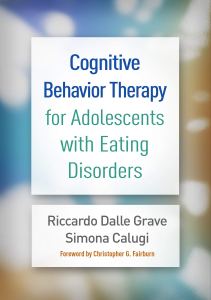
Book: Cognitive Behaviour Therapy for Adolescents with Eating Disorders

Book Title:

Cognitive Behaviour Therapy for Adolescents with Eating Disorders.

Author(s): Riccardo Dalle Grave and Simona Calugi.

Year: 2020.

Edition: First (1st).

Publisher: Guildford Press.

Type(s): Hardcover and Kindle.

Synopsis:

This state-of-the-art guide provides a powerful transdiagnostic approach for treating adolescent eating disorders (anorexia nervosa, bulimia nervosa, binge-eating disorder, and others) in either outpatient or inpatient settings.

It describes how enhanced cognitive behaviour therapy (CBT-E) – the gold-standard treatment for adult eating disorders – has been systematically adapted and tested with younger patients.

With a strong motivational focus, CBT-E gives the adolescent a key role in decision making. The book presents session-by-session guidelines for assessing patients, determining whether CBT-E is appropriate, developing case conceptualisations, conducting individualised interventions, addressing medical issues, and involving parents.

User-friendly features include case vignettes and reproducible forms; purchasers get access to a Web page where they can download and print the reproducible materials in a convenient 8 1/2″ x 11″ size.

CBT-E is recognised as a best practice for the treatment of adolescent eating disorders by the UK’s National Institute for Health and Care Excellence (NICE).

Book: Cognitive Behaviour Therapy for Eating Disorders

Book Title:

Cognitive Behaviour Therapy for Eating Disorders.

Author(s): Glenn Waller, Helen Cordery, Emma Corstorphine, Hendrik Hinrichsen, Rachel Lawson, Victoria Mountford, and Katie Russell.

Year: 2007.

Edition: First (1st), Illustrated Edition.

Publisher: Cambridge University Press.

Type(s): Paperback and Kindle.

Synopsis:

This book describes the application of cognitive behavioural principles to patients with a wide range of eating disorders – it covers those with straightforward problems and those with more complex conditions or co-morbid states.

The book takes a highly pragmatic view. It is based on the published evidence, but stresses the importance of individualised, principle-based clinical work.

It describes the techniques within the widest clinical context, for use across the age range and from referral to discharge.

Throughout the text, the links between theory and practice are highlighted in order to stress the importance of the flexible application of skills to each new situation. Case studies and sample dialogs are employed to demonstrate the principles in action and the book concludes with a set of useful handouts for patients and other tools.

This book will be essential reading for all those working with eating-disordered patients including psychologists, psychiatrists, nurses, counsellors, dieticians, and occupational therapists.

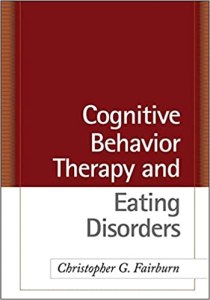
Book: Cognitive Behaviour Therapy and Eating Disorders

Book Title:

Cognitive Behaviour Therapy and Eating Disorders.

Author(s): Christopher G. Fairburn.

Year: 2008.

Edition: First (1st).

Publisher: Guildford Press.

Type(s): Hardcover and Kindle.

Synopsis:

This book provides the first comprehensive guide to enhanced cognitive behaviour therapy (CBT-E), the leading empirically supported treatment for eating disorders in adults.

Written with the practitioner in mind, the book demonstrates how this transdiagnostic approach can be used with the full range of eating disorders seen in clinical practice.

Christopher Fairburn and colleagues describe in detail how to tailor CBT-E to the needs of individual patients, and how to adapt it for patients who require hospitalisation.

Also addressed are frequently encountered co-occurring disorders and how to manage them.

Reproducible appendices feature the Eating Disorder Examination interview and questionnaire.

Book: Mental Health Workbook

Book Title:

Mental Health Workbook: 4 Books In 1: How to Use Neuroscience and Cognitive Behavioural Therapy to Declutter Your Mind, Stop Overthinking and Quickly Overcome Anxiety, Worry and Panic Attacks.

Author(s): Edward Scott.

Year: 2020.

Edition: First (1st).

Publisher: Saturno Lecca.

Type(s): Hardcover, Paperback, and Kindle.

Synopsis:

Want to learn more about neuroscience paired with cognitive behavioural therapy? Would you like to figure out how to clear your mind by stopping stress, stopping overthinking, overcoming anxiety, worries and panic attacks? If so, read on!

The Cognitive behavioural therapy has been shown to be effective in relieving symptoms in a wide range of mental health problems, ranging from addiction to schizophrenia, along with almost everything in between. It has been shown to be useful for longer than drugs and other forms of therapy.

Excessive thinking can be a side effect of some nervousness problems; however, it can also be an indication of simply being overwhelmed.

One of the most important reasons you want to clear your mind is because it is already playing a negative role in your life. Living with constant negative thoughts and intense fears can cause someone to crave a way to relieve pain or develop unhealthy habits that could get worse.

Anxiety is linked to many other mental illnesses, especially depression!

The main focus of this book is to follow the steps which will improve your thinking

This book covers the following topics

  • What is cognitive behavioural therapy?
  • Stages of cognitive behavioural therapy
  • Definition of excessive thinking.
  • How to identify if you are an excessive thinker.
  • The relationship between excessive thinking, anxiety and stress.
  • Health Benefits of Decluttering.
  • Usual remedy in localised deep breathing.
  • Believe in your self-esteem.
  • And many more.

Before learning the exercises that eliminate negative thinking, you should understand why you have these thoughts.

In fact, the stress caused by information overload, endless options and physical clutter can trigger various mental health problems, including depression, anxiety, and panic attacks. Do you want to know how to prevent them?

On This Day … 18 November

People (Births)

  • 1924 – Anna Elisabeth (Lise) Østergaard, Danish psychologist and politician (d. 1996).

Anna Østergaard

Anna Elisabeth “Lise” Østergaard (18 November 1924 to 19 March 1996) was a Danish psychologist and a politician in the social-democratic party. Under Anker Jørgensen’s leadership, she was Minister without Portfolio (1977-1980) and Minister of Culture (February 1980 to September 1982).

As a psychologist, she was head of psychology in Copenhagen’s Rigshospitalet (1958) as well as the first woman to become professor of clinical psychology at Copenhagen University (1963), a position she resumed after her political career ended in the mid-1980s.

Biography

Born on 18 November 1924 in Odense, Østergarrd was the daughter of Alfred Østergaard (1890-1962) and his wife Martha Kirstine Nielsen (1885-1944). She spent her first 12 years in Odense before moving with her parents to Gentofte. Although she encountered difficulties at school, she finally embarked on psychology studies at Copenhagen University. On leaving home against her father’s wishes, she paid her own way by working as a doctor’s secretary.

Psychology

After graduating in 1947, Østergaard worked as a psychologist in Norrtulls sjukhus, a children’s hospital in Stockholm. In 1949, she returned to Denmark, first spending a year in Dronning Louises Børnehospital (Queen Louise’s Children’s Hospital) before moving to the newly established children’s psychology clinic at Copenhagen University where she remained until 1954. She then entered the Rigshospitalet’s psychology department where she was appointed head psychologist in 1958, expanding her experience in clinical psychology. As a result, from 1955 to 1960 she headed a course in clinical psychology for the Dansk Psychologforening (Danish Psychologists Association) while teaching as the first woman psychologist at the university. She also took up assignments as a guest lecturer in Lund, Sweden, and Bergen, Norway.

Published in 1961, her Den psykologiske testmetode og dens relation til klinisk psykiatri (The Psychological Test Method and its Relationship to Clinical Psychiatry) raised considerable interest among psychiatrists. While working at Rigshospitalet, Østergaard treated a number of schizophrenic patients. In 1962, this led to her En psykologisk analyse af de formelle schizofrene tankeforstyrrelser (A Psychological Analysis of Formal Schizophrenic Thought Disorders), paving the way for research on the borderline between psychology and psychiatry in collaboration with the National Institute of Mental Health in the United States.

In 1963, Østergaard became the first female professor of psychology at Copenhagen University. After heading the Studenterrådgivningsklinikken (Student Advisory Clinic, 1964-1968), she established the Institut for Klinisk Psykologi (Clinical Psychology Institute) in 1968. From 1970 to 1973, she was a member of Denmark’s Unesco committee and from 1973 a member of Akademiet for de Tekniske Videnskaber (The Danish Academy of Technical Sciences).

Political Career

In the early 1970s, Østergaard became involved in the Danish Refugee Council, acting as spokesman from 1974 to 1977. She also increasingly became active in children’s affairs, becoming spokesman for the Danish Children’s Commission where she promoted the need for paternity leave. Her life underwent a significant change in 1977 when Anker Jørgensen offered her an appointment as Minister without Portfolio with special responsibilities for foreign affairs.

Although she had no political background, Østergaard was not afraid to criticize the West for fighting for its status as a ruling class rather than helping the poor. She drew considerable attention in 1980 when she opposed Denmark’s support for NATO’s decision to modernise Western Europe’s rocket defences. After gaining increasing popularity, she was elected to the Folketing with a considerable majority in 1979 as representative for Gladsaxe. In 1980, she was appointed Minister of Culture and Minister for Nordic Affairs until the socialist government was defeated in 1982. In 1980, she chaired the UN World Conference on Women in Copenhagen and in 1982 she was deputy chair of the Unesco World Cultural Conference in Mexico. She remained a member of parliament until 1984 but did not seek re-election.

Later Life

On leaving the Folketing, Østergaard returned to Copenhagen University, concentrating on the need for women to contribute to international development. She held her post as professor until 1994.

Lise Østergaard died on 19 March 1996 in Copenhagen and is buried in Holmens Cemetery. She shares a grave with Gunnar P. Rosendahl (1919-1996) whom she married in 1974.


What are the Incidence Rates of Treated Mental Disorders in Childhood & Adolescence?

Research Paper Title

Incidence Rates of Treated Mental Disorders in Childhood and Adolescence in a Complete Nationwide Birth Cohort.

Background

To investigate incidences, cumulative incidence rates, and risk factors of diagnosed mental disorders in a complete nationwide birth cohort across the entire period of childhood and adolescence.

Methods

Based on nationwide Danish registries, the entire cohort of all children born in 1995 was followed up to 31 December 2013. Data for children who migrated during the period were censored in the time analyses, and death before age 18 years was considered a competing risk. Incidence rates and cumulative incidence rates for any first-time-diagnosed mental disorder and 10 major categories of mental disorders according to ICD-10 criteria were calculated for 68,982 individuals. In addition, the effects of age, sex, and further child- and family-related risk factors on mental disorders were analysed.

Results

The incidences of any mental disorder, substance use disorders, depression, and anxiety disorders showed an increase in adolescence, whereas those for autism spectrum disorders, attention-deficit/hyperactivity disorder, conduct disorder, and tic disorder increased during childhood and decreased thereafter. Males had higher incidence rates of any mental disorders, substance use disorders, autism spectrum disorders, ADHD, conduct disorder, and tic disorder. Females had higher risks for depressive, anxiety, obsessive-compulsive, and eating disorders. Several other risk and protective factors for any mental disorder were identified. The cumulative incidence rate at age 18 years amounted to 11.02% for any mental disorder.

Conclusions

These findings provide the most comprehensive estimates of the development, incidence rates, and contributing risk factors of registered mental disorders for the entire period of childhood and adolescence that have been calculated so far.

Reference

Steinhausen, H-C. & Jakobsen, H. (2020) Incidence Rates of Treated Mental Disorders in Childhood and Adolescence in a Complete Nationwide Birth Cohort. The Journal of Clinical Psychiatry. 80(3):17m12012. doi: 10.4088/JCP.17m12012.

On This Day … 17 November

People (Births)

  • 1896 – Lev Vygotsky, Belarusian-Russian psychologist and philosopher (d. 1934).

People (Deaths)

  • 2014 – Patrick Suppes, American psychologist and philosopher (b. 1922).

Lev Vygotsky

Lev Semyonovich Vygotsky (Russian: Лев Семёнович Выго́тский; Belarusian: Леў Сямёнавіч Выго́цкі; 17 November 17 (05 November (O.S.) 1896 to 11 June 1934) was a Soviet psychologist, known for his work on psychological development in children. He published on a diverse range of subjects, and from multiple views as his perspective changed over the years. Among his students was Alexander Luria.

He is known for his concept of the zone of proximal development (ZPD): the distance between what a student (apprentice, new employee, etc.) can do on their own, and what they can accomplish with the support of someone more knowledgeable about the activity. Vygotsky saw the ZPD as a measure of skills that are in the process of maturing, as supplement to measures of development that only look at a learner’s independent ability.

Also influential are his works on the relationship between language and thought, the development of language, and a general theory of development through actions and relationships in a socio-cultural environment.

Vygotsky is the subject of great scholarly dispute. There is a group of scholars who see parts of Vygotsky’s current legacy as distortions and who are going back to Vygotsky’s manuscripts in an attempt to make Vygotsky’s legacy more true to his actual ideas.

Patrick Suppes

Patrick Colonel Suppes (17 March 1922 to 17 November 2014) was an American philosopher who made significant contributions to philosophy of science, the theory of measurement, the foundations of quantum mechanics, decision theory, psychology and educational technology.

He was the Lucie Stern Professor of Philosophy Emeritus at Stanford University and until January 2010, and was the Director of the Education Program for Gifted Youth also at Stanford.

Older People: Physical Health, Check; Mental Health, Overlooked

Research Paper Title

Promoting active ageing in older people with mental disorders living in the community: An integrative review.

Background

Approximately 15% of older people aged 60 and above are experiencing a mental disorder. However, they are commonly unrecognised from health care providers.

Therefore the purpose of this research was to critically synthesise the evidence in relation to the promotion of active ageing in older people, including those with mental disorders.

Methods

This study is an integrative review. Articles published between January 2002 and March 2017 in English and in Thai were identified through searches of the databases CINAHL, MEDLINE, EMBASE, PsycINFO, and Thai LIS, as well as through manual searching.

Methodologically high-quality research articles were included if they addressed the promotion of active ageing and related concepts, the impact of mental disorders on active ageing and related concepts, the perspective of older people regarding active ageing, and issues related to working with older people with mental health problems living in the community.

Results

A total of 18 articles were included. The findings show that there is little evidence regarding the promotion of active ageing in older people with mental disorders.

Older people with mental disorders were less likely to achieve successful ageing compared with those without mental disorders, suggesting they need support from health care providers. However, there are several barriers to care and working with older people with mental disorders at the community level.

Conclusions

Of concern is that health professionals focus on the physical health of older people while mental health issues are overlooked.

Reference

Kenbubpha, K., Higgins, I., Chan, S.W-C. & Wilson, A. (2020) Promoting active ageing in older people with mental disorders living in the community: An integrative review. International Journal of Nursing Practice. 24(3):e12624. doi: 10.1111/ijn.12624. Epub 2018 Mar 30.

Book: Cognitive Analytic Therapy and the Politics of Mental Health

Book Title:

Cognitive Analytic Therapy and the Politics of Mental Health.

Author(s): Rachel Pollard and Julie Lloyd (Editors).

Year: 2018.

Edition: First (1st).

Publisher: Routledge.

Type(s): Hardcover, Paperback, and Kindle.

Synopsis:

Cognitive Analytic Therapy and the Politics of Mental Health provides an overview of the development of cognitive analytic therapy (CAT), and illuminates how the political context affects the way in which therapists consider their work and facilitates their practice.

This book examines how CAT contributes to wider debates over ‘the politics of mental health’. With contributions from those working in services – including adult mental health, learning disabilities and child and adolescent therapists – the writers consider how contemporary politics devolves responsibility for mental illness onto those suffering distress. The evolving political and social attitudes clients bring to therapy are also addressed in several chapters, and there is a focus on groups in society who have been marginalized and neglected in mental and physical health services.

Cognitive Analytic Therapy and the Politics of Mental Health offers a fresh understanding of the contemporary politics of mental health that will be of interest to all therapists and mental health professionals.

Book: Cognitive Analytic Supervision

Book Title:

Cognitive Analytic Supervision: A Relational Approach.

Author(s): Deborah Pickvance (Editor).

Year: 2016.

Edition: First (1st).

Publisher: Routledge.

Type(s): Hardcover, Paperback, and Kindle.

Synopsis:

Cognitive Analytic Supervision: A relational approach is the first book to present a cognitive analytic perspective on psychotherapy supervision. This edited collection of original chapters reflects the ways in which CAT therapists and supervisors have developed the model and used it in diverse settings. It is a significant contribution to the literature on relational psychotherapy supervision, written by established CAT supervisors, trainers and therapists who, together, have an enormous amount of professional and clinical experience.
The book covers important areas such as:

  • The relational theory and practice of CAT supervision.
  • A cognitive analytic conceptualisation of narcissistic difficulties.
  • Intercultural issues in supervision (based on CAT training experience in India).
  • Ethical and clinical dilemmas in supervision.
  • Supervision of consultancy work.

Cognitive Analytic Supervision will be of interest to CAT supervisors, therapists and trainee supervisors, as well as supervisors and therapists working in other therapeutic models, in particular those with a relational approach. This book may be a useful bridge into relationally informed supervision for therapists who do not have an explicitly relational focus.