Posts

World Mental Health Day 2020

Introduction

World Mental Health Day is an international day for global mental health education, awareness and advocacy against social stigma.

It was first celebrated in 1992 at the initiative of the World Federation for Mental Health, a global mental health organisation with members and contacts in more than 150 countries.

This day, each October, thousands of supporters come to celebrate this annual awareness program to bring attention to mental illness and its major effects on peoples’ lives worldwide.

In some countries this day is part of an awareness week, such as Mental Health Week in Australia.

Brief History

World Mental Health Day was celebrated for the first time on 10 October 1992 at the initiative of Deputy Secretary General Richard Hunter. Up until 1994, the day had no specific theme other than general promoting mental health advocacy and educating the public.

In 1994, World Mental Health Day was celebrated with a theme for the first time at the suggestion of then Secretary General Eugene Brody. The theme was ‘Improving the Quality of Mental Health Services throughout the World’.

World Mental Health Day is supported by the World Health Organisation (WHO) through raising awareness on mental health issues using its strong relationships with the Ministries of health and civil society organizations across the globe. WHO also supports with developing technical and communication material.

Historical Themes

  • 2020: Move for mental health: Increased investment in mental health.
  • 2019: Mental Health Promotion and Suicide Prevention.
  • 2018: Young people and mental health in a changing world.
  • 2017: Mental health in the workplace.
  • 2016: Psychological First Aid.
  • 2015: Dignity in Mental Health.
  • 2014: Living with Schizophrenia.
  • 2013: Mental health and older adults.
  • 2012: Depression: A Global Crisis.
  • 2011: The Great Push: Investing in Mental Health.
  • 2010: Mental Health and Chronic Physical Illnesses.
  • 2009: Mental Health in Primary Care: Enhancing Treatment and Promoting Mental Health.
  • 2008: Making Mental Health a Global Priority: Scaling up Services through Citizen Advocacy and Action.
  • 2007: Mental Health in A Changing World: The Impact of Culture and Diversity.
  • 2006: Building Awareness – Reducing Risk: Mental Illness & Suicide.
  • 2005: Mental and Physical Health Across the Life Span.
  • 2004: The Relationship Between Physical & Mental Health: co-occurring disorders.
  • 2003: Emotional and Behavioural Disorders of Children & Adolescents.
  • 2002: The Effects of Trauma and Violence on Children & Adolescents.
  • 2000-2001: Mental Health and Work.
  • 1999: Mental Health and Aging.
  • 1998: Mental Health and Human Rights.
  • 1997: Children and Mental Health.
  • 1996: Women and Mental Health.

Similar Campaigns in Early Ocotber

Links

On This Day … 09 October

People (Births)

  • 1900 – Joseph Zubin, Lithuanian-American psychologist and academic (d. 1990).

Joseph Zubin

Joseph Zubin (09 October 1900 to 18 December 1990) was a Lithuanian born American educational psychologist and an authority on schizophrenia who is commemorated by the Joseph Zubin Awards.

Zubin was born 09 October 1900 in Raseiniai, Lithuania, but moved to the US in 1908 and grew up in Baltimore. His first degree was in chemistry at Johns Hopkins University in 1921, and he earned a PhD in educational psychology at Columbia University in 1932.

In 1946, he was elected as a Fellow of the American Statistical Association.

Zubin was President of both the American Psychopathological Association (195-1952) and the American College of Neuropsychopharmacology (1971-1972) and received numerous awards for his work.

Book: Anti-Discriminatory Practice in Counselling & Psychotherapy

Book Title:

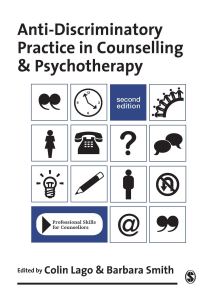
Anti-Discriminatory Practice in Counselling & Psychotherapy.

Author(s): Colin Lago and Barbara Smith (Editors).

Year: 2010.

Edition: First (1st).

Publisher: SAGE Publications Ltd.

Type(s): Paperback and EPUB.

Synopsis:

Anti-Discriminatory Practice in Counselling and Psychotherapy is a groundbreaking text which identifies the ease with which individuals can be disadvantaged merely on the basis of their gender, race, culture, age, sexuality or ability. Examining these and other areas of discrimination, leading experts highlight how vital it is for counsellors, psychotherapists – and others in the helping professions – to be aware of and engage with their own social, political and cultural attitudes, and how they must develop their skills as culturally sensitive, reflective practitioners if counselling is to be truly accessible to all members of society.

This substantially revised and updated second edition now also includes chapters on working within an anti-discriminatory approach with:

  • Refugees;
  • People with mental health difficulties; and
  • People with disfigurement or visible differences.

While each thought-provoking chapter now:

  • Links theory to practice by providing case studies and extracts from therapeutic dialogues;
  • Assesses the most recent research findings;
  • Provides exercises for enhancing awareness and skills within each different domain or care setting; and
  • Presents references for further recommended reading.

Clearly written and accessible, Anti-discriminatory Practice in Counselling and Psychotherapy is an indispensable addition to the toolkit of everyone either training to be or practising in the counselling and psychotherapeutic professions.

Book: Critical Suicidology

Book Title:

Critical Suicidology: Transforming Suicide Research and Prevention for the 21st Century.

Author(s): Jennifer White, Ian Marsh, Michael J. Kral, and Jonathan Morris (Editors).

Year: 2015.

Edition: First (1st).

Publisher: UBC Press.

Type(s): Paperback and EPUB.

Synopsis:

This book is a must-read for practitioners, policy makers, and researchers working in mental health services, psychology, counselling, social work, psychiatry, medicine, philosophy, sociology, suicidology, feminism, anthropology, critical disability studies, and cultural studies.

Book: Depression in Japan

Book Title:

Depression in Japan: Psychiatric Cures for a Society in Distress.

Author(s): Junko Kitanaka.

Year: 2011.

Edition: First (1st).

Publisher: Princeton University Press.

Type(s): Paperback and EPUB.

Synopsis:

Since the 1990s, suicide in recession-plagued Japan has soared, and rates of depression have both increased and received greater public attention. In a nation that has traditionally been uncomfortable addressing mental illness, what factors have allowed for the rising medicalisation of depression and suicide? Investigating these profound changes from historical, clinical, and sociolegal perspectives, Depression in Japan explores how depression has become a national disease and entered the Japanese lexicon, how psychiatry has responded to the nation’s ailing social order, and how, in a remarkable transformation, psychiatry has overcome the longstanding resistance to its intrusion in Japanese life.

Questioning claims made by Japanese psychiatrists that depression hardly existed in premodern Japan, Junko Kitanaka shows that Japanese medicine did indeed have a language for talking about depression which was conceived of as an illness where psychological suffering was intimately connected to physiological and social distress. The author looks at how Japanese psychiatrists now use the discourse of depression to persuade patients that they are victims of biological and social forces beyond their control; analyzes how this language has been adopted in legal discourse surrounding “overwork suicide”; and considers how, in contrast to the West, this language curiously emphasizes the suffering of men rather than women. Examining patients’ narratives, Kitanaka demonstrates how psychiatry constructs a gendering of depression, one that is closely tied to local politics and questions of legitimate social suffering.

Drawing upon extensive research in psychiatric institutions in Tokyo and the surrounding region, Depression in Japan uncovers the emergence of psychiatry as a force for social transformation in Japan.

Book: Recovery of People with Mental Illness

Book Title:

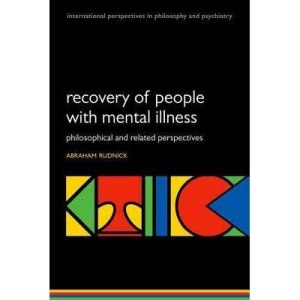
Recovery of People with Mental Illness: Philosophical and Related Perspectives.

Author(s): Abraham Rudnick.

Year: 2012.

Edition: First (1st).

Publisher: Oxford University Press.

Type(s): Paperback and EPUB.

Synopsis:

It is only in the past 20 years that the concept of ‘recovery’ from mental health has been more widely considered and researched.

Before then, it was generally considered that ‘stability’ was the best that anyone suffering from a mental disorder could hope for. But now it is recognised that, throughout their mental illness, many patients develop new beliefs, feelings, values, attitudes, and ways of dealing with their disorder. The notion of recovery from mental illness is thus rapidly being accepted and is inserting more hope into mainstream psychiatry and other parts of the mental health care system around the world.

Yet, in spite of conceptual and other challenges that this notion raises, including a variety of interpretations, there is scarcely any systematic philosophical discussion of it. This book is unique in addressing philosophical issues – including conceptual challenges and opportunities – raised by the notion of recovery of people with mental illness. Such recovery – particularly in relation to serious mental illness such as schizophrenia – is often not about cure and can mean different things to different people.

For example, it can mean symptom alleviation, ability to work, or the striving toward mental well-being (with or without symptoms).

The book addresses these different meanings and their philosophical grounds, bringing to the fore perspectives of people with mental illness and their families as well as perspectives of philosophers, mental health care providers and researchers, among others.

The important new work will contribute to further research, reflective practice and policy making in relation to the recovery of people with mental illness.It is essential reading for philosophers of health, psychiatrists, and other mental care providers, as well as policy makers.

Book: Rethinking Psychiatry

Book Title:

Rethinking Psychiatry: From Cultural Category to Personal Experience.

Author(s): Arthur Kleinman, MD.

Year: 2008.

Edition: First (1st).

Publisher: Free Press.

Type(s): Paperback and EPUB.

Synopsis:

In this book, Kleinman proposes an international view of mental illness and mental care.

Arthur Kleinman, M.D., examines how the prevalence and nature of disorders vary in different cultures, how clinicians make their diagnoses, and how they heal, and the educational and practical implications of a true understanding of the interplay between biology and culture.

Book: Psychiatry Disrupted

Book Title:

Psychiatry Disrupted: Theorising Resistance and Crafting the (R)evolution.

Author(s): Bonnie Burstow, Brenda A LeFrancois, and Shaindl Diamond.

Year: 2014.

Edition: First (1st).

Publisher: McGill-Queen’s University Press.

Type(s): Paperback and EPUB.

Synopsis:

There is growing international resistance to the oppressiveness of psychiatry. While previous studies have critiqued psychiatry, Psychiatry Disrupted goes beyond theorising what is wrong with it to theorizing how we might stop it. Introducing readers to the arguments and rationale for opposing psychiatry, the book combines perspectives from anti-psychiatry and critical psychiatry activism, mad activism, antiracist, critical, and radical disability studies, as well as feminist, Marxist, and anarchist thought.

The editors and contributors are activists and academics – adult education and social work professors, psychologists, prominent leaders in the psychiatric survivor movement, and artists – from across Canada, England, and the United States.

From chapters discussing feminist opposition to the medicalisation of human experience, to the links between psychiatry and neo-liberalism, to internal tensions within the various movements and different identities from which people organise, the collection theorises psychiatry while contributing to a range of scholarship and presenting a comprehensive overview of resistance to psychiatry in the academy and in the community.

A courageous anthology, Psychiatry Disrupted is a timely work that asks compelling activist questions that no other book in the field touches.

Book: Decolonising Global Mental Health

Book Title:

Decolonizing Global Mental Health: The Psychiatrisation of the Majority World.

Author(s): China Mills.

Year: 2014.

Edition: First (1st).

Publisher: Routledge.

Type(s): Paperback.

Synopsis:

Decolonising Global Mental Health is a book that maps a strange irony.

The World Health Organisation (WHO) and the Movement for Global Mental Health are calling to ‘scale up’ access to psychological and psychiatric treatments globally, particularly within the global South. Simultaneously, in the global North, psychiatry and its often chemical treatments are coming under increased criticism (from both those who take the medication and those in the position to prescribe it).

The book argues that it is imperative to explore what counts as evidence within Global Mental Health, and seeks to de-familiarise current ‘Western’ conceptions of psychology and psychiatry using postcolonial theory. It leads us to wonder whether we should call for equality in global access to psychiatry, whether everyone should have the right to a psychotropic citizenship and whether mental health can, or should, be global.

As such, it is ideal reading for undergraduate and postgraduate students, as well as researchers in the fields of critical psychology and psychiatry, social and health psychology, cultural studies, public health and social work.