Posts

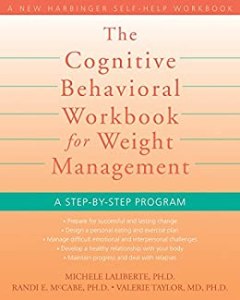
Book: The Cognitive Behavioural Workbook for Weight Management

Book Title:

The Cognitive Behavioural Workbook for Weight Management: A Step-by-Step Programme (A New Harbinger Self-Help Workbook).

Author(s): Michele Laliberte, Randi E. McCabe, and Valerie Taylor.

Year: 2009.

Edition: First (1st), Illutstrated Edition.

Publisher: New Harbinger Publications.

Type(s): Paperback and Kindle.

Synopsis:

We all think we know what we have to do to manage our weight, and blame ourselves when we do not meet the goals we have set. In reality, we need to understand the biology behind the body’s regulation of weight to achieve the control we are hoping for. And we need strategies for overcoming obstacles: the stress of daily life, emotional upsets, and people who sabotage our efforts or attack our self-esteem.

The Cognitive Behavioural Workbook for Weight Management is a different kind of weight management guide that focuses on helping you stay disciplined and dedicated to your weight management goals by using cognitive behavioural therapy. This approach has been used by therapists for years to treat a diverse range of mental health conditions, and researchers have found that it also helps people make healthy changes that last.

This workbook includes exercises and worksheets to help you design a customised weight management strategy most likely to be effective for you based on the habits and lifestyle you have now. You’ll set specific goals to improve your body image and your health, and follow a realistic weight management plan designed specifically for you. It is possible to feel good about yourself as you work toward a healthier lifestyle. This book will show you how.

Learn to:

  • Manage situational, emotional, and interpersonal eating triggers.
  • Overcome body image difficulties and critical thoughts.
  • Make changes toward weight management that you actually enjoy.
  • Use support from friends and family to bolster success.

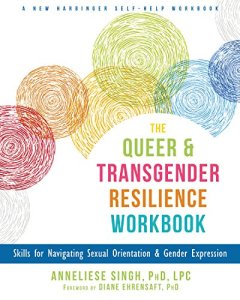
Book: The Queer and Transgender Resilience Workbook

Book Title:

The Queer and Transgender Resilience Workbook: Skills for Navigating Sexual Orientation and Gender Expression (New Harbinger Self-Help Workbook).

Author(s): Anneliese A. Singh (PhD, LPC) and Diane Ehrensaft (PhD).

Year: 2018.

Edition: First (1st) Workbook Edition.

Publisher: New Harbinger Publications.

Type(s): Paperback and eTextbook.

Synopsis:

How can you build unshakable confidence and resilience in a world still filled with ignorance, inequality, and discrimination? The Queer and Transgender Resilience Workbook will teach you how to challenge internalised negative messages, handle stress, build a community of support, and embrace your true self.

Resilience is a key ingredient for psychological health and wellness. It’s what gives people the psychological strength to cope with everyday stress, as well as major setbacks. For many people, stressful events may include job loss, financial problems, illness, natural disasters, medical emergencies, divorce, or the death of a loved one. But if you are queer or gender non-conforming, life stresses may also include discrimination in housing and health care, employment barriers, homelessness, family rejection, physical attacks or threats, and general unfair treatment and oppression – all of which lead to overwhelming feelings of hopelessness and powerlessness. So, how can you gain resilience in a society that is so often toxic and unwelcoming?

In this important workbook, you will discover how to cultivate the key components of resilience: holding a positive view of yourself and your abilities; knowing your worth and cultivating a strong sense of self-esteem; effectively utilising resources; being assertive and creating a support community; fostering hope and growth within yourself, and finding the strength to help others. Once you know how to tap into your personal resilience, you’ll have an unlimited well you can draw from to navigate everyday challenges.

By learning to challenge internalised negative messages and remove obstacles from your life, you can build the resilience you need to embrace your truest self in an imperfect world.

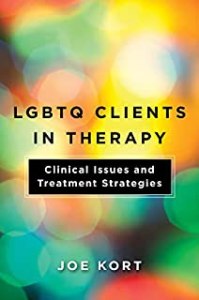
Book: LGBT Clients in Therapy

Book Title:

LGBTQ Clients in Therapy: Clinical Issues and Treatment Strategies.

Author(s): Joe Kort.

Year: 2018.

Edition: First (1st).

Publisher: W.W. Norton & Company.

Type(s): Paperback and Kindle.

Synopsis:

All the answers clinicians need to work effectively with LGBTQ clients.

A therapist who treats LGBTQ clients often must be more than “gay friendly.” Clinical experience, scientific research, and cultural understanding are advancing rapidly, and the task of being LGBTQ informed is ever-changing in today’s world.

This book covers topics such as how to avoid making the common mistake of believing that “a couple is a couple,” thus treating LGBTQ couples the same as their heterosexual counterparts; how to treat clients struggling in “mixed” orientation marriages and relationships (straight and LGBTQ spouses in the same couple); and how to work with all clients who have non-heteronormative sexual behaviours and practices. Perhaps most importantly, the book discusses covert cultural sexual abuse (the trauma suffered from having to suppress one’s own sexual and gender identity) as well as the difficult process of coming out to family and friends.

A therapist’s job is to help clients and their identities through their own lens and not anyone else’s – especially the therapist’s. The gay affirmative principles put forward in this book will help you build a stronger relationship with your LGBTQ clients and become the go-to therapist in your area.

Book: LGBT Psychology and Mental Health

Book Title:

LGBT Psychology and Mental Health – Emerging Research and Advances.

Author(s): Richard Ruth and Erik Santacruz (Editors).

Year: 2017.

Edition: First (1st).

Publisher: Praeger.

Type(s): Hardcover and Kindle.

Synopsis:

This cutting-edge guide spotlights some of the most exciting emerging discoveries, trends, and research areas in LGBT psychology, both in science and therapy.

LGBT Psychology and Mental Health: Emerging Research and Advances brings together concise, substantive reviews of what is new or on the horizon in science and in key areas of clinical practice. It will equip professionals at institutions with mental health programmes that deal with lesbian, gay, bisexual and transgender issues with information and insight to help psychologists, mental health clinicians, and counsellors better serve the LGBT populations that, increasingly, are seeking their services.

The book begins with introductory chapters that present an overview of the field, chronicle the relationship between the LGBT community and the field of psychology in past decades, and identify emerging issues covered in the volume. It then addresses subjects such as social psychology and LGBT populations, health disparities and LGBT populations, the evolution of developmental theory related to the LBGT populations, emerging policy issues in LGBT health and psychology, and recent efforts to make the field of psychology more trans-inclusive and affirmative.

Chapters are also dedicated to examining contemporary, LGBT-affirmative psychoanalysis and treating addictions and substance abuse in the LGBT community. The book concludes with chapters that address how the concept of intersectionality can serve as a way to better understand LGBT members who possess multiple cultural identities and the unique stressors they experience in daily life. The final chapter summarises issues that bridge the contributions provided by the authors, and it highlights current issues of focal concern in order to project future directions for the field of LGBT psychology in the next two decades.

It presents a concise history of LGBT psychology as well as coverage of current LGBT psychology in various subfields, including social, developmental, psychoanalytical, minority psychology, and women’s psychology Addresses issues in the LGBT community ranging from health disparities (physical, biological, and psychological illnesses that disproportionately affect the LGBT community) to addictions and substance abuse, stressors, and emerging policy issues Includes contributors who are well-known trailblazers and noted experts in the field

On This Day … 08 October

People (Births)

  • 1888 – Ernst Kretschmer, German psychiatrist and author (d. 1964).

Ernst Kretschmer

Ernst Kretschmer (08 October 1888 to 08 February 1964) was a German psychiatrist who researched the human constitution and established a typology.

He attempted to correlate body build and physical constitution with personality characteristics and mental illness.

Is There an Association between Cardiovasular Disease & Executive Function in Those with Bipolar Disorder?

Research Paper Title

Cumulative Cardiovascular Disease Risk and Triglycerides Differentially Relate to Subdomains of Executive Function in Bipolar Disorder; preliminary findings.

Background

Cardiovascular disease is disproportionally prevalent in bipolar disorder (BD) and has been linked to cognition in preliminary studies. The researchers evaluate the association between known risk factors for cardiovascular disease and executive function in BD patients compared to healthy controls.

Methods

In a sample of n=57 individuals (n=23 BD, n=34 controls) they assessed two subdomains of executive function; cognitive flexibility (using the Trail Making Test – Part B) and cognitive inhibition (using the Stroop Colour Word Interference Task). Cardiovascular risk was assessed by means of serum triglyceride levels, body mass index (BMI) and waist circumference, as well as dietary saturated fat intake and a sex-specific cumulative cardiovascular risk score calculated using the Framingham Heart Study method.

Results

Patients with BD had higher BMI and waist circumference, with more BD patients categorised as having central obesity than controls. In the BD group only, higher triglyceride levels were associated with worse cognitive flexibility, and elevated cumulative cardiovascular disease risk was associated with worse cognitive inhibition. No correlations between cardiovascular risk factors and executive function were evident in the control group.

The study was limited by the small sample size and should be considered hypothesis-generating.

Conclusions

The associations between triglyceride levels, cumulative cardiovascular disease risk and executive functioning evident in BD in this study preliminarily indicate the potential for mechanistic overlap of physical health and cognitive function in the disorder.

Reference

Van Rheenen, T.E., McIntyre, R.S., Balanza-Martinez, V., Berk, M. & Rossell, S.L. (2020) Cumulative Cardiovascular Disease Risk and Triglycerides Differentially Relate to Subdomains of Executive Function in Bipolar Disorder; preliminary findings. Journal of Affective Disorders. 278, pp.556-562. doi: 10.1016/j.jad.2020.09.104. Online ahead of print.

What are the Hidden Downsides of Mindfulness?

“Mindfulness and other types of meditation are usually seen as simple stress-relievers – but they can sometimes leave people worse off.” (Wilson, 2020, p.15).

Read this interesting article by Claire Wilson in the New Scientist about the dowsides of mindfulness.

Reference

Wilson, C. (2020) The Hidden Downsides of Mindfulness. New Scientist. 22 August 2020, pp.15

Research: Treatments for Internet Gaming Disorder and Internet Addiction: A Systematic Review

Research Paper Title:

Treatments for Internet Gaming Disorder and Internet Addiction: A Systematic Review.

Author(s): Kristyn Zajac, Meredith K. Ginley, Rocio Chang, and Nancy Petry.

Year: 2017.

Journal: Psychology of Addictive Behaviours, 31(8).

DOI: 10.1037/adb0000315.

Abstract:

Problems related to excessive use of the Internet and video games have recently captured the interests of both researchers and clinicians.

The goals of this review are to summarise the literature on treatment effectiveness for these problems and to determine whether any treatments meet the minimum requirement of an evidence-based treatment as defined by Chambless et al. (1998).

Studies of treatments for Internet gaming disorder (IGD) and Internet addiction were examined separately, as past studies have linked IGD to more severe outcomes. The systematic review identified 26 studies meeting predefined criteria; 13 focused on treatments for IGD and 13 on Internet addiction.

The results highlighted a paucity of well-designed treatment outcome studies and limited evidence for the effectiveness of any treatment modality. Studies were limited by methodological flaws, including small sample sizes, lack of control groups, and little information on treatment adherence, among other problems. In addition, the field is beset by a lack of consistent definitions of and established instruments to measure IGD and Internet addiction.

The results of this review highlight the need for additional work in the area of treatment development and evaluation for IGD and Internet addiction. Attention to methodological concerns identified within this review should improve subsequent research related to treating these conditions, and ultimately outcomes of patients suffering from them.

You can download a copy of the full paper here.

Research: Relationship between Internet Addiction and Academic Performance among Foreign Undergraduate Students

Research Paper Title:

Relationship between Internet Addiction and Academic Performance among Foreign Undergraduate Students.

Author(s): Najmi Hayati, Masoumeh Alavi, and Syed Mohamed Shafeq.

Year: 2014.

Journal: Procedia – Social and Behavioural Sciences, 114 (Conference: 4th World Conference on Psychology, Counseling and Guidance).

DOI: 10.1016/j.sbspro.2013.12.795.

Abstract:

The purpose of this study is to identify the relationship between Internet Addiction (IA) and academic performance among foreign undergraduate students in Universiti Teknologi Malaysia (UTM).

This study also identified the differences in internet addiction in terms of gender and country of original.

Four countries were selected through simple random sampling; there were China, Yemen, Somalia and Indonesia. Then, a total of 120 students were selected randomly from those countries. In order to measure IA, Internet Addiction Test (IAT) based on Young’s (1998) survey which modified by Pee and Shafeq (2009), was used.

The data collected was analysed using SPSS. The statistical techniques frequency and percentage were used to identify the patterns of using the Internet; t-test and one-way ANOVA were used to examine the differences in IA in terms of demographic factors. Pearson correlation technique was also used to determine the relationship between IA and academic performance.

The results of the study showed that there were no significant differences in IA in terms of gender, country of origin. The results also indicated that there were no significant differences in IA in terms of CGPA. This suggests that future research needs to work on large-scale using multiple-campus technology assessments.

You can download a copy of the full paper here.

Research: Risk Factors of Internet Addiction and the Health Effect of Internet Addiction on Adolescents

Research Paper Title:

Risk Factors of Internet Addiction and the Health Effect of Internet Addiction on Adolescents: A Systematic Review of Longitudinal and Prospective Studies.

Author(s): Lawrence T. Lam.

Year: 2014.

Journal: Current Psychiatry Reports, 16(11), pp.1-9.

DOI: 10.1007/s11920-014-0508-2.

Abstract:

Internet gaming addiction was included in the latest version of the DSM-V as a possible disorder recently, while debate is still on-going as to whether the condition called “Internet Addiction” (IA) could be fully recognised as an established disorder.

The major contention is how well IA could fulfil the validation criteria as a psychiatric disorder as in other well-established behavioural addictions. In addition to various proposed validation criteria, evidence of risk and protective factors as well as development of outcomes from longitudinal and prospective studies are suggested as important.

A systematic review of available longitudinal and prospective studies was conducted to gather epidemiological evidence on risk and protective factors of IA and the health effect of IA on adolescents. Nine articles were identified after an extensive search of the literature in accordance to the PRISMA guidelines. Of these, eight provided data on risk or protective factors of IA and one focused solely on the effects of IA on mental health.

Information was extracted and analysed systematically from each study and tabulated. Many exposure variables were studied and could be broadly classified into three main categories:

  • Psychopathologies of the participants, family and parenting factors; and
  • Others such as Internet usage, motivation, and academic performance.

Some were found to be potential risk or protective factors of IA. It was also found that exposure to IA had a detrimental effect on the mental health of young people. These results were discussed in light of their implications to the fulfilment of the validation criteria.

You can download a copy of the full paper here.