Posts

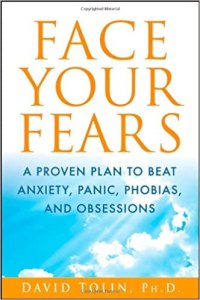
Book: Face Your Fears

Book Title:

Face Your Fears – A Proven Plan to Beat Anxiety, Panic, Phobias, and Obsessions.

Author(s): David Tolin, PhD.

Year: 2012.

Edition: First (1st), Illustrated Edition.

Publisher: John Wiley & Sons.

Type(s): Hardcover.

Synopsis:

Reclaim your life from crippling anxiety with this revolutionary step-by-step approach Nearly a third of all people will suffer from severe or debilitating fears – phobias, panic attacks, obsessions, worries, and more over the course of a lifetime.

Now Dr. David Tolin – a renowned psychologist and scientist at the Institute of Living and Yale featured on such programmes as The OCD Project, Hoarders, The Dr. Oz Show , and Oprah – offers help for nearly every type of anxiety disorder.

Dr. Tolin explains what fear really is, why you should face, not avoid, your fear, and how to beat your fear using gradual exposure techniques.

Practical action steps and exercises help you learn this unique approach to facing fear without crutches or other unhelpful things found in many other programs in order to achieve a life that is free of debilitating anxieties. Self–help guide that gives you the tools to take charge and overcome your fears Written by a leading authority on anxiety and based on the latest research provides a practical, step-by-step plan for beating many different kinds of fears—including social anxiety, posttraumatic stress disorder (PTSD), obsessive–compulsive disorder, panic disorder, and phobias Face Your Fears will change the way you think about fear and what to do about it.

This up-to-date, evidence-based, and user-friendly self-help guide to beating phobias and overcoming anxieties walks you step by step through the process of choosing courage and freedom over fear.

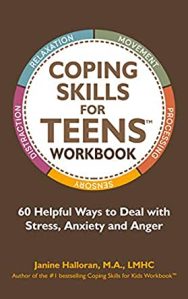
Book: Coping Skills for Teens Workbook

Book Title:

Coping Skills for Teens Workbook – 60 Helpful Ways to Deal with Stress, Anxiety and Anger.

Author(s): Janine Halloran (Author), Amy Maranville (Editor), and Meg Garcia (Illustrator).

Year: 2020.

Edition: First (1st).

Publisher: Encourage Play, LLC.

Type(s): Paperback and Kindle.

Synopsis:

A teen version of the #1 Bestselling Coping Skills for Kids Workbook, this version is written specifically with a tween/teen audience (age 11+) in mind.

There are 60 coping strategies included in the book, and it is divided into Coping Styles to make searching for a coping skill easier.

This book also includes several pages to support teens as they work on their coping skills, including: Feelings Tracker Worksheet Identifying Triggers and Making a Plan Positive to Negative Thoughts Worksheet Journal Pages Wellness Worksheets, including a Self-Care PlanThere’s also a rich resource section full of apps, books, card decks, and other resources to help teens deal with stress, anxiety and anger.

On This Day … 06 October

People (Births)

  • 1915 – Carolyn Goodman, American psychologist and activist (d. 2007).
  • 1934 – Marshall Rosenberg, American psychologist and author (d. 2015).

Carolyn Goodman

Carolyn Elizabeth Goodman (née Drucker; 06 October 1915 to 17 August 2007) was an American clinical psychologist who became a prominent civil rights advocate after her son, Andrew Goodman and two other civil rights workers, James Chaney and Michael Schwerner, were murdered by the Ku Klux Klan in Neshoba County, Mississippi, in 1964.

Politically active until age 90, Goodman came to wide public attention again in 2005. Traveling to Philadelphia, Mississippi, she testified at the murder trial of Edgar Ray Killen, a former Klan leader recently indicted in the case. On 21 June 2005, the 41st anniversary of the killings, a jury acquitted Killen of murder but found him guilty of manslaughter in the deaths of Goodman, Chaney, and Schwerner.

Marshall Rosenberg

Marshall Bertram Rosenberg (06 October 1934 to 07 February 2015) was an American psychologist, mediator, author and teacher.

Starting in the early 1960s he developed Nonviolent Communication, a process for supporting partnership and resolving conflict within people, in relationships, and in society.

He worked worldwide as a peacemaker and in 1984 founded the Center for Nonviolent Communication, an international non-profit organisation for which he served as Director of Educational Services.

Gamification & Mobile Mental Health Interventions

Research Paper Title

Gamification as an approach to improve resilience and reduce attrition in mobile mental health interventions: A randomized controlled trial.

Background

40% of all general-practitioner appointments are related to mental illness, although less than 35% of individuals have access to therapy and psychological care, indicating a pressing need for accessible and affordable therapy tools.

The ubiquity of smartphones offers a delivery platform for such tools.

Previous research suggests that gamification-turning intervention content into a game format-could increase engagement with prevention and early-stage mobile interventions.

This study aimed to explore the effects of a gamified mobile mental health intervention on improvements in resilience, in comparison with active and inactive control conditions. Differences between conditions on changes in personal growth, anxiety and psychological wellbeing, as well as differences in attrition rates, were also assessed.

Methods

The eQuoo app was developed and published on all leading mobile platforms. The app educates users about psychological concepts including emotional bids, generalisation, and reciprocity through psychoeducation, storytelling, and gamification.

In total, 358 participants completed in a 5-week, 3-armed (eQuoo, “treatment as usual” cognitive behavioral therapy journal app, no-intervention waitlist) randomized controlled trial. Relevant scales were administered to all participants on days 1, 17, and 35.

Results

Repeated-measures ANOVA revealed statistically significant increases in resilience in the test group compared with both control groups over 5 weeks.

The app also significantly increased personal growth, positive relations with others, and anxiety.

With 90% adherence, eQuoo retained 21% more participants than the control or waitlist groups.

Conclusions

Intervention delivered via eQuoo significantly raised mental well-being and decreased self-reported anxiety while enhancing adherence in comparison with the control conditions.

Mobile apps using gamification can be a valuable and effective platform for well-being and mental health interventions and may enhance motivation and reduce attrition.

Future research should measure eQuoo’s effect on anxiety with a more sensitive tool and examine the impact of eQuoo on a clinical population.

Reference

Litvin, S., Saunders, R., Maier, M.A. & Luttke, S. (2020) Gamification as an approach to improve resilience and reduce attrition in mobile mental health interventions: A randomized controlled trial. PLoS One. 15(9), pp.e0237220. doi: 10.1371/journal.pone.0237220. eCollection 2020.

Do Psychiatric Conditions Shift Over Time?

Diagnoses for mental health conditions often morph into each other, suggesting that psychiatry’s reliance on specific diagnoses may be misguided.

A team led by Avshalom Caspi and Terrie Moffitt (2020) at Duke University, North Carolina, analysed data from the Dunedin Birth Cohort Study, which follows a nationally representative group of more
than 1,000 New Zealanders born in 1972 and 1973.

As the participants in the Dunedin Study have grown up, they have been assessed nine times to measure aspects of their health and behaviour, including their mental health. Caspi and Moffitt’s team found that by the age of 45, 86% of participants had met the criteria for at least one psychiatric diagnosis in one assessment. This did not mean that they had received a psychiatric diagnosis, but if they had seen a psychiatrist, they could have been given one.

A third of the cohort met the criteria for a psychiatric diagnosis before they reached the age of 15. Yet over time, people’s mental health usually shifted into a different category of psychiatric conditions.

This could suggest that an excessive focus on a current diagnosis is short-sighted and that therapy should not just address the presenting disorder, but must build fundamental skills for maintaining general mental health.

However, one must caution against ditching diagnostic categories as some disorders are linked to specific causes and respond better to certain treatments than others. It could do harm to ignore these distinctions, at least in some cases.

Reference

Caspi, A., Houts, R.M., Ambler, A., Danese, A., Elliott, M.L., Hariri, A., Harrington, H., Hogan, S., Poulton, R., Ramrakha, S., Rasmussen, L.J.H., Reuben, A., Richmond-Rakerd, L., Sugden, K., Wertz, J., Williams, B.S. & Moffitt, T.E. (2020) Longitudinal Assessment of Mental Health Disorders and Comorbidities Across 4 Decades Among Participants in the Dunedin Birth Cohort Study. JAMA Network Open. 3(4), pp.e203221. doi:10.1001/jamanetworkopen.2020.3221

Could a Robot Improve the Way We Treat OCD?

A robot that mimics obsessive compulsive disorder (OCD) could help us understand the condition (Lewis et al., 2019).

OCD involves obsessive worrying that compels people to carry out rituals like repeated handwashing, and generates anxiety if they cannot complete these compulsions.

Researchers recreated this in a robot they programmed to achieve three goals:

  • Eat;
  • Avoid bumping into things; and
  • Groom.

The robot eats by touching light patches on the floor, replenishing its energy. It grooms by going to, and bumping into, a solid post – a behaviour that causes damage and runs down its energy if performed excessively.

To recreate a compulsive drive, the robot’s target grooming level was set beyond what it could
achieve, prompting the robot to run out of energy 95% of the time.

Treatment for OCD often involves exposing someone to the things that trigger their obsessive thoughts and preventing them from responding.

In future, showing people with OCD how the robot might improve may help them accept such stressful
treatment (Lewis et al., 2019).

There is some concern that the robot’s quirks might reinforce the idea that the condition is all down to weird behaviours, instead of distressing, obsessive thoughts. We have been studying people for years, though, so maybe robots do have a role.

Reference

Lewis, M., Fineberg, N. & Canamero, L. (2019) A Robot Model of OC-Spectrum Disorders: Design Framework, Implementation, and First Experiments. Computational Psychiatry. 3, pp.40-75. https://doi.org/10.1162/cpsy_a_00025

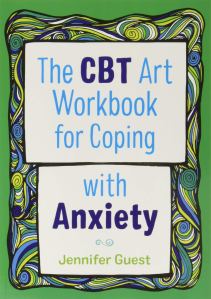
Book: The CBT Art Workbook for Coping with Anxiety

Book Title:

The CBT Art Workbook for Coping with Anxiety.

Author(s): Jennifer Guest.

Year: 2019.

Edition: First (1st).

Publisher: Jessica Kingsley Publishers.

Type(s): Paperback.

Synopsis:

Using the principles of CBT, these 150 information pages and worksheets help adults to understand and manage symptoms of anxiety.

The activities follow the framework of a typical CBT course: how it works, looking at the nature of the anxiety, linking thoughts, feelings, behaviour and physiology cycles, exploring different levels of thinking and beliefs, and identifying goals and future planning.

Suitable for adults in individual or group work, this is an excellent resource to use as a standalone resource or in conjunction with professional therapy to deal with anxiety.

Book: Essential Art Therapy Exercises

Book Title:

Essential Art Therapy Exercises: Effective Techniques to Manage Anxiety, Depression, and PTSD.

Author(s): Leah Guzman.

Year: 2020.

Edition: First (1st).

Publisher: Rockridge Press.

Type(s): Paperback and Kindle.

Synopsis:

Process difficult thoughts and feelings with art therapy

Essential Art Therapy Exercises shows you how creating art can help ease depression, anxiety, PTSD, and life’s other challenges. Art therapy activities like drawing, painting, and sculpting will help you better understand your state of mind in order to gain control over your emotions and improve your self-esteem.

From drawing a representation of your favourite song, to writing affirmations and taking photos to match, these therapeutic exercises will help you overcome the mindsets that are holding you back and lead you toward inner peace. Some take only five minutes, others up to an hour, but all of them explore a range of artistic mediums, so you can choose exactly what works for you.

Essential Art Therapy Exercises offers:

  • The art of getting better – These sophisticated exercises are a springboard for insight, self-expression, mindfulness, acceptance, and self-compassion.
  • Insights and questions – Every activity describes its benefits and offers thoughtful prompts to help you get the most out of each experience.
  • No experience required – You do not need to be an artist to use art therapy. It is about the experience of creating-without worry or judgement.

Book: The CBT Art Workbook for Coping with Depression

Book Title:

The CBT Art Workbook for Coping with Depression.

Author(s): Jennifer Guest.

Year: 2020.

Edition: First (1st).

Publisher: Jessica Kingsley Publishers.

Type(s): Paperback.

Synopsis:

Using the principles of CBT, these illustrated worksheets help clients to understand and manage their symptoms of depression.

The activities follow the framework of a typical CBT course: how it works, looking at the nature of depression, linking thoughts, feelings, behaviour and physiology cycles, exploring different levels of thinking and beliefs, and identifying goals and future planning. It presents these theories in an accessible way so that clients are familiar with the foundations of CBT they will be using in the worksheets. They can complete them by writing or drawing, alongside the opportunity to colour in parts of the pages as they consider ideas.

Suitable for adults in individual or group work, this is an excellent resource to use as a standalone resource or in conjunction with professional therapy to deal with depression.

Book: The Art Activity Book for Psychapeutic Work

Book Title:

The Art Activity Book for Psychapeutic Work: 100 Illustrated CBT and Psychodynamic Handouts for Creative Therapeutic Work.

Author(s): Jennifer Guest.

Year: 2017.

Edition: First (1st), Illustrated Edition.

Publisher: Jessica Kingsley Publishers.

Type(s): Paperback.

Synopsis:

Help clients to raise self-esteem, cope with change and adversity and manage complex emotions with these brand new 100 ready-to-use illustrated worksheets and activities.

Drawing on psychotherapeutic approaches including cognitive behavioural therapy (CBT), these worksheets are ideal for use in therapeutic work, for starting conversations and addressing problems that clients face. Each worksheet is designed to encourage clients to express their thoughts and emotions creatively in a relaxed way. The book also includes activities that centre on visual diary keeping, to help clients gain perspective on their unique issues and learn to solve their problems in a positive, healthy way.

Suitable for adults and young people, in individual or group work, this is an excellent resource for those who work in therapy, counselling and social work.