Posts

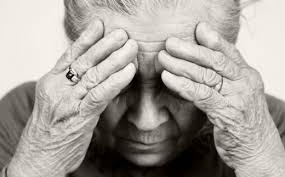
International Day of Older Persons

Introduction

The International Day of Older Persons is observed on 01 October each year.

On 14 December 1990 the United Nations General Assembly voted to establish 01 October as the International Day of Older Persons as recorded in Resolution 45/106.

The holiday was observed for the first time on 01 October 1991.

Purpose

The holiday is celebrated by raising awareness about issues affecting the elderly, such as senescence and elder abuse.

It is also a day to appreciate the contributions that older people make to society.

Similarities to Other Days

This holiday is similar to National Grandparents Day in the United States and Canada as well as Double Ninth Festival in China and Respect for the Aged Day in Japan.

The observance is a focus of ageing organisations and the United Nations Programme on Ageing.

Annual Themes

  • 1998 & 2000: Towards A Society for All Ages.
  • 2004: Older persons in an intergenerational society.
  • 2005: Ageing in the new millennium.
  • 2006: Improving the Quality of Life for Older Persons: Advancing UN Global Strategies.
  • 2007: Addressing the Challenges and Opportunities of Ageing.
  • 2008: Rights of Older Persons.
  • 2009: Celebrating the 10th Anniversary of the International Year of Older Persons: Towards a Society for All Ages.
  • 2010: Older persons and the achievement of the MDGs.
  • 2011: The Growing Opportunities & Challenges of Global Ageing.
  • 2012: Longevity: Shaping the Future.
  • 2013: The future we want: what older persons are saying.
  • 2014: Leaving No One Behind: Promoting a Society for All.
  • 2015: Sustainability and Age Inclusiveness in the Urban Environment.
  • 2016: Take A Stand Against Ageism.
  • 2017: Stepping into the Future: Tapping the Talents, Contributions and Participation of Older Persons in Society.
  • 2018: Celebrating Older Human Rights champions.
  • 2019: The Journey to Age Equality.
  • 2020: Pandemics: Do They Change How We Address Age and Ageing?

How Do People Celebrate International Day of Older Persons?

The celebration of International Day of Older Persons is done to create awareness and empathy regarding the well being of the elderly.

People usually celebrate the day by spending time with their grandparents, visiting old age homes and N.G.O’s and cooking or baking them. Some kids also give greeting cards to their elderly on this day.

Major Depressive Disorder: Childhood Trauma

Research Paper Title

Major depressive disorder with childhood trauma: Clinical characteristics, biological mechanism, and therapeutic implications.

Background

Major depressive disorder (MDD) is a main type of mood disorder, characterised by significant and lasting depressed mood.

Until now, the pathogenesis of MDD is not clear, but it is certain that biological, psychological, and social factors are involved.

Childhood trauma is considered to be an important factor in the development of this disease.

Previous studies have found that nearly half of the patients with MDD have experienced childhood trauma, and different types of childhood trauma, gender, and age show different effects on this disease.

In addition, the clinical characteristics of MDD patients with childhood trauma are also different, which often have more severe depressive symptoms, higher risk of suicide, and more severe cognitive impairment.

The response to antidepressants is also worse.

In terms of biological mechanisms and marker characteristics, the serotonin transporter gene and the FKBP prolyl isomerase 5 have been shown to play an important role in MDD and childhood trauma.

Moreover, some brain imaging and biomarkers showed specific features, such as changes in gray matter in the dorsal lateral prefrontal cortex, and abnormal changes in hypothalamic-pituitary-adrenal axis function.

Reference

Guo, W., Liu, J. & Li, L. (2020) Major depressive disorder with childhood trauma:Clinical characteristics, biological mechanism, and therapeutic implications. Zhong nan da xue xue bao. Journal of Central South University. 45(4), pp.462-468. doi: 10.11817/j.issn.1672-7347.2020.190699.

Book: Your Anxiety Beast and You

Book Title:

Your Anxiety Beast and You – A Compassionate Guide to Living in an Increasingly Anxious World.

Author(s): Eric Goodman, PhD.

Year: 2020.

Edition: First (1st), Illustrated Edition.

Publisher: Exisle Publishing.

Type(s): Paperback and Kindle.

Synopsis:

Just like The Beast in the fairy tale Beauty and the Beast, anxiety is an emotion that society initially misjudges as the villain. Your Anxiety Beast and You is a kinder, more compassionate approach for people suffering from anxiety. Rather than living with an enemy inside your mind, you are encouraged to see anxiety for what it really is – an inner hero. It is always trying to protect you from threats, however, it is completely confused about what are true threats in the modern world.

Learn how to cope with your anxiety and train it to be a better inner-companion through integrating therapeutic methods from compassion-focused therapy, Cognitive Behavioural Therapy (CBT) and Acceptance and Commitment Therapy (ACT). Gain an understanding of why society stigmatises anxiety and gain a better understanding of your own anxiety beast with humour and compassion. Your Anxiety Beast and You takes you through step-by-step strategies to cope with the howling of the beast in your mind, the physical effects of anxiety on your body, and then focuses on ways to come up with ‘teachable moments’ for your anxiety to learn that what you fear is not actually a threat.

With over 25 years of experience helping people with anxiety disorders and OCD, Dr Goodman aims to help you make peace with the reality of your anxiety. And then to help you re-focus on making your anxiety a better companion.

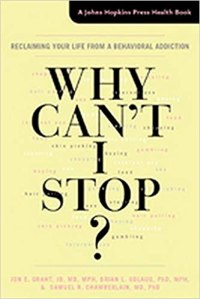
Book: Why Can’t I Stop?

Book Title:

Why Can’t I Stop?: Reclaiming Your Life from a Behavioral Addiction (A Johns Hopkins Press Health Book).

Author(s): Jon E. Grant, Brian L. Odlaug, and Samuel R. Chamberlain.

Year: 2016.

Edition: First (1st).

Publisher: John Hopkins University Press.

Type(s): Hardcover, Paperback, and Kindle.

Synopsis:

At some point in our lives, we all engage in behaviours that are risky, irrational, or unwise. We might find it exciting and temporarily rewarding to gamble on the lottery or impulsively buy an expensive gadget. But just as substances like alcohol and narcotics have the potential to become addictive, so do certain behaviours. A person addicted to gambling, shopping, the internet, food, or picking at their skin may suffer shame in the shadows while their behaviour consumes time and energy and disrupts their life. Some people with behavioural addictions lose their family, job, savings, and home. With a physical basis in the brain, behavioural addictions are serious illnesses – but simply willing yourself to stop is usually not enough.

Why Can’t I Stop? is for anyone who has a behavioural addiction, as well as their supportive families and friends. Examining seven of the most common and serious addictions – gambling, sex, stealing, internet use, shopping and buying, hair pulling and skin picking, and food – the authors bring together cutting-edge research to describe behavioural addiction, its causes, and how it can be diagnosed and treated.

Featuring patient stories of behavioural addiction and recovery, as well as information about treatment centres, this compassionate guide will help readers better understand the complicated issues surrounding these addictions and teach family members how to help the addicted person while helping themselves.

Book: Understanding Children and Young People’s Mental Health

Book Title:

Understanding Children and Young People’s Mental Health.

Author(s): Anne Claveirole and Martin Gaughan (Editors).

Year: 2010.

Edition: First (1st), Illustrated Edition.

Publisher: Wiley-Blackwell.

Type(s): Paperback and Kindle.

Synopsis:

Understanding Children and Young People’s Mental Health has been designed to help the student and newly qualified health care professional to familiarise themselves with the key theoretical frameworks underpinning the field of children and young people’s mental health.

It explores the mental health challenges that children and young people face, and how we as adults can work alongside them to help them face and overcome such challenges.

This book provides comprehensive information on the theory and practice of particular mental health difficulties which children and young people may have to face, including self-harm, depression, suicide, child abuse, eating disorders, substance misuse, and early onset psychosis.

Understanding Children and Young People’s Mental Health is essential reading for pre-registration students in nursing and healthcare on child and mental health branches, and for newly qualified nursing, health and social care practitioners who work with children and young people.

  • Brings together specialist practitioners and academics in the field
  • Incorporates the latest guidelines and policies.
  • Practical and accessible in style with learning outcomes, activities, examples and recommended reading in each chapter.

Book: Training Trances

Book Title:

Training Trances – Multi-Level Communication in Therapy and Training.

Author(s): John Overdurf and Julie Silverthorn.

Year: 1995.

Edition: Third (3rd).

Publisher: Metamorphous Press.

Type(s): Paperback.

Synopsis:

Training Trances is about how to therapeutically communicate with the unconscious mind. The authors present their own unique integration of Ericksonian techniques, traditional models of hypnotherapy, and recent research in related areas. Numerous new patterns modeled from the work of Milton H. Erickson, M.D. are clearly explained and demonstrated. The use of trance in training design, to unconsciously install the skills being taught to the participants, is also covered.

The book developed from transcripts of a four day workshop, and the design of the book parallels the design chosen for the training itself. Individual exercises or those done in groups of two or three are offered so that the reader may practice the techniques and learn the skills.

There are numerous “live” demonstrations, inductions, and double inductions which create for the reader a real “feel” of how hypnosis is done and which are also a rich source for linguistic analysis for the advanced reader.

Written with insight and humor, this book’s most unique twist is its use of multi-level communication and hypnotic language to create a “training trance” for the readers as they journey through the text. Some hypnotic references are obvious and explicit – those which are not obvious will create enjoyable “ah-ha!” experiences for the reader as they are discovered.

Book: Together Apart – The Psychology of COVID-19

Book Title:

Together Apart – The Psychology of COVID-19.

Author(s): Jolanda Jetten, Stephen D. Reicher, S. Alexander Haslam, and Tegan Cruwys.

Year: 2020.

Edition: First (1st).

Publisher: SAGE Publications Ltd.

Type(s): Paperback and Kindle.

Synopsis:

Written by leading social psychologists with expertise in leadership, health and emergency behaviour – who have also played an important role in advising governments on COVID-19 – this book provides a broad but integrated analysis of the psychology of COVID-19

It explores the response to COVID-19 through the lens of social identity theory, drawing from insights provided by four decades of research. Starting from the premise that an effective response to the pandemic depends upon people coming together and supporting each other as members of a common community, the book helps us to understand emerging processes related to social (dis)connectedness, collective behaviour and the societal effects of COVID-19. In this it shows how psychological theory can help us better understand, and respond to, the events shaping the world in 2020.

Considering key topics such as:

  • Leadership.
  • Communication.
  • Risk perception.
  • Social isolation.
  • Mental health.
  • Inequality.
  • Misinformation.
  • Prejudice and racism.
  • Behaviour change.
  • Social Disorder.

This book offers the foundation on which future analysis, intervention and policy can be built.

What is Capgras Delusion?

Introduction

Capgras delusion, also known as Capgras syndrome. is a psychiatric disorder in which a person holds a delusion that a friend, spouse, parent, or other close family member (or pet) has been replaced by an identical impostor.

It is named after Joseph Capgras (1873-1950), a French psychiatrist.

The Capgras delusion is classified as a delusional misidentification syndrome, a class of delusional beliefs that involves the misidentification of people, places, or objects. It can occur in acute, transient, or chronic forms. Cases in which patients hold the belief that time has been “warped” or “substituted” have also been reported.

The delusion most commonly occurs in individuals diagnosed with:

  • Paranoid schizophrenia, but has also been seen in;
  • Brain injury;
  • Dementia with Lewy bodies; and
  • Other dementia.

It presents often in individuals with a neurodegenerative disease, particularly at an older age. It has also been reported as occurring in association with diabetes, hypothyroidism, and migraine attacks.

In one isolated case, the Capgras delusion was temporarily induced in a healthy subject by the drug ketamine.

It occurs more frequently in females, with a female to male ratio of approximately 3 to 2.

Brief History

Capgras syndrome is named after Joseph Capgras, a French psychiatrist who first described the disorder in 1923 in his paper co-authored by Jean Reboul-Lachaux, on the case of a French woman, “Madame Macabre,” who complained that corresponding “doubles” had taken the places of her husband and other people she knew. Capgras and Reboul-Lachaux first called the syndrome “l’illusion des sosies”, which can be translated literally as “the illusion of look-alikes.”

The syndrome was initially considered a purely psychiatric disorder, the delusion of a double seen as symptomatic of schizophrenia, and purely a female disorder (though this is now known not to be the case) often noted as a symptom of hysteria. Most of the proposed explanations initially following that of Capgras and Reboul-Lachaux were psychoanalytical in nature. It was not until the 1980s that attention was turned to the usually co-existing organic brain lesions originally thought to be essentially unrelated or accidental. Today, the Capgras syndrome is understood as a neurological disorder, in which the delusion primarily results from organic brain lesions or degeneration.

Signs and Symptoms

The following two case reports are examples of the Capgras delusion in a psychiatric setting:

Mrs. D, a 74-year-old married housewife, recently discharged from a local hospital after her first psychiatric admission, presented to our facility for a second opinion. At the time of her admission earlier in the year, she had received the diagnosis of atypical psychosis because of her belief that her husband had been replaced by another unrelated man. She refused to sleep with the impostor, locked her bedroom and door at night, asked her son for a gun, and finally fought with the police when attempts were made to hospitalise her. At times she believed her husband was her long deceased father. She easily recognised other family members and would misidentify her husband only. )Passer and Warnock, 1991).

Diane was a 28-year-old single woman who was seen for an evaluation at a day hospital program in preparation for discharge from a psychiatric hospital. This was her third psychiatric admission in the past five years. Always shy and reclusive, Diane first became psychotic at age 23. Following an examination by her physician, she began to worry that the doctor had damaged her internally and that she might never be able to become pregnant. The patient’s condition improved with neuroleptic treatment but deteriorated after discharge because she refused medication. When she was admitted eight months later, she presented with delusions that a man was making exact copies of people – “screens” – and that there were two screens of her, one evil and one good. The diagnosis was schizophrenia with Capgras delusion. She was disheveled and had a bald spot on her scalp from self-mutilation. (Sinkman, 2008).

The following case is an instance of the Capgras delusion resulting from a neurodegenerative disease:

Fred, a 59-year-old man with a high school qualification, was referred for neurological and neuropsychological evaluation because of cognitive and behavioural disturbances. He had worked as the head of a small unit devoted to energy research until a few months before. His past medical and psychiatric history was uneventful. […] Fred’s wife reported that about 15 months from onset he began to see her as a “double” (her words). The first episode occurred one day when, after coming home, Fred asked her where Wilma was. On her surprised answer that she was right there, he firmly denied that she was his wife Wilma, whom he “knew very well as his sons’ mother”, and went on plainly commenting that Wilma had probably gone out and would come back later. […] Fred presented progressive cognitive deterioration characterised both by severity and fast decline. Apart from [Capgras disorder], his neuropsychological presentation was hallmarked by language disturbances suggestive of frontal-executive dysfunction. His cognitive impairment ended up in a severe, all-encompassing frontal syndrome. (Lucchelli and Spinnler, 2007).

Causes

It is generally agreed[14] that the Capgras delusion has a complex and organic basis (caused by structural damage to organs) and can be better understood by examining neuroanatomical damage associated with the syndrome.

In one of the first papers to consider the cerebral basis of the Capgras delusion, Alexander, Stuss and Benson pointed out in 1979 that the disorder might be related to a combination of frontal lobe damage causing problems with familiarity and right hemisphere damage causing problems with visual recognition.

Further clues to the possible causes of the Capgras delusion were suggested by the study of brain-injured patients who had developed prosopagnosia. In this condition, patients are unable to recognize faces consciously, despite being able to recognize other types of visual objects. However, a 1984 study by Bauer showed that even though conscious face recognition was impaired, patients with the condition showed autonomic arousal (measured by a galvanic skin response measure) to familiar faces, suggesting that there are two pathways to face recognition – one conscious and one unconscious.

In a 1990 paper published in the British Journal of Psychiatry, psychologists Hadyn Ellis and Andy Young hypothesised that patients with Capgras delusion may have a “mirror image” or double dissociation of prosopagnosia, in that their conscious ability to recognise faces was intact, but they might have damage to the system that produces the automatic emotional arousal to familiar faces. This might lead to the experience of recognising someone while feeling something was not “quite right” about them. In 1997, Ellis and his colleagues published a study of five patients with Capgras delusion (all diagnosed with schizophrenia) and confirmed that although they could consciously recognise the faces, they did not show the normal automatic emotional arousal response. The same low level of autonomic response was shown in the presence of strangers. Young (2008) has theorised that this means that patients with the disease experience a “loss” of familiarity, not a “lack” of it. Further evidence for this explanation comes from other studies measuring galvanic skin responses (GSR) to faces. A patient with Capgras delusion showed reduced GSRs to faces in spite of normal face recognition. This theory for the causes of Capgras delusion was summarised in Trends in Cognitive Sciences in 2001.

William Hirstein and Vilayanur S. Ramachandran reported similar findings in a paper published on a single case of a patient with Capgras delusion after brain injury. Ramachandran portrayed this case in his book Phantoms in the Brain and gave a talk about it at TED 2007. Since the patient was capable of feeling emotions and recognising faces but could not feel emotions when recognising familiar faces, Ramachandran hypothesises that the origin of Capgras syndrome is a disconnection between the temporal cortex, where faces are usually recognized (see temporal lobe), and the limbic system, involved in emotions. More specifically, he emphasises the disconnection between the amygdala and the inferotemporal cortex.

In 2010, Hirstein revised this theory to explain why a person with Capgras syndrome would have the particular reaction of not recognising a familiar person.

Furthermore, Ramachandran suggests a relationship between the Capgras syndrome and a more general difficulty in linking successive episodic memories because of the crucial role emotion plays in creating memories. Since the patient could not put together memories and feelings, he believed objects in a photograph were new on every viewing, even though they normally should have evoked feelings (e.g., a person close to him, a familiar object, or even himself). Others like Merrin and Silberfarb (1976) have also proposed links between the Capgras syndrome and deficits in aspects of memory. They suggest that an important and familiar person (the usual subject of the delusion) has many layers of visual, auditory, tactile, and experiential memories associated with them, so the Capgras delusion can be understood as a failure of object constancy at a high perceptual level.

Most likely, more than just an impairment of the automatic emotional arousal response is necessary to form the Capgras delusion, as the same pattern has been reported in patients showing no signs of delusions. Ellis suggested that a second factor explains why this unusual experience is transformed into a delusional belief; this second factor is thought to be an impairment in reasoning, although no definitive impairment has been found to explain all cases. Many have argued for the inclusion of the role of patient phenomenology in explanatory models of the Capgras syndrome in order to better understand the mechanisms that enable the creation and maintenance of delusional beliefs.

Capgras syndrome has also been linked to reduplicative paramnesia, another delusional misidentification syndrome in which a person believes a location has been duplicated or relocated. Since these two syndromes are highly associated, it has been proposed that they affect similar areas of the brain and therefore have similar neurological implications. Reduplicative paramnesia is understood to affect the frontal lobe, and thus it is believed that Capgras syndrome is also associated with the frontal lobe. Even if the damage is not directly to the frontal lobe, an interruption of signals between other lobes and the frontal lobe could result in Capgras syndrome.

Diagnosis

Because it is a rare and poorly understood condition, there is no definitive way to diagnose the Capgras delusion. Diagnosis is primarily made on a psychiatric evaluation of the patient, who is most likely brought to a psychiatrist’s attention by a family member or friend believed to be an imposter by the person under the delusion.

Treatment

Treatment has not been well studied and so there is no evidence-based approach. Treatment is generally therapy, often with support of antipsychotic medication.

Cultural References

In the Memoirs Found in a Bathtub novel by the Polish writer Stanisław Lem, first published in 1961 the narrator inhabits a paranoid dystopia where nothing is as it seems, chaos seems to rule all events, and everyone is deeply suspicious of everyone. In the end, it is revealed that the world is filled by phantom body doubles.

A central character in Richard Powers’s 2006 novel The Echo Maker suffers from Capgras Delusion subsequent to traumatic brain injury.

The protagonist in the movie Synecdoche, New York, who is named Caden Cotard (played by Philip Seymour Hoffman), goes to see his ex-wife at her apartment, and, as he enters the building, one of the resident call boxes is taped with the name “Capgras”. He is then misidentified as his ex-wife’s cleaning lady, Ellen Bascomb, as he tries to enter the apartment, and, later in the film, he actually comes to play the role of Ellen Bascomb in his own play. Throughout the film, Cotard enlists actor-doubles to play actors, and, as the film progresses, the actor-doubles are in turn then given actors-doubles.

Conditional Cash Transfers & Mental Health

Research Paper Title

The worse the better? Quantile treatment effects of a conditional cash transfer programme on mental health.

Background

Poor mental health is a pressing global health problem, with high prevalence among poor populations from low-income countries.

Existing studies of conditional cash transfer (CCT) effects on mental health have found positive effects.

However, there is a gap in the literature on population-wide effects of cash transfers on mental health and if and how these vary by the severity of mental illness.

Methods

The researchers use the Malawian Longitudinal Study of Family and Health containing 790 adult participants in the Malawi Incentive Programme, a year-long randomized controlled trial.

They estimate average and distributional quantile treatment effects and we examine how these effects vary by gender, HIV status and usage of the cash transfer.

Results

They find that the cash transfer improves mental health on average by 0.1 of a standard deviation.

The effect varies strongly along the mental health distribution, with a positive effect for individuals with worst mental health of about four times the size of the average effect.

These improvements in mental health are associated with increases in consumption expenditures and expenditures related to economic productivity.

Conclusions

Their results show that CCTs can improve adult mental health for the poor living in low-income countries, particularly those with the worst mental health.

Reference

Ohrnberger, J., Fichera, E., Sutton, M. & Anselmi, L. (2020) The worse the better? Quantile treatment effects of a conditional cash transfer programme on mental health. Health Policy and Planning. doi: 10.1093/heapol/czaa079. Online ahead of print.

Book: The ACT Workbook for OCD

Book Title:

The ACT Workbook for OCD: Mindfulness, Acceptance, and Exposure Skills to Live Well with Obsessive-Compulsive Disorder.

Author(s): Marisa T. Mazza.

Year: 2020.

Edition: First (1st), Workbook Edition.

Publisher: New Harbinger.

Type(s): Paperback and Kindle.

Synopsis:

Stand up to your OCD! The ACT Workbook for OCD combines evidence-based acceptance and commitment therapy (ACT) with exposure and response prevention (ERP) for the most up-to-date, effective treatment for obsessive-compulsive disorder (OCD).

If you are one of the millions of people who suffer from OCD, you may experience obsessive, intrusive, or even disturbing thoughts. You may engage in compulsive or ritualistic behaviours, such as checking to make sure you have locked the front door, or endlessly washing your hands for fear of germs or contamination. And you may be tempted to give up if treatment just does not work for you.

Whether you have just received a diagnosis, or have suffered for years, this workbook can help. Using the powerful and proven-effective treatments in this guide, you will learn what type of OCD you suffer from (such as harm OCD), how to identify the underlying mechanisms of your OCD, move through triggering incidents while staying present and connected to your values, be more aware and flexible, tolerate uncertainty, and commit to behaviours that ultimately allow you to lead a full, rewarding life.

Once you realise what really matters to you, you will find the motivation needed to start on the path to psychological well-being.

If you are ready to be courageous, take a risk, and stand up to your OCD symptoms, this workbook can help guide you, every step of the way.