Posts

Book: The Stress Survival Guide for Teens

Book Title:

The Stress Survival Guide for Teens: CBT Skills to Worry Less, Develop Grit, and Live Your Best Life (The Instant Help Solutions Series).

Author(s): Jeffrey Bernstein, PhD.

Year: 2019.

Edition: First (1st), Illustrated Edition.

Publisher: Instant Help.

Type(s): Paperback and Kindle.

Synopsis:

Is stress getting the best of you? Do you ever feel overwhelmed, like your life is zooming by? This practical, proven-effective, and easy-to-use survival guide has your back!

School pressure, BFF drama, body changes, social media, dating – is it any wonder you are feeling stressed? You are not alone. Many teens today find themselves worried, anxious, and stressed out. But there are ways you can take control of your stress before it interferes with your life. This go-to “survival guide” will show you how to deal with stress so you can get back to the things that make you happy.

With this fun and easy guide, you will learn how cognitive behavioral therapy (CBT) can help you challenge negative thoughts and replace them with more helpful, flexible ways of seeing life’s challenges. You will also discover how important it is to slow down and notice the things that are really going well in your life! Finally, you will learn to figure out what is really important to you, and how you can use your values to build resilience against stress and future setbacks.

Life is full of stress, but that does not mean you have to be. With this book, you will learn to quiet your negative inner voice and focus on your strengths, so you can conquer any challenge you might face, achieve your goals, and live your very best life.

Book: Social Cognition in Psychosis

Book Title:

Social Cognition in Psychosis.

Author(s): Kathryn Eve Lewandowski and Ahmed A. Moustafa (Editors).

Year: 2019.

Edition: First (1st).

Publisher: Academic Press.

Type(s): Paperback and Kindle.

Synopsis:

Social Cognition in Psychosis combines current research on phenotypes, neurobiology, and existing evidence on the assessment and treatment of various forms of psychoses.

The book presents various treatment options, including assessment approaches, tools and training methods that aid in the rehabilitation of patients with psychotic disorders.

Social cognition is a set of psychological processes related to understanding, recognising, processing and appropriately using social stimuli in one’s environment.

Individuals with psychotic disorders consistently exhibit impairments in social cognition. As a result, social cognition has been an important target for intervention, with recent efforts trying to enhance early recovery among individuals with psychotic disorders.

Book: Social Anxiety

Book Title:

Social Anxiety: Seek Your Inner Peace.

Author(s): Alex Munoz.

Year: 2020.

Edition: First (1st).

Publisher: Independently Published.

Type(s): Paperback and Kindle.

Synopsis:

Guide your mind towards social freedom and find solutions to your shyness!

Social Anxiety is becoming more and more common in modern day. You are not alone. You are important. Do you want to find the confidence you’ve always been seeking? Let’s get rid of the social anxiousness once and for all!

This book has the tools and techniques to find your inner peace by being your full authentic self. With an abundance of strategies, you will be able to go about your day by being unapologetically yourself. It is time to get rid of all the barriers that are holding you back. Being a transparent human being will bring you the joy you have been seeking.

Start a new chapter in your life by indulging in the knowledge that will improve your personality to become the best version of yourself.

Book: SNAP Matters

Book Title:

Snap Matters – How Food Stamps Affect Health And Well-Being (Studies in Social Inequality).

Author(s): Judith Bartfield, Craig Gundersen, Timothy Smeeding, and James P. Ziliak (Editors).

Year: 2015.

Edition: First (1st).

Publisher: Stanford University Press.

Type(s): Hardcover, Paperback, and Kindle.

Synopsis:

In 1963, President Kennedy proposed making permanent a small pilot project called the Food Stamp Programme (FSP). By 2013, the programme’s fiftieth year, more than one in seven Americans received benefits at a cost of nearly $80 billion. Renamed the Supplemental Nutrition Assistance Programme (SNAP) in 2008, it currently faces sharp political pressure, but the social science research necessary to guide policy is still nascent.

In SNAP Matters, Judith Bartfeld, Craig Gundersen, Timothy M. Smeeding, and James P. Ziliak bring together top scholars to begin asking and answering the questions that matter. For example, what are the antipoverty effects of SNAP? Does SNAP cause obesity? Or does it improve nutrition and health more broadly? To what extent does SNAP work in tandem with other programmes, such as school breakfast and lunch? Overall, the volume concludes that SNAP is highly responsive to macroeconomic pressures and is one of the most effective antipoverty programmes in the safety net, but the volume also encourages policymakers, students, and researchers to continue examining this major pillar of social assistance in America.

What is the Evidence for the Effectiveness of Psychological Interventions for Adults with Anti-Social Personality Disorder?

Research Paper Title

Psychological interventions for antisocial personality disorder.

Background

Antisocial personality disorder (AsPD) is associated with poor mental health, criminality, substance use and relationship difficulties. This review updates Gibbon 2010 (previous version of the review).

Therefore the purpose of this review was to evaluate the potential benefits and adverse effects of psychological interventions for adults with AsPD.

Methods

The researchers searched CENTRAL, MEDLINE, Embase, 13 other databases and two trials registers up to 5 September 2019. They also searched reference lists and contacted study authors to identify studies.

Selection criteria concisted of randomised controlled trials of adults, where participants with an AsPD or dissocial personality disorder diagnosis comprised at least 75% of the sample randomly allocated to receive a psychological intervention, treatment-as-usual (TAU), waiting list or no treatment. The primary outcomes were aggression, reconviction, global state/functioning, social functioning and adverse events.

Data collection and analysis consisted of standard methodological procedures expected by Cochrane.

Results

This review includes 19 studies (eight new to this update), comparing a psychological intervention against TAU (also called ‘standard Maintenance'(SM) in some studies).

Eight of the 18 psychological interventions reported data on our primary outcomes. Four studies focussed exclusively on participants with AsPD, and 15 on subgroups of participants with AsPD. Data were available from only 10 studies involving 605 participants.

Eight studies were conducted in the UK and North America, and one each in Iran, Denmark and the Netherlands. Study duration ranged from 4 to 156 weeks (median = 26 weeks).

Most participants (75%) were male; the mean age was 35.5 years. Eleven studies (58%) were funded by research councils. Risk of bias was high for 13% of criteria, unclear for 54% and low for 33%. Cognitive behaviour therapy (CBT) + TAU versus TAU One study (52 participants) found no evidence of a difference between CBT + TAU and TAU for physical aggression (odds ratio (OR) 0.92, 95% CI 0.28 to 3.07; low-certainty evidence) for outpatients at 12 months post-intervention.

One study (39 participants) found no evidence of a difference between CBT + TAU and TAU for social functioning (mean difference (MD) -1.60 points, 95% CI -5.21 to 2.01; very low-certainty evidence), measured by the Social Functioning Questionnaire (SFQ; range = 0-24), for outpatients at 12 months post-intervention. Impulsive lifestyle counselling (ILC) + TAU versus TAU One study (118 participants) found no evidence of a difference between ILC + TAU and TAU for trait aggression (assessed with Buss-Perry Aggression Questionnaire-Short Form) for outpatients at nine months (MD 0.07, CI -0.35 to 0.49; very low-certainty evidence).

One study (142 participants) found no evidence of a difference between ILC + TAU and TAU alone for the adverse event of death (OR 0.40, 95% CI 0.04 to 4.54; very low-certainty evidence) or incarceration (OR 0.70, 95% CI 0.27 to 1.86; very low-certainty evidence) for outpatients between three and nine months follow-up. Contingency management (CM) + SM versus SM One study (83 participants) found evidence that, compared to SM alone, CM + SM may improve social functioning measured by family/social scores on the Addiction Severity Index (ASI; range = 0 (no problems) to 1 (severe problems); MD -0.08, 95% CI -0.14 to -0.02; low-certainty evidence) for outpatients at six months. ‘Driving whilst intoxicated’ programme (DWI) + incarceration versus incarceration One study (52 participants) found no evidence of a difference between DWI + incarceration and incarceration alone on reconviction rates (hazard ratio 0.56, CI -0.19 to 1.31; very low-certainty evidence) for prisoner participants at 24 months.

Schema therapy (ST) versus TAU One study (30 participants in a secure psychiatric hospital, 87% had AsPD diagnosis) found no evidence of a difference between ST and TAU for the number of participants who were reconvicted (OR 2.81, 95% CI 0.11 to 74.56, P = 0.54) at three years. The same study found that ST may be more likely to improve social functioning (assessed by the mean number of days until patients gain unsupervised leave (MD -137.33, 95% CI -271.31 to -3.35) compared to TAU, and no evidence of a difference between the groups for overall adverse events, classified as the number of people experiencing a global negative outcome over a three-year period (OR 0.42, 95% CI 0.08 to 2.19).

The certainty of the evidence for all outcomes was very low. Social problem-solving (SPS) + psychoeducation (PE) versus TAU One study (17 participants) found no evidence of a difference between SPS + PE and TAU for participants’ level of social functioning (MD -1.60 points, 95% CI -5.43 to 2.23; very low-certainty evidence) assessed with the SFQ at six months post-intervention. Dialectical behaviour therapy versus TAU One study (skewed data, 14 participants) provided very low-certainty, narrative evidence that DBT may reduce the number of self-harm days for outpatients at two months post-intervention compared to TAU.

Psychosocial risk management (PSRM; ‘Resettle’) versus TAU One study (skewed data, 35 participants) found no evidence of a difference between PSRM and TAU for a number of officially recorded offences at one year after release from prison. It also found no evidence of difference between the PSRM and TAU for the adverse event of death during the study period (OR 0.89, 95% CI 0.05 to 14.83, P = 0.94, 72 participants (90% had AsPD), 1 study, very low-certainty evidence).

Conclusions

There is very limited evidence available on psychological interventions for adults with AsPD. Few interventions addressed the primary outcomes of this review and, of the eight that did, only three (CM + SM, ST and DBT) showed evidence that the intervention may be more effective than the control condition. No intervention reported compelling evidence of change in antisocial behaviour.

Overall, the certainty of the evidence was low or very low, meaning that we have little confidence in the effect estimates reported. The conclusions of this update have not changed from those of the original review, despite the addition of eight new studies. This highlights the ongoing need for further methodologically rigorous studies to yield further data to guide the development and application of psychological interventions for AsPD and may suggest that a new approach is required.

Reference

Gibbon, S., Khalifa, N.R., Cheung, N.H-Y., Vollm, B.A. & McCarthy, L. (2020) Psychological interventions for antisocial personality disorder. The Cochrane Database of Systematic Reviews. doi: 10.1002/14651858.CD007668.pub3.

Book: Sleep Medicine and Mental Health

Book Title:

Sleep Medicine and Mental Health – A Guide for Psychiatrists and Other Healthcare Professionals.

Author(s): Karim Sedky, Racha Nazir, and David Bennett (Editors).

Year: 2020.

Edition: First (1st).

Publisher: Springer.

Type(s): Hardcover and Kindle.

Synopsis:

Advances in sleep medicine research are improving our clinical work for individuals with sleep problems. The aim of this book is to educate psychiatrists and other mental health professionals about the importance of understanding sleep disorders, including their bidirectional relationship with psychiatric conditions.

This book consists of six major sections with seventeen chapters. It is led off by an introduction on the function of sleep, its neurophysiology, and types of sleep problems. Since insomnia represents a common and significant challenge for patients with psychiatric disorders, its clinical presentation and treatments are reviewed in the second section. Cognitive behavioural therapy for insomnia (CBT-I), mindfulness-based CBT, acceptance and commitment therapy (ACT), and the medication management of insomnia are reviewed.

A third section addresses sleep related breathing disorders. The pathology of sleep apnea, its treatments, and therapeutic modalities to address non-compliance with positive pressure ventilation are reviewed. Other sleep disorders such as hypersomnia, circadian rhythm disorders, movement disorders and parasomnias are discussed in the fourth section.

Since features of sleep disorders can vary by age, gender, and trauma history, a fifth section discusses the unique sleep problems associated with children, women, older adults, and veterans. The book concludes with a final section discussing how sleep disorders and psychiatric conditions overlap.

We hope this book highlights the importance of understanding and addressing comorbid sleep disorders among individuals with psychiatric conditions. We are confident that this book will be valuable in helping clinicians improve the management of sleep disorders in their clinical practice.

Book: Shyness – What it is, What to Do About it

1990 Edition cover

Book Title:

Shyness – What it is, What to Do About it.

Author(s): Philip G. Zambardo.

Year: 1977.

Edition: First (1st).

Publisher: London: Addison-Wesley Publishing Company.

Type(s): Hardcover.

Synopsis:

Here is a startling and sometimes disturbing book about a problem that touches the lives of all of us — shyness.

Based on five years of scientific research by Stanford University psychologist Philip G. Zimbardo, this book examines how and why people become shy.

You will read about the roles parents, teachers, spouses, and society play in generating shyness. And you 11 learn how the famous (Carol Burnett, Lawrence Welk, Melvin Belli, Barbara Walters, and others) and the not-so-famous cope with this common problem.

Dr. Zimbardo also provides successful techniques developed at his Stanford University Shyness Clinic for overcoming your own shyness and for helping othersdeal effectively with this often devastating problem.

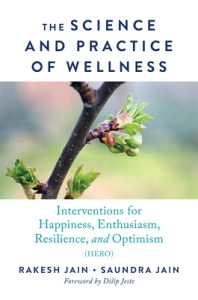
Book: The Science and Practice of Wellness

Book Title:

The Science and Practice of Wellness: Interventions for Happiness, Enthusiasm, Resilience, and Optimism (HERO).

Author(s): Rakesh Jain and Saundra Jain.

Year: 2020.

Edition: First (1st).

Publisher: W.W. Norton Company.

Type(s): Hardcover.

Synopsis:

Wellness is rapidly becoming an issue of great importance in clinical practice. Wellness-centric clinicians look to improve various traits known to be beneficial to patients – traits such as happiness, enthusiasm, resilience, and optimism (referred to as the HERO traits). All of these not only improve global mental wellness, but also offer resilience against stress, depression, and anxiety. Wellness-centric interventions augment both psychopharmacology and traditional psychotherapies, such as CBT.

Rakesh and Saundra Jain start with an in- depth review of the scientific literature and a practical introduction on applying wellness interventions in various clinical settings. Additionally, they offer advice on such beneficial practices as exercise, mindfulness, optimised nutrition, optimized sleep, enhanced socialisation, and positive psychology enhancement. A robust resource section offers access to wellness-centric scales and forms developed by the authors.

Book: Resilience – How We Find New Strength At Times of Stress

Book Title:

Resilience – How We Find New Strength At Times of Stress.

Author(s): Frederic Flach, MD.

Year: 2020.

Edition: Third (3rd).

Publisher: Ballantine Books.

Type(s): Hardcover, Paperback, and Kindle.

Synopsis:

Learn to bounce back from life’s inevitable crises by making friends with stress. There’s no escaping stress. It appears on our doorstep uninvited in the shattering forms of death and divorce, or even in the pleasant experiences of promotion, marriage, or a long-held wish fulfilled. Anything that upsets the delicate balance of our daily lives creates stress.

So why do some people come out of a crisis while others never seem quite themselves again? Now, Dr. Frederic Flach takes the anxiety out of hard times by showing you how to embrace you fears and become stronger because of them. Drawing on over thirty years of experience, Flach reveals the remarkable antidote to the destructive qualities of stress: RESILIENCE.

Book: Rainy Brain, Sunny Brain

Book Title:

Rainy Brain, Sunny Brain – How to Retrain Your Brain to Overcome Pessimism and Achieve a More Positive Outlook.

Author(s): Elaine Fox.

Year: 2012.

Edition: First (1st).

Publisher: Baisc Books.

Type(s): Hardcover, Paperback, and Audiobook, and Kindle.

Synopsis:

Are you optimistic or pessimistic? Glass half-full or half-empty? Do you look on the bright side or turn towards the dark? These are easy questions for most of us to answer, because our personality types are hard-wired into our brains. As pioneering psychologist and neuroscientist Elaine Fox has discovered, our outlook on life reflects our primal inclination to seek pleasure or avoid danger – inclinations that, in many people, are healthily balanced. But when our “fear brain” or “pleasure brain” is too strong, the results can be disastrous, as those of us suffering from debilitating shyness, addiction, depression, or anxiety know all too well.

Luckily, anyone suffering from these afflictions has reason to hope. Stunning breakthroughs in neuroscience show that our brains are more malleable than we ever imagined. In Rainy Brain, Sunny Brain, Fox describes a range of techniques – from traditional cognitive behavioural therapy to innovative cognitive-retraining exercises – that can actually alter our brains’ circuitry, strengthening specific thought processes by exercising the neural systems that control them. The implications are enormous: lifelong pessimists can train themselves to think positively and find happiness, while pleasure-seekers inclined toward risky or destructive behavior can take control of their lives.

Drawing on her own cutting-edge research, Fox shows how we can retrain our brains to brighten our lives and learn to flourish. With keen insights into how genes, life experiences and cognitive processes interleave together to make us who we are, Rainy Brain, SunnyBrain revolutionizes our basic concept of individuality. We learn that we can influence our own personalities, and that our lives are only as “sunny” or as “rainy” as we allow them to be.