Posts

Let There Be Light (1946)

Introduction

Let There Be Light (1946) – known to the US Army as PMF 5019 – is a documentary film directed by American filmmaker John Huston.

Intended to educate the public about posttraumatic stress disorder and its treatment among returning veterans, the film’s unscripted presentation of mental disability led to Let There Be Light being suppressed by the US government; it was not released until the 1980’s.

It is featured in the docuseries “Five Came Back“.

Outline (Background)

As the US Army was demobilising near the end of World War II it had the task of reintegrating returning military veterans back into peacetime society.

An obstacle veterans faced was the stigma surrounding “shell shock” or “psychoneurosis”, the old terms for posttraumatic stress disorder.

To convince the public, and especially employers, that veterans being treated for battle-induced mental instability were completely normal after psychiatric treatment, on 25 June 1945, the Army Signal Corps tasked Major John Huston with producing the documentary The Returning Psychoneurotics.

Huston visited multiple Army hospitals on the East and West Coasts before deciding upon Mason General Hospital on Brentwood, Long Island. The reasons being that Mason General was the biggest mental health facility on the East Coast, the hospital was located near the Army motion picture production center at Astoria Studio in Queens, New York, and the doctors were very open and receptive to the filming and any psychiatric questions he had.

The new title that Huston gave the film, Let There Be Light, was a reference to Genesis 1:3 of the King James Version of the Bible. This was an allusion to the documentary revealing truths that were previously concealed as too frightening or shameful for acknowledgement.

Outline (Documentary)

The film begins with an introduction, stating that 20% of wartime casualties are of a psychiatric nature.

Veterans are transported from a medical ship to Mason General Hospital to be treated for mental conditions brought about by war.

A group of seventy-five US service members – recent combat veterans suffering from various “nervous conditions” including psychoneurosis, battle neurosis, conversion disorder, amnesia, severe stammering, and anxiety states – arrive at the facility. They are brought into a room and told by an admissions officer to not be alarmed by the cameras, which will make a photographic record of their progress.

Next are scenes of interviews between a doctor and some of the patients about their problems and circumstances leading to that point. Afterwards, various treatment methods are employed to cure them.

Treatments depicted include narcosynthesis, hypnosis, group psychotherapy, music therapy, and work therapy. One soldier who had amnesia was hypnotised to remember the trauma of the Japanese bombings on Okinawa and his life before then. Another is given an intravenous injection of sodium amytal to induce a hypnotic state, curing him of his mental inability to walk.

The treatments are followed by classes (designed to reintegrate patients into civilian life) and group therapy sessions. Therapists make a point of reassuring the patients that there is nothing to be ashamed of for receiving treatment for their mental conditions, and that civilians subjected to the same stresses would develop the same conditions.

At this point the documentary shifts the tone to a sense of normalcy, with the soldiers performing regular activities and complaining about everyday problems.

The film ends with a number of the featured patients participating in a ceremony in which they are discharged, not just from the hospital, but from military service, and returned to civilian life.

Production & Filming Details

  • Narrator(s): Walter Huston.
  • Director(s): John Huston.
  • Producer(s): John Huston and US Army Pictorial Service.
  • Writer(s): John Huston and Charles Kaufman.
  • Music: Dimitri Tiomkin.
  • Cinematography: Stanley Cortez, John Doran, Lloyd Fromm, Joseph Jackman, and George Smith.
  • Editor(s): William H. Reynolds and Genre Fowler Jr.
  • Distributor(s): US Army.
  • Release Date: 1946.
  • Running Time: 58 minutes.
  • Country: US.
  • Language: English.

Suicidal Ideation: Linking the Role of Major Depressive Disorder & Noncombat Trauma

Research Paper Title

Factors Associated With Suicide Ideation in US Army Soldiers During Deployment in Afghanistan.

Background

Understanding suicide ideation (SI) during combat deployment can inform prevention and treatment during and after deployment.

Therefore the purpose of this study was to examine associations of sociodemographic characteristics, lifetime and past-year stressors, and mental disorders with 30-day SI among a representative sample of US Army soldiers deployed in Afghanistan.

Methods

In this survey study, soldiers deployed to Afghanistan completed self-administered questionnaires in July 2012. The sample was weighted to represent all 87 032 soldiers serving in Afghanistan. Prevalence of lifetime, past-year, and 30-day SI and mental disorders was determined. Logistic regression analyses examined risk factors associated with SI. Data analyses for this study were conducted between August 2018 and August 2019.

The main outcomes and measures were suicide ideation, lifetime and 12-month stressors, and mental disorders were assessed with questionnaires. Administrative records identified sociodemographic characteristics and suicide attempts.

Results

A total of 3,957 soldiers (3473 [weighted 87.5%] male; 2135 [weighted 52.6%] aged ≤29 years) completed self-administered questionnaires during their deployment in Afghanistan.

Lifetime, past-year, and 30-day SI prevalence estimates were 11.7%, 3.0%, and 1.9%, respectively. Among soldiers with SI, 44.2% had major depressive disorder (MDD) and 19.3% had posttraumatic stress disorder in the past 30-day period.

A series of analyses of the 23 grouped variables potentially associated with SI resulted in a final model of sex; race/ethnicity; lifetime noncombat trauma; past 12-month relationship problems, legal problems, and death or illness of a friend or family member; and MDD.

In this final multi-variable model, white race/ethnicity (odds ratio [OR], 3.1 [95% CI, 1.8-5.1]), lifetime noncombat trauma (OR, 2.1 [95% CI, 1.1-4.0]), and MDD (past 30 days: OR, 31.8 [95% CI, 15.0-67.7]; before past 30 days: OR, 4.9 [95% CI, 2.5-9.6]) were associated with SI.

Among the 85 soldiers with past 30-day SI, from survey administration through 12 months after returning from deployment, 6% (5 participants) had a documented suicide attempt vs 0.14% (6 participants) of the 3872 soldiers without SI.

Conclusions

This study suggests that major depressive disorder and noncombat trauma are important factors in identifying SI risk during combat deployment.

Reference

Ursano, R.J., Mash, H.B.H., Kessler, R.C., Naifeh, J.A., Fullerton, C.S., Aliaga, P.A., Stokes, C.M., Wynn, G.H., Ng, T.H.H., Dinh, H.M., Gonzalez, O.I., Zaslavsky, A.M., Sampson, N.A., Kao, T-C., Heeringa, S.G., Nock, M.K. & Stein, M.B. (2020) Factors Associated With Suicide Ideation in US Army Soldiers During Deployment in Afghanistan. JAMA Network Open. 3(1):e1919935. doi: 10.1001/jamanetworkopen.2019.19935.

Substance Use & Intervention Programmes: Remember to Address Social Issues Regardless of Deployment History

Research Paper Title

Problems With Social Acceptance and Social Victimization Predict Substance Use Among U.S. Reserve/Guard Soldiers.

Background

The effects of negative social interactions/experiences on substance use have largely been studied in civilian populations, but less is known about United States Army Reserve/National Guard (USAR/NG) soldiers-a high-risk group.

Methods

The researchers examined the associations between problems with social acceptance, social victimisation, and substance use among USAR/NG soldiers, and examined potential differences by deployment history.

The sample consisted of soldiers who completed baseline and 1-year follow-up assessments (N = 445) of Operation: SAFETY, an ongoing study of USAR/NG soldiers.

They examined the effects of baseline problems with social acceptance/social victimization on nonmedical use of prescription drugs (NMUPD), illicit drug use, frequent heavy drinking (FHD), and alcohol problems at follow-up.

Results

Significant effects were small in magnitude but consistent in direction.

Greater problems with social acceptance were associated with higher odds of NMUPD and illicit drug use.

Greater social victimisation was associated with higher odds of NMUPD and illicit drug use.

There were no differences by deployment history.

Conclusions

Problems with social acceptance/social victimisation were not associated with FHD or alcohol problems.

Problems with social acceptance/social victimisation may contribute to drug use among USAR/NG soldiers.

Intervention programmes should address social issues, regardless of deployment history.

Reference

Hoopsick, R.A., Vest, B.M., Homish, D.L. & Homish, G.G. (2020) Problems With Social Acceptance and Social Victimization Predict Substance Use Among U.S. Reserve/Guard Soldiers. Stress and Health. doi: 10.1002/smi.2934. Online ahead of print.

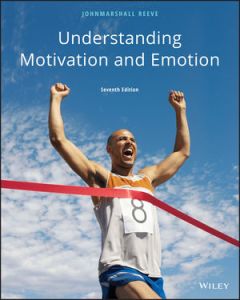
Book: Understanding Motivation and Emotion

Book Title:

Understanding Motivation and Emotion.

Author(s): Johnmarshall Reeve.

Year: 2018.

Edition: Seventh (7th).

Publisher: John Wiley and Sons.

Type(s): Paperback and Kindle.

Synopsis:

Understanding Motivation and Emotion helps readers understand motivation; where it comes from, how and why it changes over time, and how motivation can be increased. The book also shows how to apply the principles of motivation in applied settings, such as in schools, in the workplace, on the athletic field, in counselling, and in one’s own personal life.

Reeve’s engaging writing captures the excitement of recent advances in the field to show the reader what contemporary motivation psychologists are excited about. He also uses effective examples and explains how motivation study can be applied to readers’ daily lives.

By combining a strong theoretical foundation with current research and practical applications, Reeve provides readers with a valuable tool for understanding why people do what they do and why people feel what they feel.

Book: The Age of Anxiety

Book Title:

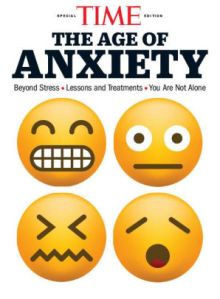
Time Special Edition: The Age of Anxiety.

Author(s): The Editors of TIME.

Year: 2020.

Edition: First (1st).

Publisher: Time.

Type(s): Magazine and Kindle.

Synopsis:

Anxiety disorders are one of the most common mental illness in the US, affecting 40 million adults.

But what exactly is anxiety?

In this special edition from TIME, anxiety is examined in all of its complexity.

Is it a physiological ailment, or a psychological impairment or both? Is it a simple fight-or-flight response to everyday stress and how best to manage it in our lives?

This special edition includes:

  • What anxiety does to your brain and body;
  • The upside of anxiety;
  • How the stress can fuel you;
  • How social media and our digital lives can make us anxious; and
  • The unique pressures upon children and teens and how to address them.

Also included are natural remedies for anxiety, tips on mindful meditation and more.

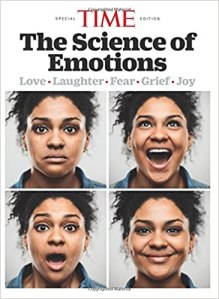
Book: The Science of Emotions

Book Title:

Time Special Edition: The Science of Emotions.

Author(s): The Editors of TIME.

Year: 2017.

Edition: First (1st).

Publisher: Time.

Type(s): Magazine and Kindle.

Synopsis:

Emotions are the world’s universal language. Understand them, and you understand yourself – and others.

Packed with thought-provoking articles on connecting emotionally with others, freeing your feelings, and engaging in mindfulness, The Science of Emotions, a new Special Edition from the Editors of TIME helps you get in touch with you. And with those around you.

Three distinct sections – “Know Yourself,” “Connect with Others,” and “Free Your Feelings” – help you unlock your emotional intelligence, tame social media envy, understand why we cry, learn how to read body language, and more.

You will also discover the secrets to mental toughness, learn how to let go of guilt, discover the upside of a bad mood, and learn the eight easy ways to get happier.

Filled with photos, infographics, and illustrations, including an uplifting photo essay on joy, this empowering collection offers a full-circle view of feelings ranging from despair to elation, and reveals how to harness emotions to build a richer life.

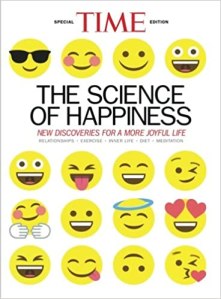
Book: The Science of Happiness

Book Title:

Time Special Edition: The Science of Happiness.

Author(s): The Editors of TIME.

Year: 2016.

Edition: First (1st).

Publisher: Time.

Type(s): Magazine and Kindle.

Synopsis:

“Don’t worry, be happy.” Sounds simple enough, yet many encounter setbacks in their pursuit of happiness. What if we could definitively say: “If you do this, you will achieve a happier and healthier life?” What if we could unlock the key to happiness? Enter Science.

In an all new special edition from TIME, The Science of Happiness: New Discoveries for a More Joyful Life, editors investigate exclusive, cutting-edge research from the Lee Kum Sheung Center for Health and Happiness.

Focusing in on the debate surrounding whether or not there is a direct relationship between happiness and health, this special edition explores the factors that affect happiness in three outlined sections – mind, life and spirit – and considers aspects such as positivity, optimism, purpose, family, finance, spirituality, and gratitude, in order to examine happiness from different angles.

Although the research included in The Science of Happiness is a work in progress, it is a step toward unlocking the key to happiness by grounding a cute catchphrase in fact and science.

Book: Mental Health: A New Understanding

Book Title:

Time Special Edition: Mental Health: A New Understanding.

Author(s): The Editors of TIME.

Year: 2018.

Edition: First (1st).

Publisher: Time.

Type(s): Magazine and Kindle.

Synopsis:

People at all stages of life experience mental illness, including anxiety and depression.

There has never been a better understanding of how the right support, lifestyle and approach can begin to crack the code and lead toward better health.

Now, in a new Special Edition, Mental Health: A New Understanding, the editors of TIME take a look at the vast world of mental health from understanding the causes and symptoms of mental disorders to feeling better, including the power of exercise, why your pets are good for your mental health, and the benefits of pharmaceutical aides, therapy and other ways to alleviate pain.

There is also guidance on how to help a friend or loved one who is suffering from mental illness and understanding life as an addict.

Additionally, they look at suicide, depression amongst college-age children and why the loneliness epidemic should be taken very seriously.

Mental Health is an excellent primer on understanding our own minds.

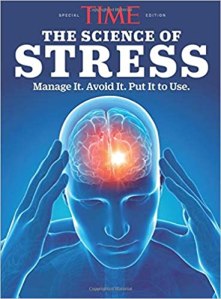
Book: The Science of Stress

Book Title:

Time Special Edition: The Science of Stress.

Author(s): The Editors of TIME.

Year: 2019.

Edition: First (1st).

Publisher: Time.

Type(s): Magazine and Kindle.

Synopsis:

Stress is a modern mental bogeyman, keeping nearly half of Americans up at night. It also takes a profound physical toll.

Research has found it linked to higher risks of heart attacks, strokes and many major chronic conditions.

Yet, many Americans say they do not do anything to meaningfully combat stress.

This special edition can help. First, you will examine the sources of your stress, including just how smartphones and other digital distractions rewire the brain for stress. Then, consider what you can do to increase calm and improve your health.

Learn about the science-backed research that shows that self-care and relaxation can help alleviate stress in real and measurable ways.

Find the latest proven ways to dampen the stress response, including mindfulness techniques, exercise, walking in nature and even washing the dishes. Get valuable tips on how to relax fast, in any situation. Or, if that’s just not possible, let this special edition make the case for embracing stress and teach you how to harness it to make yourself stronger, more positive and more resilient.

Stress is a powerful response to an increasingly challenging world. Let this special edition help you make sure you are in control of it!

Book: The Science of Addiction

Book Title:

Time Special Edition: The Science of Addiction.

Author(s): The Editors of TIME.

Year: 2019.

Edition: First (1st).

Publisher: Time.

Type(s): Magazine and Kindle.

Synopsis:

The US is a nation of addictions, large and small.

Close to 40 million Americans smoke; nearly 1 of every 8 adults is addicted to alcohol; and the sudden and spiralling epidemic of opioid addiction took 47,000 American lives in 2017 alone.

People are hooked on gambling, video games, sex, shopping, smartphones, food and Tinder. Once considered a moral failing, addiction today is largely acknowledged as a disease.

Now, this new special edition examines how science is seeking to curb the cravings and help Americans kick the habit.

  • Explore the neuroscience of pleasure to better understand just what’s happening when we feel great;
  • Learn how addiction disrupts pathways and processes that underlie desire, learning, emotional regulation, and cognition;
  • Consider how brain vulnerabilities caused by genetics, trauma and stress can increase the risk of becoming addicted; and
  • Examine promising new therapies, including under-the-skin implants for recovering alcoholics and treating cocaine addicts with electromagnetic pulses to the brain.

Understanding and moderating pleasure is at the heart of being healthy and happy and never has it been more urgent or challenging a time to do so.