Posts

Book: ICD-10-PCS 2020: The Complete Official Codebook

Book Title:

ICD-10-PCS 2020: The Complete Official Codebook.

Author(s): America Medical Association.

Year: 2019.

Edition: First (1st).

Publisher: American Medical Association (AMA).

Type(s): Paperback and Kindle.

Synopsis:

ICD-10-PCS 2020: The Complete Official Codebook contains the complete ICD-10-PCS code set and supplementary appendixes required for reporting inpatient procedures. This illustrated codebook presents the code set in 17 sections of tables arranged by general procedure type. Tables within the extensive Medical and Surgical section are additionally sectioned out by body system, indicated by colour-coded page borders.

ICD-10-PCS contains classifications for procedures, devices and technologies.

Features and Benefits:

  • Summary of changes.
    • Quickly see how additions and deletions affect each section of ICD-10-PCS.
  • Complete 2020 ICD-10-PCS code set.
    • The code set is organised in 17 sections. Each section contains a code table by which a code can be built through character selections that reflect the procedure performed.
    • A character meanings table and citations to American Hospital Association’s Coding Clinic start each section.
  • Official coding guidelines.
    • Learn how to use the code set appropriately following the guidelines specific for each section.
  • Illustrations.
    • The full-colour illustrations provide a visual explanation of anatomy and procedural approach.
    • Approach illustrations show the access location, method, and instrumentation that determine the approach.
    • Body parts with indicators to applicable code characters (provided immediately after the character meaning tables in the Medical/Surgical sections)
  • Visual alerts.
    • This edition provides colour-coding and symbols that identify male/female procedures and new/revised character values.
  • Detailed information on structure and conventions of ICD-10-PCS.
    • Learn about the unique structure and the specific definitions and functions of each character. Practice your skills with sample exercises (answers included).
  • Colour-coding and symbols for the Medicare Code Edits.
    • This edition includes colour-coding and symbols for the most comprehensive coverage of ICD10 MS-DRG MCEs for procedures including;
      • Non-covered procedures.
      • Limited coverage procedures.
      • Combination only procedures.
      • Non-operating room procedures affecting MS-DRG assignment.
      • Non-operating room procedures NOT affecting MS-DRG assignment.
      • Hospital acquired condition (HAC)-related procedures.
  • Procedure combination tables.
    • Identify ICD-10-PCS code combination requirements needed to satisfy certain MS-DRG requirements.

Book: How to Use Herbs, Nutrients, and Yoga in Mental Health Care

Book Title:

How to Use Herbs, Nutrients, and Yoga in Mental Health Care.

Author(s): Richard P. Brown, Patricia L. Gerberg, and Phillip R. Muskin.

Year: 2012.

Edition: Reprint Edition.

Publisher: W.W. Norton & Co.

Type(s): Hardcover, Paperback and Kindle.

Synopsis:

Many physicians and therapists agree that herbs and mind-body practices enhance health, but many more are reluctant to integrate them into their clinical work because of a lack of training or, given how long it takes to master the use of hundreds of different herbs, a lack of time.

But the trend is clear: clients and consumers alike want control over their health care choices, making the time ripe for a practical resource that guides both the clinician and the consumer on complementary and alternative medicine (CAM). This book answers that call.

Three noted experts in integrative medicine, Drs. Brown, Gerbarg, and Muskin, demystify the complexities of alternative mental health care, giving readers a comprehensive yet accessible guidebook to the best treatment options out there.

From mood, memory, and anxiety disorders to ADD, sexual enhancement issues, psychotic disorders, and substance abuse, every chapter covers a major diagnostic category.

The authors then present a range of complementary and alternative treatments-including the use of herbs, nutrients, vitamins, nootropics, hormones, and mind-body practices that they have found to be beneficial for various conditions within each category.

For example, B complex vitamins and folate have been shown to help with depression; omega-3 fatty acids can offer relief for bipolar sufferers; coherent and resonant breathing techniques-used by Buddhist monks-induce healthy alpha rhythms in the brain to relieve anxiety; the elderly can boost their memory by taking the ancient medicinal herb Rhodiola rosea; and those with chronic fatigue syndrome can find comfort in acupuncture and yoga.

Focusing on evidence-based approaches, the research, the authors’ clinical experience, and the potential risks and benefits of each treatment are carefully examined.

Brown, Gerbarg, and Muskin have distilled an otherwise daunting field of treatment down to its basics: their overriding approach is to present the CAM methods that are most practical in a clinical setting, easy to administer, and low in side effects.

With helpful summary tables at the end of each chapter, clinical pearls, and case vignettes interspersed throughout, this is a must-have resource for all clinicians and consumers who want the best that alternative medicine has to offer.

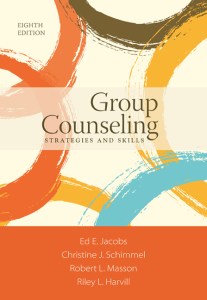
Book: Group Counseling – Strategies and Skills

Book Title:

Group Counseling – Strategies and Skills.

Author(s): Ed E. Jacobs, Christine J. Schimmel, Robert L. Mason, and Riley L. Harvill.

Year: 2016.

Edition: Eighth (8th).

Publisher: Brooks/Cole.

Type(s): Paperback.

Synopsis:

Group Counseling: Strategies and Skills, Eighth Edition, provides an in-depth look at group counselling with an emphasis on practical knowledge and techniques for effective group leadership.

The authors discuss the many facets of group counselling and provide examples of how each skill can be applied in a wide range of group settings to produce effective and efficient group sessions.

The book focuses on the skills necessary for starting and ending a session, as well as on how to make the middle phase productive and meaningful.

Its practical, active approach is supported by nearly 50 video segments-including several new ones-that demonstrate specific skills as well as the integration of multiple skills and techniques.

Through its integration of traditional theories and concepts of group process with thoughtful strategies and specific skills, this reader-friendly book and video clips meet the needs of practising or future counsellors, social workers, psychologists, and others who are leading or preparing to lead groups in a variety of settings.

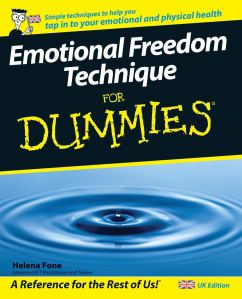
Book: Emotional Freedom Technique For Dummies

Book Title:

Emotional Freedom Technique For Dummies.

Author(s): Helena Fone.

Year: 2009.

Edition: First (1st) UK Edition.

Publisher: Wiley.

Type(s): Paperback and Kindle.

Synopsis:

A member of the Energy Therapies family – which includes, acupuncture, acupressure and shiatsu – Emotional Freedom Technique is a simple and increasingly popular self- development therapy used to treat a wide range of physical and emotional issues.

Popularised by figures including Paul McKenna, EFT is based on the theory that negative emotions are caused by disturbances in the body’s energy.

Often referred to as acupuncture without needles, EFT involves locating and tapping on meridian points in the body while thinking of a negative emotion and using positive suggestion and thoughts to alter the body’s energy flow, restore balance and reprogramme thought processes.

This no-nonsense guide introduces readers to the theories and methods behind the technique and shows them how to use it to reduce the physical and emotional impact of a wide range of issues including, depression, fears, phobias, anger, addictions, sleeplessness and pain.

It is simple, safe, anyone can practice it at home and with EFT For Dummies readers can banish bad habits for good.

Includes information on: The path to emotional freedom – explaining EFT Understanding your emotions Basic EFT tapping routines Improving emotional health with EFT Practising EFT on yourself and others Helena Fone is a registered EFT practitioner and trainer and an advanced hypnotherapist.

She has a diploma in advanced holistic hypnotherapy and practices CBT and NLP.

Book: The Easy Way to Stop Gambling – Take Control of Your Life

Book Title:

The Easy Way to Stop Gambling – Take Control of Your Life.

Author(s): Allen Carr.

Year: 2013.

Edition: First (1st).

Publisher: Arcturus Publishing Ltd.

Type(s): Paperback, Audiobook, and Kindle.

Synopsis:

Allen Carr’s Easyway is a global phenomenon. It has helped millions of smokers from all over the world, and has also been successfully applied to a wide range of other issues, including drinking, overeating, and overspending.

Here the method addresses the fastest growing social problem of modern times: gambling.

Allen Carr explains how gamblers fall into the trap and why they keep gambling despite knowing that it’s ruining their lives.

By explaining the nature of the trap, he removes the desire to gamble and the fears that keep you hooked.

Most important of all, you will not feel that you have made a sacrifice, you will not miss gambling, and you will enjoy life to the full without feeling in any way deprived.

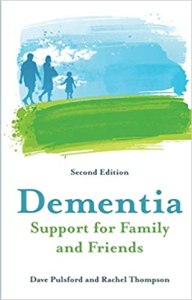
Book: Dementia: Support for Family and Friends

Book Title:

Dementia: Support for Family and Friends

Author(s): Dave Pulsford and Rachel Thompson.

Year: 2019.

Edition: Second (2nd).

Publisher: Jessica Kingsley Publishers.

Type(s): Paperback and Kindle.

Synopsis:

A comprehensive and practical guide to dementia, this book is essential reading for anyone who has a friend or relative with the condition.

This updated edition reflects new guidance on approaches to supporting people with dementia, focussing especially on the UK, and includes quotes from people with dementia as well as from family carers.

The book explores each stage of the journey people with dementia face and explains how it affects the person, as well as those around them both at home and in residential settings.

It shows how best to offer support and where to get professional and informal assistance.

Focussing on the progressive nature of dementia and the issues that can arise as a result, it gives practical advice that can help to ensure the best possible quality of life both for the person with dementia and the people around them.

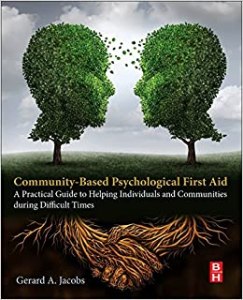
Book: Community-Based Psychological First Aid

Book Title:

Community-Based Psychological First Aid: A Practical Guide to Helping Individuals and Communities during Difficult Times.

Author(s): Gerard A. Jacobs.

Year: 2016.

Edition: First (1st).

Publisher: Butterworth-Heinemann.

Type(s): Paperback and Kindle.

Synopsis:

Community-Based Psychological First Aid: A Practical Guide to Helping Individuals and Communities during Difficult Times presents a practical method for helping those in need in difficult times.

No advanced training in psychology is needed to use it. Injuries from disasters, terrorist events, and civil unrest are not just physical.

These events also cause psychological trauma that can do lasting damage.

Psychological First Aid (PFA) draws on human resilience and aims to reduce stress systems and help those affected recover.

It is not professional psychotherapy, and those providing this kind of aid do not need a degree to help.

Gerard Jacobs has developed this community-based method of delivering PFA over 20 years and has taught it in over 30 countries.

Along with the easy-to-follow method, Jacobs includes examples of how this works in action in different situations, and presents scenarios to practice.

Unique in its approach of community engagement to train community members to help each other, this guide is an excellent resource for local emergency managers to engage in whole community emergency management.

Book: Cognitive Psychology for Dummies

Book Title:

Cognitive Psychology for Dummies.

Author(s): Peter J. Hills and Michael Pake.

Year: 2016.

Edition: First (1st).

Publisher: Wiley.

Type(s): Paperback, Audiobook, and Kindle.

Synopsis:

Demystify the core concepts of cognitive psychology.

Written specifically for psychology students and not other academics – Cognitive Psychology For Dummies is an accessible and entertaining introduction to the field. Unlike the dense and jargon-laden content found in most psychology textbooks, this practical guide provides readers with easy-to-understand explanations of the fundamental elements of cognitive psychology so that they are able obtain a firm grasp of the material.

Cognitive Psychology For Dummies follows the structure of a typical university course, which makes it the perfect supplement for students in need of a clear and enjoyable overview of the topic.

The complexities of a field that explores internal mental processes including the study of how people perceive, remember, think, speak, and solve problems can be overwhelming for first-year psychology students.

This practical resource cuts through the academic-speak to provide a clear understanding of the most important elements of cognitive psychology.

  • Obtain a practical understanding of the core concepts of cognitive psychology.
  • Supplement required course reading with clear and easy-to-understand overviews.
  • Gain confidence in your ability to apply your knowledge of cognitive psychology.
  • Prepare for upcoming exams or topic discussions.

Cognitive Psychology For Dummies is the perfect resource for psychology students who need a clear and readable overview of the core concepts of cognitive psychology.

Book: The Big Disconnect – Protecting Childhood And Family Relationships In The Digital Age

Book Title:

The Big Disconnect – Protecting Childhood And Family Relationships In The Digital Age.

Author(s): Catherine Steiner-Adair.

Year: 2013.

Edition: First (1st).

Publisher: Harper.

Type(s): Hardcover and Paperback.

Synopsis:

Clinical psychologist Catherine Steiner-Adair takes an in-depth look at how the Internet and the digital revolution are profoundly changing childhood and family dynamics, and offers solutions parents can use to successfully shepherd their children through the technological wilderness.

As the focus of the family has turned to the glow of the screen – children constantly texting their friends or going online to do homework; parents working online around the clock – everyday life is undergoing a massive transformation. Easy access to the Internet and social media has erased the boundaries that protect children from damaging exposure to excessive marketing and the unsavoury aspects of adult culture. Parents often feel they are losing a meaningful connection with their children. Children are feeling lonely and alienated. The digital world is here to stay, but what are families losing with technology’s gain?

As renowned clinical psychologist Catherine Steiner-Adair explains, families are in crisis as they face this issue, and even more so than they realise. Not only do chronic tech distractions have deep and lasting effects but children also desperately need parents to provide what tech cannot: close, significant interactions with the adults in their lives. Drawing on real-life stories from her clinical work with children and parents and her consulting work with educators and experts across the country, Steiner-Adair offers insights and advice that can help parents achieve greater understanding, authority, and confidence as they engage with the tech revolution unfolding in their living rooms.

Book: Already Free: Buddhism Meets Psychotherapy on the Path of Liberation

Book Title:

Already Free: Buddhism Meets Psychotherapy on the Path of Liberation.

Author(s): Bruce Lift.

Year: 2011.

Edition: First (1st).

Publisher: Sounds True.

Type(s): Audiobook and Kindle.

Synopsis:

Different Paths, Different Strengths

Freedom from unnecessary suffering is the goal of both Buddhism and modern psychotherapy, yet each approaches this intention from a very different perspective. “Buddhist practice helps us awaken to a well-being that is independent of our circumstances,” explains Bruce Tift, “while Western psychotherapy helps us bring our disowned experience into awareness in order to live in a more skillful and satisfying way.” On Already Free, this therapist and Buddhist practitioner opens a fresh dialogue between these two perspectives, and explores how each provides us with essential keys to experiencing full presence and aliveness.

Practical Tools and Wisdom from the Eastern and Western Traditions

Buddhism gives us powerful tools for breaking free of our own identity drama and our fascination with day-to-day problems, yet it does not address how early childhood experience shapes our adult lives. Western psychotherapy provides a wide range of proven techniques for understanding and untangling the development of our neurotic patterns, but it is only beginning to recognise the powerful impact of exploring awareness itself. “These two approaches sometimes contradict and sometimes support each other,” Tift explains. “When used together, they can help us open to all of life in all its richness, its disturbances, and its inherent completeness.”With a keen understanding of the wisdom of East and West, and a special focus on working with intimate relationships as a pathway to spiritual awakening, Bruce Tift presents seven immersive sessions of insights, wisdom, and practical instruction for realising the fundamental freedom that is your birthright.

Highlights

The Developmental Approach – why we still use our childhood survival skills after we outgrow them The Fruitional Approach – Buddhist wisdom on finding liberation without resolving our historic issues Relationships and Awakening – practices for couples to develop “healthy intimacy” and welcome connection and separateness Why we use “neurotic organisation” to limit our life experience, and how to challenge this self-perpetuating process.