What is the Impact of COVID-19 & Lockdown on the Mental Health of Children & Adolescents?

Research Paper Title

Impact of COVID-19 and lockdown on mental health of children and adolescents: A narrative review with recommendations.

Background

COVID-19 pandemic and lockdown has brought about a sense of fear and anxiety around the globe. This phenomenon has led to short term as well as long term psychosocial and mental health implications for children and adolescents.

The quality and magnitude of impact on minors is determined by many vulnerability factors like developmental age, educational status, pre-existing mental health condition, being economically underprivileged or being quarantined due to infection or fear of infection.

This paper is aimed at narratively reviewing various articles related to mental-health aspects of children and adolescents impacted by COVID-19 pandemic and enforcement of nationwide or regional lockdowns to prevent further spread of infection.

Methods

The researchers conducted a review and collected articles and advisories on mental health aspects of children and adolescents during the COVID-19 pandemic. They selected articles and thematically organised them. The researchers put up their major findings under the thematic areas of impact on young children, school and college going students, children and adolescents with mental health challenges, economically underprivileged children, impact due to quarantine and separation from parents and the advisories of international organisations. They have also provided recommendations to the above.

Conclusions

There is a pressing need for planning longitudinal and developmental studies, and implementing evidence based elaborative plan of action to cater to the psycho social and mental health needs of the vulnerable children and adolescents during pandemic as well as post pandemic.

There is a need to ameliorate children and adolescents’ access to mental health support services geared towards providing measures for developing healthy coping mechanisms during the current crisis.

For this innovative, child and adolescent mental health policies with direct and digital collaborative networks of psychiatrists, psychologists, paediatricians, and community volunteers are deemed necessary.

Reference

Singh, S., Roy, D., Sinha, K., Parveen, S. Sharma, G. & Joshi, G. (2020) Impact of COVID-19 and lockdown on mental health of children and adolescents: A narrative review with recommendations. Psychiatry Research. doi: 10.1016/j.psychres.2020.113429. Online ahead of print.

What is the Role of Informant Discrepancies in Mental Health in Relation to Sexuality?

Research Paper Title

Mental-health disparities between heterosexual and sexual-minority adolescents: Examining the role of informant discrepancies.

Background

An emerging literature documents substantial mental-health disparities by sexual orientation amongst adolescents, with sexual-minority youth exhibiting poorer mental health than heterosexual youth.

This brief report provides the first empirical account of how the association between sexual-minority status and adolescent mental health differs depending on who assesses adolescents’ mental health (child/mother/father/teacher), and how informant discrepancies in assessments of adolescent mental health differ by adolescents’ sexual orientation.

Methods

Data come from an Australian national sample of 14-/15-year-old adolescents (Longitudinal Study of Australian Children; n = 3,000).

Adolescent mental health is measured using multiple measures from the Strengths and Difficulties Questionnaire, and modelled using multivariable linear regression models.

Results

Mental-health disparities between sexual-minority and heterosexual adolescents emerged irrespective of who assessed the child’s mental health.

However, their magnitude varied substantially by informant, being largest when mental-health was reported by adolescents (~0.7 standard deviations) and smallest when reported by teachers (~0.2 standard deviations).

Discrepancies between mental-health scores collected from the child and other informants were largest for internalising than externalising behaviours, and in child-father than child-mother comparisons.

Conclusions

Understanding informant discrepancies and their meaning is pivotal to designing surveys that generate robust insights into the health of sexual-minority adolescents, as well as appropriate policy interventions.

Reference

Perales, F., Campbell, A. & Johnson, S. (2020) Mental-health disparities between heterosexual and sexual-minority adolescents: Examining the role of informant discrepancies. Journal of Adolescence. 79, pp.122-127. doi: 10.1016/j.adolescence.2020.01.006. Epub 2020 Jan 15.

Examining National Trends in the Care of Different Mental Health Problems & in Different Treatment Settings among Adolescents

National Trends in Mental Health Care for US Adolescents.

Background

The prevalence of adolescent depression and other internalising mental health problems has increased in recent years, whereas the prevalence of externalising behaviours has decreased. The association of these changes with the use of mental health services has not been previously examined.

Therefore, the purpose of this study was to examine national trends in the care of different mental health problems and in different treatment settings among adolescents.

Methods

Data for this survey study were drawn from the National Survey on Drug Use and Health, an annual cross-sectional survey of the US general population. This study focused on adolescent participants aged 12 to 17 years interviewed from January 1, 2005, to December 31, 2018. Data were reported as weighted percentages and adjusted odds ratios (aORs) and analysed from July 20 to December 1, 2019.

Time trends in 12-month prevalence of any mental health treatment or counselling in a wide range of settings were examined overall and for different:

  • Sociodemographic groups;
  • Types of mental health problems (internalising, externalising, relationship, and school related); and
  • Treatment settings (inpatient mental health, outpatient mental health, general medical, and school counselling).

Trends in the number of visits and nights in inpatient settings were also examined.

Results

A total of 47,090 of the 230,070 adolescents across survey years (19.7%) received mental health care. Of these, 57.5% were female; 31.3%, aged 12 to 13 years; 35.8%, aged 14 to 15 years; and 32.9%, aged 16 to 17 years.

The overall prevalence of mental health care did not change appreciably over time. However, mental health care increased among girls (from 22.8% in 2005-2006 to 25.4% in 2017-2018; aOR, 1.11; 95% CI, 1.04-1.19; P = .001), non-Hispanic white adolescents (from 20.4% in 2005-2006 to 22.7% in 2017-2018; aOR, 1.08; 95% CI, 1.03-1.14; P = .004), and those with private insurance (from 19.4% in 2005-2006 to 21.2% in 2017-2018; aOR, 1.11; 95% CI, 1.04-1.18; P = .002).

Internalising problems, including suicidal ideation and depressive symptoms, accounted for an increasing proportion of care (from 48.3% in 2005-2006 to 57.8% in 2017-2018; aOR, 1.52; 95% CI, 1.39-1.66; P < .001), whereas externalising problems (from 31.9% in 2005-2006 to 23.7% in 2017-2018; aOR, 0.67; 95% CI, 0.62-0.73; P < .001) and relationship problems (from 30.4% in 2005-2006 to 26.9% in 2017-2018; aOR, 0.75; 95% CI, 0.69-0.82; P < .001) accounted for decreasing proportions.

During this period, use of outpatient mental health services increased from 58.1% in 2005-2006 to 67.3% in 2017-2018 (aOR, 1.47; 95% CI, 1.35-1.59; P < .001), although use of school counselling decreased from 49.1% in 2005-2006 to 45.4% in 2017-2018 (aOR, 0.86; 95% CI, 0.79-0.93; P < .001).

Outpatient mental health visits (eg, private mental health clinicians, from 7.2 in 2005-2006 to 9.0 in 2017-2018; incidence rate ratio, 1.30; 95% CI, 1.23-1.37; P < .001) and overnight stays in inpatient mental health settings (from 4.0 nights in 2005-2006 to 5.4 nights in 2017-2018; incidence rate ratio, 1.18; 95% CI, 1.02-1.37; P = .03) increased.

Conclusions

This study’s findings suggest that the growing number of adolescents who receive care for internalising mental health problems and the increasing share who receive care in specialty outpatient settings are placing new demands on specialty adolescent mental health treatment resources.

Reference

Mojtabai, R. & Olfson, M. (2020) National Trends in Mental Health Care for US Adolescents. JAMA Psychiatry. 77(7), pp.1-12. doi: 10.1001/jamapsychiatry.2020.0279. Online ahead of print.

Research Paper Title

National Trends in Mental Health Care for US Adolescents.

Background

The prevalence of adolescent depression and other internalising mental health problems has increased in recent years, whereas the prevalence of externalising behaviours has decreased. The association of these changes with the use of mental health services has not been previously examined.

Therefore, the purpose of this study was to examine national trends in the care of different mental health problems and in different treatment settings among adolescents.

Methods

Data for this survey study were drawn from the National Survey on Drug Use and Health, an annual cross-sectional survey of the US general population. This study focused on adolescent participants aged 12 to 17 years interviewed from January 1, 2005, to December 31, 2018. Data were reported as weighted percentages and adjusted odds ratios (aORs) and analysed from July 20 to December 1, 2019.

Time trends in 12-month prevalence of any mental health treatment or counselling in a wide range of settings were examined overall and for different:

  • Sociodemographic groups;
  • Types of mental health problems (internalising, externalising, relationship, and school related); and
  • Treatment settings (inpatient mental health, outpatient mental health, general medical, and school counselling).

Trends in the number of visits and nights in inpatient settings were also examined.

Results

A total of 47,090 of the 230,070 adolescents across survey years (19.7%) received mental health care. Of these, 57.5% were female; 31.3%, aged 12 to 13 years; 35.8%, aged 14 to 15 years; and 32.9%, aged 16 to 17 years.

The overall prevalence of mental health care did not change appreciably over time. However, mental health care increased among girls (from 22.8% in 2005-2006 to 25.4% in 2017-2018; aOR, 1.11; 95% CI, 1.04-1.19; P = .001), non-Hispanic white adolescents (from 20.4% in 2005-2006 to 22.7% in 2017-2018; aOR, 1.08; 95% CI, 1.03-1.14; P = .004), and those with private insurance (from 19.4% in 2005-2006 to 21.2% in 2017-2018; aOR, 1.11; 95% CI, 1.04-1.18; P = .002).

Internalising problems, including suicidal ideation and depressive symptoms, accounted for an increasing proportion of care (from 48.3% in 2005-2006 to 57.8% in 2017-2018; aOR, 1.52; 95% CI, 1.39-1.66; P < .001), whereas externalising problems (from 31.9% in 2005-2006 to 23.7% in 2017-2018; aOR, 0.67; 95% CI, 0.62-0.73; P < .001) and relationship problems (from 30.4% in 2005-2006 to 26.9% in 2017-2018; aOR, 0.75; 95% CI, 0.69-0.82; P < .001) accounted for decreasing proportions.

During this period, use of outpatient mental health services increased from 58.1% in 2005-2006 to 67.3% in 2017-2018 (aOR, 1.47; 95% CI, 1.35-1.59; P < .001), although use of school counselling decreased from 49.1% in 2005-2006 to 45.4% in 2017-2018 (aOR, 0.86; 95% CI, 0.79-0.93; P < .001).

Outpatient mental health visits (eg, private mental health clinicians, from 7.2 in 2005-2006 to 9.0 in 2017-2018; incidence rate ratio, 1.30; 95% CI, 1.23-1.37; P < .001) and overnight stays in inpatient mental health settings (from 4.0 nights in 2005-2006 to 5.4 nights in 2017-2018; incidence rate ratio, 1.18; 95% CI, 1.02-1.37; P = .03) increased.

Conclusions

This study’s findings suggest that the growing number of adolescents who receive care for internalising mental health problems and the increasing share who receive care in specialty outpatient settings are placing new demands on specialty adolescent mental health treatment resources.

Reference

Mojtabai, R. & Olfson, M. (2020) National Trends in Mental Health Care for US Adolescents. JAMA Psychiatry. 77(7), pp.1-12. doi: 10.1001/jamapsychiatry.2020.0279. Online ahead of print.

Examining Bicultural Stress & Well-being Processes among Adolescents

Research Paper Title

Disentangling relationships between bicultural stress and mental well-being among Latinx immigrant adolescents.

Background

The Acculturative Process and Context Framework (Ward & Geeraert, 2016) proposes that acculturative stressors influence psychological well-being over time.

In fact, extant literature has linked bicultural stress with psychological functioning; yet, no studies have explored the causal dominance of bicultural stress.

The purpose of the present study was to evaluate the directionality of prospective relations among bicultural stress and psychosocial functioning (i.e., depressive symptoms, hopefulness, and self-esteem) in Latinx immigrant adolescents across 5 waves.

Methods

There were 303 Latinx adolescents who were recruited for this study from Los Angeles and Miami and were assessed across 5 waves at 6-month intervals.

Adolescents were 14.50 years old on average (SD = .88) and 53.16% were male.

Adolescents reported living in the United States for 2.07 years on average (SD = 1.87). A Random-Intercept Cross-Lagged Panel Model (RI-CLPM) was used to examine the between- and within-person relations among bicultural stress, depressive symptoms, hopefulness, and self-esteem in a comprehensive model.

Results

The comprehensive RI-CLPM including bicultural stress, depressive symptoms, hopefulness, and self-esteem exhibited excellent model fit.

Between-person, trait-like relations among constructs ranged from small to large, as expected.

Within-person, cross-lagged estimates among constructs were overall inconsistent, with some evidence that, within individuals, self-esteem influences later hopefulness.

Conclusions

Findings from this study indicate that the RI-CLPM is an effective strategy to examine bicultural stress and well-being processes among adolescents.

There is a need for further research examining bicultural stress among Latinx immigrant youth, particularly within prevention and intervention studies.

Reference

Romero, A., Piña-Watson, B., Stevens, A.K., Schwartz, S.J., Unger, J.B., Zamboanga, B.L., Szapocznik, J., Lorenzo-Blanco, E., Cano, M,Á., Meca, A., Baezconde-Garbanati, L., Córdova, D., Villamar, J.A., Soto, D.W., Lizzi, K.M., Des Rosiers, S.E., Pattarroyo, M. & Oshri, A. (2020) Disentangling relationships between bicultural stress and mental well-being among Latinx immigrant adolescents. Journal of Consulting and Clinical Psychology. 88(2), pp.149-159. doi: 10.1037/ccp0000466.

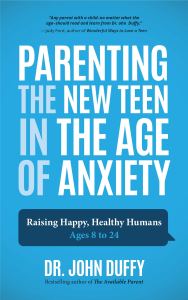
Book: Parenting the New Teen in the Age of Anxiety

Book Title:

Parenting the New Teen in the Age of Anxiety: A Complete Guide to Your Child’s Stressed, Depressed, Expanded, Amazing Adolescence.

Author(s): Dr. John Duffy.

Year: 2019.

Edition: First.

Publisher: Mango.

Type(s): Paperback, Kindle, and Audiobook.

Synopsis:

Learn about the “New Teen” and how to adjust your parenting approach. Kids are growing up with nearly unlimited access to social media and the internet, and unprecedented academic, social, and familial stressors. Starting as early as eight years old, children are exposed to information, thought, and emotion that they are developmentally unprepared to process. As a result, saving the typical “teen parenting” strategies for thirteen-year-olds is now years too late.

Urgent advice for parents of teens. Dr. John Duffy’s parenting book is a new and necessary guide that addresses this hidden phenomenon of the changing teenage brain. Dr. Duffy, a nationally recognised expert in parenting for nearly twenty-five years, offers this book as a guide for parents raising children who are growing up quickly and dealing with unresolved adolescent issues that can lead to anxiety and depression.

Unprecedented psychological suffering among our young and why it is occurring. A shift has taken place in how and when children develop. Because of the exposure they face, kids are emotionally overwhelmed at a young age, often continuing to search for a sense of self well into their twenties. Paradoxically, Dr. Duffy recognises the good that comes with these challenges, such as the sense of justice instilled in teenagers starting at a young age.

Readers of this book will:

  • Sort through the overwhelming circumstances of today’s teens and better understand the changing landscape of adolescence.
  • Come away with a revised, conscious parenting plan more suited to addressing the current needs of the New Teen.
  • Discover the joy in parenting again by reclaiming the role of your teen’s ally, guide, and consultant.

Is there Evidence of Cognitive Impairment in Psychosis Risk Syndrome Children & Adolescents?

Research Paper Title

Neuropsychological profile of children and adolescents with psychosis risk syndrome: the CAPRIS study.

Background

Neuropsychological underperformance is well described in young adults at clinical high risk for psychosis, but the literature is scarce on the cognitive profile of at-risk children and adolescents.

The aim of this study is to describe the neuropsychological profile of a child and adolescent sample of patients with psychosis risk syndrome (PRS; also known as Attenuated Psychosis Syndrome) compared to healthy controls and to analyse associations between attenuated psychotic symptoms and cognitive impairment.

Methods

Cross-sectional baseline data analysis from a longitudinal, naturalistic, case-control, two-site study is presented.

Eighty-one help-seeking subjects with PRS and 39 healthy controls (HC) aged between 10 and 17 years of age were recruited.

PRS was defined by:

  • Positive or negative attenuated symptoms;
  • Brief Limited Intermittent Psychotic Symptoms (BLIPS);
  • Genetic risk (first- or second-degree relative); or
  • Schizotypal personality disorder plus impairment in functioning.

A neuropsychological battery was administered to assess:

  • General intelligence;
  • Verbal and visual memory;
  • Visuospatial abilities;
  • Speed processing;
  • Attention; and
  • Executive functions.

Results

The PRS group showed lower general neuropsychological performance scores at a multivariate level and lower scores than controls in general intelligence and executive functions.

Lower scores on executive function and poorer attention were associated with high scores of positive attenuated psychotic symptoms.

No association with attenuated negative symptoms was found.

Conclusions

This study provides evidence of cognitive impairment in PRS children and adolescents and shows a relationship between greater cognitive impairment in executive functions and attention tasks and severe attenuated positive symptoms.

However, longitudinal studies are needed to clarify the nature of cognitive impairment as a possible vulnerability marker.

Reference

Tor, J., Dolz, M., Sintes-Estevez, A., de la Serna, E., Puig, O., Muñoz-Samons, D., Pardo, M., Rodríguez-Pascual, M., Sugranyes, G., Sánchez-Gistau, V. & Baeza, I. (2020) Neuropsychological profile of children and adolescents with psychosis risk syndrome: the CAPRIS study. European Child & Adolescent Psychiatry. doi: 10.1007/s00787-019-01459-6. [Epub ahead of print].

Do Lipid Alterations Predate Antipsychotic Treatment in Adolescents with Early-Onset Pyschosis?

Research Paper Title

Lipid alterations in adolescents with early-onset psychosis may be independent of antipsychotic medication.

Background

Dyslipidemia and insulin resistance (HOMA-IR) are cardiovascular risk factors prevalent in patients with psychosis.

Whether these factors are intrinsic or affected by lifestyle or antipsychotic medication (AP) is unclear.

Therefore, the researchers investigated lipid profiles, HOMA-IR, and psychotic phenotypes in patients aged 12-18 years with early-onset psychosis (EOP) with and without AP exposure.

Methods

The researchers measured fasting total cholesterol (TC), high-density lipoprotein cholesterol (HDLC), triglycerides (TG), insulin, and glucose in patients with EOP (n = 39) and healthy controls (HC) (n = 66).

Diet information was not available. Negative symptoms were assessed using the Positive and Negative Syndrome Scale (PANSS).

They used univariate analysis of variance to compare TC/HDL-C ratios and TG and HOMA-IR values, controlling for body mass index (BMI) and AP exposure.

They also assessed the explained variance of having EOP using multiple regression analysis.

Results

Patients with and without AP exposure had significantly higher TC/HDL-C (p = 0.003, p = 0.029) and TG values (p < 0.001, p = 0.021) than HC.

Significantly increased HOMA-IR scores were found only in AP-exposed patients (p = 0.037). EOP significantly increased the explained variance for TC/HDL-C and TG, but not for HOMA-IR.

Patients with a PANSS negative score > 21 had significantly higher levels of TG than those with low scores (p = 0.032).

Conclusions

The results suggest that lipid alterations predate AP treatment in adolescents with EOP.

Higher levels of negative symptoms and AP further increase metabolic risk.

The preliminary findings propose that subclinical dyslipidemia may be intrinsic to EOP.

Reference

Wedervang-Resell, K., Friis, S., Lonning, V., Smelror, R.E., Johannessen, C., Agartz, I., Ulven, S.M., Holven, K.B., Andreassen, O.A. & Myhre, A.M. (2019) Lipid alterations in adolescents with early-onset psychosis may be independent of antipsychotic medication. Schizophrenia Research. pii: S0920-9964(19)30546-8. doi: 10.1016/j.schres.2019.11.039. [Epub ahead of print].