What is Sickness Behaviour?

Sickness Behaviour is a type of short-term depression:

“Remember the last time you had a stomach bug and just wanted to crawl into bed and pull up the covers? That is called “sickness behaviour” and it is a kind of short-term depression.

The bacteria infecting you aren’t just making you feel nauseous, they are controlling your mood too. It sounds absurd: they are in your gut and your feelings are generated in your brain.

In fact, this is just an inkling of the power that microbes have over our emotions. In recent years, such organisms in the gut have been implicated in a range of conditions that affect mood, especially depression and anxiety.

The good news is that bacteria don’t just make you feel low; the right ones can also improve your mood. That has an intriguing implication: one day we may be able to manipulate the microbes living within our gut to change our mood and feelings.” (Anderson, 2019, p.34).

Reference

Anderson, S. (2019) The Psychobiotic Revolution. New Scientist. 07 September 2019.

Testing the Effectiveness of Smartphone Apps Delivered to School Students to Prevent Depression at Scale.

Research Paper Title

A trial protocol for the effectiveness of digital interventions for preventing depression in adolescents: The Future Proofing Study.

Background

Depression frequently first emerges during adolescence, and one in five young people will experience an episode of depression by the age of 18 years.

Despite advances in treatment, there has been limited progress in addressing the burden at a population level.

Accordingly, there has been growing interest in prevention approaches as an additional pathway to address depression.

Depression can be prevented using evidence-based psychological programmes. However, barriers to implementing and accessing these programmes remain, typically reflecting a requirement for delivery by clinical experts and high associated delivery costs.

Digital technologies, specifically smartphones, are now considered a key strategy to overcome the barriers inhibiting access to mental health programmes.

The Future Proofing Study is a large-scale school-based trial investigating whether cognitive behaviour therapies (CBT) delivered by smartphone application can prevent depression.

Methods

A randomised controlled trial targeting up to 10,000 Year 8 Australian secondary school students will be conducted.

In Stage I, schools will be randomised at the cluster level either to receive the CBT intervention app (SPARX) or to a non-active control group comparator.

The primary outcome will be symptoms of depression, and secondary outcomes include psychological distress, anxiety and insomnia.

At the 12-month follow-up, participants in the intervention arm with elevated depressive symptoms will participate in an individual-level randomised controlled trial (Stage II) and be randomised to receive a second CBT app which targets sleep difficulties (Sleep Ninja) or a control condition.

Assessments will occur post intervention (both trial stages) and at 6, 12, 24, 36, 48 and 60 months post baseline.

Primary analyses will use an intention-to-treat approach and compare changes in symptoms from baseline to follow-up relative to the control group using mixed-effect models.

Results & Conclusions

This is the first trial testing the effectiveness of smartphone apps delivered to school students to prevent depression at scale.

Results from this trial will provide much-needed insight into the feasibility of this approach.

They stand to inform policy and commission decisions concerning if and how such programmes should be deployed in school-based settings in Australia and beyond.

Reference

Werner-Seidler, A., Huckvale, K., Larsen, M.E., Calear, A.L., Maston, K., Johnston, L., Torok, M., O’Dea, B., Batterham, P.J., Schweizer, S., Skinner, S.R., Steinbeck, K., Ratcliffe, J., Oei, J.L., Patton, G., Wong, I., Beames, J., Wong, Q.J.J., Lingam, R., Boydell, K., Salmon, A.M., Cockayne, N., Mackinnon, A. & Christensen, H. (2020) A trial protocol for the effectiveness of digital interventions for preventing depression in adolescents: The Future Proofing Study. Trials. 21(1), pp.2. doi: 10.1186/s13063-019-3901-7.


What is the Prevalence & Associated Factors of Depression among Patients with Schizophrenia?

Research Paper Title

The prevalence and associated factors of depression among patients with schizophrenia in Addis Ababa, Ethiopia, cross-sectional study.

Background

Depression is common among people with schizophrenia and associated with severe positive and negative symptoms, higher rates of disability, treatment resistance and mortality related to suicide, physical and drug-related causes.

However, to the researchers knowledge, no study has been conducted to report the magnitude of depression among people with schizophrenia in Ethiopia.

Therefore, this study aimed to determine the prevalence and associated factors of depression among people with schizophrenia.

Methods

A hospital-based cross-sectional study was conducted among 418 patients with schizophrenia selected by systematic sampling technique.

Patient Health Questionnaire 9 (PHQ-9) was used to measure depression among the study participants.

To identify the potential contributing factors, we performed binary and multi-variable logistic regression analysis adjusting the model for the potential confounding factors.

Odds ratios (OR) with the corresponding 95% confidence interval (95%CI)) was determined to evaluate the strength of association.

Results

The prevalence estimate of depression among people with schizophrenia was found to be 18.0% [95% confidence interval: 14.50-22.30].

The multi-variable analysis revealed that current substance use (AOR 2.28, 95%CI (1.27, 4.09), suicide attempt (AOR 5.24, 95%CI (2.56, 10.72), duration of illness between 6 and 10 years (AOR 2.09, 95%CI (1.08, 4.04) and poor quality of life (AOR 3.13, 95%CI (1.79, 5.76) were found to be the factors associated with depression among people with schizophrenia.

Conclusions

The current study revealed that co-morbid depression was high among people with schizophrenia and associated with current substance use, suicide attempt, and long duration of the illness as well as poor quality of life.

Attention needs to be given to address co-morbid depression among people with schizophrenia.

Reference

Fanta, T., Bekel, D. & Ayano, G. (2020) The prevalence and associated factors of depression among patients with schizophrenia in Addis Ababa, Ethiopia, cross-sectional study. BMC Pyschiatry. 20(1):3. doi: 10.1186/s12888-019-2419-6.

Is There a link between Cosmetic Facial Injection & Emotional Disorder Syndrome?

Research Paper Title

Emotional disorder syndrome after cosmetic facial injection.

Background

There are a number of patients who develop severe anxiety or depression after receiving facial cosmetic injections.

The researchers presented a 32-year-old woman who developed frequent panic, tension headache, tachycardia, shortness of breath, and sleep disorder for a year after the injection of hyaluronic acid on her forehead and glabella.

Brain magnetic resonance imaging (MRI) showed multiple flaky and slightly longer T1, slightly longer T2 signals on the anterior frontal white matter. However, the patient’s brain MRI scan 5 months before the injection showed no such performance.

The patient was asked to consult the psychiatrist and was diagnosed with anxiety disorder.

The researchers name such phenomenon by Emotional disorder syndrome after cosmetic facial injection and assume that there are three major reasons for the emergence of this syndrome:

  • One reason may be that emotional disorder is caused by the mental state of the patient.
  • The second reason to explain the emotional disorder might be the frontal lobe syndrome caused by the frontal embolism during the filler injection.
  • Another reason may be leukoaraiosis, a brain white matter change which may cause depression and anxiety.

Reference

Wang, C., Sun, T., Zhu, L., Zhang, Y. & Wang, X. (2020) Emotional disorder syndrome after cosmetic facial injection.

Book: Understanding Depression

Book Title:

Understanding Depression: 9 Techniques To Change YOUR Life!

Author(s): Amy McMiller.

Year: 2019.

Edition: First (1st).

Publisher: Independently Published.

Type(s): Kindle.

Synopsis:

I have written this book because I have helped many people with depression and feel that there is a need to clear a few things up.

The current medical and pharmaceutical industry are not doing much to improve the symptoms. I want people to feel like themselves again and finally get the symptom relieve that they are looking for.


Luckily I am not the only one recognising that someone has to wake up in order to educate people of what can really aid in fighting depression.

I have been a former nurse working with mentally ill patients for more than a decade therefore I am speaking from experience and also in the name of many of my former patients for whom I cared deeply.

Depending on where you are living in the world antidepressants can be very expensive, the medical system might have written you off already or you have simply lost hope that there will ever be a cure for your condition. Do not give up. Take the courage and read this book, fight another day to get out of the cycle of depression and medication.

I want you to try my suggestions in this book because I know that they will work! Together we can cure your depression and potentially with the help of your current physician get off the medication for good. Sounds good? Let’s get started!

Book: Overcoming Depression

Book Title:

Overcoming Depression: The CBT Program to Overcoming Psychological Blockages Due to Depression, Anxiety, Phobias and Eliminating Negative Thoughts. Retraining Your Brain, Resolve the Eating Disorder. (Emotional Intelligence Book 4).

Author(s): George Wiseman.

Year: 2019.

Edition: First.

Publisher: Independently Published.

Type(s): Paperback and Kindle.

Synopsis:

Do you ever cry for a long time?Can’t stand to keep having to take antidepressants or tranquilisers anymore?

One out of three patients who often go to primary care physician would have depression. Millions of people regularly take antidepressants. Being labelled as depressed is not a cure. It could even demoralise you and give you a longer bitter suffering.

We are now used to see negative emotions as disorders or diseases. Our modern therapeutic culture has gone too far in labelling people for their anxieties – such labels make them feel mentally abnormal and unable to help themselves.With my studies and by all my experience, I realised that the secret is developing resilience in adversity; dealing with problems and being deeply changed by such experiences.

I realised that our current way to approach depression and despair often makes things even worse than what they are.We live in an overprotective society, which believes the way to help weak and vulnerable people is to assist them as kids and to prevent their bad experiences.With these habits, you will have a clear view on how you can best guide your community and give priority to what is most important to achieve your goals.

This is it what you will learn in “Overcoming Depression”, which is part of the “Emotional Intelligence” series.

The goal of this books’ series is simple: we will teach you habits, mentality and actions to better recognise, feel better emotions and use them to improve yourself and others.You will learn:

  • How to develop resilience in adversity.
  • How to get through difficult times.
  • How to eliminate Negative Thoughts.
  • How to Develop an Unbeatable Mind.
  • To improve Focus and Concentration.

How to Manage Yourself”Overcoming Depression” is a book full of content with exercises that will have an immediate and positive impact on your mentality and on your working environment.

We are looking for practical actions that can create real and lasting changes if you practice regularly.Would you like to know more?Download now to Retrain Your Brain and Solve Any Behavioural Disorder.

Book: The Mindfulness Solution for Intense Emotions

Book Title:

The Mindfulness Solution for Intense Emotions: Take Control of Borderline Personality Disorder with DBT.

Author(s): Cedar R. Koons.

Year: 2016.

Edition: First.

Publisher: New Harbinger.

Type(s): Paperback and Kindle.

Synopsis:

If you suffer from intense emotions, you are not alone. Millions of Americans are diagnosed with emotion regulation disorders, such as borderline personality disorder (BPD) and other co-morbid conditions like post traumatic stress disorder (PTSD), and severe depression.

Developed by Marsha Linehan, DBT is a clinically proven, evidence-based treatment for intense emotions that can help you start feeling better right away.

This is the first consumer-friendly book to offer Linehan’s new mindfulness skills to help you take control of your emotions, once and for all.

In this book, you will learn seven powerful skills that highlight the unique connection between mindfulness and emotion regulation.

Each skill is designed to help you find focus in the present moment, reduce impulsive behaviour, and increase a sense of connection to your true self, even during times of extreme stress or difficulty.

You can feel calmer, more grounded, and centred. If you are ready, the mindfulness practices in this book will help you move away from a chaotic, emotion-driven life and cultivate a focused, intentional one.

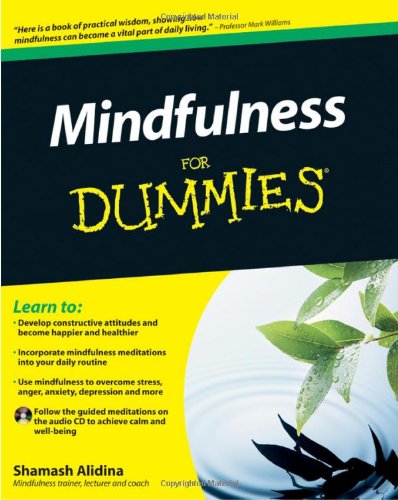
Book: Mindfulness for Dummies

Book Title:

Mindfulness for Dummies.

Author(s): Shamash Alidina.

Year: 2010.

Edition: First.

Publisher: John Wiley & Sons.

Type(s): Paperback, Kindle, and Audiobook.

Synopsis:

A cutting-edge meditation therapy that uses self-control techniques, mindfulness has taken off across the globe as a way of overcoming negative thoughts and emotions and achieving a calmer, more focused state of mind.

Written by a professional mindfulness trainer, this practical guide covers the key self-control techniques designed to help you achieve a more focused and contented state of mind, while maximising the health benefits of mindfulness-from reducing stress, anxiety, and high blood pressure to overcoming depression and low self-esteem and battling chronic pain and insomnia.

Includes self-control techniques (such as body posture, sitting practice and breathing exercises) and routines.

Includes an audio CD featuring narrated meditations and exercises.

Introducing you to a new and powerful form of meditation therapy, Mindfulness For Dummies outlines how to use it in your everyday life to achieve a new level of self-awareness and self-understanding and reap the long-term rewards of better health.

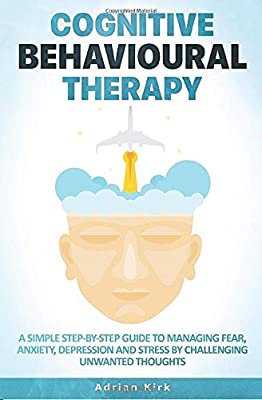
Book: Cognitive Behavioural Therapy

Book Title:

Cognitive Behavioural Therapy: A Simple Step-by-Step Guide to Managing Fear, Anxiety, Depression and Stress by Challenging Unwanted Thoughts.

Author(s): Adrian Kirk.

Year: 2019.

Edition: One.

Publisher: Independently Published.

Type(s): Paperback and Kindle.

Synopsis:

Do you want to significantly improve the way you behave around others by refining your thought patterns?

Do you want to be able to interpret life events from another person’s perspective to help you understand others?

This book will help you achieve those goals!

Many of us interprets information that we receive differently, whether it is at work or elsewhere. As a result, we end up having to deal with problems that others might not understand or even see. This is where Cognitive Behavioural Therapy comes in!

Inside this book, Cognitive Behavioural Therapy: A Simple step-by-step Guide to Managing Fear, Anxiety, Depression and Stress by Challenging Unwanted Thoughts, you will find new ideas and strategies to help you improve the way you approach problems, with chapters that include:

  • Understanding the root causes of your thought pattern.
  • Identifying and challenging your worst nightmares.
  • Setting realistic goals and how to stay on track.
  • Applying exercises to combat unwanted thought.
  • And much more…

This book is ideal for anyone who has never heard of cognitive behavioural therapy before, or for those who are not getting the most from the ones they are currently practising.

Whichever it is, Cognitive Behavioural Therapy: A Simple step-by-step Guide to Managing Fear, Anxiety, Depression and Stress by Challenging Unwanted Thoughts is the book which will provide a platform for success like no other!

Book: Cognitive Behavioural Therapy

Book Title:

Cognitive Behavioral Therapy: A Comprehensive Guide to Using CBT to Overcome Depression, Anxiety, Intrusive Thoughts, and Rewiring Your Brain to Regain Control Over Your Emotions and Life.

Author(s): Stuart Watson.

Year: 2020 (Hardcover) and 2019 (Kindle).

Edition: One.

Publisher: Ationa Publications.

Type(s): Hardcover, Paperback, Kindle and Audiobook.

Synopsis:

If you’re looking for an effective method to treat anxiety, depression, phobias and more, then keep reading…

Cognitive-behavioural therapy, otherwise known as “CBT,” is an incredibly well-known therapy method within the field of psychology. Yet, unless you work within this field you likely know very little about CBT, how it works, and why it is one of the best therapy methods around.

In this book you will learn about the amazing affects this therapy has been proven to have. You can learn how to use CBT from within your own home, helping to treat anxiety, depression, post-traumatic stress disorder, panic disorder, obsessive-compulsive disorder, and more. No longer do you have to suffer in silence, simply existing through life. You can learn to heal and begin to actually live a full life again.

Whether you have been diagnosed with social anxiety disorder, major depression, post-traumatic stress disorder, or simply are struggling throughout your daily life without a diagnosis, CBT can help. While it is always best to go to a professional and receive a diagnosis of your condition, you can also use the tools of CBT independently at home, with or without an official diagnosis.

You can learn to better understand your mind, overcome intrusive thoughts, cope with daily stress, and transform your negative thought patterns into something more positive. CBT is truly transformative, and with a little daily effort, you could possibly change your entire life for the better.

The following are some of the critical things explored in the book:

  • The Basic Premise of CBT and how it Can Benefit You in Daily Life.
  • The Fascinating History of CBT.
  • 16 Common Mistakes and Myths about CBT.
  • An In-Depth Look into What CBT Can Treat and Why it Works.
  • The Key Principles of CBT.
  • Overcoming Anxiety and Depression Step-By-Step.
  • 3 Alternative CBT Approaches.
  • Discover 7 Inspiring Tales of CBT Success.
  • And so much more.