Book: The Nurse’s Guide to Mental Health Medicines

Book Title:

The Nurse’s Guide to Mental Health Medicines.

Author(s): Liz Holland.

Year: 2018.

Edition: First (1st).

Publisher: SAGE Publications Ltd.

Type(s): Hardcover, Paperback and Kindle.

Synopsis:

The Nurse’s Guide to Mental Health Medicines is an invaluable, pocket sized guide to a complex subject. Each chapter provides a short and easy-to-read overview of the different drug types used in mental health nursing, focusses only on the need to know information and the associated risks and side effects. The chapters also provide a short medicines list that gives you fast facts relating to the most common drugs used in practice.

Key features:

  • Simple layout with clear tables putting the facts at your fingertips.
  • Written by nurses for nurses providing the perfect amount of detail for the busy student or practitioner.
  • Clear and simple language combined with real world case studies to cut through the jargon and terminology.

Book: The Maudsley Prescribing Guidelines in Psychiatry

Book Title:

The Maudsley Prescribing Guidelines in Psychiatry (The Maudsley Prescribing Guidelines Series).

Author(s): David M. Taylor, Thomas R.E. Barnes, and Allan H. Young.

Year: 2018.

Edition: Thirteenth (13th).

Publisher: Wiley-Blackwall.

Type(s): Paperback and Kindle.

Synopsis:

The revised 13th edition of the essential reference for the prescribing of drugs for patients with mental health disorders.

The revised and updated 13th edition of The Maudsley Prescribing Guidelines in Psychiatry provides up-to-date information, expert guidance on prescribing practice in mental health, including drug choice, treatment of adverse effects and how to augment or switch medications.

The text covers a wide range of topics including pharmacological interventions for schizophrenia, bipolar disorder, depression and anxiety, and many other less common conditions. There is advice on prescribing in children and adolescents, in substance misuse and in special patient groups. This world-renowned guide has been written in concise terms by an expert team of psychiatrists and specialist pharmacists.

The Guidelines help with complex prescribing problems and include information on prescribing psychotropic medications outside their licensed indications as well as potential interactions with other medications and substances such as alcohol, tobacco and caffeine. In addition, each of the book’s 165 sections features a full reference list so that evidence on which guidance is based can be readily accessed.

This important text: Is the world’s leading clinical resource for evidence-based prescribing in day-to-day clinical practice and for formulating prescribing policy Includes referenced information on topics such as transferring from one medication to another, prescribing psychotropic medications during pregnancy or breastfeeding, and treating patients with comorbid physical conditions, including impaired renal or hepatic function. Presents guidance on complex clinical problems that may not be encountered routinely Written for psychiatrists, neuropharmacologists, pharmacists and clinical psychologists as well as nurses and medical trainees, The Maudsley Prescribing Guidelines in Psychiatry are the established reference source for ensuring the safe and effective use of medications for patients presenting with mental health problems.

Book: Psychiatric Drugs Explained

Book Title:

Psychiatric Drugs Explained.

Author(s): David Healy (MD, FRCPsych).

Year: 2016.

Edition: Sixth (6th).

Publisher: Churchill Livingstone.

Type(s): Paperback.

Synopsis:

Now in its sixth edition, and written by an author internationally recognised in his field, Psychiatric Drugs Explained offers a wealth of information in a handy easy-to-use format. Organised by disorder, and providing a comprehensive review of drug effects, action and side-effects, this fully updated new edition covers the latest drugs on the market, and explores changes in prescribing practice.

The author’s approach is distinctive and reader-friendly, to help guide mental health professionals through the benefits and impacts of psychotropic drugs. Additional topics include management of disorders including stimulants and drugs for children, cognitive impairment and sleep disorders.

  • Includes management of disorders including stimulants and drugs for children, cognitive impairment and sleep disorders.
  • Gives particular focus on areas that are of major concern to mental health practitioners including management of dependence and withdrawal and issues of consent, abuse and liability.
  • ‘User Issues’ boxes highlight the most crucial aspects of drug effects and their implications.
  • Key references point the reader to the most up-to-date research and literature in the field.
  • Fresh design and updated artwork gives added appeal to the volume.
  • Organised by disorder this new edition now covers the latest drugs on the market and explores changes in prescribing practice.
  • Includes updated references pointing the reader to the most recent research and literature in the field.

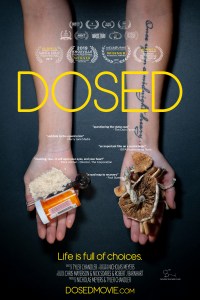
Dosed (2019)

Introduction

An award-winning documentary film about treating anxiety, depression and addiction with psychedelic medicine.

Outline

After years of prescription medications failed her a suicidal woman, Adrianne, turns to underground healers to try and overcome her depression, anxiety, and opioid addiction with illegal psychedelic medicine like magic mushrooms and iboga.

Production & Filming Details

  • Director(s): Tyler Chandler.
  • Producer(s): Robert J. Barnhart, Tyler Chandler, Jason Hodges, Kelley Hodges, Chris Mayerson, Nicholas Meyers, and Nick Soares.
  • Writer(s): Tyler Chandler, Nicholas Meyers, and Jessie Deeter (Story consultant).
  • Music: Jayme McDonald.
  • Cinematography: Nicholas Meyers.
  • Editor(s): Tyler Chandler and Nicholas Meyers.
  • Production: Golden Teacher Films.
  • Release Date: 20 March 2019 (US).
  • Running Time: 82 minutes.

A New Understanding: The Science of Psilocybin (2015)

Introduction

A New Understanding explores the treatment of end-of-life anxiety in terminally ill cancer patients using psilocybin, a psychoactive compound found in some mushrooms, to facilitate deeply spiritual experiences.

Outline

The documentary explores the confluence of science and spirituality in the first psychedelic research studies since the 1970’s with terminally ill patients.

As a society we devote a great deal of attention to treating cancer, but very little to treating the human being who is dying of cancer. The recent resurgence of psychedelic research is once again revealing the power of compounds like psilocybin to profoundly alter our understanding of both life and death. Through the eyes of patients, their loved ones, therapists, and researchers, A New Understanding examines the use of psilocybin in a controlled setting to reduce psychospiritual anxiety, depression, and physical pain.

The treatment aims to help the patient understand that a ‘good’ death is possible, and to help the patient’s family deal well with the dying process. A New Understanding shows patients and their families coming to terms with dying through the skillful treatment of the whole human being. If we can learn to work more skillfully with dying, we will also learn to take better care of life.

Production & Filming Details

  • Director(s): Roslyn Dauber.
  • Producer(s): Robert J Barnhart, Roslyn Dauber, Brady Dial, Matt Humble, Steve McDonald, Jeff Porter, and Mitch Schultz.
  • Music: Brian Satterwhite.
  • Editor(s): Jason Uson.
  • Studio: Red Phoenix Productions.
  • Production: Golden Teacher Films.
  • Release Date: March 2015 (US).
  • Running Time: 55 minutes.
  • Country: US.
  • Langauge: English.

Patients Dependent on Benzodiazepines: Make Alliances

Research Paper Title

Making Alliances With Patients Dependent on Benzodiazepines: A Provider’s Experience.

Abstract

Tens of millions of benzodiazepine (BZD) prescriptions are written annually for the outpatient management of anxiety disorders and insomnia.

Many prescribers do not follow published treatment guidelines for these disorders.

Psychiatric-mental health nurse practitioners (PMHNPs) regularly meet patients who have been treated with BZDs for years.

The dangers posed by outpatient BZD use are recognised, especially among older adults, and their use should be minimised or eliminated.

There are multiple manualised approaches to outpatient down-titration of BZDs, but little evidence about which methods really work.

To effect change, it is essential that PMHNPs establish a sound therapeutic alliance with these patients, especially by using their skills in therapeutic communication.

One major conflict that may occur early in the relationship is the patient’s expectation that the BZD medication regimen will continue indefinitely and their unwillingness to risk discontinuing the drug.

This conflict commonly raises non-adherence to a down-titration plan or patient termination of the relationship.

It is essential that PMHNPs take the time and patience to build strong therapeutic alliances with patients to design and implement a successful BZD discontinuation regimen.

Reference

Amberg, A. (2020) Making Alliances With Patients Dependent on Benzodiazepines: A Provider’s Experience. Journal of Pyschosocial Nursing and Mental Health Services. 58(1), pp.29-32. doi: 10.3928/02793695-20191218-06.

Benzodiazepines & Older Adults

Research Paper Title

Little Helpers No More: A Framework for Collaborative Deprescribing of Benzodiazepines in Older Adults.

Abstract

Benzodiazepines are a class of medications that tend to fly “under the radar” within the general population but nonetheless post a significant risk to older adults when not used appropriately.

The current article aims to shine a spotlight on this medication class along with a framework for a team-based approach to successfully de-escalate use when clinically appropriate.

Reference

Suss, T. & Oldani, M. (2020) Little Helpers No More: A Framework for Collaborative Deprescribing of Benzodiazepines in Older Adults. Journal of Pyschosocial Nursing and Mental Health Services. 58(1), pp.23-28. doi: 10.3928/02793695-20191218-05.

Utility of Add-on Mirtazapine to Clozapine-Responsive Early-Onset Schizophrenia

Research Paper Title

Add-on mirtazapine to clozapine-responsive early-onset schizophrenia.

Abstract

Early-onset schizophrenia is notorious for poor prognostication and treatment-refractoriness.

Clozapine remains a viable option, albeit off-label, but is clearly underutilised in this population.

Use is typically fraught with panoply of drastic side effects.

Here, the authors report on an adolescent case with schizophrenia that responded ultimately to clozapine.

Add-on mirtazapine was advantageous spanning negative and cognitive symptom domains whilst addressing clozapine-related sialorrhea and urinary incontinence.

This might open new venues for such complicated clinical scenarios.

Reference

Moodliar, S., Naguy, A. & Elsori, D.H. (2019) Add-on mirtazapine to clozapine-responsive early-onset schizophrenia. Psychiatry Research. https://doi.org/10.1016/j.psychres.2019.112701.

Mental Health Needs & Visits: Rural vs Urban Residents

Research Paper Title

Rural Residents With Mental Health Needs Have Fewer Care Visits Than Urban Counterparts.

Background

Analysis of a nationally representative sample of adults with mental health needs shows that rural residents have fewer ambulatory mental health visits than their urban counterparts do.

Even among people already on prescription medications for mental health conditions, rural-urban differences are large.

Reference

Kirby, J.B., Zuvekas, S.H., Borsky, A.E. & Ngo-Metzger, Q. (2019) Rural Residents With Mental Health Needs Have Fewer Care Visits Than Urban Counterparts. Health Affairs (Project Hope). 38(12), pp.2057-2060. doi: 10.1377/hlthaff.2019.00369.