Is the PROMIS® v2.0 Cognitive Function Scale a Reliable Measure of Subjective Cognitive Functioning?

Research Paper Title

Normative Reference Values, Reliability, and Item-Level Symptom Endorsement for the PROMIS® v2.0 Cognitive Function-Short Forms 4a, 6a and 8a.

Background

Reliable, valid, and precise measures of perceived cognitive functioning are useful in clinical practice and research. The researchers present normative data, internal consistency statistics, item-level symptom endorsement, and the base rates of symptoms endorsed for the PROMIS® v2.0 Cognitive Function-Short Forms.

Methods

The four-, six -, and eight-item short form of the PROMIS® v2.0 Cognitive Function scale assess subjective cognitive functioning. The researchers stratified the normative sample from the US general population (n = 1,009; 51.1% women) by gender, education, health status, self-reported history of a depression or anxiety diagnosis, and recent mental health symptoms (i.e. feeling anxious or depressed in the past week) and examined cognitive symptom reporting.

Results

Internal consistency was measured using Cronbach’s alpha and ranged from .85 to .95 for all three forms, across all groups. Mann-Whitney U test comparisons showed that individuals with past or present mental health difficulties scored significantly lower (i.e., worse perceived cognitive functioning) on the self-report questionnaires, particularly the eight-item form (history of depression, men: p < .001, Cohen’s d = 1.07; women: p < .001, d = .99; history of anxiety, men: p < .001, d = 1.06; women: p < .001, d = .98; and current mental health symptoms, men: p < .001, d = 1.38; women: p < .001, d = 1.19).

Conclusions

All three short forms of the PROMIS® v2.0 Cognitive Function scale had strong internal consistency reliability, supporting its use as a reliable measure of subjective cognitive functioning. The subgroup differences in perceived cognitive functioning supported the relationship between emotional and cognitive well-being. This study is the first to present normative values and base rates for several community-dwelling subgroups, allowing for precise interpretation of these measures in clinical practice and research.

Reference

Iverson, G.L., Marsh, J.M., Connors, E.J. & Terry, D.P. (2021) Normative Reference Values, Reliability, and Item-Level Symptom Endorsement for the PROMIS® v2.0 Cognitive Function-Short Forms 4a, 6a and 8a. Archives of Clinical Neuropsychology. doi: 10.1093/arclin/acaa128. Online ahead of print.

Are Social Network Connections Essential for Individuals’ Mental Health & Social Development?

Research Paper Title

Social Network Mediation Analysis: A Latent Space Approach.

Background

A social network comprises both actors and the social connections among them. Such connections reflect the dependence among social actors, which is essential for individuals’ mental health and social development.

In this article, the researchers propose a mediation model with a social network as a mediator to investigate the potential mediation role of a social network.

In the model, the dependence among actors is accounted for by a few mutually orthogonal latent dimensions which form a social space. The individuals’ positions in such a latent social space are directly involved in the mediation process between an independent and dependent variable.

After showing that all the latent dimensions are equivalent in terms of their relationship to the social network and the meaning of each dimension is arbitrary, the researchers propose to measure the whole mediation effect of a network.

Although individuals’ positions in the latent space are not unique, they rigorously articulate that the proposed network mediation effect is still well defined. They use a Bayesian estimation method to estimate the model and evaluate its performance through an extensive simulation study under representative conditions.

The usefulness of the network mediation model is demonstrated through an application to a college friendship network.

Reference

Liu, H., Jin, I.H., Zhang, Z. & Yuan, Y. (2020) Social Network Mediation Analysis: A Latent Space Approach. Psychomtrika. doi: 10.1007/s11336-020-09736-z. Online ahead of print.

Does Lockdown Change Health Priorities in the Local Population?

Research Paper Title

Effects of lockdown on emergency room admissions for psychiatric evaluation: an observational study from the AUSL Romagna, Italy.

Background

An observation of the admissions to the emergency room (ER) requiring psychiatric evaluation during the lockdown and investigation of the demographic and clinical variables.

Methods

Retrospective longitudinal observational study of ER accesses for psychiatric evaluation was performed, comparing two periods (09 March to 03 May 2020 vs. 09 March to 03 May 2019). Data (number of admissions, key baseline demographic and clinical variables) were extracted from the ER databases of referral centres in a well-defined geographic area of North-Eastern Italy (Cesena, Ravenna, Forlì, and Rimini).

Results

A 15% reduction of psychiatric referrals was observed, together with a 17% reduction in the total number of patients referring to the ER. This reduction was most evident in the first month of the lockdown period (almost 25% reduction of both referrals and patients). Female gender (OR: 1.52: 95%, CI: 1.12-2.06) and being a local resident (OR: 1.54: 95%CI: 1.02-2.34) were factors associated with the decrease.

Conclusions

Lockdown changed dramatically health priorities in the local population, including people with mental health. The researchers speculate that our observations do not only refer to the confinement due to the lockdown regime but also to fear of contagion and adoption of different coping strategies, especially in women. Key-points During lockdown 15% reduction of psychiatric visits and >17% reduction in the number of psychiatric patients referring to the ER was observed. in the first four weeks of the lockdown almost 25% reduction of both visits and patients was observed Female gender and being a local resident were factors associated with the decrease.

Reference

Beghi, M., Brandolini, R., Casolaro, I., Beghi, E., Cornaggia, C.M., Fraticelli, C., De Paoli, G., Ravani, C., Castelpietra, G. & Ferrari, S. (2020) Effects of lockdown on emergency room admissions for psychiatric evaluation: an observational study from the AUSL Romagna, Italy. International Journal of Psychiatry in Clinical Practice. doi: 10.1080/13651501.2020.1859120.

Transference: A Love Story (2020)

Introduction

A secret threatens the love affair between two nurses in London.

Also known as Transference: A Bipolar Love Story.

Outline

Katarina, a Norwegian nurse in London, embarks on a passionate affair with a fellow immigrant nurse that suffers the consequences of unresolved mental health issues from the lovers’ secret pasts.

Cast

  • Raffaello Degruttola … Nik Coluzzi.
  • Emilie Sofie Johannesen … Katerina Nielsen.
  • Lotte Verbeek … Marieke.
  • Pernille Broch … Camilla.
  • Simone Lahbib … Sophie.
  • Ania Sowinski … Natasha Kocinska.
  • Christina Chong … Natasha Wong.
  • Iggy Blanco … Miguel Cortez.
  • Bea Watson … Senior PU Nurse Lisa.
  • Tyrone Keogh … Douglas Cornell.
  • Dylan McKiernan … Ryan.
  • Liza Mircheva … Laura.
  • Poya Shohani … Kaivan.
  • Reice Weathers … Jay.

Production & Filming Details

  • Director(s): Raffaello Degruttola.
  • Producer(s):
    • Bill Bossert … executive producer.
    • Sérgio Clinkett … consulting producer.
    • Raffaello Degruttola … producer.
    • Emilie Sofie Johannesen … co-producer.
    • Sadie Kaye … co-producer.
    • Simone Lahbib … consulting producer.
    • Poya Shohani … co-producer.
  • Writer(s):
  • Music:
  • Cinematography: Simon Hayes and Phil Summers.
  • Editor(s): Charles Lort-Phillips.
  • Production: Contro Vento Films, Mental Ideas, and AMG Media.
  • Distributor(s):
  • Release Date: 26 June 2020 (Internet, Socially Relevant Film Festival New York).
  • Running Time: 90 minutes.
  • Rating: Unknown.
  • Country: US.
  • Language: English.

Video Link

Complementary Medicine & Integrative Health Approaches to Trauma Therapy & Recovery

Research Paper Title

Introduction to the special issue: Complementary medicine and integrative health approaches to trauma therapy and recovery.

Abstract

The popularity of complementary and integrative health (also complementary integrated health; CIH) approaches has significantly increased in recent years.

According to the National Centre for Complementary and Integrative Health (NCCIH), part of the National Institutes of Health, about 1 in 3 adults and 1 in 9 children used CIH approaches to healing.

Some reports estimate that the use of CIH approaches will continue to increase (Clarke et al., 2015) as these therapies are cost effective and also due to the difficulties in finding trained mental health professionals (Simon et al., 2020).

For the purpose of this special issue, the researchers use the NCCIH’s definition of CIH as “a group of diverse medical and health care systems, practices, and products that are not presently considered to be part of conventional medicine” (Barnes et al., 2004, p. v). However, the integration of these therapies into the health system has not followed the same pattern despite the fact that patients report the need to discuss CIH therapies with their doctors or are actually using them (de Jonge et al., 2018; Jou & Johnson, 2016; Stapleton et al., 2015). This inability to keep up with the demand or patients’ preference is possibly due to providers’ lack of understanding and/or knowledge of these therapies, as well as scientific skepticism (Ali & Katz, 2015; Fletcher et al., 2017).

Using data from the 2012 National Health Interview Survey, Jou & Johnson (2016) identified patterns of CIH use in the United States and reasons for patients’ nondisclosure of the use of these therapies. Patients’ fear of disclosure due to perceived scepticism or disapproval from their provider was frequently attributed as a cause of patients’ nondisclosures to providers about the use of these therapies (Eisenberg et al., 2001; Jou & Johnson, 2016; Thomson et al., 2012).

The arrival of patient-centred care models is beginning to shift the ways we understand the patient’s role in treatment engagement. Patient-centred approaches often emphasize the use of preventative and holistic wellness models that go beyond the use of evidence-based treatments. This approach also seeks to be culturally responsive, which is a key factor in addressing health disparities in the United States (American Psychological Association [APA], 2019).

The Institute of Medicine, in its report on CIH therapies, highlighted the importance of engaging patients in their own care, including having a decision about therapeutic options (Bondurant et al., 2005). Likewise, the Race and Ethnicity Guidelines in Psychology (APA, 2019) recommend psychologists engage the patient’s cultural beliefs, or what Kleinman called the “explanatory belief model” (Kleinman, 1978)- for example, by “aim[ing] to understand and encourage indigenous/ ethnocultural sources of healing within professional practice” (APA, 2019, p. 24).

Reference

Mattar, S. & Frewenm P.A. (2020) Introduction to the special issue: Complementary medicine and integrative health approaches to trauma therapy and recovery. Psychological Trauma. 12(8):821-824. doi: 10.1037/tra0000994.

Book: Nutrition and Mental Health: A Handbook

Book Title:

Nutrition and Mental Health: A Handbook: An Essential Guide to the Relationship Between Diet and Mental Health.

Author(s): Michael Crawford, Oscar Umahro Cadogan, Alexandra J. Richardson, and Martina Watts.

Year: 2008.

Edition: First (1st).

Publisher: Pavilion Publishing (Brighton) Ltd.

Type(s): Hardcover and Paperback.

Synopsis:

The role of nutrition is fundamental to human health and well-being.

It is, however, often overlooked when treating people with mental health problems.

Book: Social Work and Mental Health

Book Title:

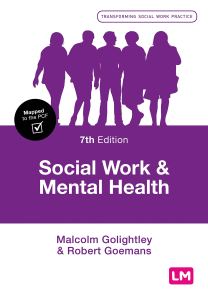
Social Work and Mental Health (Transforming Social Work Practice Series).

Author(s): Malcom Golightley and Robert Goemans.

Year: 2020.

Edition: Seventh (7th).

Publisher: Learning Matters.

Type(s): Hardcover, Paperback and Kindle.

Synopsis:

With 1 in 4 people experiencing a mental health problem in any given year, mental health is a more important part of social work training than ever before, and all successful social workers need to understand the core values, skills and knowledge that underpin excellent practice in a modern mental health system.

Written as an accessible introduction to the complex issues around mental health, this book has become a classic in its field. Law and policy are clearly outlined while the authors give space to important ethical considerations when working with the most vulnerable in society. There are clear links between policy, legislation and real life practice as well as a wealth of learning features.

Book: A Beginner’s Guide to Being Mental: An A-Z

Book Title:

A Beginner’s Guide to Being Mental: An A-Z.

Author(s): Natasha Devon.

Year: 2018.

Edition: First (1st), Main Market Edition.

Publisher: Blue Bird.

Type(s): Paperback, Audiobook and Kindle.

Synopsis:

‘Am I normal?’
‘What’s an anxiety disorder?’
‘Does therapy work?’

These are just a few of the questions Natasha Devon is asked as she travels the UK campaigning for better mental health awareness and provision. Here, Natasha calls upon experts in the fields of psychology, neuroscience and anthropology to debunk and demystify the full spectrum of mental health. From A (Anxiety) to Z (Zero F**ks Given – or the art of having high self-esteem) via everything from body image and gender to differentiating ‘sadness’ from ‘depression’.

Statistically, one in three of us will experience symptoms of a mental illness during our lifetimes. Yet all of us have a brain, and so we ALL have mental health – regardless of age, sexuality, race or background. The past few years have seen an explosion in awareness, yet it seems there is still widespread confusion. A Beginner’s Guide to Being Mental is for anyone who wants to have this essential conversation, written as only Natasha – with her combination of expertise, personal experience and humour – knows how.

Book: Breaking the Barriers

Book Title:

Breaking the Barriers: Early Intervention to Mental Health Issues.

Author(s): Lade Hephzibah Olugbemi.

Year: 2020.

Edition: First (1st).

Publisher: Independently Published.

Type(s): Paperback and Kindle.

Synopsis:

“If you don’t know what your barriers are, it’s impossible to figure out how to tear them down.” – John Manning, author of The Disciplined Leader.

This is true about mental health in the community. Barriers to information and understanding have affected people with mental health issues, as well as their friends, work colleagues and family members. This book seeks to shed light on the many factors that causes barriers to preventing mental health problems. It demystifies the various issues surrounding mental health, especially within the Black, Asian and Minority Ethnic (BAME) communities. It also explores the various factors that trigger mental illness, the role of the media, religion and culture in complicating the barriers.

By reading Breaking The Barriers, you will become more aware of the various issues around mental health, and better equipped to overcoming the barriers.

Book: An Educator’s Guide to Mental Health and Wellbeing in Schools

Book Title:

An Educator’s Guide to Mental Health and Wellbeing in Schools.

Author(s): James Hollinsley.

Year: 2018.

Edition: First (1st).

Publisher: John Catt Educational Ltd.

Type(s): Paperback and Kindle.

Synopsis:

A brilliant and practical collection of essays by educators, psychologists and counsellors, highlighting the critical importance of mental health and wellbeing of students in our schools.

The book has been collated and edited by James Hollinsley, Head of the Longwood Primary Academy in Essex, highly respected and awarded for their proactive approach to child mental health. An absolutely critical read for all those involved in the education of young people, the book offers: a range of best-practice case studies; searingly honest anonymous stories from survivors of poor mental health who have also been (or are) practitioners in schools; and advice from experts and specialists, including psychologists, counsellors and SEN specialists.