What is Unipolar Mania?

Introduction

Unipolar mania is an unrecognised mental illness characterised by episodes of mania and normal mood, with the absence of depressive symptoms.

Refer to Bipolar Disorder.

Background

The concept has its origins as far back as the year 1889, when the German psychiatrist Emil Kraepelin first used the term of “periodic mania” to refer to people with recurrent manic episodes and no depression. One year later, Carl Wernicke proposed that mania and depression should be viewed as separate disorders. As the time went on, unipolar mania became an invalid diagnosis due to its variations across different patients. Currently patients with symptoms of mania, even in the absence of any depressive symptoms, would get the bipolar 1 diagnosis.

Symptoms

Symptoms of unipolar mania are similar to those of bipolar mania. They can include:

  • Elevated self-esteem or grandiosity.
  • Increased motivation or psychomotor agitation.
  • Decreased need for sleep.
  • Unusually talkative.
  • Difficulty maintaining attention.
  • Racing thoughts.
  • Excessive involvement in activities with a high likelihood of painful consequences.(e.g. extravagant shopping, improbable commercial schemes, hypersexuality).

The episode generally have a stronger tendency to present with psychosis or/and need psychiatric assistance.

What is Bipolar I Disorder?

Introduction

Bipolar I disorder (BD-I; pronounced “type one bipolar disorder”) is a type of bipolar spectrum disorder characterised by the occurrence of at least one manic episode, with or without mixed or psychotic features.

Most people also, at other times, have one or more depressive episodes, and all experience a hypomanic stage before progressing to full mania.

It is a type of bipolar disorder, and conforms to the classic concept of manic-depressive illness, which can include psychosis during mood episodes.

Refer to Bipolar II Disorder and Mixed Affective State.

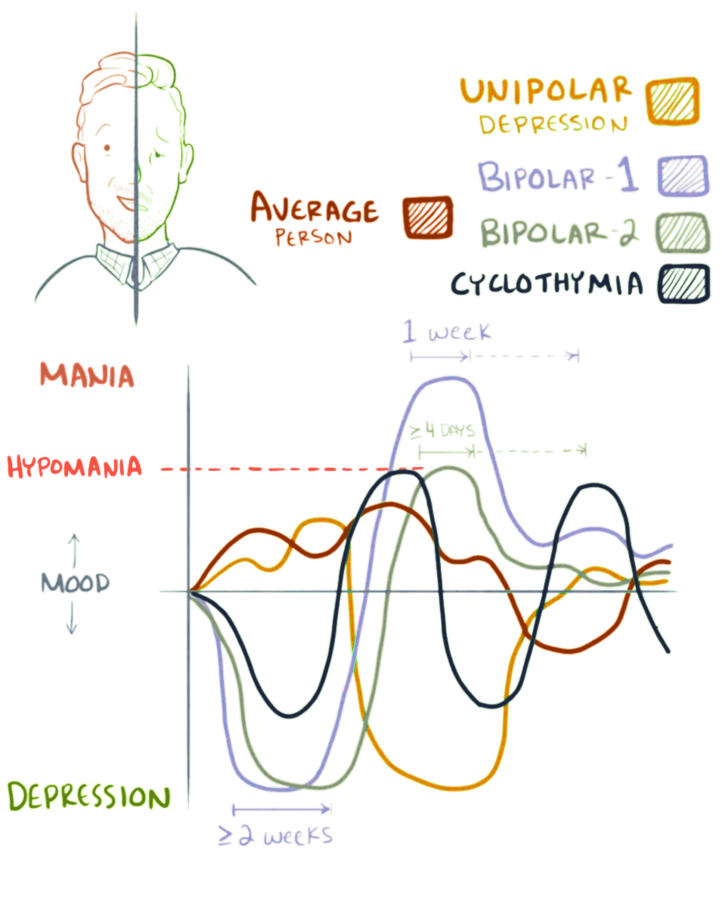
Bipolar mood shifts.

Diagnosis

The essential feature of bipolar I disorder is a clinical course characterised by the occurrence of one or more manic episodes or mixed episodes. Often, individuals have had one or more major depressive episodes. One episode of mania is sufficient to make the diagnosis of bipolar disorder; the person may or may not have a history of major depressive disorder. Episodes of substance-induced mood disorder due to the direct effects of a medication, or other somatic treatments for depression, drug abuse, or toxin exposure, or of mood disorder due to a general medical condition need to be excluded before a diagnosis of bipolar I disorder can be made. Bipolar I disorder requires confirmation of only 1 full manic episode for diagnosis, but may be associated with hypomanic and depressive episodes as well. Diagnosis for bipolar II disorder does not include a full manic episode; instead, it requires the occurrence of both a hypomanic episode and a major depressive episode. Serious aggression has been reported to occur in one of every ten first-major episode BD-I patients with psychotic features, its prevalence in this group being particularly high in association with a recent suicide attempt, alcohol-abuse, learning disability, or manic polarity in the first episode.

Bipolar I disorder (and bipolar II disorder) is often comorbid with other disorders including PTSD, substance use disorders and a variety of mood disorders. Up to 40% of people with bipolar disorder also present with PTSD, with higher rates occurring in women and individuals with bipolar I disorder. In addition, the episodes must not be better accounted for by schizoaffective disorder or superimposed on schizophrenia, schizophreniform disorder, delusional disorder, or a psychotic disorder not otherwise specified.

Medical Assessment

Regular medical assessments are performed to rule-out secondary causes of mania and depression. These tests include complete blood count, glucose, serum chemistry/electrolyte panel, thyroid function test, liver function test, renal function test, urinalysis, vitamin B12 and folate levels, HIV screening, syphilis screening, and pregnancy test, and when clinically indicated, an electrocardiogram (ECG), an electroencephalogram (EEG), a computed tomography (CT scan), and/or a magnetic resonance imagining (MRI) may be ordered. Drug screening includes recreational drugs, particularly synthetic cannabinoids, and exposure to toxins.

Diagnostic and Statistical Manual of Mental Disorders, 4th Edition (DSM-IV-TR)

Dx Code #DisorderDescription
296.0xBipolar ISingle manic episode
296.40Bipolar IMost recent episode hypomanic
296.4xBipolar IMost recent episode manic
296.5xBipolar IMost recent episode depressed
296.6xBipolar IMost recent episode mixed
296.7Bipolar IMost recent episode unspecified

Diagnostic and Statistical Manual of Mental Disorders, 5th Edition (DSM-5)

In May 2013, American Psychiatric Association released the fifth edition of the Diagnostic and Statistical Manual of Mental Disorders (DSM-5). There are several proposed revisions to occur in the diagnostic criteria of Bipolar I Disorder and its subtypes. For Bipolar I Disorder 296.40 (most recent episode hypomanic) and 296.4x (most recent episode manic), the proposed revision includes the following specifiers: with psychotic features, with mixed features, with catatonic features, with rapid cycling, with anxiety (mild to severe), with suicide risk severity, with seasonal pattern, and with postpartum onset. Bipolar I Disorder 296.5x (most recent episode depressed) will include all of the above specifiers plus the following: with melancholic features and with atypical features. The categories for specifiers will be removed in DSM-5 and criterion A will add or there are at least 3 symptoms of major depression of which one of the symptoms is depressed mood or anhedonia. For Bipolar I Disorder 296.7 (most recent episode unspecified), the listed specifiers will be removed.

The criteria for manic and hypomanic episodes in criteria A & B will be edited. Criterion A will include “and present most of the day, nearly every day”, and criterion B will include “and represent a noticeable change from usual behaviour”. These criteria as defined in the DSM-IV-TR have created confusion for clinicians and need to be more clearly defined.

There have also been proposed revisions to criterion B of the diagnostic criteria for a Hypomanic Episode, which is used to diagnose For Bipolar I Disorder 296.40, Most Recent Episode Hypomanic. Criterion B lists “inflated self-esteem, flight of ideas, distractibility, and decreased need for sleep” as symptoms of a Hypomanic Episode. This has been confusing in the field of child psychiatry because these symptoms closely overlap with symptoms of attention deficit hyperactivity disorder (ADHD).

Note that many of the above changes are still under active consideration and are not definite. For more information regarding proposed revisions to the DSM-5, please visit their website at dsm5.org.

ICD-10

  • F31 Bipolar Affective Disorder.
  • F31.6 Bipolar Affective Disorder, Current Episode Mixed.
  • F30 Manic Episode.
  • F30.0 Hypomania.
  • F30.1 Mania Without Psychotic Symptoms.
  • F30.2 Mania With Psychotic Symptoms.
  • F32 Depressive Episode.
  • F32.0 Mild Depressive Episode.
  • F32.1 Moderate Depressive Episode.
  • F32.2 Severe Depressive Episode Without Psychotic Symptoms.
  • F32.3 Severe Depressive Episode With Psychotic Symptoms.

Treatment

Medication

Mood stabilisers are often used as part of the treatment process.

  • Lithium is the mainstay in the management of bipolar disorder but it has a narrow therapeutic range and typically requires monitoring.
  • Anticonvulsants, such as valproate, carbamazepine, or lamotrigine.
  • Atypical antipsychotics, such as quetiapine, risperidone, olanzapine, or aripiprazole.
  • Electroconvulsive therapy, a psychiatric treatment in which seizures are electrically induced in anesthetised patients for therapeutic effect.

Antidepressant-induced mania occurs in 20-40% of people with bipolar disorder. Mood stabilisers, especially lithium, may protect against this effect, but some research contradicts this.

A frequent problem in these individuals is nonadherence to pharmacological treatment; long-acting injectable antipsychotics may contribute to solving this issue in some patients.

A review of validated treatment guidelines for bipolar disorder by international bodies was published in 2020.

Education

Psychosocial interventions can be used for managing acute depressive episodes and for maintenance treatment to aid in relapse prevention. This includes psycho education, cognitive behavioural therapy (CBT), family-focused therapy (FFT), interpersonal and social-rhythm therapy (IPSRT), and peer support.

Information on the condition, importance of regular sleep patterns, routines and eating habits and the importance of compliance with medication as prescribed. Behaviour modification through counselling can have positive influence to help reduce the effects of risky behaviour during the manic phase. Additionally, the lifetime prevalence for bipolar I disorder is estimated to be 1%.

Mnemophrenia (2019)

Introduction

Mnemophrenia is a futuristic drama about a new psychosis that arises from advanced virtual reality technology, which causes people to be unable to distinguish between real and artificial memories.

Outline

The film explores how society is affected by and how it adapts to deal with Mnemophrenia, a growing new psychosis and the still advancing technology. We see the story unfold over time, through the eyes of three generations of the same family who are all affected and involved in different ways. The story explores how attitudes to Mnemophrenia would differ from person to person and across generations, going from resistance and fear, through acceptance and eventually even using it to our benefit, pushing humanity towards a new evolutionary step.

Cast

  • Freya Berry … Jeanette Harper.
  • Robin King … Nicholas Morgan.
  • Tim Seyfert … Douglas.
  • Tallulah Sheffield … Robyin.
  • Jamie Laird … Will Hall.
  • Robert Milton Wallace … Charlie.
  • Dominic O’Flynn … Michael Murphy.
  • Angela Peters … Keri Taylor.
  • Anna Brook … Nina.
  • Michael Buckster … Richard.
  • Gary Cargill … Jim.
  • Steve Hope Wynne … David Quinn.
  • Lisa Caruccio Came … Anna Lyons.
  • Cally Lawrence … Tessa Fox.
  • John Morton … Self.

Trivia

  • The word ‘mnemophrenia’ was coined especially for the film.
    • It is a portmanteau of the words ‘mneme’ and ‘schizophrenia’.
    • In the film ‘Mnemophrenia’ the word is defined as: ‘A condition or a state characterised by the coexistence of real and artificial memories, which affects the subject’s sense of identity.’
  • The director, Eirini Konstantinidou, used improvisation in order to build the characters and the shooting script for the whole film.
    • She believes that the realistic dialogue and performances that are achieved through improvisation contribute to the intended blurring of the distinction between reality and fiction.
    • Part 1 needed to be made first and edited in order for the actors of the following period (part 2) to watch it and build their characters’ experiences from what they have watched; according to the premise of the film these video recordings become part of their memories and identity.
    • That is the process that the actors of part 3 had to go through as well.
    • This technique allows for an organic development of the characters and dialogue, which is a result of the creative collaboration between the actors and herself.

Production & Filming Details

  • Director(s):
    • Eirini Konstantinidou.
  • Producer(s):
    • Robin King … assistant producer.
    • Eirini Konstantinidou … producer.
  • Writer(s):
    • Eirini Konstantinidou … (writer).
    • Robin King … (co-writer).
    • Eirini Konstantinidou … (original story).
    • Gary Cargill … (additional material).
    • Cally Lawrence … (additional material).
    • Robert Milton Wallace … (additional material).
    • Freya Berry … (additional material).
    • Michael Buckster … (additional material).
    • Tallulah Sheffield … (additional material).
    • Tim Seyfert … (additional material).
    • Angela Peters … (additional material).
    • Anna Brook … (additional material).
    • Dominic O’Flynn … (additional material).
    • Jamie Laird … (additional material).
    • Lisa Came … (additional material).
  • Music:
    • Corey Zack.
  • Cinematography:
    • Mirko Beutler … (part one: “The Beginning”).
    • Petros Nousias … (part three: “Homo Mnemonicus”).
    • Richard Thomas … (part two: “Total Cinema”).
  • Editor(s):
    • Giorgio Galli.
  • Production:
    • EK Productions.
    • Quoxel.
  • Distributor(s):
    • Indie Rights (2019) (World-wide) (all media).
  • Release Date: 11 February 2019 (US, Boston Science Fiction Film Festival).
  • Running Time: 78 minutes.
  • Rating: Unknown.
  • Country: US.
  • Language: English.

What is Metacognitive Training?

Introduction

Metacognitive training, (MCT), is an approach for treating the symptoms of psychosis in schizophrenia, especially delusions, which has been adapted for other disorders such as depression, obsessive-compulsive disorder and borderline personality disorder over the years (see below and external links for free download).

It was developed by Steffen Moritz and Todd Woodward. The intervention is based on the theoretical principles of cognitive behavioural therapy (CBT), but focuses in particular on problematic thinking styles (cognitive biases) that are associated with the development and maintenance of positive symptoms, e.g. overconfidence in errors and jumping to conclusions. Metacognitive training exists as a group training (MCT) and as an individualized intervention (MCT+).

Refer to Metacognitive Therapy.

Background

Metacognition can be defined as “thinking about thinking”. Over the course of the training, cognitive biases subserving positive symptoms are identified and corrected. The current empirical evidence assumes a connection between certain cognitive biases, such as jumping to conclusions, and the development and maintenance of psychosis. Accordingly, correcting these problematic/unhelpful thinking styles should lead to a reduction of symptoms.

Intervention

In eight training units (modules) and two additional modules, examples of “cognitive traps”, which can promote the development and maintenance of the positive symptoms of schizophrenia, are presented to patients in a playful way. Patients are instructed to critically reflect on their thought patterns, which may contribute to problematic behaviours, and to implement the contents of the training in everyday life. MCT deals with the following problematic styles of thinking: monocausal attributions, jumping to conclusions, inflexibility, problems in social cognition, overconfidence for memory errors and depressive thought patterns. The additional modules deal with stigma and low self-esteem. Individualised metacognitive training (MCT+) targets the same symptoms and cognitive biases as the group training, but is more flexible in that it allows discussion of individualised topics. The treatment materials for the group training can be obtained free of charge in over 30 languages from the website.

Efficacy

A recent meta-analysis found significant improvements for positive symptoms and delusions, as well as the acceptance of the training. These findings have been replicated in 2018 and 2019. An older meta-analysis based on a smaller number of studies found a small effect, which reached significance when newer studies were considered. Individual studies provide evidence for the long-term effectiveness of the approach beyond the immediate treatment period. MCT is recommended as an evidence-based treatment by the Royal Australian and New Zealand College of Psychiatrists as well as the German Association for Psychiatry, Psychotherapy and Psychosomatics.

Adaptations to other Disorders

Since its introduction, MCT has been adapted to other mental disorders. Empirical studies have been carried out for borderline personality disorder, obsessive-compulsive disorder (self-help approach), depression, bipolar disorders, and problem gambling.

Links (External)

Book: Delusions and Delusion Disorder

Book Title:

Delusions and Delusional Disorder: The Power to Heal Someone from Mental Disorder.

Mental Health – Psychosis Symptoms and What To Do.

Author(s): Jon Carson.

Year: 2021.

Edition: First (1st).

Publisher: Independently Published.

Type(s): Paperback and Kindle.

Synopsis:

Delusional disorder, recently called paranoid disorder, is a kind of genuine mental illness called a psychotic disorder. Individuals who have it can’t determine what’s genuine based on what is envisioned. Delusions are the fundamental manifestation of delusional disorder. They are relentless convictions in something that is not correct or dependent on the real world.

Individuals with the delusional disorder frequently can proceed to mingle and work regularly, aside from the subject of their dream, and by and large, do not carry on in a clearly odd or strange way.

The study material provides summarised various answers to the questions that are likely to be the in minds of readers. This covers:

  • Vivid introduction delusional disorder.
  • Various types of delusion.
  • What are the indications of delusional disorder?
  • What are the causes and dangerous elements of delusional disorder?
  • Could pressure cause delusions?
  • How is a delusional disorder diagnosed?
  • Treatment of delusional disorder treated.
  • What are the intricacies of delusion disorder?
  • What’s the standpoint for individuals with the delusional disorder?
  • Can the delusional disorder be forestalled?
  • Supportive activities when somebody who has a psychological sickness is encountering hallucinations, delusions, or paranoia.

What is a Typical Antipsychotic?

Introduction

Typical antipsychotics (also known as major tranquilisers, or first generation antipsychotics) are a class of antipsychotic drugs first developed in the 1950s and used to treat psychosis (in particular, schizophrenia).

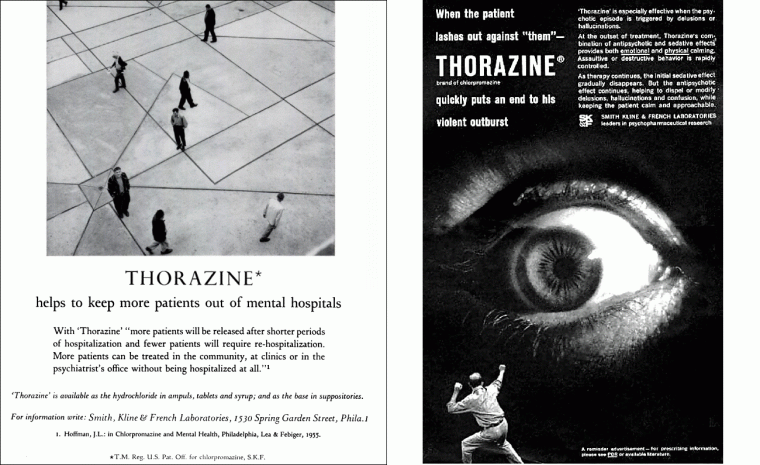
Advertisement for Thorazine (chlorpromazine) from the 1950s, reflecting the perceptions of psychosis, including the now-discredited perception of a tendency towards violence, from the time when antipsychotics were discovered.

Typical antipsychotics may also be used for the treatment of acute mania, agitation, and other conditions. The first typical antipsychotics to come into medical use were the phenothiazines, namely chlorpromazine which was discovered serendipitously. Another prominent grouping of antipsychotics are the butyrophenones, an example of which is haloperidol. The newer, second-generation antipsychotics, also known as atypical antipsychotics, have largely supplanted the use of typical antipsychotics as first-line agents due to the higher risk of movement disorders in the latter.

Both generations of medication tend to block receptors in the brain’s dopamine pathways, but atypicals at the time of marketing were claimed to differ from typical antipsychotics in that they are less likely to cause extrapyramidal symptoms (EPS), which include unsteady Parkinson’s disease-type movements, internal restlessness, and other involuntary movements (e.g. tardive dyskinesia, which can persist after stopping the medication). More recent research has demonstrated the side effect profile of these drugs is similar to older drugs, causing the leading medical journal The Lancet to write in its editorial “the time has come to abandon the terms first-generation and second-generation antipsychotics, as they do not merit this distinction.” While typical antipsychotics are more likely to cause EPS, atypicals are more likely to cause adverse metabolic effects, such as weight gain and increase the risk for type II diabetes.

Brief History

The original antipsychotic drugs were happened upon largely by chance and then tested for their effectiveness. The first, chlorpromazine, was developed as a surgical anaesthetic after an initial report in 1952. It was first used in psychiatric institutions because of its powerful tranquilising effect; at the time it was regarded as a non-permanent “pharmacological lobotomy” (Note that “tranquilizing” here only refers to changes in external behaviour, while the experience a person has internally may be one of increased agitation but inability to express it).

Until the 1970s there was considerable debate within psychiatry on the most appropriate term to use to describe the new drugs. In the late 1950s the most widely used term was “neuroleptic”, followed by “major tranquilizer” and then “ataraxic”. The word neuroleptic was coined in 1955 by Delay and Deniker after their discovery (1952) of the antipsychotic effects of chlorpromazine. It is derived from the Greek: “νεῦρον” (neuron, originally meaning “sinew” but today referring to the nerves) and “λαμβάνω” (lambanō, meaning “take hold of”). Thus, the word means taking hold of one’s nerves. It was often taken to refer also to common effects such as reduced activity in general, as well as lethargy and impaired motor control. Although these effects are unpleasant and harmful, they were, along with akathisia, considered a reliable sign that the drug was working. These terms have been largely replaced by the term “antipsychotic” in medical and advertising literature, which refers to the medication’s more-marketable effects.

Clinical Uses

Typical antipsychotics block the dopamine 2 receptor (D2) receptor, causing a tranquilising effect. It is thought that 60-80% of D2 receptors need to be occupied for antipsychotic effect. For reference, the typical antipsychotic haloperidol tends to block about 80% of D2 receptors at doses ranging from 2 to 5 mg per day. On the aggregate level, no typical antipsychotic is more effective than any other, though people will vary in which antipsychotic they prefer to take (based on individual differences in tolerability and effectiveness). Typical antipsychotics can be used to treat, e.g. schizophrenia or severe agitation. Haloperidol, due to the availability of a rapid-acting injectable formulation and decades of use, remains the most commonly used tranquilizer for chemical restraint in the emergency department setting (in the interests of hospital staff, not to meet a medical need of the patient).

Adverse Effects

Adverse effects vary among the various agents in this class of medications, but common effects include: dry mouth, muscle stiffness, muscle cramping, tremors, EPS and weight gain. EPS refers to a cluster of symptoms consisting of akathisia, parkinsonism, and dystonia. Anticholinergics such as benztropine and diphenhydramine are commonly prescribed to treat the EPS. 4% of users develop rabbit syndrome while on typical antipsychotics.

There is a risk of developing a serious condition called tardive dyskinesia as a side effect of antipsychotics, including typical antipsychotics. The risk of developing tardive dyskinesia after chronic typical antipsychotic usage varies on several factors, such as age and gender, as well as the specific antipsychotic used. The commonly reported incidence of TD among younger patients is about 5% per year. Among older patients incidence rates as high as 20% per year have been reported. The average prevalence is approximately 30%. There are few treatments that have consistently been shown to be effective for the treatment of tardive dyskinesia, though an VMAT2 inhibitor like valbenazine may help. The atypical antipsychotic clozapine has also been suggested as an alternative antipsychotic for patients experiencing tardive dyskinesia. Tardive dyskinesia may reverse upon discontinuation of the offending agent or it may be irreversible, withdrawal may also make tardive dyskinesia more severe.

Neuroleptic malignant syndrome, or NMS, is a rare, but potentially fatal side effect of antipsychotic treatment. NMS is characterized by fever, muscle rigidity, autonomic dysfunction, and altered mental status. Treatment includes discontinuation of the offending agent and supportive care.

The role of typical antipsychotics has come into question recently as studies have suggested that typical antipsychotics may increase the risk of death in elderly patients. A retrospective cohort study from the New England Journal of Medicine on 01 December 2005 showed an increase in risk of death with the use of typical antipsychotics that was on par with the increase shown with atypical antipsychotics. This has led some to question the common use of antipsychotics for the treatment of agitation in the elderly, particularly with the availability of alternatives such as mood stabilising and antiepileptic drugs.

Potency

Traditional antipsychotics are classified as high-potency, mid-potency, or low-potency based on their potency for the D2 receptor as noted in the table below.

PotencyExamplesAdverse Effect Profile
HighFluphenazine and HaloperidolMore extrapyramidal side effects (EPS) and less antihistaminic effects (e.g. sedation), alpha adrenergic antagonism (e.g. orthostatic hypotension), and anticholinergic effects (e.g. dry mouth).
MediumPerphenazine and LoxapineIntermediate D2 affinity, with more off-target effects than high-potency agents.
LowChlorpromazineLess risk of EPS but more antihistaminic effects, alpha adrenergic antagonism, and anticholinergic effects.

Prochlorperazine (Compazine, Buccastem, Stemetil) and Pimozide (Orap) are less commonly used to treat psychotic states, and so are sometimes excluded from this classification.

A related concept to D2 potency is the concept of “chlorpromazine equivalence”, which provides a measure of the relative effectiveness of antipsychotics. The measure specifies the amount (mass) in milligrams of a given drug that must be administered in order to achieve desired effects equivalent to those of 100 milligrams of chlorpromazine. Another method is “defined daily dose” (DDD), which is the assumed average dose of an antipsychotic that an adult would receive during long-term treatment. DDD is primarily used for comparing the utilization of antipsychotics (e.g. in an insurance claim database), rather than comparing therapeutic effects between antipsychotics. Maximum dose methods are sometimes used to compare between antipsychotics as well. It is important to note that these methods do not generally account for differences between the tolerability (i.e. the risk of side effects) or the safety between medications.

Below is list of typical antipsychotics organised by potency.

  • Low potency:
    • Chlorpromazine.
    • Chlorprothixene.
    • Levomepromazine.
    • Mesoridazine.
    • Periciazine.
    • Promazine.
    • Thioridazine (withdrawn by brand-name manufacturer and most countries, and since discontinued).
  • Medium potency:
    • Loxapine.
    • Molindone.
    • Perphenazine.
    • Thiothixene.
  • High potency:
    • Droperidol.
    • Flupentixol.
    • Fluphenazine.
    • Haloperidol.
    • Pimozide.
    • Prochlorperazine.
    • Thioproperazine.
    • Trifluoperazine.
    • Zuclopenthixol.

Long-Acting Injectables

Some typical antipsychotics have been formulated as a long-acting injectable (LAI), or “depot”, formulation. Depot injections are also used on persons under involuntary commitment to force compliance with a court treatment order when the person would refuse to take daily oral medication. This has the effect of dosing a person who doesn’t consent to take the drug. The United Nations Special Rapporteur On Torture has classified this as a human rights violation and cruel or inhuman treatment.

The first LAI antipsychotics (often referred to as simply “LAIs”) were the typical antipsychotics fluphenazine and haloperidol. Both fluphenazile and haloperidol are formulated as decanoates, referring to the attachment of a decanoic acid group to the antipsychotic molecule. These are then dissolved in an organic oil. Together, these modifications prevent the active medications from being released immediately upon injection, attaining a slow release of the active medications (note, though, that the fluphenazine decanoate product is unique for reaching peak fluphenazine blood levels within 24 hours after administration). Fluphenazine decanoate can be administered every 7 to 21 days (usually every 14 to 28 days), while haloperidol decanoate can be administered every 28 days, though some people receive more or less frequent injections. If a scheduled injection of either haloperidol decanoate or fluphenazine decanoate is missed, recommendations for administering make-up injectable dose(s) or providing antipsychotics to be taken by mouth vary by, e.g. how long ago the last injection was and how many previous injections the person has received (i.e. if steady state levels of the medication have been reached or not).

Both of the typical antipsychotic LAIs are inexpensive in comparison to the atypical LAIs. Doctors usually prefer atypical LAIs over typical LAIs due to the differences in adverse effects between typical and atypical antipsychotics in general.

What is Thioridazine?

Introduction

Thioridazine (Mellaril or Melleril) is a first generation antipsychotic drug belonging to the phenothiazine drug group and was previously widely used in the treatment of schizophrenia and psychosis.

The branded product was withdrawn worldwide in 2005 because it caused severe cardiac arrhythmias. However, generic versions are still available in the US.

Brief History

The manufacturer Novartis/Sandoz/Wander of the brands of thioridazine, Mellaril in the US and Canada and Melleril in Europe, discontinued the drug worldwide in June 2005.

Indications

Thioridazine was voluntarily discontinued by its manufacturer, Novartis, worldwide because it caused severe cardiac arrhythmias.

Its primary use in medicine was the treatment of schizophrenia. It was also tried with some success as a treatment for various psychiatric symptoms seen in people with dementia, but chronic use of thioridazine and other anti-psychotics in people with dementia is not recommended.

Side Effects

Thioridazine prolongs the QTc interval in a dose-dependent manner. It produces significantly less extrapyramidal side effects than most first-generation antipsychotics. Its use, along with the use of other typical antipsychotics, has been associated with degenerative retinopathies. It has a higher propensity for causing anticholinergic side effects coupled with a lower propensity for causing extrapyramidal side effects and sedation than chlorpromazine, but also has a higher incidence of hypotension and cardiotoxicity. It is also known to possess a relatively high liability for causing orthostatic hypotension compared to other antipsychotics. Similarly to other first-generation antipsychotics it has a relatively high liability for causing prolactin elevation. It is moderate risk for causing weight gain. As with all antipsychotics thioridazine has been linked to cases of tardive dyskinesia (an often permanent neurological disorder characterised by slow, repetitive, purposeless and involuntary movements, most often of the facial muscles, that is usually brought on by years of continued treatment with antipsychotics, especially the first-generation (or typical) antipsychotics such as thioridazine) and neuroleptic malignant syndrome (a potentially fatal complication of antipsychotic treatment). Blood dyscrasias such as agranulocytosis, leukopenia and neutropenia are possible with thioridazine treatment. Thioridazine is also associated with abnormal retinal pigmentation after many years of use. Thioridazine has been correlated to rare instances of clinically apparent acute cholestatic liver injury.

Metabolism

Thioridazine is a racemic compound with two enantiomers, both of which are metabolised, according to Eap et al., by CYP2D6 into (S)- and (R)-thioridazine-2-sulfoxide, better known as mesoridazine, and into (S)- and (R)-thioridazine-5-sulfoxide. Mesoridazine is in turn metabolized into sulforidazine. Thioridazine is an inhibitor of CYP1A2 and CYP3A4.

Antibiotic Activity

Thioridazine is known to kill extensively drug-resistant tuberculosis and to make methicillin-resistant Staphylococcus aureus sensitive to β-lactam antibiotics. A possible mechanism of action for the drug’s antibiotic activity is via the inhibition of bacterial secretion pumps. The β-lactam antibiotic resistance is due to the secretion β-lactamase a protein that destroys antibiotics. If the bacteria cannot secrete the β-lactamase, then the antibiotic will be effective.

What is an Antipsychotic?

Introduction

Antipsychotics, also known as neuroleptics, are a class of psychotropic medication primarily used to manage psychosis (including delusions, hallucinations, paranoia or disordered thought), principally in schizophrenia but also in a range of other psychotic disorders.

They are also the mainstay together with mood stabilisers in the treatment of bipolar disorder.

Recent research has shown that use of any antipsychotic results in smaller brain tissue volumes and that this brain shrinkage is dose dependent and time dependent. A review of the research has also reinforced this effect.

The use of antipsychotics may result in many unwanted side effects such as involuntary movement disorders, gynecomastia, impotence, weight gain and metabolic syndrome. Long-term use can produce adverse effects such as tardive dyskinesia.

First-generation antipsychotics, known as typical antipsychotics, were first introduced in the 1950s, and others were developed until the early 1970s. Second-generation drugs, known as atypical antipsychotics, were introduced firstly with clozapine in the early 1970s followed by others. Both generations of medication block receptors in the brain for dopamine, but atypicals tend to act on serotonin receptors as well. Neuroleptic, originating from Greek: νεῦρον (neuron) and λαμβάνω (take hold of) – thus meaning “which takes the nerve” – refers to both common neurological effects and side effects.

Brief History

The original antipsychotic drugs were happened upon largely by chance and then tested for their effectiveness. The first, chlorpromazine, was developed as a surgical anaesthetic. It was first used on psychiatric patients because of its powerful calming effect; at the time it was regarded as a non-permanent “pharmacological lobotomy”. Lobotomy at the time was used to treat many behavioural disorders, including psychosis, although its effect was to markedly reduce behaviour and mental functioning of all types. However, chlorpromazine proved to reduce the effects of psychosis in a more effective and specific manner than lobotomy, even though it was known to be capable of causing severe sedation. The underlying neurochemistry involved has since been studied in detail, and subsequent antipsychotic drugs have been discovered by an approach that incorporates this sort of information.

The discovery of chlorpromazine’s psychoactive effects in 1952 led to further research that resulted in the development of antidepressants, anxiolytics, and the majority of other drugs now used in the management of psychiatric conditions. In 1952, Henri Laborit described chlorpromazine only as inducing indifference towards what was happening around them in nonpsychotic, non-manic patients, and Jean Delay and Pierre Deniker described it as controlling manic or psychotic agitation. The former claimed to have discovered a treatment for agitation in anyone, and the latter team claimed to have discovered a treatment for psychotic illness.

Until the 1970s there was considerable debate within psychiatry on the most appropriate term to use to describe the new drugs. In the late 1950s the most widely used term was “neuroleptic”, followed by “major tranquilizer” and then “ataraxic”. The first recorded use of the term tranquilizer dates from the early nineteenth century. In 1953 Frederik F. Yonkman, a chemist at the Swiss-based Cibapharmaceutical company, first used the term tranquiliser to differentiate reserpine from the older sedatives. The word neuroleptic was coined in 1955 by Delay and Deniker after their discovery (1952) of the antipsychotic effects of chlorpromazine. It is derived from the Greek: “νεῦρον” (neuron, originally meaning “sinew” but today referring to the nerves) and “λαμβάνω” (lambanō, meaning “take hold of”). Thus, the word means taking hold of one’s nerves. It was often taken to refer also to common side effects such as reduced activity in general, as well as lethargy and impaired motor control. Although these effects are unpleasant and in some cases harmful, they were at one time, along with akathisia, considered a reliable sign that the drug was working. The term “ataraxy” was coined by the neurologist Howard Fabing and the classicist Alister Cameron to describe the observed effect of psychic indifference and detachment in patients treated with chlorpromazine. This term derived from the Greek adjective “ἀτάρακτος” (ataraktos), which means “not disturbed, not excited, without confusion, steady, calm”. In the use of the terms “tranquiliser” and “ataractic”, medical practitioners distinguished between the “major tranquilizers” or “major ataractics”, which referred to drugs used to treat psychoses, and the “minor tranquilizers” or “minor ataractics”, which referred to drugs used to treat neuroses. While popular during the 1950s, these terms are infrequently used today. They are being abandoned in favour of “antipsychotic”, which refers to the drug’s desired effects. Today, “minor tranquiliser” can refer to anxiolytic and/or hypnotic drugs such as the benzodiazepines and nonbenzodiazepines, which have some antipsychotic properties and are recommended for concurrent use with antipsychotics, and are useful for insomnia or drug-induced psychosis. They are potentially addictive sedatives.

Antipsychotics are broadly divided into two groups, the typical or first-generation antipsychotics and the atypical or second-generation antipsychotics. The difference between first- and second-generation antipsychotics is a subject of debate. The second-generation antipsychotics are generally distinguishable by the presence of 5HT2A receptor antagonism and a corresponding lower propensity for extrapyramidal side effects compared to first-generation antipsychotics.

Medical Uses

Antipsychotics are most frequently used for the following conditions:

  • Schizophrenia.
  • Schizoaffective disorder most commonly in conjunction with either an antidepressant (in the case of the depressive subtype) or a mood stabiliser (in the case of the bipolar subtype).
  • Bipolar disorder (acute mania and mixed episodes) may be treated with either typical or atypical antipsychotics, although atypical antipsychotics are usually preferred because they tend to have more favourable adverse effect profiles and, according to a recent meta-analysis, they tend to have a lower liability for causing conversion from mania to depression.
  • Psychotic depression. In this indication it is a common practice for the psychiatrist to prescribe a combination of an atypical antipsychotic and an antidepressant as this practice is best supported by the evidence.
  • Treatment resistant depression as an adjunct to standard antidepressant therapy.

Antipsychotics are generally not recommended for treating behavioural problems associated with dementia, given that the risk of use tends to be greater than the potential benefit. The same can be said for insomnia, in which they are not recommended as first-line therapy. There are evidence-based indications for using antipsychotics in children (e.g. tic disorder, bipolar disorder, psychosis), but the use of antipsychotics outside of those contexts (e.g. to treat behavioural problems) warrants significant caution.

Schizophrenia

Antipsychotic drug treatment is a key component of schizophrenia treatment recommendations by the National Institute of Health and Care Excellence (NICE), the American Psychiatric Association, and the British Society for Psychopharmacology. The main aim of treatment with antipsychotics is to reduce the positive symptoms of psychosis that include delusions and hallucinations. There is mixed evidence to support a significant impact of antipsychotic use on negative symptoms (such as apathy, lack of emotional affect, and lack of interest in social interactions) or on the cognitive symptoms (memory impairments, reduced ability to plan and execute tasks). In general, the efficacy of antipsychotic treatment in reducing both positive and negative symptoms appears to increase with increasing severity of baseline symptoms. All antipsychotic medications work relatively the same way, by antagonising D2 dopamine receptors. However, there are some differences when it comes to typical and atypical antipsychotics. For example, atypical antipsychotic medications have been seen to lower the neurocognitive impairment associated with schizophrenia more so than conventional antipsychotics, although the reasoning and mechanics of this are still unclear to researchers.

Applications of antipsychotic drugs in the treatment of schizophrenia include prophylaxis in those showing symptoms that suggest that they are at high risk of developing psychosis, treatment of first episode psychosis, maintenance therapy (a form of prophylaxis, maintenance therapy aims to maintain therapeutic benefit and prevent symptom relapse), and treatment of recurrent episodes of acute psychosis.

Prevention of Psychosis and Symptom Improvement

Test batteries such as the PACE (Personal Assessment and Crisis Evaluation Clinic) and COPS (Criteria of Prodromal Syndromes), which measure low-level psychotic symptoms and cognitive disturbances, are used to evaluate people with early, low-level symptoms of psychosis. Test results are combined with family history information to identify patients in the “high-risk” group; they are considered to have a 20-40% risk of progression to frank psychosis within two years. These patients are often treated with low doses of antipsychotic drugs with the goal of reducing their symptoms and preventing progression to frank psychosis. While generally useful for reducing symptoms, clinical trials to date show little evidence that early use of antipsychotics improves long-term outcomes in those with prodromal symptoms, either alone or in combination with cognitive behavioural therapy (CBT).

First Episode Psychosis

First episode psychosis (FEP), is the first time that psychotic symptoms are presented. NICE recommends that all persons presenting with first episode psychosis be treated with both an antipsychotic drug, and CBT. NICE further recommends that those expressing a preference for CBT alone are informed that combination treatment is more effective. A diagnosis of schizophrenia is not made at this time as it takes longer to determine by both DSM-5 and ICD-11, and only around 60% of those presenting with a first episode psychosis will later be diagnosed with schizophrenia.

The conversion rate for a first episode drug induced psychosis to bipolar disorder or schizophrenia are lower, with 30% of people converting to either bipolar disorder or schizophrenia. NICE makes no distinction between a substance-induced psychosis, and any other form of psychosis. The rate of conversion differs for different classes of drug.

Pharmacological options for the specific treatment of FEP have been discussed in recent reviews. The goals of treatment for FEP include reducing symptoms and potentially improving long-term treatment outcomes. Randomised clinical trials have provided evidence for the efficacy of antipsychotic drugs in achieving the former goal, with first-generation and second generation antipsychotics showing about equal efficacy. Evidence that early treatment has a favourable effect on long term outcomes is equivocal.

Recurrent Psychotic Episodes

Placebo controlled trials of both first and second generation antipsychotic drugs consistently demonstrate the superiority of active drug to placebo in suppressing psychotic symptoms. A large meta-analysis of 38 trials of antipsychotic drugs in schizophrenia acute psychotic episodes showed an effect size of about 0.5. There is little or no difference in efficacy among approved antipsychotic drugs, including both first- and second-generation agents. The efficacy of such drugs is suboptimal. Few patients achieve complete resolution of symptoms. Response rates, calculated using various cutoff values for symptom reduction, are low and their interpretation is complicated by high placebo response rates and selective publication of clinical trial results.

Maintenance Therapy

The majority of patients treated with an antipsychotic drug will experience a response within four weeks. The goals of continuing treatment are to maintain suppression of symptoms, prevent relapse, improve quality of life, and support engagement in psychosocial therapy.

Maintenance therapy with antipsychotic drugs is clearly superior to placebo in preventing relapse but is associated with weight gain, movement disorders, and high dropout rates. A 3-year trial following persons receiving maintenance therapy after an acute psychotic episode found that 33% obtained long-lasting symptom reduction, 13% achieved remission, and only 27% experienced satisfactory quality of life. The effect of relapse prevention on long term outcomes is uncertain, as historical studies show little difference in long term outcomes before and after the introduction of antipsychotic drugs.

While maintenance therapy clearly reduces the rate of relapses requiring hospitalization, a large observational study in Finland found that, in people that eventually discontinued antipsychotics, the risk of being hospitalized again for a mental health problem or dying increased the longer they were dispensed (and presumably took) antipsychotics prior to stopping therapy. If people did not stop taking antipsychotics, they remained at low risk for relapse and hospitalisation compared to those that stopped taking antipsychotics. The authors speculated that the difference may be because the people that discontinued treatment after a longer time had more severe mental illness than those that discontinued antipsychotic therapy sooner.

A significant challenge in the use of antipsychotic drugs for the prevention of relapse is the poor rate of adherence. In spite of the relatively high rates of adverse effects associated with these drugs, some evidence, including higher dropout rates in placebo arms compared to treatment arms in randomised clinical trials, suggest that most patients who discontinue treatment do so because of suboptimal efficacy. If someone experiences psychotic symptoms due to nonadherence, they may be compelled to treatment through a process called involuntary commitment, in which they can be forced to accept treatment (including antipsychotics). A person can also be committed to treatment outside of a hospital, called outpatient commitment.

Antipsychotics in long-acting injectable (LAI), or “depot”, form have been suggested as a method of decreasing medication nonadherence (sometimes also called non-compliance). NICE advises LAIs be offered to patients when preventing covert, intentional nonadherence is a clinical priority. LAIs are used to ensure adherence in outpatient commitment. A meta-analysis found that LAIs resulted in lower rates of rehospitalisation with a hazard ratio of 0.83, however these results were not statistically significant (the 95% confidence interval was 0.62 to 1.11).

Bipolar Disorder

Antipsychotics are routinely used, often in conjunction with mood stabilisers such as lithium/valproate, as a first-line treatment for manic and mixed episodes associated with bipolar disorder. The reason for this combination is the therapeutic delay of the aforementioned mood stabilisers (for valproate therapeutic effects are usually seen around five days after treatment is commenced whereas lithium usually takes at least a week before the full therapeutic effects are seen) and the comparatively rapid antimanic effects of antipsychotic drugs. The antipsychotics have a documented efficacy when used alone in acute mania/mixed episodes.

Three atypical antipsychotics (lurasidone, olanzapine and quetiapine) have also been found to possess efficacy in the treatment of bipolar depression as a monotherapy, whereas only olanzapine and quetiapine have been proven to be effective broad-spectrum (i.e. against all three types of relapse – manic, mixed and depressive) prophylactic (or maintenance) treatments in patients with bipolar disorder. A recent Cochrane review also found that olanzapine had a less favourable risk/benefit ratio than lithium as a maintenance treatment for bipolar disorder.

The American Psychiatric Association and the UK National Institute for Health and Care Excellence recommend antipsychotics for managing acute psychotic episodes in schizophrenia or bipolar disorder, and as a longer-term maintenance treatment for reducing the likelihood of further episodes. They state that response to any given antipsychotic can be variable so that trials may be necessary, and that lower doses are to be preferred where possible. A number of studies have looked at levels of “compliance” or “adherence” with antipsychotic regimes and found that discontinuation (stopping taking them) by patients is associated with higher rates of relapse, including hospitalisation.

Dementia

Psychosis and agitation develop in as many as 80 percent of people living in nursing homes. Despite a lack of Federal Drug Administration (FDA) approval and black-box warnings, atypical antipsychotics are often prescribed to people with dementia. An assessment for an underlying cause of behaviour is needed before prescribing antipsychotic medication for symptoms of dementia. Antipsychotics in old age dementia showed a modest benefit compared to placebo in managing aggression or psychosis, but this is combined with a fairly large increase in serious adverse events. Thus, antipsychotics should not be used routinely to treat dementia with aggression or psychosis, but may be an option in a few cases where there is severe distress or risk of physical harm to others. Psychosocial interventions may reduce the need for antipsychotics. In 2005, the FDA issued an advisory warning of an increased risk of death when atypical antipsychotics are used in dementia. In the subsequent 5 years, the use of atypical antipsychotics to treat dementia decreased by nearly 50%.

Major Depressive Disorder

A number of atypical antipsychotics have some benefits when used in addition to other treatments in major depressive disorder. Aripiprazole, quetiapine extended-release, and olanzapine (when used in conjunction with fluoxetine) have received FDA labelling for this indication. There is, however, a greater risk of side effects with their use compared to using traditional antidepressants. The greater risk of serious side effects with antipsychotics is why, e.g. quetiapine was denied approval as monotherapy for major depressive disorder or generalised anxiety disorder, and instead was only approved as an adjunctive treatment in combination with traditional antidepressants.

Other

Besides the above uses antipsychotics may be used for obsessive compulsive disorder (OCD), post-traumatic stress disorder (PTSD), personality disorders, Tourette syndrome, autism and agitation in those with dementia. Evidence however does not support the use of atypical antipsychotics in eating disorders or personality disorder. The atypical antipsychotic risperidone may be useful for OCD. The use of low doses of antipsychotics for insomnia, while common, is not recommended as there is little evidence of benefit and concerns regarding adverse effects. Low dose antipsychotics may also be used in treatment of impulse-behavioural and cognitive-perceptual symptoms of borderline personality disorder.

In children they may be used in those with disruptive behaviour disorders, mood disorders and pervasive developmental disorders or intellectual disability. Antipsychotics are only weakly recommended for Tourette syndrome, because although they are effective, side effects are common. The situation is similar for those on the autism spectrum. Much of the evidence for the off-label use of antipsychotics (for example, for dementia, OCD, PTSD, personality disorders, Tourette’s) was of insufficient scientific quality to support such use, especially as there was strong evidence of increased risks of stroke, tremors, significant weight gain, sedation, and gastrointestinal problems. A UK review of unlicensed usage in children and adolescents reported a similar mixture of findings and concerns. A survey of children with pervasive developmental disorder found that 16.5% were taking an antipsychotic drug, most commonly for irritability, aggression, and agitation. Both risperidone and aripiprazole have been approved by the FDA for the treatment of irritability in autistic children and adolescents.

Aggressive challenging behaviour in adults with intellectual disability is often treated with antipsychotic drugs despite lack of an evidence base. A recent randomised controlled trial, however, found no benefit over placebo and recommended that the use of antipsychotics in this way should no longer be regarded as an acceptable routine treatment.

Antipsychotics may be an option, together with stimulants, in people with ADHD and aggressive behaviour when other treatments have not worked. They have not been found to be useful for the prevention of delirium among those admitted to hospital.

Typicals vs Atypicals

It is unclear whether the atypical (second-generation) antipsychotics offer advantages over older, first generation antipsychotics. Amisulpride, olanzapine, risperidone and clozapine may be more effective but are associated with greater side effects. Typical antipsychotics have equal drop-out and symptom relapse rates to atypicals when used at low to moderate dosages.

Clozapine is an effective treatment for those who respond poorly to other drugs (“treatment-resistant” or “refractory” schizophrenia), but it has the potentially serious side effect of agranulocytosis (lowered white blood cell count) in less than 4% of people.

Due to bias in the research the accuracy of comparisons of atypical antipsychotics is a concern.

In 2005, a US government body, the National Institute of Mental Health published the results of a major independent study (the CATIE project). No other atypical studied (risperidone, quetiapine, and ziprasidone) did better than the typical perphenazine on the measures used, nor did they produce fewer adverse effects than the typical antipsychotic perphenazine, although more patients discontinued perphenazine owing to extrapyramidal effects compared to the atypical agents (8% vs. 2% to 4%).

Atypical antipsychotics do not appear to lead to improved rates of medication adherence compared to typical antipsychotics.

Many researchers question the first-line prescribing of atypicals over typicals, and some even question the distinction between the two classes. In contrast, other researchers point to the significantly higher risk of tardive dyskinesia and other extrapyramidal symptoms with the typicals and for this reason alone recommend first-line treatment with the atypicals, notwithstanding a greater propensity for metabolic adverse effects in the latter. NICE recently revised its recommendation favouring atypicals, to advise that the choice should be an individual one based on the particular profiles of the individual drug and on the patient’s preferences.

The re-evaluation of the evidence has not necessarily slowed the bias toward prescribing the atypical

Adverse Effects

Generally, more than one antipsychotic drug should not be used at a time because of increased adverse effects.

Very rarely antipsychotics may cause tardive psychosis.

By Rate

Common (≥ 1% and up to 50% incidence for most antipsychotic drugs) adverse effects of antipsychotics include:

  • Sedation (particularly common with asenapine, clozapine, olanzapine, quetiapine, chlorpromazine and zotepine).
  • Headaches.
  • Dizziness.
  • Diarrhoea.
  • Anxiety.
  • Extrapyramidal side effects (particularly common with first-generation antipsychotics), which include:
    • Akathisia, an often distressing sense of inner restlessness.
    • Dystonia, an abnormal muscle contraction.
    • Pseudoparkinsonism, symptoms that are similar to what people with Parkinson’s disease experience, including tremulousness and drooling.
  • Hyperprolactinaemia (rare for those treated with clozapine, quetiapine and aripiprazole), which can cause:
    • Galactorrhoea, the unusual secretion of breast milk.
    • Gynaecomastia, abnormal growth of breast tissue.
    • Sexual dysfunction (in both sexes).
    • Osteoporosis.
  • Orthostatic hypotension.
  • Weight gain (particularly prominent with clozapine, olanzapine, quetiapine and zotepine).
  • Anticholinergic side-effects (common for olanzapine, clozapine; less likely on risperidone) such as:
    • Blurred vision.
    • Constipation.
    • Dry mouth (although hypersalivation may also occur).
    • Reduced perspiration.
  • Tardive dyskinesia appears to be more frequent with high-potency first-generation antipsychotics, such as haloperidol, and tends to appear after chronic and not acute treatment. It is characterised by slow (hence the tardive) repetitive, involuntary and purposeless movements, most often of the face, lips, legs, or torso, which tend to resist treatment and are frequently irreversible. The rate of appearance of TD is about 5% per year of use of antipsychotic drug (whatever the drug used).

Rare/Uncommon (<1% incidence for most antipsychotic drugs) adverse effects of antipsychotics include:

  • Blood dyscrasias (e.g., agranulocytosis, leukopenia, and neutropoenia), which is more common in patients on clozapine.
  • Metabolic syndrome and other metabolic problems such as type II diabetes mellitus – particularly common with clozapine, olanzapine and zotepine. In American studies African Americans appeared to be at a heightened risk for developing type II diabetes mellitus. Evidence suggests that females are more sensitive to the metabolic side effects of first-generation antipsychotic drugs than males. Metabolic adverse effects appear to be mediated by the following mechanisms:
    • Causing weight gain by antagonising the histamine H1 and serotonin 5-HT2Creceptors] and perhaps by interacting with other neurochemical pathways in the central nervous system.
  • Neuroleptic malignant syndrome, a potentially fatal condition characterised by:
    • Autonomic instability, which can manifest with tachycardia, nausea, vomiting, diaphoresis, etc.
    • Hyperthermia – elevated body temperature.
    • Mental status change (confusion, hallucinations, coma, etc.).
    • Muscle rigidity.
    • Laboratory abnormalities (e.g. elevated creatine kinase, reduced iron plasma levels, electrolyte abnormalities, etc.).
  • Pancreatitis.
  • QT interval prolongation – more prominent in those treated with amisulpride, pimozide, sertindole, thioridazine and ziprasidone.
  • Torsades de pointes.
  • Seizures, particularly in people treated with chlorpromazine and clozapine.
  • Thromboembolism.
  • Myocardial infarction.
  • Stroke.

Long-Term Effects

Some studies have found decreased life expectancy associated with the use of antipsychotics, and argued that more studies are needed. Antipsychotics may also increase the risk of early death in individuals with dementia. Antipsychotics typically worsen symptoms in people who suffer from depersonalisation disorder. Antipsychotic polypharmacy (prescribing two or more antipsychotics at the same time for an individual) is a common practice but not evidence-based or recommended, and there are initiatives to curtail it. Similarly, the use of excessively high doses (often the result of polypharmacy) continues despite clinical guidelines and evidence indicating that it is usually no more effective but is usually more harmful.

Loss of grey matter and other brain structural changes over time are observed amongst people diagnosed with schizophrenia. Meta-analyses of the effects of antipsychotic treatment on grey matter volume and the brain’s structure have reached conflicting conclusions. A 2012 meta-analysis concluded that grey matter loss is greater in patients treated with first generation antipsychotics relative to those treated with atypicals, and hypothesized a protective effect of atypicals as one possible explanation. A second meta-analysis suggested that treatment with antipsychotics was associated with increased grey matter loss. Animal studies found that monkeys exposed to both first- and second-generation antipsychotics experience significant reduction in brain volume, resulting in an 8-11% reduction in brain volume over a 17-27 month period.

Subtle, long-lasting forms of akathisia are often overlooked or confused with post-psychotic depression, in particular when they lack the extrapyramidal aspect that psychiatrists have been taught to expect when looking for signs of akathisia.

Adverse effect on cognitive function and increased risk of death in people with dementia along with worsening of symptoms has been describe in the literature.

Discontinuation

The British National Formulary recommends a gradual withdrawal when discontinuing antipsychotics to avoid acute withdrawal syndrome or rapid relapse. Symptoms of withdrawal commonly include nausea, vomiting, and loss of appetite. Other symptoms may include restlessness, increased sweating, and trouble sleeping. Less commonly there may be a feeling of the world spinning, numbness, or muscle pains. Symptoms generally resolve after a short period of time.

There is tentative evidence that discontinuation of antipsychotics can result in psychosis. It may also result in recurrence of the condition that is being treated. Rarely tardive dyskinesia can occur when the medication is stopped.

Unexpected psychotic episodes have been observed in patients withdrawing from clozapine. This is referred to as supersensitivity psychosis, not to be equated with tardive dyskinesia.

Tardive dyskinesia may abate during withdrawal from the antipsychotic agent, or it may persist.

Withdrawal effects may also occur when switching a person from one antipsychotic to another, (it is presumed due to variations of potency and receptor activity). Such withdrawal effects can include cholinergic rebound, an activation syndrome, and motor syndromes including dyskinesias. These adverse effects are more likely during rapid changes between antipsychotic agents, so making a gradual change between antipsychotics minimises these withdrawal effects. The British National Formulary recommends a gradual withdrawal when discontinuing antipsychotic treatment to avoid acute withdrawal syndrome or rapid relapse. The process of cross-titration involves gradually increasing the dose of the new medication while gradually decreasing the dose of the old medication.

City and Hackney Clinical Commissioning Group found more than 1,000 patients in their area in July 2019 who had not had regular medication reviews or health checks because they were not registered as having serious mental illness. On average they had been taking these drugs for six years. If this is typical of practice in England more than 100,000 patients are probably in the same position.

List of Agents

Clinically used antipsychotic medications are listed below by drug group. Trade names appear in parentheses. A 2013 review has stated that the division of antipsychotics into first and second generation is perhaps not accurate.

Notes:

  • † indicates drugs that are no longer (or were never) marketed in English-speaking countries.
  • ‡ denotes drugs that are no longer (or were never to begin with) marketed in the United States. Some antipsychotics are not firmly placed in either first-generation or second-generation classes.
  • # denotes drugs that have been withdrawn worldwide.

First-Generation (Typical)

  • Butyrophenones:
    • Benperidol‡
    • Bromperidol†
    • Droperidol‡
    • Haloperidol
    • Moperone (discontinued)†
    • Pipamperone (discontinued)†
    • Timiperone †
  • Diphenylbutylpiperidines:
    • Fluspirilene ‡
    • Penfluridol ‡
    • Pimozide
  • Phenothiazines:
    • Acepromazine † – although it is mostly used in veterinary medicine.
    • Chlorpromazine
    • Cyamemazine †
    • Dixyrazine †
    • Fluphenazine
    • Levomepromazine‡
    • Mesoridazine (discontinued)†
    • Perazine
    • Pericyazine‡
    • Perphenazine
    • Pipotiazine ‡
    • Prochlorperazine
    • Promazine (discontinued)
    • Promethazine
    • Prothipendyl †
    • Thioproperazine‡ (only English-speaking country it is available in is Canada)
    • Thioridazine (discontinued)
    • Trifluoperazine
    • Triflupromazine (discontinued)†
  • Thioxanthenes:
    • Chlorprothixene †
    • Clopenthixol
    • Flupentixol ‡
    • Thiothixene
    • Zuclopenthixol ‡

Disputed/Unknown

This category is for drugs that have been called both first and second-generation, depending on the literature being used.

  • Benzamides:
    • Sulpiride ‡
    • Sultopride †
    • Veralipride †
  • Tricyclics:
    • Carpipramine †
    • Clocapramine †
    • Clorotepine †
    • Clotiapine ‡
    • Loxapine
    • Mosapramine †
  • Others:
    • Molindone #

Second-Generation (Atypical)

  • Benzamides:
    • Amisulpride ‡ – Selective dopamine antagonist. Higher doses (greater than 400 mg) act upon post-synaptic dopamine receptors resulting in a reduction in the positive symptoms of schizophrenia, such as psychosis. Lower doses, however, act upon dopamine autoreceptors, resulting in increased dopamine transmission, improving the negative symptoms of schizophrenia. Lower doses of amisulpride have also been shown to have antidepressant and anxiolytic effects in non-schizophrenic patients, leading to its use in dysthymia and social phobias.
    • Nemonapride † – Used in Japan.
    • Remoxipride # – Has a risk of causing aplastic anaemia and, hence, has been withdrawn from the market worldwide. It has also been found to possess relatively low (virtually absent) potential to induce hyperprolactinaemia and extrapyramidal symptoms, likely attributable to its comparatively weak binding to (and, hence, rapid dissociation from) the D2 receptor.
    • Sultopride – An atypical antipsychotic of the benzamide chemical class used in Europe, Japan, and Hong Kong for the treatment of schizophrenia. It was launched by Sanofi-Aventis in 1976. Sultopride acts as a selective D2 and D3 receptor antagonist.
  • Benzisoxazoles/benzisothiazoles:
    • Iloperidone – Approved by the FDA in 2009, it is fairly well tolerated, although hypotension, dizziness, and somnolence were very common side effects. Has not received regulatory approval in other countries, however.
    • Lurasidone – Approved by the FDA for schizophrenia and bipolar depression, and for use as schizophrenia treatment in Canada.
    • Paliperidone – Primary, active metabolite of risperidone that was approved in 2006.
    • Paliperidone palmitate – Long-acting version of paliperidone for once-monthly injection.
    • Perospirone † – Has a higher incidence of extrapyramidal side effects than other atypical antipsychotics.
    • Risperidone – Divided dosing is recommended until initial titration is completed, at which time the drug can be administered once daily. Used off-label to treat Tourette syndrome and anxiety disorder.
    • Ziprasidone – Approved in 2004 to treat bipolar disorder. Side-effects include a prolonged QT interval in the heart, which can be dangerous for patients with heart disease or those taking other drugs that prolong the QT interval.
  • Butyrophenones:
    • Melperone † – Only used in a few European countries. No English-speaking country has licensed it to date.
    • Lumateperone.
  • Phenylpiperazines/quinolinones:
    • Aripiprazole – Partial agonist at the D2 receptor unlike almost all other clinically-utilized antipsychotics.
    • Aripiprazole lauroxil – Long-acting version of aripiprazole for injection.
    • Brexpiprazole – Partial agonist of the D2 receptor. Successor of aripiprazole.
    • Cariprazine – A D3-preferring D2/D3 partial agonist.
  • Tricyclics:
    • Asenapine – Used for the treatment of schizophrenia and acute mania associated with bipolar disorder.
    • Clozapine – Requires routine laboratory monitoring of complete blood counts every one to four weeks due to the risk of agranulocytosis. It has unparalleled efficacy in the treatment of treatment-resistant schizophrenia.
    • Olanzapine – Used to treat psychotic disorders including schizophrenia, acute manic episodes, and maintenance of bipolar disorder. Used as an adjunct to antidepressant therapy, either alone or in combination with fluoxetine as Symbyax.
    • Quetiapine – Used primarily to treat bipolar disorder and schizophrenia. Also used and licensed in a few countries (including Australia, the United Kingdom and the United States) as an adjunct to antidepressant therapy in patients with major depressive disorder. It is the only antipsychotic that has demonstrated efficacy as a monotherapy for the treatment of major depressive disorder. It indirectly serves as a norepinephrine reuptake inhibitor by means of its active metabolite, norquetiapine.
    • Zotepine – An atypical antipsychotic indicated for acute and chronic schizophrenia. It is still used in Japan and was once used in Germany but it was discontinued.†
  • Others:
    • Blonanserin – Approved by the PMDA in 2008. Used in Japan and South Korea.
    • Pimavanserin – A selective 5-HT2A receptor antagonist approved for the treatment of Parkinson’s disease psychosis in 2016.
    • Sertindole ‡ – Developed by the Danish pharmaceutical company H. Lundbeck. Like the other atypical antipsychotics, it is believed to have antagonist activity at dopamine and serotonin receptors in the brain.

Mechanism of Action

Antipsychotic drugs such as haloperidol and chlorpromazine tend to block dopamine D2 receptors in the dopaminergic pathways of the brain. This means that dopamine released in these pathways has less effect. Excess release of dopamine in the mesolimbic pathway has been linked to psychotic experiences. Decreased dopamine release in the prefrontal cortex, and excess dopamine release in other pathways, are associated with psychotic episodes in schizophrenia and bipolar disorder. In addition to the antagonistic effects of dopamine, antipsychotics (in particular atypical neuroleptics) also antagonise 5-HT2A receptors. Different alleles of the 5-HT2A receptor have been associated with schizophrenia and other psychoses, including depression. Higher concentrations of 5-HT2A receptors in cortical and subcortical areas, in particular in the right caudate nucleus have been historically recorded.

Typical antipsychotics are not particularly selective and also block dopamine receptors in the mesocortical pathway, tuberoinfundibular pathway, and the nigrostriatal pathway. Blocking D2 receptors in these other pathways is thought to produce some unwanted side effects that the typical antipsychotics can produce (see above). They were commonly classified on a spectrum of low potency to high potency, where potency referred to the ability of the drug to bind to dopamine receptors, and not to the effectiveness of the drug. High-potency antipsychotics such as haloperidol, in general, have doses of a few milligrams and cause less sleepiness and calming effects than low-potency antipsychotics such as chlorpromazine and thioridazine, which have dosages of several hundred milligrams. The latter have a greater degree of anticholinergic and antihistaminergic activity, which can counteract dopamine-related side-effects.

Atypical antipsychotic drugs have a similar blocking effect on D2 receptors; however, most also act on serotonin receptors, especially 5-HT2A and 5-HT2C receptors. Both clozapine and quetiapine appear to bind just long enough to elicit antipsychotic effects but not long enough to induce extrapyramidal side effects and prolactin hypersecretion. 5-HT2A antagonism increases dopaminergic activity in the nigrostriatal pathway, leading to a lowered extrapyramidal side effect liability among the atypical antipsychotics.

Society and Culture

Terminology

The term major tranquiliser was used for older antipsychotic drugs. The term neuroleptic is often used as a synonym for antipsychotic, even though – strictly speaking – the two terms are not interchangeable. Antipsychotic drugs are a subgroup of neuroleptic drugs, because the latter have a wider range of effects.

Antipsychotics are a type of psychoactive or psychotropic medication.

Sales

Antipsychotics were once among the biggest selling and most profitable of all drugs, generating $22 billion in global sales in 2008. By 2003 in the US, an estimated 3.21 million patients received antipsychotics, worth an estimated $2.82 billion. Over 2/3 of prescriptions were for the newer, more expensive atypicals, each costing on average $164 per year, compared to $40 for the older types. By 2008, sales in the US reached $14.6 billion, the biggest selling drugs in the US by therapeutic class.

Overprescription

Antipsychotics in the nursing home population are often overprescribed, often for the purposes of making it easier to handle dementia patients. Federal efforts to reduce the use of antipsychotics in US nursing homes has led to a nationwide decrease in their usage in 2012.

Legal

Antipsychotics are sometimes administered as part of compulsory psychiatric treatment via inpatient (hospital) commitment or outpatient commitment.

Formulations

They may be administered orally or, in some cases, through long-acting (depot) injections administered in the dorsgluteal, ventrogluteal or deltoid muscle. Short-acting parenteral formulations also exist, which are generally reserved for emergencies or when oral administration is otherwise impossible. The oral formulations include immediate release, extended release, and orally disintegrating products (which are not sublingual, and can help ensure that medications are swallowed instead of “cheeked”). Sublingual products (e.g. asenapine) also exist, which must be held under the tongue for absorption. The first transdermal formulation of an antipsychotic (transdermal asenapine, marketed as Secuado), was FDA-approved in 2019.

Recreational Use

Certain second-generation antipsychotics are misused or abused for their sedative, tranquilising, and (paradoxically) “hallucinogenic” effects. The most commonly second-generation antipsychotic implicated is quetiapine. In case reports, quetiapine has been abused in doses taken by mouth (which is how the drug is available from the manufacturer), but also crushed and insufflated or mixed with water for injection into a vein. Olanzapine, another sedating second-generation antipsychotic, has also been misused for similar reasons. There is no standard treatment for antipsychotic abuse, though switching to a second-generation antipsychotic with less abuse potential (e.g. aripiprazole) has been used.

Controversy

Joanna Moncrieff has argued that antipsychotic drug treatment is often undertaken as a means of control rather than to treat specific symptoms experienced by the patient.

Use of this class of drugs has a history of criticism in residential care. As the drugs used can make patients calmer and more compliant, critics claim that the drugs can be overused. Outside doctors can feel under pressure from care home staff. In an official review commissioned by UK government ministers it was reported that the needless use of antipsychotic medication in dementia care was widespread and was linked to 1800 deaths per year. In the US, the government has initiated legal action against the pharmaceutical company Johnson & Johnson for allegedly paying kickbacks to Omnicare to promote its antipsychotic risperidone (Risperdal) in nursing homes.

There has also been controversy about the role of pharmaceutical companies in marketing and promoting antipsychotics, including allegations of downplaying or covering up adverse effects, expanding the number of conditions or illegally promoting off-label usage; influencing drug trials (or their publication) to try to show that the expensive and profitable newer atypicals were superior to the older cheaper typicals that were out of patent. Following charges of illegal marketing, settlements by two large pharmaceutical companies in the US set records for the largest criminal fines ever imposed on corporations. One case involved Eli Lilly and Company’s antipsychotic Zyprexa, and the other involved Bextra. In the Bextra case, the government also charged Pfizer with illegally marketing another antipsychotic, Geodon. In addition, Astrazeneca faces numerous personal-injury lawsuits from former users of Seroquel (quetiapine), amidst federal investigations of its marketing practices. By expanding the conditions for which they were indicated, Astrazeneca’s Seroquel and Eli Lilly’s Zyprexa had become the biggest selling antipsychotics in 2008 with global sales of $5.5 billion and $5.4 billion respectively.

Harvard medical professor Joseph Biederman conducted research on bipolar disorder in children that led to an increase in such diagnoses. A 2008 Senate investigation found that Biederman also received $1.6 million in speaking and consulting fees between 2000 and 2007 – some of them undisclosed to Harvard – from companies including makers of antipsychotic drugs prescribed for children with bipolar disorder. Johnson & Johnson gave more than $700,000 to a research centre that was headed by Biederman from 2002 to 2005, where research was conducted, in part, on Risperdal, the company’s antipsychotic drug. Biederman has responded saying that the money did not influence him and that he did not promote a specific diagnosis or treatment.

Pharmaceutical companies have also been accused of attempting to set the mental health agenda through activities such as funding consumer advocacy groups.

Special Populations

It is recommended that persons with dementia who exhibit behavioural and psychological symptoms should not be given antipsychotics before trying other treatments. When taking antipsychotics this population has increased risk of cerebrovascular effects, parkinsonism or extrapyramidal symptoms, sedation, confusion and other cognitive adverse effects, weight gain, and increased mortality. Physicians and caretakers of persons with dementia should try to address symptoms including agitation, aggression, apathy, anxiety, depression, irritability, and psychosis with alternative treatments whenever antipsychotic use can be replaced or reduced. Elderly persons often have their dementia treated first with antipsychotics and this is not the best management strategy.

What is Neurosis?

Introduction

Neurosis is a class of functional mental disorders involving chronic distress, but neither delusions nor hallucinations. The term is no longer used by the professional psychiatric community in the United States, having been eliminated from the Diagnostic and Statistical Manual of Mental Disorders (DSM) in 1980 with the publication of DSM III. However, it is still used in the ICD-10 Chapter V F40-48.

Neurosis should not be mistaken for psychosis, which refers to a loss of touch with reality. Nor should it be mistaken for neuroticism, a fundamental personality trait proposed in the Big Five personality traits theory.

Etymology

The term is derived from the Greek word neuron (νεῦρον, ‘nerve’) and the suffix -osis (-ωσις, ‘diseased’ or ‘abnormal condition’).

The term neurosis was coined by Scottish doctor William Cullen in 1769 to refer to “disorders of sense and motion” caused by a “general affection of the nervous system.” Cullen used the term to describe various nervous disorders and symptoms that could not be explained physiologically. Physical features, however, were almost inevitably present, and physical diagnostic tests, such as exaggerated knee-jerks, loss of the gag reflex and dermatographia, were used into the 20th century. The meaning of the term was redefined by Carl Jung and Sigmund Freud over the early and middle 20th century, and has continued to be used in psychology and philosophy.

The DSM eliminated the neurosis category in 1980, because of a decision by its editors to provide descriptions of behaviour rather than descriptions of hidden psychological mechanisms. This change has been controversial. Likewise, according to the American Heritage Medical Dictionary, neurosis is “no longer used in psychiatric diagnosis.”

Symptoms and Causes

Neurosis may be defined simply as a “poor ability to adapt to one’s environment, an inability to change one’s life patterns, and the inability to develop a richer, more complex, more satisfying personality.” There are many different neuroses, including:

According to C. George Boeree, professor emeritus at Shippensburg University, the symptoms of neurosis may involve:

… anxiety, sadness or depression, anger, irritability, mental confusion, low sense of self-worth, etc., behavioral symptoms such as phobic avoidance, vigilance, impulsive and compulsive acts, lethargy, etc., cognitive problems such as unpleasant or disturbing thoughts, repetition of thoughts and obsession, habitual fantasizing, negativity and cynicism, etc. Interpersonally, neurosis involves dependency, aggressiveness, perfectionism, schizoid isolation, socio-culturally inappropriate behaviors, etc.

Jungian Theory

Carl Jung found his approach particularly effective for patients who are well adjusted by social standards but are troubled by existential questions. Jung claims to have “frequently seen people become neurotic when they content themselves with inadequate or wrong answers to the questions of life”. Accordingly, the majority of his patients “consisted not of believers but of those who had lost their faith”. Contemporary man, according to Jung,

…is blind to the fact that, with all his rationality and efficiency, he is possessed by ‘powers’ that are beyond his control. His gods and demons have not disappeared at all; they have merely got new names. They keep him on the run with restlessness, vague apprehensions, psychological complications, an insatiable need for pills, alcohol, tobacco, food — and, above all, a large array of neuroses.

Jung found that the unconscious finds expression primarily through an individual’s inferior psychological function, whether it is thinking, feeling, sensation, or intuition. The characteristic effects of a neurosis on the dominant and inferior functions are discussed in his Psychological Types. Jung also found collective neuroses in politics: “Our world is, so to speak, dissociated like a neurotic.”

Psychoanalytic Theory

According to psychoanalytic theory, neuroses may be rooted in ego defence mechanisms, though the two concepts are not synonymous. Defence mechanisms are a normal way of developing and maintaining a consistent sense of self (i.e. an ego). However, only those thoughts and behaviours that produce difficulties in one’s life should be called neuroses.

A neurotic person experiences emotional distress and unconscious conflict, which are manifested in various physical or mental illnesses; the definitive symptom being anxiety. Neurotic tendencies are common and may manifest themselves as acute or chronic anxiety, depression, an obsessive compulsive disorder, a phobia, or a personality disorder.

Horney’s Theory

In her final book, Neurosis and Human Growth, Karen Horney lays out a complete theory of the origin and dynamics of neurosis. In her theory, neurosis is a distorted way of looking at the world and at oneself, which is determined by compulsive needs rather than by a genuine interest in the world as it is. Horney proposes that neurosis is transmitted to a child from his or her early environment and that there are many ways in which this can occur:

When summarized, they all boil down to the fact that the people in the environment are too wrapped up in their own neuroses to be able to love the child, or even to conceive of him as the particular individual he is; their attitudes toward him are determined by their own neurotic needs and responses.

The child’s initial reality is then distorted by his or her parents’ needs and pretences. Growing up with neurotic caretakers, the child quickly becomes insecure and develops basic anxiety. To deal with this anxiety, the child’s imagination creates an idealised self-image:

Each person builds up his personal idealized image from the materials of his own special experiences, his earlier fantasies, his particular needs, and also his given faculties. If it were not for the personal character of the image, he would not attain a feeling of identity and unity. He idealizes, to begin with, his particular “solution” of his basic conflict: compliance becomes goodness, love, saintliness; aggressiveness becomes strength, leadership, heroism, omnipotence; aloofness becomes wisdom, self-sufficiency, independence. What—according to his particular solution—appear as shortcomings or flaws are always dimmed out or retouched.

Once he identifies himself with his idealised image, a number of effects follow. He will make claims on others and on life based on the prestige he feels entitled to because of his idealised self-image. He will impose a rigorous set of standards upon himself in order to try to measure up to that image. He will cultivate pride, and with that will come the vulnerabilities associated with pride that lacks any foundation. Finally, he will despise himself for all his limitations. Vicious circles will operate to strengthen all of these effects.

Eventually, as he grows to adulthood, a particular “solution” to all the inner conflicts and vulnerabilities will solidify. He will be either:

  • Expansive, displaying symptoms of narcissism, perfectionism, or vindictiveness;
  • Self-effacing and compulsively compliant, displaying symptoms of neediness or codependence; or
  • Resigned, displaying schizoid tendencies.

In Horney’s view, mild anxiety disorders and full-blown personality disorders all fall under her basic scheme of neurosis as variations in the degree of severity and in the individual dynamics. The opposite of neurosis is a condition Horney calls self-realisation, a state of being in which the person responds to the world with the full depth of his or her spontaneous feelings, rather than with anxiety-driven compulsion. Thus the person grows to actualize his or her inborn potentialities. Horney compares this process to an acorn that grows and becomes a tree: the acorn has had the potential for a tree inside it all along.

What is Substance-Induced Psychosis?

Introduction

Substance-induced psychosis (commonly known as toxic psychosis or drug-induced psychosis) is a form of psychosis that is attributed to substance use.

It is a psychosis that results from the effects of chemicals or drugs, including those produced by the body itself. Various psychoactive substances have been implicated in causing or worsening psychosis in users.

Signs and Symptoms

Psychosis manifests as disorientation, visual hallucinations and/or haptic hallucinations. It is a state in which a person’s mental capacity to recognise reality, communicate, and relate to others is impaired, thus interfering with the capacity to deal with life demands. While there are many types of psychosis, substance-induced psychosis can be pinpointed to specific chemicals.

Transition to schizophrenia

A 2019 systematic review and meta-analysis by Murrie and colleagues found that the pooled proportion of transition from substance-induced psychosis to schizophrenia was 25% (95% CI 18%-35%), compared with 36% (95% CI 30%-43%) for brief, atypical and not otherwise specified psychoses.

Type of substance was the primary predictor of transition from drug-induced psychosis to schizophrenia, with highest rates associated with cannabis (6 studies, 34%, CI 25%-46%), hallucinogens (3 studies, 26%, CI 14%-43%) and amphetamines (5 studies, 22%, CI 14%-34%). Lower rates were reported for opioid (12%), alcohol (10%) and sedative (9%) induced psychoses.

Transition rates were slightly lower in older cohorts but were not affected by sex, country of the study, hospital or community location, urban or rural setting, diagnostic methods, or duration of follow-up.

Substances

Psychotic states may occur after using a variety of legal and illegal substances. Usually such states are temporary and reversible, with fluoroquinolone-induced psychosis being a notable exception. Substances whose use or withdrawal are implicated in psychosis include the following:

International Classification of Diseases

Psychoactive substance-induced psychotic disorders outlined within the ICD-10 codes F10.5-F19.5:

  • F10.5 alcohol:
    • Alcohol is a common cause of psychotic disorders or episodes, which may occur through acute intoxication, chronic alcoholism, withdrawal, exacerbation of existing disorders, or acute idiosyncratic reactions.
    • Research has shown that excessive alcohol use causes an 8-fold increased risk of psychotic disorders in men and a 3 fold increased risk of psychotic disorders in women.
    • While the vast majority of cases are acute and resolve fairly quickly upon treatment and/or abstinence, they can occasionally become chronic and persistent.
    • Alcoholic psychosis is sometimes misdiagnosed as another mental illness such as schizophrenia.
  • F11.5 opioid:
    • Studies show stronger opioids such as Fentanyl are more likely to cause psychosis and hallucinations.
  • F12.5 cannabinoid:
    • Some studies indicate that cannabis may trigger full-blown psychosis.
    • Recent studies have found an increase in risk for psychosis in cannabis users.
  • F13.5 sedatives/hypnotics (barbiturates; benzodiazepines):
    • It is also important to this topic to understand the paradoxical effects of some sedative drugs.
    • Serious complications can occur in conjunction with the use of sedatives creating the opposite effect as to that intended.
    • Malcolm Lader at the Institute of Psychiatry in London estimates the incidence of these adverse reactions at about 5%, even in short-term use of the drugs.
    • The paradoxical reactions may consist of depression, with or without suicidal tendencies, phobias, aggressiveness, violent behaviour and symptoms sometimes misdiagnosed as psychosis.
    • However, psychosis is more commonly related to the benzodiazepine withdrawal syndrome.
  • F14.5 cocaine.
  • F15.5 other stimulants:
    • Amphetamines; methamphetamine; and methylphenidate.
    • Refer to stimulant psychosis.
  • F16.5 hallucinogens (LSD and others).
  • F18.5 volatile solvents (volatile inhalants):
    • Toluene, found in glue, paint, thinner, etc. See also toluene toxicity.
    • Butane.
    • Gasoline (petrol).

F17.5 is reserved for tobacco-induced psychosis, but is traditionally not associated with the induction of psychosis.

The code F15.5 also includes caffeine-induced psychosis, despite not being specifically listed in the DSM-IV. However, there is evidence that caffeine, in extreme acute doses or when taken in excess for long periods of time, may induce psychosis.

Medication

  • Fluoroquinolone drugs, fluoroquinolone use has been linked to serious cases of toxic psychosis that have been reported to be irreversible and permanent, see adverse effects of fluoroquinolones. The related quinoline derivative mefloquine (Lariam) has also been associated with psychosis.
  • Some over-the-counter drugs, including:
    • Dextromethorphan (DXM) at high doses.
    • Certain antihistamines at high doses.
    • Cold Medications (i.e. containing Phenylpropanolamine, or PPA)
  • Prescription drugs:
    • Prednisone and other corticosteroids.
    • Isotretinoin
    • Anticholinergic drugs.
      • Atropine.
      • Scopolamine.
    • Antidepressants.
    • L-dopa.
    • Antiepileptics.
  • Antipsychotics, in an idiosyncratic reaction.
  • Antimalarials.
  • Mepacrine.

Other drugs illicit in America

Other drugs illegal in America (not listed above), including:

  • MDMA (ecstasy).
  • Phencyclidine (PCP).
  • Ketamine.
  • Synthetic research chemicals used recreationally, including:
    • JWH-018 and some other synthetic cannabinoids, or mixtures containing them (e.g. “Spice”, “Kronic”, “MNG” or “Mr. Nice Guy”, “Relaxinol”, etc.).
    • Various “JWH-XXX” compounds in “Spice” or “Incense” have also been found and have been found to cause psychosis in some people.
  • Mephedrone and related amphetamine-like drugs sold as “bath salts” or “plant food”.

Plants

  • Hawaiian baby woodrose (contains ergine).
  • Morning glory seeds (contains ergine).
  • Jimson weed (Datura, angel’s trumpet, thorn apple).
  • Belladonna (deadly nightshade).
  • Salvia divinorum.

Nonmedicinal Substances

Substances chiefly nonmedicinal as to source:

  • Carbon monoxide, carbon dioxide, and carbon disulfide.
  • Heavy metals.
  • Organophosphate insecticides.
  • Sarin and other nerve gases.
  • Tetraethyllead.
  • Aniline.
  • Acetone and other ketones.
  • Antifreeze – a mixture of ethylene glycol and other glycols.
  • Arsenic and its compounds.

Reference

Murrie, B., Lappin, J., Large, M. & Sara, G. (2019) Transition of Substance-Induced, Brief, and Atypical Psychoses to Schizophrenia: A Systematic Review and Meta-analysis. Schizophrenia Bulletin. 46(3), pp.505-516. doi:10.1093/schbul/sbz102.