1957 – Manfred Sakel, Ukrainian-American neurophysiologist and psychiatrist (b. 1902).
1986 – John Curtis Gowan, American psychologist and academic (b. 1912).
Manfred Sakel
Manfred Joshua Sakel (06 June 1900 to 02 December 1957) was an Austrian-Jewish (later Austrian-American) neurophysiologist and psychiatrist, credited with developing insulin shock therapy in 1927.
Sakel was born in Nadvirna (Nadwórna), in the former Austria-Hungary Empire (now Ukraine), which was part of Poland between the world wars. Sakel studied Medicine at the University of Vienna from 1919 to 1925, specialising in neurology and neuropsychiatry. From 1927 until 1933 Sakel worked in hospitals in Berlin. In 1933 he became a researcher at the University of Vienna’s Neuropsychiatric Clinic. In 1936, after receiving an invitation from Frederick Parsons, the state commissioner of mental hygiene, he chose to emigrate from Austria to the United States of America. In the US, he became an attending physician and researcher at the Harlem Valley State Hospital.
Dr. Sakel was the developer of insulin shock therapy from 1927 while a young doctor in Vienna, starting to practice it in 1933. It would become widely used on individuals with schizophrenia and other mental patients. He noted that insulin-induced coma and convulsions, due to the low level of glucose attained in the blood (hypoglycaemic crisis), had a short-term appearance of changing the mental state of drug addicts and psychotics, sometimes dramatically so. He reported that up to 88% of his patients improved with insulin shock therapy, but most other people reported more mixed results and it was eventually shown that patient selection had been biased and that it did not really have any specific benefits and had many risks, adverse effects and fatalities. However, his method became widely applied for many years in mental institutions worldwide. In the US and other countries it was gradually dropped after the introduction of the electroconvulsive therapy in the 1940s and the first neuroleptics in the 1950s.
Dr. Sakel died from a heart attack on 02 December 1957, in New York City, NY, US.
John Curtis Gowan
John Curtis Gowan (21 May 1912 to 02 December 1986) was a psychologist who studied, along with E. Paul Torrance, the development of creative capabilities in children and gifted populations.
Graduating from Thayer Academy, Braintree, Massachusetts, in 1929, John Gowan was only 17 when he entered Harvard University, earning his undergraduate degree four years later. A master’s degree in mathematics followed; he then moved to Culver, Indiana, where he was employed as a counsellor and mathematics teacher at Culver Military Academy from 1941 to 1952. Earning a doctorate from UCLA, he became a member of the founding faculty at the California State University at Northridge, where he taught as a professor of Educational Psychology from 1953 until 1975, when he retired with emeritus status.
Dr. Gowan became interested in gifted children after the Russians gained superiority in space with the 1957 launch of Sputnik. He formed the National Association for Gifted Children the following year. He was the group’s executive director and president from 1975 to 1979 and over the years wrote more than 100 articles and fourteen books on gifted children, teacher evaluation, child development, and creativity.
While at Northridge, he developed a program to train campus counsellors, was nominated in 1973 as outstanding professor, and had been a counsellor, researcher, Fulbright lecturer, and visiting professor at various schools including the University of Singapore, the University of Canterbury in Christchurch, New Zealand, the University of Hawaii, and Connecticut State College. He was a fellow of the American Psychological Association and was also a colleague of the Creative Education Foundation.
Besides his work in Educational Psychology as specifically related to gifted children, he also had an interest in psychic (or psychedelic) phenomena as it relates to human creativity. His work in this area was inspired by the writings of Aldous Huxley and Carl Jung. Based on his work in creativity and with gifted children, Dr. Gowan developed a model of mental development that derived from the work of Jean Piaget and Erik Erikson, but also included adult development beyond the ordinary adult successes of career and family building, extending into the emergence and stabilisation of extraordinary development and mystical states of consciousness. He described the entire spectrum of available states in his classic Trance, Art, & Creativity (1975), with its different modalities of spiritual and aesthetic expression. He also devised a test for self-actualisation, (as defined by Abraham Maslow), called the Northridge Developmental Scale.
Neuroanalysis: a method for brain-related neuroscientific diagnosis of mental disorders.
Background
As an Ancient Chinese proverb says “The beginning of wisdom is to call things by their right names” thus we must start calling mental disorders by the names of their underlying brain disturbances. Without knowledge of the causes of mental disorders, their cures will remain elusive.
Methods
Neuroanalysis is a literature-based re-conceptualisation of mental disorders as disturbances of brain organisation. Psychosis and schizophrenia can be re-conceptualised as disturbances to connectivity and hierarchical dynamics in the brain; mood disorders can be re-conceptualised as disturbances to optimization dynamics and free energy in the brain, and finally personality disorders can be re-conceptualised as disordered default-mode networks in the brain.
Results and Conclusions
Knowledge and awareness of the disease algorithms of mental disorders will become critical because powerful technologies for controlling brain activity are developing and becoming available. The time will soon come when psychiatrists will be asked to define the exact ‘algorithms’ of disturbances in their psychiatric patients. Neuroanalysis can be a starting point for the response to that challenge.
Reference
Peled, A. (2020) Neuroanalysis: a method for brain-related neuroscientific diagnosis of mental disorders. Medical Hypotheses. 78(5), pp.636-640. doi: 10.1016/j.mehy.2012.01.043. Epub 2012 Feb 18.
Mental Health Emergencies: A Guide to Recognising and Handling Mental Health Crises.
Author(s): Nick Benas and Michele Hart (LCSW).
Year: 2017.
Edition: First (1st).
Publisher: Hatherleigh Press.
Type(s): Paperback and Kindle.
Synopsis:
One in three people will deal with some kind of mental health concern during their lifetime and odds of knowing a loved one dealing with problems in mental health is even greater.
Mental Health First Aid is a comprehensive guide that provides an overview of the most common mental health problems as well as provide expert guidance on more serious problems such as self-injury, eating disorders, substance abuse, psychosis and attempted suicides.
Way from Chaos to a Better Life: Developing Mental health and Recovering from a Mental Illness: By a Survivor’s Inside-Out Persepctive.
Author(s): Henri Kulm.
Year: 2020.
Edition: First (1st).
Publisher: Independently Published.
Type(s): Paperback and Kindle.
Synopsis:
My name is Henri. I was born in 1990 in the capital of Estonia, Tallinn and I have lived there my entire life. I have been diagnosed with schizoaffective disorder, mixed type. This means that I must cope with psychotic episodes and mood disturbances (symptoms of schizophrenia and bipolar disorder). I have been struck by the illness more seriously twice: the first blow was, when I was 22 years old, and the second one was, when I was 25 years old. I have gotten my education by finishing a bachelors and master's degree in energetics and now, I work full-timely in that area. I have gotten my training from Tallinn Mental Health Centre and Loov Ruum Koolitused OÜ to be a licensed experience counsellor and I have been involved in the following activities during my work at Tallinn Mental Health Centre: Individual and group counselling, sharing experience story, conducting trainings, representing organization in media. In the training process, I decided to write deeply about my experience recovering from a major mental illness and I want share that with you. Experience counsellor is a person, who has been diagnosed with a mental illness, but has recovered well. He/she can tell his/her experience with the illness from inside and share things, what a psychiatrist or a psychologist might not know. Because the speciality of the sufferers illness is different in every case, the experience counsellor does not give concrete advice, but encourages and supports basing on his/her experience. Despite the risk of possible negative attitudes from society, I wish to publish this book, because after my first psychotic episode and first treatment in the psychiatric hospital, I fell into the zero point of life. It took a lot of time and work to get out of that zero point and now, I can say that I am satisfied with my life. I have been able to live a full life, start and finish a master’s degree, work full timely in my area and be a licensed experience counsellor. I wish to help people with mental illnesses to recover from a mental illness, to re-establish life quality and develop mental health. I wish to show that recovery from a major mental illness is possible. This book might also be useful to people, who are mentally well, but wish to gain more insight of what a mental illness is all about. This book might also be useful to professionals of mental health.
Psychiatrists have a dizzying array of diagnoses and not enough treatments. Hunting for the hidden biology underlying mental disorders could help.
In 2018, psychiatrist Oleguer Plana-Ripoll was wrestling with a puzzling fact about mental disorders. He knew that many individuals have multiple conditions – anxiety and depression, say, or schizophrenia and bipolar disorder. He wanted to know how common it was to have more than one diagnosis, so he got his hands on a database containing the medical details of around 5.9 million Danish citizens.
Mitochondrial Involvement in Mental Disorders: Energy Metabolism and Genetic and Environmental Factors.
Background
Mental disorders, such as major depressive disorder (MDD), bipolar disorder (BD), and schizophrenia (SZ), are generally characterised by a combination of abnormal thoughts, perceptions, emotions, behaviour, and relationships with others.
Multiple risk factors incorporating genetic and environmental susceptibility are associated with development of these disorders.
Mitochondria have a central role in the energy metabolism, and the literature suggests energy metabolism abnormalities are widespread in the brains of subjects with MDD, BPD, and SZ.
Numerous studies have shown altered expressions of mitochondria-related genes in these mental disorders.
In addition, environmental factors for these disorders, such as stresses, have been suggested to induce mitochondrial abnormalities.
Moreover, animal studies have suggested that interactions of altered expression of mitochondria-related genes and environmental factors might be involved in mental disorders.
Further investigations into interactions of mitochondrial abnormalities with environmental factors are required to elucidate of the pathogenesis of these mental disorders.
Reference
Iwata, K. (2020) Mitochondrial Involvement in Mental Disorders: Energy Metabolism and Genetic and Environmental Factors. Advances in Experimental Medicine and Biology. doi: 10.1007/978-3-030-05542-4_3.
Palliative and high-intensity end-of-life care in schizophrenia patients with lung cancer: results from a French national population-based study.
Background
Schizophrenia is marked by inequities in cancer treatment and associated with high smoking rates.
Lung cancer patients with schizophrenia may thus be at risk of receiving poorer end-of-life care compared to those without mental disorder.
The objective was to compare end-of-life care delivered to patients with schizophrenia and lung cancer with patients without severe mental disorder.
Methods
This population-based cohort study included all patients aged 15 and older who died from their terminal lung cancer in hospital in France (2014-2016).
Schizophrenia patients and controls without severe mental disorder were selected and indicators of palliative care and high-intensity end-of-life care were compared.
Multivariable generalised log-linear models were performed, adjusted for sex, age, year of death, social deprivation, time between cancer diagnosis and death, metastases, comorbidity, smoking addiction and hospital category.
Results
The analysis included 633 schizophrenia patients and 66,469 controls.
The schizophrenia patients died 6 years earlier, had almost twice more frequently smoking addiction (38.1%), had more frequently chronic pulmonary disease (32.5%) and a shorter duration from cancer diagnosis to death.
In multivariate analysis, they were found to have more and earlier palliative care (adjusted Odds Ratio 1.27 [1.03;1.56]; p = 0.04), and less high-intensity end-of-life care (e.g., chemotherapy 0.53 [0.41;0.70]; p < 0.0001; surgery 0.73 [0.59;0.90]; p < 0.01) than controls.
Conclusions
Although the use and/or continuation of high-intensity end-of-life care is less important in schizophrenia patients with lung cancer, some findings suggest a loss of chance.
Future studies should explore the expectations of patients with schizophrenia and lung cancer to define the optimal end-of-life care.
Reference
Viprey, M., Pauly, V., Salas, S., Baumstarck, K., Orleans, V., Llorca, P-M., Lancon, C., Auquier, P., Boyer, L. & Fond, G. (2020) Palliative and high-intensity end-of-life care in schizophrenia patients with lung cancer: results from a French national population-based study. European Archives of Psychiatry and Clinical Neuroscience. doi: 10.1007/s00406-020-01186-z. Online ahead of print.
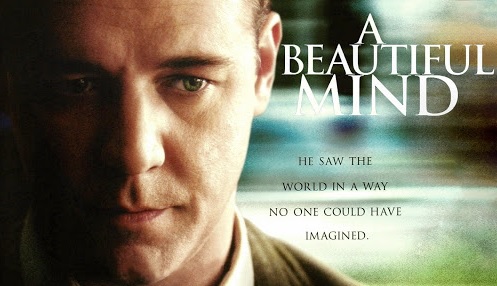
A Beautiful Mind is a 2001 American biographical drama film based on the life of the American mathematician John Nash, a Nobel Laureate in Economics and Abel Prize winner. The film was directed by Ron Howard, from a screenplay written by Akiva Goldsman. It was inspired by the bestselling, Pulitzer Prize-nominated 1998 book of the same name by Sylvia Nasar.
The film stars Russell Crowe, along with Ed Harris, Jennifer Connelly, Paul Bettany, Adam Goldberg, Judd Hirsch, Josh Lucas, Anthony Rapp, and Christopher Plummer in supporting roles. The story begins in Nash’s days as a graduate student at Princeton University. Early in the film, Nash begins to develop paranoid schizophrenia and endures delusional episodes while watching the burden his condition brings on his wife Alicia and friends.
The film opened in the United States cinemas on 21 December 2001. It went on to gross over $313 million worldwide and won four Academy Awards, for Best Picture, Best Director, Best Adapted Screenplay and Best Supporting Actress. It was also nominated for Best Actor, Best Film Editing, Best Makeup, and Best Original Score.
It was well received by critics, but has been criticised for its inaccurate portrayal of some aspects of Nash’s life, especially his other family and a son born out of wedlock. However, the filmmakers have stated that the film was not meant to be a literal representation of Nash’s life (see A Brilliant Madness (2002)).
Outline
In 1947, John Nash arrives at Princeton University as co-recipient, with Martin Hansen, of the prestigious Carnegie Scholarship for mathematics. He meets fellow math and science graduate students Sol, Ainsley, and Bender, as well as his roommate Charles Herman, a literature student. Determined to publish his own original idea, Nash is inspired when he and his classmates discuss how to approach a group of women at a bar. Hansen quotes Adam Smith and advocates “every man for himself,” but Nash argues that a cooperative approach would lead to better chances of success, and develops a new concept of governing dynamics. He publishes an article on his theory, earning him an appointment at MIT where Sol and Bender join him.
In 1953, Nash is invited to the Pentagon to crack encrypted enemy telecommunications, which he manages to decipher mentally. Bored with his regular duties at MIT, including teaching, he is recruited by the mysterious William Parcher of the United States Department of Defence with a classified assignment: to look for hidden patterns in magazines and newspapers in order to thwart a Soviet plot. Nash becomes increasingly obsessive in his search for these patterns, delivering his results to a secret mailbox, and comes to believe he is being followed.
One of his students, Alicia Larde, asks him to dinner, and they fall in love. On a return visit to Princeton, Nash runs into Charles and his niece, Marcee. With Charles’ encouragement, he proposes to Alicia and they marry. Nash fears for his life after surviving a shootout between Parcher and Soviet agents, and learns Alicia is pregnant, but Parcher blackmails him into continuing his assignment. While delivering a guest lecture at Harvard University, Nash tries to flee from people he thinks are Soviet agents, led by psychiatrist Dr. Rosen, but is forcibly sedated and committed to a psychiatric facility.
Dr. Rosen tells Alicia that Nash has paranoid schizophrenia and that Charles, Marcee, and Parcher exist only in his imagination. Alicia informs Nash that the Department of Defense does not employ a “William Parcher” and reveals the unopened documents he delivered to the secret mailbox. Nash is given a course of insulin shock therapy and eventually released. Frustrated with the depressive side effects of his antipsychotic medication, he secretly stops taking it and relapses, “meeting” Parcher again.
In 1956, Alicia discovers Nash has resumed his “assignment” in an abandoned shed near their home. Realizing he has relapsed, Alicia rushes to the house to find Nash had left their infant son in the running bathtub, believing Charles was watching the baby. Alicia calls Dr. Rosen, but Nash believes Parcher is trying to kill her and accidentally knocks her and the baby to the ground. As Alicia flees with their baby, Nash jumps in front of her car and affirms: “Marcee can’t be real! She never gets old!”, finally accepting that Parcher and other figures are hallucinations. Against Dr. Rosen’s advice, Nash chooses not to restart his medication, believing he can deal with his symptoms himself, and Alicia decides to stay and support him.
Nash returns to Princeton and approaches his old rival Hansen, now head of the mathematics department, who allows him to work out of the library and audit classes. Over the next two decades, Nash learns to ignore his hallucinations and, by the late 1970s, is allowed to teach again. In 1994, Nash wins the Nobel Prize for his revolutionary work on game theory, and is honoured by his fellow professors. At the Nobel ceremony, he dedicates his prize to his wife. As Nash, Alicia, and their son leave the auditorium in Stockholm, Nash sees Charles, Marcee, and Parcher watching him, but looks at them only briefly before departing.
Cast
Russell Crowe as John Nash.
Ed Harris as William Parcher.
Jennifer Connelly as Alicia Nash.
Christopher Plummer as Dr. Rosen.
Paul Bettany as Charles Herman.
Adam Goldberg as Richard Sol.
Josh Lucas as Martin Hansen.
Anthony Rapp as Bender.
Jason Gray-Stanford as Ainsley Neilson.
Judd Hirsch as Helinger.
Austin Pendleton as Thomas King.
Vivien Cardone as Marcee Herman.
Killian, Christian, and Daniel Coffinet-Crean as Baby.
Production
Development
After producer Brian Grazer first read an excerpt of Sylvia Nasar’s book A Beautiful Mind in Vanity Fair magazine, he immediately purchased the rights to the film. He eventually brought the project to director Ron Howard, who had scheduling conflicts and was forced to pass. Grazer later said that many A-list directors were calling with their point of view on the project. He eventually focused on a particular director, who coincidentally was available only when Howard was also available. Grazer chose Howard.
Grazer met with a number of screenwriters, mostly consisting of “serious dramatists”, but he chose Akiva Goldsman because of his strong passion and desire for the project. Goldsman’s creative take on the project was to avoid having viewers understand they are viewing an alternative reality until a specific point in the film. This was done to rob the viewers of their understanding, to mimic how Nash comprehended his experiences. Howard agreed to direct the film based on the first draft. He asked Goldsman to emphasize the love story of Nash and his wife; she was critical to his being able to continue living at home.
Dave Bayer, a professor of Mathematics at Barnard College, Columbia University, was consulted on the mathematical equations that appear in the film. For the scene where Nash has to teach a calculus class and gives them a complicated problem to keep them busy, Bayer chose a problem physically unrealistic but mathematically very rich, in keeping with Nash as “someone who really doesn’t want to teach the mundane details, who will home in on what’s really interesting”. Bayer received a cameo role in the film as a professor who lays his pen down for Nash in the pen ceremony near the end of the film.
Greg Cannom was chosen to create the makeup effects for A Beautiful Mind, specifically the age progression of the characters. Crowe had previously worked with Cannom on The Insider. Howard had also worked with Cannom on Cocoon. Each character’s stages of makeup were broken down by the number of years that would pass between levels. Cannom stressed subtlety between the stages, but worked toward the ultimate stage of “Older Nash”. The production team originally decided that the makeup department would age Russell Crowe throughout the film; however, at Crowe’s request, the makeup was used to push his look to resemble the facial features of John Nash. Cannom developed a new silicone-type makeup that could simulate skin and be used for overlapping applications; this shortened make-up application time from eight to four hours. Crowe was also fitted with a number of dentures to give him a slight overbite in the film.
Howard and Grazer chose frequent collaborator James Horner to score the film because they knew of his ability to communicate. Howard said, regarding Horner, “It’s like having a conversation with a writer or an actor or another director.” A running discussion between the director and the composer was the concept of high-level mathematics being less about numbers and solutions, and more akin to a kaleidoscope, in that the ideas evolve and change. After the first screening of the film, Horner told Howard: “I see changes occurring like fast-moving weather systems.” He chose it as another theme to connect to Nash’s ever-changing character. Horner chose Welsh singer Charlotte Church to sing the soprano vocals after deciding that he needed a balance between a child and adult singing voice. He wanted a “purity, clarity and brightness of an instrument” but also a vibrato to maintain the humanity of the voice.
The film was shot 90% chronologically. Three separate trips were made to the Princeton University campus. During filming, Howard decided that Nash’s delusions should always be introduced first audibly and then visually. This provides a clue for the audience and establishes the delusions from Nash’s point of view. The historic John Nash had only auditory delusions. The filmmakers developed a technique to represent Nash’s mental epiphanies. Mathematicians described to them such moments as a sense of “the smoke clearing”, “flashes of light” and “everything coming together”, so the filmmakers used a flash of light appearing over an object or person to signify Nash’s creativity at work. Two night shots were done at Fairleigh Dickinson University’s campus in Florham Park, New Jersey, in the Vanderbilt Mansion ballroom. Portions of the film set at Harvard were filmed at Manhattan College.
Many actors were considered for the role of John Nash, including Bruce Willis, Kevin Costner, John Travolta, Tom Cruise. Howard ultimately cast Russell Crowe.
Writing
The narrative of the film differs considerably from the events of Nash’s life, as filmmakers made choices for the sense of the story. The film has been criticised for this aspect, but the filmmakers said they never intended a literal representation of his life.
One difficulty was the portrayal of his mental illness and trying to find a visual film language for this. Sylvia Nasar said that the filmmakers “invented a narrative that, while far from a literal telling, is true to the spirit of Nash’s story”. Nash spent his years between Princeton and MIT as a consultant for the RAND Corporation in California, but in the film he is portrayed as having worked for the Department of Defense at the Pentagon instead. His handlers, both from faculty and administration, had to introduce him to assistants and strangers. The PBS documentary A Brilliant Madness (2002) tried to portray his life more accurately.
Few of the characters in the film, besides John and Alicia Nash, correspond directly to actual people. The discussion of the Nash equilibrium was criticized as over-simplified. In the film, Nash suffers schizophrenic hallucinations while he is in graduate school, but in his life he did not have this experience until some years later. No mention is made of Nash’s homosexual experiences at RAND, which are noted in the biography, though both Nash and his wife deny this occurred. Nash fathered a son, John David Stier (born 19 June 1953), by Eleanor Agnes Stier (1921-2005), a nurse whom he abandoned when she told him of her pregnancy. The film did not include Alicia’s divorce of John in 1963. It was not until after Nash won the Nobel Memorial Prize in 1994 that they renewed their relationship. Beginning in 1970, Alicia allowed him to live with her as a boarder. They remarried in 2001.
Nash is shown to join Wheeler Laboratory at MIT, but there is no such lab. Instead, he was appointed as C. L. E. Moore instructor at MIT, and later as a professor. The film furthermore does not touch on the revolutionary work of John Nash in differential geometry and partial differential equations, such as the Nash embedding theorem or his proof of Hilbert’s nineteenth problem, work which he did in his time at MIT and for which he was given the Abel Prize in 2015. The so-called pen ceremony tradition at Princeton shown in the film is completely fictitious. The film has Nash saying in 1994: “I take the newer medications”, but in fact, he did not take any medication from 1970 onwards, something highlighted in Nasar’s biography. Howard later stated that they added the line of dialogue because they worried that the film would be criticised for suggesting that all people with schizophrenia can overcome their illness without medication. In addition, Nash never gave an acceptance speech for his Nobel prize.
Release
A Beautiful Mind received a limited release on 21 December 2001, receiving positive reviews, with Crowe receiving wide acclaim for his performance. It was later released in the United States on 04 January 2002.
Box Office
During the five-day weekend of the limited release, A Beautiful Mind opened at the #12 spot at the box office, peaking at the #2 spot following the wide release. The film went on to gross $170,742,341 in the United States and Canada and $313,542,341 worldwide.
Home Media
A Beautiful Mind was released on VHS and DVD, in wide- and full-screen editions, in North America on 25 June 2002. The DVD set includes audio commentaries, deleted scenes and documentaries. The film was also released on Blu-ray in North America on 25 January 2011.
Production & Filming Details
Director(s): Ron Howard.
Producer(s): Brian Grazer and Ron Howard.
Writer(s): Akiva Goldsman.
Music: James Horner.
Cinematography: Roger Deakins.
Editor(s): Daniel P. Hanley and Mike Hill.
Production: Imagine Entertainment.
Distributor(s): Universal Pictures (North America) and DreamWorks Pictures (International).
Release Date: 13 December 2001 (Beverly Hills Premiere) and 01 December 2001 (US).
A science documentary hosted by Liev Schreiber, published by PBS in 2002 with English narration.
Part of the American Experience series.
Outline
John Nash, often called one of the most remarkable mathematicians in history, tells his version of the strange, tragic and inspiring events that took him from genius to immobilising illness to the Nobel Prize.
Suffering a devastating breakdown at the age of 30 and later diagnosed with schizophrenia, Nash was the focus of the 2001 Oscar-winning film ‘A Beautiful Mind‘.
Production & Filming Details
Director(s): Marks Samuels.
Producer(s):
Margaret Drain … executive producer.
Sharon Grimberg … series editor.
Randall MacLowry … producer.
Melissa Martin … associate producer.
Susan Mottau … coordinating producer.
Mark Samels … senior producer.
Greg Shea … post production producer.
Writer(s): Marks Samuels and Randall MacLowery.
Music: Tom Philips.
Cinematography: Peter Donahue.
Editor(s): Karen Schmeer.
Production:
WGBH Educational Foundation.
WGBH.
Yellow Jersey Films (as A Yellow Jersey Films Production for American Experience).
Association of Urbanicity with Schizophrenia and Related Mortality in China: Association de l’urbanicité avec la schizophrénie et la mortalité qui y est reliée en Chine.
Background
Although higher prevalence of schizophrenia in Chinese urban areas was observed, studies focused on the association between schizophrenia and urbanicity were less in China. Using a national representative population-based data set, this study aimed to investigate the relationship between urbanicity and schizophrenia and its related mortality among adults aged 18 years old and above in China.
Methods
Data were obtained from the Second China National Sample Survey on Disability in 2006 and follow-up studies from 2007 to 2010 each year. We restricted our analysis to 1,909,205 participants aged 18 years or older and the 2,071 schizophrenia patients with information of survival and all-caused mortality of the follow-up surveys from 2007 to 2010.
Schizophrenia was ascertained according to the International Statistical Classification of Diseases, 10th Revision. The degree of urbanicity and the region of residence were used to be the proxies of urbanicity. Of these, the degree of urbanicity measured by the ratio of non-agricultural population to total population and the region of residence measured by six categorical variables (first-tier cities, first-tier city suburbs, second-tier cities, second-tier city suburbs, other city areas, and rural areas).
Logistics regression models and restricted polynomial splines were used to examine the linear/nonlinear relationship between urbanicity and the risk of schizophrenia. Cox proportional hazards regression models were used to test the role of urbanicity on mortality risk of schizophrenia patients.
Results
10% increase in the degree of urbanicity was associated with increased risk of schizophrenia (OR = 1.44; 95% CI, 1.32 to 1.57). The nonlinear model further confirmed the association between the degree of urbanicity and the risk of schizophrenia. This association existed sex difference, as the level of urbanicity increased, schizophrenia risk of males grew faster than the risk of females. The hazard ratio (HR) of mortality in schizophrenia patients decreased with the elevated of urbanicity level, with a HR of 0.42 (95% CI, 0.21 to 0.84).
Conclusions
This research suggested that incremental changes in the degree of urbanicity linked to higher risk of schizophrenia, and as the degree of urbanicity elevated, the risk of schizophrenia increased more for men than for women. Additionally, the researchers found that schizophrenia patients in higher degree of urbanicity areas had lower risk of mortality.
These findings contributed to the literature on schizophrenia in developing nations under a non-Western context and indicates that strategies to improve mental health conditions are needed in the progress of urbanicity.
Reference
Luo, Y., Pang, L., Guo, C., Zhang, L. & Zheng, X. (2020) Association of Urbanicity with Schizophrenia and Related Mortality in China: Association de l’urbanicité avec la schizophrénie et la mortalité qui y est reliée en Chine. Canadian Journal of Psychiatry. doi: 10.1177/0706743720954059. Online ahead of print.











 Mental Health Matters
You must be logged in to post a comment.