The Challenges of a Pandemic in Secure Psychiatric Settings

“Before COV-19, the phrase “parity of esteem” was ubiquitous.

Policy makers and politicians emphasised the importance of high quality mental healthcare, insisting it was on an equal footing with physical healthcare.

Most mental health professionals viewed this with some cynicism, especially those working in secure inpatient settings.

Is it reasonable to expect parity when it comes to covid-19? Arguably it would not be reasonable to expect the same focus on, for example, PPE and testing as that directed towards the acute emergency services and intensive care.

However, inpatient units struggled with the lack of central guidance on managing patients who had been diagnosed with or were suspected of having covid-19.

Patients with serious mental disorders are at high risk of physical health problems. While they are acutely unwell, they:

  • May not have the capacity to understand the need to self-isolate;
  • May be unable or unwilling to be tested; and
  • If agitated, will be unlikely to be able to practice social distancing.

Mental health trusts have been struggling:

  • With protocols and the availability of testing;
  • With managing the direct contacts of patients; and
  • Like other settings, with sourcing appropriate PPE.

There is intense debate about the apparent lack of appropriate legal frameworks. In the case of a voluntary or inform patient, can the Mental Health Act be used? The Mental Capacity Act is not appropriate as it applies top decisions in the patient’s best interests, not for the protection of others.

The Coronavirus Act 2020 give public health officers the power to impose isolation on someone suspected of being infected, but this seems unlikely to extend to inpatient units.

If parity of esteem is ever going to be meaningful, the challenges of safely and securely managing coivd-19 in the most seriously unwell patients with mental disorders needs to be given a higher priority.”

Reference

O’Brien, A. (2020) The Challenges of a Pandemic in Secure Psychiatric Settings. BMJ 2020;369:No.8247, pp.318-319.

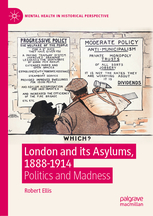
Book: London and Its Asylums, 1888-1914 – Politics and Madness

Book Title:

London and Its Asylums, 1888-1914 – Politics and Madness.

Author(s): Robert Ellis.

Year: 2020.

Edition: First (1ed).

Publisher: Palgrave Macmillan.

Type(s): Hardcover and Kindle.

Synopsis:

This book explores the impact that politics had on the management of mental health care at the turn of the nineteenth and twentieth centuries. 1888 and the introduction of the Local Government Act marked a turning point in which democratically elected bodies became responsible for the management of madness for the first time.

With its focus on London in the period leading up to the First World War, it offers a new way to look at institutions and to consider their connections to wider issues that were facing the capital and the nation.

The chapters that follow place London at the heart of international networks and debates relating to finance, welfare, architecture, scientific and medical initiatives, and the developing responses to immigrant populations.

Overall, it shines a light on the relationships between mental health policies and other ideological priorities.

Components & Principles of Effective Treatments in Mental Health

For interventions (to at least be perceived) to be effective in the treatment of mental health conditions, from the perspective of the service user, there are a range of components that one must understand and appreciate.

  • Facilitative service environment(s):
    • Understand how the environment can affect a service user’s experience of treatment.
    • Prioritise good relationships between staff/volunteers and those using the services.
    • Taking a genuine interest in the service user.
    • Being respectful.
    • Helps service users feel at ease and prevent relapse.
  • Access to appropriate treatment(s).
  • Compassionate and non-judgemental support.
    • This can include peer, practical, and emotional support.
  • Interventions that are long enough in duration:
    • Treatment needs to be long enough in duration for the service user to avoid relapse and/or move into recovery.
    • Need for ongoing support.
    • Aftercare programme as a way of ensuring a supportive network to prevent relapse.
  • Interventions that offer stability.
  • Choices (in terms of treatment).
    • Service users like to feel they have a choice in their treatment.
    • Want to be treated as individuals.
    • Individualised care means provider must have flexibility in service delivery.
  • Opportunities to learn (or relearn) how to live.
    • Treatment should be seen as providing opportunities for service users to learn (vocational/life) skills to support them to live their lives.
    • This can aid service users to steer away from problematic patterns of behaviour by providing structure and purpose, alleviating boredom, and distraction from their condition.

The above should be provided with the following three principles in mind:

  1. Within the context of good relationships.
    • You are not there to be the service user’s best friend, but good/positive relationships aid effectiveness of treatment and perceptions of service.
  2. Person-centred care.
    • Where appropriate and practicable, the service/treatment should fit around the service user, not the service user around the service/treatment.
  3. Understanding the complexity of the service user’s (both personal and professional) circumstances.
    • Understanding of the service user’s circumstances can aid adherence to treatment and their journey through their condition.

Finally, remember that the way in which services and treatment are delivered, is considered by many service users, to be more important than the type of treatment provided.

Homelessness & Substance Use Treatment: Is the Way in which Services & Treatment are Delivered more Important than the Type of Treatment Provided?

Research Paper Title

What Constitutes Effective Problematic Substance Use Treatment From the Perspective of People Who Are Homeless? A Systematic Review and Meta-Ethnography.

Background

People experiencing homelessness have higher rates of problematic substance use but difficulty engaging with treatment services. There is limited evidence regarding how problematic substance use treatment should be delivered for these individuals.

Previous qualitative research has explored perceptions of effective treatment by people who are homeless, but these individual studies need to be synthesised to generate further practice-relevant insights from the perspective of this group.

Methods

Meta-ethnography was conducted to synthesise research reporting views on substance use treatment by people experiencing homelessness. Studies were identified through systematic searching of electronic databases (CINAHL; Criminal Justice Abstracts; Health Source; MEDLINE; PsycINFO; SocINDEX; Scopus; and Web of Science) and websites and were quality appraised. Original participant quotes and author interpretations were extracted and coded thematically.

Concepts identified were compared to determine similarities and differences between studies. Findings were translated (reciprocally and refutationally) across studies, enabling development of an original over-arching line-of-argument and conceptual model.

Results

Twenty-three papers published since 2002 in three countries, involving 462 participants, were synthesised. Findings broadly related, through personal descriptions of, and views on, the particular intervention components considered effective to people experiencing homelessness. Participants of all types of interventions had a preference for harm reduction-oriented services.

Participants considered treatment effective when it provided a facilitative service environment; compassionate and non-judgemental support; time; choices; and opportunities to (re)learn how to live. Interventions that were of longer duration and offered stability to service users were valued, especially by women.

From the line-of-argument synthesis, a new model was developed highlighting critical components of effective substance use treatment from the service user’s perspective, including a service context of good relationships, with person-centred care and an understanding of the complexity of people’s lives.

Conclusions

This is the first meta-ethnography to examine the components of effective problematic substance use treatment from the perspective of those experiencing homelessness. Critical components of effective problematic substance use treatment are highlighted.

The way in which services and treatment are delivered is more important than the type of treatment provided. Substance use interventions should address these components, including prioritising good relationships between staff and those using services, person-centred approaches, and a genuine understanding of individuals’ complex lives.

Reference

Carver, H., Ring, N., Miler, J. & Parkes, T. (2020) What Constitutes Effective Problematic Substance Use Treatment From the Perspective of People Who Are Homeless? A Systematic Review and Meta-Ethnography. Harm Reduction Journal. 17(1), pp.10. doi: 10.1186/s12954-020-0356-9.

Evidence-Based Practices for the (Web-based) Treatment of PTSD

Research Paper Title

Understanding How Clinicians Use a New Web-based Tool for Disseminating Evidence-Based Practices for the Treatment of PTSD: The PTSD Clinicians Exchange.

Background

Web-based interventions hold great promise for the dissemination of best practices to clinicians, and investment in these resources has grown exponentially. Yet, little research exists to understand their impact on intended objectives.

Methods

The Post-Traumatic Stress Disorder (PTSD) Clinicians Exchange is a website to support clinicians treating veterans and active duty military personnel with PTSD, evaluated in a randomised controlled trial (N = 605). This manuscript explores how a subset of clinicians, those who utilised the intervention (N = 148), engaged with it by examining detailed individual-level web analytics and qualitative feedback. Stanford University and New England Research Institutes Institutional Review Boards approved this study.

Results

Only 32.7% of clinicians randomised to the intervention ever accessed the website. The number of pages viewed was positively associated with changes from baseline to 12 months in familiarity (P = 0.03) and perceived benefit of practices (P = 0.02). Thus, engagement with the website did predict an improvement in practice familiarity and benefit outcomes despite low rates of use.

Conclusions

This study demonstrates the importance of methodologically rigorous evaluations of participant engagement with web-based interventions.

These approaches provide insight into who accesses these tools, when, how, and with what results, which can be translated into their strategic design, evaluation, and dissemination.

Reference

Coleman, J.L., Marceau, L., Zincavage, R., Magnavita, A.M., Ambrosoli, J., Shi, L., Simon, E., Ortigo, K., Clarke-Walper, K., Penix, E., Wilk, J., Ruzek, J.I. & Rosen, R.C. (2020) Understanding How Clinicians Use a New Web-based Tool for Disseminating Evidence-Based Practices for the Treatment of PTSD: The PTSD Clinicians Exchange. Military Medicine. 185(Suppl 1), pp.286-295. doi: 10.1093/milmed/usz313.

Could Fake Poo & a Rubber Hand Treat OCD?

An illusion in which fake faeces are put on a rubber hand has been tested on people with obsessive compulsive disorder (OCD) (Jalal et al., 2020).

It may one day become a new treatment.

Therapies based on this illusion, designed to help people get more comfortable with germ exposure, could be less upsetting than existing therapies, says Baland Jalal at the University of Cambridge.

The original rubber hand illusion involves putting one hand out of sight and seeing a fake hand in its place. If someone else strokes both the fake and real hand, most people feel that the fake is their own.

Jalal and his colleagues tried a variant on people with hygiene-related OCD. They are usually treated with exposure therapy, but that would, for example, involve exposure on their actual hands. As a result, a quarter reject such therapy.

In the study, 29 people with OCD had fake faeces, made from foods and a fake odour, dabbed on the rubber hand, while their real, hidden hand was touched with a damp towel. While they knew the faeces were fake, they reported feeling disgusted and contaminated.

Jalal’s team plan to test the technique as a way of treating OCD.

References

Jalal, B., McNally, R.J., Elias, J.A., Potluri, S. & Ramanchandran, V.S. (2020) “Fake it till You Make it”! Contaminating Rubber Hands (“Multisensory Stimulation Therapy”) to Treat Obsessive-Compulsive Disorder. Frontiers in Human Neuroscience. 13:414. https://doi.org/10.3389/fnhum.2019.00414

Wilson, C. (2020) Rubber Hand Illusion and Fake Poo May be the may to Treat OCD. New Scientist. 18 January 2020, pp.17.

Are E-Mental Health Applications for Depression Beneficial?

Research Paper Title

E-mental health applications for depression: an evidence-based ethical analysis.

Background

E-mental health applications (apps) are an increasingly important factor for the treatment of depression.

To assess the risks and benefits for patients, an in-depth ethical analysis is necessary.

The objective of this paper is to determine the ethical implications of app-based treatment for depression.

Methods

An evidence-based ethical analysis was conducted.

The material was meta-reviews and randomised control studies (RCTs) on app-based treatment.

Based on the empirical data, an ethical analysis was conducted using the 3-ACES-approach by Thornicroft and Tansella.

Results

Apps may empower autonomy, offer an uninterrupted series of contacts over a period of time, show evidence-based benefits for patients with subclinical and mild-to-moderate-symptoms, are easily accessible, may be used for coordinating information and services within an episode of care, and are on the whole cost-effective.

Their risks are that they are not suitable for the whole range of severity of mental illnesses and patient characteristics, show severe deficits in the data privacy policy, and a big variability in quality standards.

Conclusions

The use of apps in depression treatment can be beneficial for patients as long as:

  • The usefulness of an app-based treatment is assessed for each individual patient;
  • Apps are chosen according to symptom severity as well as characteristics like the patient’s level of self-reliance, their e-literacy, and their openness vis-à-vis apps; and
  • Manufacturers improve their privacy policies and the quality of apps.

Reference

Rubeis, G. (2020) E-mental health applications for depression: an evidence-based ethical analysis. European Archives of Psychiatry and Clinical Neuroscience. doi: 10.1007/s00406-019-01093-y. [Epub ahead of print].

What is the Impact of Onset of Psychiatric Disorders & Psychiatric Treatment on Mortality Among Patients with Cancer?

Research Paper Title

Impact of Onset of Psychiatric Disorders and Psychiatric Treatment on Mortality Among Patients with Cancer.

Background

Psychiatric disorders are common in patients with cancer.

The impact of both psychiatric disorders and psychiatric treatment on mortality in patients with cancer needs to be established.

Methods

Nationwide claims data were analysed.

To investigate the association between psychiatric disorders and mortality, 6,292 male and 4,455 female patients with cancer who did not have a record of psychiatric disorders before cancer onset were included.

To examine the association between psychiatric treatment and mortality, 1,467 male and 1,364 female patients with cancer were included.

Incident psychiatric disorder and receipt of psychiatric treatment within 30 days from the onset of a psychiatric disorder were the main independent variables.

Dependent variables were all-cause and cancer-related mortality. Cox proportional hazards regression with time-dependent covariates was used.

Results

The onset of psychiatric disorders was associated with a significantly increased risk of mortality in both male (all-cause hazard ratio [HR]: 1.55; cancer-related HR: 1.47) and female patients with cancer (all-cause HR: 1.50; cancer-related HR: 1.44) compared with patients with cancer without psychiatric disorders.

Both male and female patients who received psychiatric treatment within 30 days of diagnosis of a psychiatric disorder had a lower risk of cancer-related mortality (males, HR: 0.73; females, HR: 0.71) compared with patients with cancer with psychiatric disorders who did not receive psychiatric treatment.

Conclusions

Patients with cancer with newly diagnosed psychiatric disorders had a higher mortality rate.

Among these, those who received psychiatric treatment showed lower rates of mortality.

Thus, early detection and early treatment of psychiatric disorders in patients with cancer is needed.

Implications for Practice

The current study supplements the body of evidence supporting the association of psychiatric disorders onset and treatment with cancer outcomes.

Patients with cancer showed an increased risk of both all-cause and cancer-related mortality upon psychiatric disorder onset.

Among patients with newly diagnosed psychiatric disorders, those who received psychiatric treatment showed lower cancer-related mortality.

Thus, raising awareness of both the risk of psychiatric disorders and the positive effects of psychiatric treatment on cancer outcomes is necessary among patients with cancer, caregivers, and oncologists.

Furthermore, it is necessary to adopt a multidisciplinary approach, encouraging patients with cancer to undergo a neuropsychological assessment of their mental health status and receive appropriate and timely psychological interventions.

Reference

Lee, S.A., Nam, C.M., Kim, Y.H., Kim, T.H., Jang, S.I., Park, E.C. (2020) Impact of Onset of Psychiatric Disorders and Psychiatric Treatment on Mortality Among Patients with Cancer. The Oncologist. doi: 10.1634/theoncologist.2019-0396. [Epub ahead of print].

Reviewing Discontinuation Rates of Antidepressant Use by Dutch Soldiers

Research Paper Title

Discontinuation Rates of Antidepressant Use by Dutch Soldiers.

Background

Soldiers have a higher risk for developing psychiatric disorders that require treatment; often with antidepressants.

However, antidepressants as well as the psychiatric disorder, may influence military readiness in several ways.

In the general population, early discontinuation of antidepressant treatment is often seen. It is yet unknown whether this occurs to a similar extent in soldiers.

The objective of this study was to evaluate discontinuation of antidepressant use by Dutch soldiers in the first 12 months after start and determinants thereof.

Methods

Data were obtained from the military pharmacy. All Dutch soldiers who started using an antidepressant between 2000 and 2014 were included.

Kaplan-Meier curves were constructed to estimate the discontinuation rate over time and the influence of each determinant on discontinuation rate was estimated using Cox regression.

Results

About 25.9% of de 2479 starters had discontinued their antidepressant use after 1 month; after 3 and 6 months this number increased to 52.7% and 70.3%, respectively.

Early discontinuation was higher in soldiers who received their first prescription from a neurologist or rehabilitation specialist (HR 1.85, 95% CI 1.55-2.21, HR 2.66 95% CI 1.97-3.58) compared to soldiers with a first prescription from a general practitioner.

In addition, early discontinuation was lower in soldiers who were prescribed serotonin reuptake inhibitors and other antidepressants (HR 0.57, 95% CI 0.51-0.60, HR 0.63, 95% CI 0.55-0.73) and in soldiers between 40 and 50 years of age (HR 0.79, 95% CI 0.70-0.89).

Conclusions

More than half of the soldiers discontinued their prescribed antidepressant within 3 months and after 6 months, only 30% were still on antidepressants.

Reference

Janssen, D.G.A., Vermetten, E., Egberts, T.C.G. & Heerdink, E.R. (2019) Discontinuation Rates of Antidepressant Use by Dutch Soldiers. Military Medicine. 184(11-12), pp.868-874. doi: 10.1093/milmed/usz060.

Book: A Beautiful Mind

Book Title: A Beautiful Mind.

Original Title: A Beautiful Mind: a Biography of John Forbes Nash, Jr., Winner of the Nobel Prize in Economics, 1994.

Author: Sylvia Nasar.

Year: 1998.

Publisher: Simon & Schuster.

Synopsis:

A Beautiful Mind (1998) is a biography of Nobel Prize-winning economist and mathematician John Forbes Nash, Jr. by Sylvia Nasar, professor of journalism at Columbia University.

An unauthorised work, it won the National Book Critics Circle Award in 1998 and was nominated for the Pulitzer Prize in biography.

It inspired the 2001 film by the same name.

Starting with his childhood, the book covers Nash’s years at Princeton and MIT, his work for the RAND Corporation, his family and his struggle with schizophrenia.

Although Nasar notes that Nash did not consider himself a homosexual, she describes his arrest for indecent exposure and firing from RAND amid the suspicion that he was, then considered grounds for revoking one’s security clearance.

The book ends with Nash being awarded the Nobel Prize in Economics in 1994.

The book is a detailed description of many aspects of Nash’s life, including the nature of his mathematical genius, and a close examination of his personality and motivations.