Posts

Book: Doctoring the Mind: Why Psychiatric Treatments Fail

Book Title:

Doctoring the Mind: Why Psychiatric Treatments Fail.

Author(s): Richard P. Bentall.

Year: 2010.

Edition: First (1st).

Publisher: Penguin.

Type(s): Hardcover, Paperback and Kindle.

Synopsis:

Why is the Western world’s treatment of mental illness so flawed? Who really benefits from psychiatry? And why would a patient in Nigeria have a much greater chance of recovery than one in the UK?

In Doctoring the Mind, leading clinical psychologist Richard Bentall reveals the shocking truths behind the system of mental health care in the West. With a heavy dependence on pills and the profit they bring, psychiatry has been relying on myths and misunderstandings of madness for too long, and builds on methods which can often hinder rather than help the patient.

Bentall argues passionately for a new future of mental health, one that considers the patient as an individual and redefines our understanding and treatment of madness for the twenty-first century.
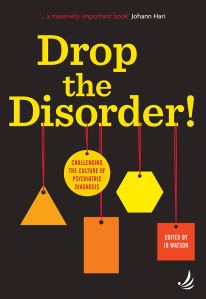
Book: Drop the Disorder! Challenging the Culture of Psychiatric Diagnosis

Book Title:

Drop the Disorder! Challenging the Culture of Psychiatric Diagnosis.

Author(s): Jo Watson.

Year: 2019.

Edition: First (1st).

Publisher: PCCS Books.

Type(s): Paperback and Kindle.

Synopsis:

In October 2016 Jo Watson hosted the very first A Disorder for Everyone!’ event in Birmingham, with psychologist Dr Lucy Johnstone, to explore (and explode) the culture of psychiatric diagnosis in mental health. To provide a space to continue the debate after the event, Jo also set up the now hugely popular and active Facebook group Drop the Disorder!’.

Since then, they have delivered events in towns and cities across the UK, bringing together activists, survivors and professionals to debate psychiatric diagnosis. How and why does psychiatric diagnosis hold such power? What harm it can do? What are the alternatives to diagnosis, and how it can be positively challenged?; This book takes the themes, energy and passions of the AD4E events – bringing together many of the event speakers with others who have stories to tell and messages to share in the struggle to challenge diagnosis.; This is an essential book for everyone of us who looks beyond the labels.

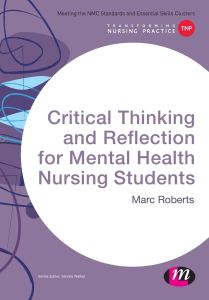
Book: Critical Thinking and Reflection for Mental Health Nursing Students

Book Title:

Critical Thinking and Reflection for Mental Health Nursing Students.

Author(s): Marc Roberts.

Year: 2015.

Edition: First (1st).

Publisher: Learning Matters.

Type(s): Hardcover, Paperback and Kindle.

Synopsis:

The ability to reflect critically is a vital nursing skill. It will help your students to make better decisions, avoid errors, identify good and bad forms of practice and become better at learning from their experiences. The challenges they will face as a mental health nurse are complex so this book breaks things down to the foundations helping them to build critical thinking and reflection skills from the ground up.

Key features:

  • Covers the theory and principles behind critical thinking and reflection.
  • Explores the specific mental health context and unique challenges students are likely to face as a mental health nurse.
  • Applies critical thinking to practice but also to academic study, showing how to demonstrate these skills in assignments.

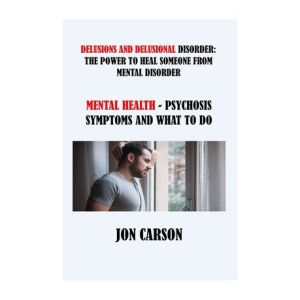
Book: Delusions and Delusion Disorder

Book Title:

Delusions and Delusional Disorder: The Power to Heal Someone from Mental Disorder.

Mental Health – Psychosis Symptoms and What To Do.

Author(s): Jon Carson.

Year: 2021.

Edition: First (1st).

Publisher: Independently Published.

Type(s): Paperback and Kindle.

Synopsis:

Delusional disorder, recently called paranoid disorder, is a kind of genuine mental illness called a psychotic disorder. Individuals who have it can’t determine what’s genuine based on what is envisioned. Delusions are the fundamental manifestation of delusional disorder. They are relentless convictions in something that is not correct or dependent on the real world.

Individuals with the delusional disorder frequently can proceed to mingle and work regularly, aside from the subject of their dream, and by and large, do not carry on in a clearly odd or strange way.

The study material provides summarised various answers to the questions that are likely to be the in minds of readers. This covers:

  • Vivid introduction delusional disorder.
  • Various types of delusion.
  • What are the indications of delusional disorder?
  • What are the causes and dangerous elements of delusional disorder?
  • Could pressure cause delusions?
  • How is a delusional disorder diagnosed?
  • Treatment of delusional disorder treated.
  • What are the intricacies of delusion disorder?
  • What’s the standpoint for individuals with the delusional disorder?
  • Can the delusional disorder be forestalled?
  • Supportive activities when somebody who has a psychological sickness is encountering hallucinations, delusions, or paranoia.

Book: Dialogical Psychiatry: A Handbook For The Teaching And Practice Of Open Dialogue

Book Title:

Dialogical Psychiatry: A Handbook For The Teaching And Practice Of Open Dialogue.

Author(s): Russell Razzaque.

Year: 2019.

Edition: First (1st).

Publisher: Omni House Books.

Type(s): Paperback and Kindle.

Synopsis:

This book is written for all of those who are searching for a more client driven, compassionate and relational approach to mental health services. Consultant Psychiatrist, Professor Russell Razzaque combines his experience as practitioner, trainer and researcher of Open Dialogue in this accessible guide to a more dialogical psychiatry.

Both thoughtful and eminently practical, this book outlines the operational changes and the cultural shift needed to deliver this promising approach which could fundamentally transform the way mental health services are delivered. If you’ve ever wondered what the future of mental health services can, and hopefully will, look like I encourage you to read this book and be inspired to be part of that change.

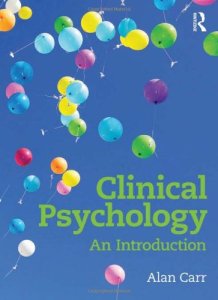
Book: Clinical Psychology: An Introduction

Book Title:

Clinical Psychology: An Introduction.

Author(s): Alan Carr.

Year: 2012.

Edition: First (1st).

Publisher: Routledge.

Type(s): Hardcover, Paperback, and Kindle.

Synopsis:

Clinical Psychology is for students studying clinical psychology as part of an undergraduate programme in psychology, nursing, sociology or social and behavioural sciences. Undergraduate students who wish to know if postgraduate study in clinical psychology would be of interest to them will find this book particularly useful.

The book will inform students about:

  • The profession of clinical psychology.
  • How to get onto a clinical psychology postgraduate training programme.
  • The way clinical psychologists work with children, adolescents and adults with common psychological problems.
  • The main models of practice used by clinical psychologists, and.
  • The scientific evidence for the effectiveness of psychological interventions.

There is a focus on both clinical case studies and relevant research, and the book includes summaries, revision questions, advice on further reading and a glossary of key terms, all of which make it an excellent student-friendly introduction to an exceptionally interesting subject.

Book: Cognitive Behavioural Therapy – A CBT Guide To Theories & Professional Practice

Book Title:

Cognitive Behavioural Therapy – A CBT Guide To Theories & Professional Practice.

Author(s): Bill Andrews.

Year: 2019.

Edition: First (1st).

Publisher: Independently Published.

Type(s): Paperback and Kindle.

Synopsis:

Here is finally a complete guide on CBT that is for the mental health practitioner as well as the clients. The guide is expansive on CBT with new ideas and suggestions for both clinical and non-professional settings.

The book’s main purpose will help you deliver:

  • Hacks for fast and effective treatments to most mental health issues.
  • A complete professional guide for mental health practitioners of all levels.
  • Detailed explanations and simple strategies anyone can help implement.
  • Effective uses including suggested therapies for most mental health disorders.

A well researched cognitive therapy guide explores powerful tools & suggested therapies, including everything you should know about CBT and it’s effective uses.

Both professional practitioner and even mental health novices can benefit from this power packed guide.

Finally you can deal with disorders in a fast and powerful way and we also include a complete range of important topics most other CBT guides omit like:

  • Changing Maladaptive Thinking.
  • Cognitive Behavioural Assessment Model Explanations.
  • Intervention & Treatment Analysis.
  • The Power of CBT: Removal of Erroneous Thinking.
  • Cognitive Distortion Made Whole.
  • Reducing Emotional Distress with CBT.
  • Modern CBT & the Latest Tools and More!

Book: Communication and Mental Health Disorders: Developing Theory, Growing Practice

Book Title:

Communication and Mental Health Disorders: Developing Theory, Growing Practice.

Author(s): Caroline Jagoe and Irene P. Walsh (Editor).

Year: 2019.

Edition: First (1st).

Publisher: J & R Press Ltd.

Type(s): Paperback.

Synopsis:

Communication and Mental Health Disorders: Developing Theory, Growing Practice brings together academics and expert clinicians to share their research, clinical expertise and insights in the presentation of current theory and evolving practice of language and communication work with children and adults with mental health disorders. The book presents recent developments in the field against a background of ‘recovery model’ principles and practices, moving beyond introductory texts published previously.

This book is a highly comprehensive text drawing on multidisciplinary perspectives in the care of people with communication difficulties and mental health disorders. It covers a broad range of areas, providing an extensive exploration of the unique and complex relationship between mental health and disorder, and language and communication, with specific emphasis on the application of theoretical developments to clinical practice. The focus is on recent and cutting-edge developments in the field, whilst acknowledging historical constructs and contexts. Service users’ perceptions are incorporated throughout alongside those of mental healthcare professionals (e.g., psychiatrists and speech and language therapists). A full section on advances in approaches to communication intervention presents the strides taken in the practical applications of innovative thinking in the area.

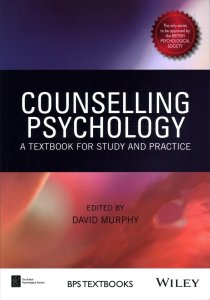
Book: Counselling Psychology: A Textbook for Study and Practice

Book Title:

Counselling Psychology: A Textbook for Study and Practice.

Author(s): David Murphy (Editor).

Year: 2017.

Edition: First (1st).

Publisher: Wiley-Blackwell.

Type(s): Hardcover, Paperback, and Kindle.

Synopsis:

An excellent resource for students at undergraduate or graduate level, Counselling Psychology: A Textbook for Study and Practice provides valuable insights into the key issues associated with theory and practice in this field. The contributors represent a diverse array of approaches, reflecting the rich diversity within the area, and care is taken to avoid favouring any one approach. The book begins with an overview of the historical and philosophical foundations of counselling psychology, before taking a detailed look at major therapeutic approaches and exploring issues associated with specific client populations, ethics, research design, and more. In particular, the text seeks to explain how counselling psychology differs from and informs other areas of contemporary applied psychology. The result is an engaging balance of the personal and academically rigorous, presented in a highly accessible format.

  • An authoritative introduction to and key issues involved with the theory and practice of counselling psychology for students and practitioners at all levels.
  • Considers all major approaches to psychotherapy including existential, person-centred experiential, psychodynamic, and cognitive-behavioural.
  • Explores issues commonly encountered when working with specific client groups including children, people with intellectual disabilities, and emergency trauma victims.

Book: Cracked: Why Psychiatry is Doing More Harm Than Good

Book Title:

Cracked: Why Psychiatry is Doing More Harm Than Good.

Author(s): James Davies

Year: 2014.

Edition: First (1st).

Publisher: Icon Books.

Type(s): Hardcover, Paperback, Audiobook, and Kindle.

Synopsis:

Controversial and powerful – a shocking indictment of the pseudo-science at the heart of modern psychiatry.