Posts

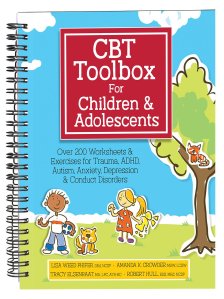
Book: CBT Toolbox for Children and Adolescents

Book Title:

CBT Toolbox for Children and Adolescents: Over 220 Worksheets & Exercises for Trauma, ADHD, Autism, Anxiety, Depression & Conduct Disorders.

Author(s): Lisa Phifer.

Year: 2017.

Edition: First (1st).

Publisher: PESI Publishing & Media.

Type(s): Spiral-bound, Paperback and Kindle.

Synopsis:

The CBT Toolbox for Children and Adolescents gives you the resources to help the children in your life handle their daily obstacles with ease. Inside this workbook you’ll find hundreds of worksheets, exercises, and activities to help treat:

  • Trauma.
  • ADHD.
  • Autism.
  • Anxiety.
  • Depression.
  • Conduct Disorders.

Written by clinicians and teachers with decades of experience working with kids, these practical and easy-to-use therapy tools are vital to teaching children how to cope with and overcome their deepest struggles. Step-by-step, you’ll see how the best strategies from cognitive behavioural therapy are adapted for children.
Book: Clinical Psychology

Book Title:

Clinical Psychology (Topics in Applied Psychology).

Author(s): Graham Davey, Nick Lake, and Adrian Whittington (Editors).

Year: 2015.

Edition: Second (2nd).

Publisher: Routledge.

Type(s): Hardcover, Paperback and Kindle.

Synopsis:

Clinical Psychology, Second Edition offers a comprehensive and an up-to-date introduction to the field. Written by clinical practitioners and researchers, as well as service users who add their personal stories, the book provides a broad and balanced view of contemporary clinical psychology.

This new edition has been extensively revised throughout and includes a new section on working with people with disabilities and physical health problems. It also includes a new chapter on career choices, and help and advice on how to move forward into clinical psychology training.

The book starts by explaining the core elements of what a clinical psychologist does and the principles of clinical practice, as well as outlining the role of the clinical psychologist within a healthcare team. It goes on to cover issues involved with working with children and families, adult mental health problems, working with people with disabilities and physical health problems, and the use of neuropsychology. The final part of the book explores current professional issues in clinical psychology, the history and future of clinical psychology, and career options.

The integrated and interactive approach, combined with the comprehensive coverage, make this book the ideal companion for undergraduate courses in clinical psychology, and anyone interested in a career in this field. It will also be of interest to anyone who wants to learn more about the work of a clinical psychologist, including other healthcare professionals.

Book: Clinical Psychology for Trainees: Foundations of Science-Informed Practice

Book Title:

Clinical Psychology for Trainees: Foundations of Science-Informed Practice.

Author(s): Andrew C. Page and Werner G.K. Stritzke.

Year: 2014.

Edition: Second (2nd).

Publisher: Cambridge University Press.

Type(s): Paperback and Kindle.

Synopsis:

Thoroughly revised, and fully updated for DSM-5, the new edition of this practice-focused book guides clinical psychology trainees through a field which is rapidly evolving. Through real-world exploration of the scientist-practitioner model, the book helps readers to develop the core competencies required in an increasingly interdisciplinary healthcare environment. New chapters cover brief interventions, routine monitoring of treatment progress, and managing alliance ruptures. Practical skills such as interviewing, diagnosis, assessment, treatment and case management are discussed with emphasis on the question ‘how would a scientist-practitioner think and act?’ By demonstrating how an evidence-base can influence every decision that a clinical psychologist makes, the book equips trainees to deliver the accountable, efficient, effective client-centred service which is demanded of professionals in the modern integrated care setting. Essential reading for all those enrolled in, or contemplating, postgraduate studies in clinical psychology.

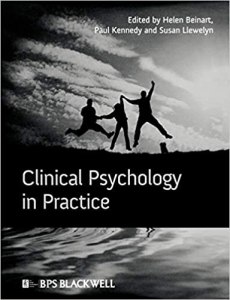
Book: Clinical Psychology in Practice

Book Title:

Clinical Psychology in Practice.

Author(s): Helen Beinart, Paul Kennedy, and Susan Llewelyn (Editors).

Year: 2009.

Edition: First (1st).

Publisher: WB.

Type(s): Paperback and eBook.

Synopsis:

Academic, clinical and research aspects are offered in collaboration with clinical practitioners, who provide the clinical experience to foster the development of competencies in Health and Social Care.

  • Provides a clear, authoritative and lively introduction to the practice of clinical psychology.
  • Explains succinctly the range of competencies which a psychologist is expected to possess, and how these can be applied in a variety of contexts.
  • Key issues covered include awareness of the social context, the need for responsive and flexible practice, and respect for diversity.
  • Examples and principles are provided which demonstrate the clinical psychologist in action, and explain why and how they work as they do.

Book: Clinical Psychology, Research and Practice

Book Title:

Clinical Psychology, Research and Practice: An Introductory Text.

Author(s): Paul Bennett.

Year: 2021.

Edition: Fourth (4th).

Publisher: Open University Press.

Type(s): Paperback and Kindle.

Synopsis:

Extensively updated, this popular and accessibly written textbook outlines the latest research and therapeutic approaches within clinical psychology, alongside important developments in clinical practice. The book introduces and evaluates the conceptual models of mental health problems and their treatment, including second and third wave therapies.

Each disorder is considered from a psychological, social and biological perspective and different intervention types are thoroughly investigated.

Key updates to this edition include:

  • The development of case formulations for conditions within each chapter.
  • An articulation and use of modern theories of psychopathology, including sections on the transdiagnostic approach, meta-cognitive therapy, and acceptance and commitment therapy.
  • An introduction to emerging mental health issues, such as internet gaming disorder.
  • Challenging ‘stop and think’ boxes that encourage readers to address topical issues raised in each chapter, such as societal responses to topics as varied as psychopathy, paedophilia and the Black Lives Matter movement.
  • New vocabulary collated into key terms boxes for easy reference.

Book: Becoming a Clinical Psychologist: Everything You Need to Know

Book Title:

Becoming a Clinical Psychologist: Everything You Need to Know.

Author(s): Steven Mayers and Amanda Mwale.

Year: 2018.

Edition: First (1st).

Publisher: Routledge.

Type(s): Hardcover, Paperback, and Kindle.

Synopsis:

Becoming a Clinical Psychologist: Everything You Need to Know brings together all the information you need to pursue a career in this competitive field.

This essential guide includes up-to-date information and guidance about a career in clinical psychology and gaining a place on clinical psychology training in the UK. It answers the questions all aspiring psychologists need to know, such as:

  • What is clinical psychology?
  • What is it like to train and work as a clinical psychologist?
  • How to make the most of your work and research experience.
  • How to prepare for clinical psychology applications and interviews.
  • Is clinical psychology the right career for me?

By cutting through all the jargon, and providing detailed interviews with trained and trainee clinical psychologists, Becoming a Clinical Psychologist will provide psychology graduates or undergrads considering a career in this area with all the tools they need.

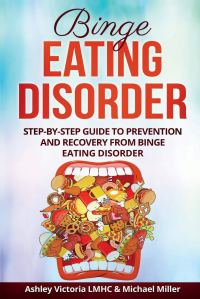
Book: Binge Eating Disorder: Step-by-Step Guide to Prevention and Recovery from Binge Eating Disorder

Book Title:

Binge Eating Disorder: Step-by-Step Guide to Prevention and Recovery from Binge Eating Disorder.

Author(s): Michael Miller and Ashley Victoria.

Year: 2018.

Edition: First (1st).

Publisher: CreateSpace Independent Publishing Platform.

Type(s): Paperback, Audiobook, and Kindle.

Synopsis:

Do you consume abnormally large amounts of food in one sitting? Do you doubt that your untimely binging is a problem? Are you someone who is not comfortable revealing that you suffer from binge eating disorder? If your answer to any of the above questions is a “YES” then you have got hold of the right book.

Binge eating is a serious disorder that masks itself as overeating and can go undetected for long periods of time. It may surprise you, but binge eating affects more people than bulimia and anorexia. Consuming abnormally large amounts of food in one sitting becomes a regular feature in the life of binge eaters. Most of these individuals don’t even recognise that there’s something wrong with them until they get overweight or obese.

Part of the reason why this happens is because there is a lack of awareness among people with regards to this disorder. The symptoms are often passed off as overeating and most people think that it’s normal for someone to eat until their guts hurt.

The very reason we wanted to come up with a book for people suffering from binge eating disorder was to spread awareness about it so they don’t face the issues many people did and ignore the problem.

Through the course of the book, we intend to openly discuss binge eating in detail. Until now if you thought that you might have to live with this disorder forever, this guide will prove you wrong. Here is a quick snapshot of what is covered in the book:

  • Details of BED (binge eating disorder).
  • Symptoms of BED.
  • Preventive measures.
  • Steps to eliminate the habit.
  • Facts on binge eating.
  • Role of the society, family and media towards eating disorders.
  • Habits that trigger binging.

Book: Borderline Personality Disorder For Dummies

Book Title:

Borderline Personality Disorder For Dummies, 2nd Edition.

Author(s): Charles H. Elliott and Laura L. Smith.

Year: 2020.

Edition: Second (2nd).

Publisher: For Dummies..

Type(s): Paperback and Kindle.

Synopsis:

Borderline personality disorder (BPD) is an extremely serious – and often seriously neglected – condition. Despite around 4 million diagnoses in the US, BPD has attracted lower funding and levels of clinical concern than more “popular” conditions such as bipolar disorder. But there’s no need to lose hope! Borderline Personality Disorder For Dummies, 2nd Edition was written to bridge this gap and help sufferers learn how to break the cycle to lead a full and happy life.

BPD impacts the way you think and feel about yourself and others and can cause long-term patterns of disruptive relationships and difficulties with self-control. It often results from childhood abuse or neglect, as well as from genetic or brain abnormalities – particularly in areas of the brain that regulate emotion, impulsivity, and aggression. Knowing how it works means we know how to manage it, and Borderline Personality Disorder For Dummies – written in a friendly, easy-to-follow style by two leading clinical psychologists – is packed with useful techniques to do just that: from identifying triggers to finding the right care provider.

  • Get a compassionate, actionable understanding of the symptoms and history of BPD.
  • Acquire techniques to identify and halt damaging behaviours.
  • Evaluate providers and the latest therapies and treatments.
  • Set goals and habits to overcome problems step-by-step.

BPD should never be allowed to dictate anyone’s existence. This reference gives you the tools to take your life back and is a must-have for sufferers and their loved ones alike.

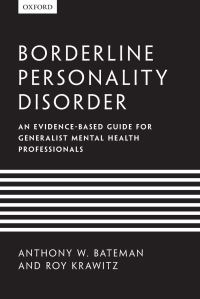
Book: Borderline Personality Disorder: An Evidence-Based Guide For Generalist Mental Health Professionals

Book Title:

Borderline Personality Disorder: An Evidence-Based Guide For Generalist Mental Health Professionals.

Author(s): Anthony W. Bateman (author) and Roy Krawitz (contrbutor).

Year: 2013.

Edition: First (1st), Illustrated Edition.

Publisher: Oxford University Press.

Type(s): Paperback and Kindle.

Synopsis:

Over the past two decades considerable progress has been made in developing specialist psychosocial treatments for borderline personality disorder (BPD), yet the majority of people with BPD receive treatment within generalist mental health services, rather than specialist treatment centres.

This is a book for general mental health professionals who treat people with BPD. It offers practical guidance on how to help people with BPD with advice based on research evidence. After a discussion of the symptoms of BPD, the authors review all the generalist treatment interventions that have resulted in good outcomes in randomised controlled trials, when compared with specialist treatments, and summarise the effective components of these interventions. The treatment strategies are organised into a structured approach called Structured Clinical Management (SCM), which can be delivered by general mental health professionals without extensive additional training.

The heart of the book outlines the principles underpinning SCM and offers a step-by-step guide to the clinical intervention. Practitioners can learn the interventions easily and develop more confidence in treating people with BPD. In addition, a chapter is devoted to how to help families – an issue commonly neglected when treating patients with BPD. Finally the authors discuss the top 10 strategies for delivering treatment and outline how the general mental health clinician can deliver these strategies competently.

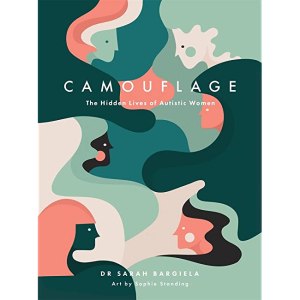
Book: Camouflage: The Hidden Lives of Autistic Women

Book Title:

Camouflage: The Hidden Lives of Autistic Women.

Author(s): Dr Sarah Bargiela.

Year: 2019.

Edition: First (1st), Illustrated Edition.

Publisher: Jessica Kingsley Publishers.

Type(s): Hardcover and Kindle.

Synopsis:

Autism in women and girls is still not widely understood, and is often misrepresented or even overlooked. This graphic novel offers an engaging and accessible insight into the lives and minds of autistic women, using real-life case studies.

The charming illustrations lead readers on a visual journey of how women on the spectrum experience everyday life, from metaphors and masking in social situations, to friendships and relationships and the role of special interests.

Fun, sensitive and informative, this is a fantastic resource for anyone who wishes to understand how gender affects autism, and how to create safer supportive and more accessible environments for women on the spectrum.