Posts

Sleep-Wake Disorders & DSM-5

Research Paper Title

Sleep-wake disorders and DSM-5.

Background

Most individuals with mental disorders complain about the problems they experience with sleeping and waking. It is becoming evident that careful diagnosis of sleep-wake disorders is of great importance for the prevention and treatment of mental disorders. Since the introduction of the DSM-IV, clinical scientific research has provided important new insights in this field.

Therefore the aim of this research was to find out whether the new classification of sleep-wake disorders in DSM-5 is likely to improve the diagnosis of disorders of this type.

Method

The researchers discuss the main changes in the DSM-5 classification of sleep- wake disorders, comparing the new version with the version in DSM-IV.

Results

Because considerable attention is being given to the symptom-orientated and dimensional approach, the classification of sleep-wake disorders in the DSM-5 is closer to current psychiatric practice and it does justice to the current scientific insights into the dimensional nature of psychiatric disorders.

Conclusions

The DSM-5 classification takes recent scientific insights into account and might help to improve the diagnosis of sleep-wake disorders in psychiatry.

Reference

van Bemmel, A.L. & Kerkhof, G.A. (2020) Sleep-wake disorders and DSM-5. Tijdschrift voor Psychiatrie. 56(3), pp.192-195.

Elucidating the Epidemiology of Mental Disorders

Research Paper Title

WHO’s work on the epidemiology of mental disorders.

Background

The WHO programme on epidemiology of mental disorders started in the early 1960’s with a series of reviews of knowledge.

These were followed by activities aiming at four main goals:

  • The standardisation of psychiatric diagnosis, classification and statistics;
  • The development of standardised internationally applicable instruments for the assessment of mental patients and of variables relevant to the assessment of mental illness;
  • The conduct of epidemiological studies of mental disorders; and
  • The training relevant to the above goals.

The paper provides a description of the activities undertaken to achieve these goals and stresses the importance and usefulness of the collaboration of individuals, experts and institutions all over the world in this effort.

Reference

Sartorius, N. (2020) WHO’s work on the epidemiology of mental disorders. Social Psychiatry and Psychiatric Epidemiology. 28(4), pp.147-155. doi: 10.1007/BF00797316.

On This Day … 13 December

People (Deaths)

  • 1931 – Gustave Le Bon, French psychologist, sociologist, and anthropologist (b. 1840).
  • 1955 – Antonio Egas Moniz, Portuguese psychiatrist and neurosurgeon, Nobel Prize laureate (b. 1874)

Gustave Le Bon

Charles-Marie Gustave Le Bon 07 May 1841 to 13 December 1931) was a leading French polymath whose areas of interest included anthropology, psychology, sociology, medicine, invention, and physics. He is best known for his 1895 work The Crowd: A Study of the Popular Mind, which is considered one of the seminal works of crowd psychology.

A native of Nogent-le-Rotrou, Le Bon qualified as a doctor of medicine at the University of Paris in 1866. He opted against the formal practice of medicine as a physician, instead beginning his writing career the same year of his graduation. He published a number of medical articles and books before joining the French Army after the outbreak of the Franco-Prussian War. Defeat in the war coupled with being a first-hand witness to the Paris Commune of 1871 strongly shaped Le Bon’s worldview. He then travelled widely, touring Europe, Asia and North Africa. He analysed the peoples and the civilisations he encountered under the umbrella of the nascent field of anthropology, developing an essentialist view of humanity, and invented a portable cephalometer during his travels.

In the 1890s, he turned to psychology and sociology, in which fields he released his most successful works. Le Bon developed the view that crowds are not the sum of their individual parts, proposing that within crowds there forms a new psychological entity, the characteristics of which are determined by the “racial unconscious” of the crowd. At the same time he created his psychological and sociological theories, he performed experiments in physics and published popular books on the subject, anticipating the mass-energy equivalence and prophesising the Atomic Age. Le Bon maintained his eclectic interests up until his death in 1931.

Ignored or maligned by sections of the French academic and scientific establishment during his life due to his politically conservative and reactionary views, Le Bon was critical of democracy and socialism. Le Bon’s works were influential to such disparate figures as Theodore Roosevelt and Benito Mussolini, Sigmund Freud and José Ortega y Gasset, Adolf Hitler and Vladimir Lenin.

Antonio Egas Moniz

António Caetano de Abreu Freire Egas Moniz (29 November 1874 to 13 December 1955), known as Egas Moniz, was a Portuguese neurologist and the developer of cerebral angiography. He is regarded as one of the founders of modern psychosurgery, having developed the surgical procedure leucotomy – ​known better today as lobotomy – ​for which he became the first Portuguese national to receive a Nobel Prize in 1949 (shared with Walter Rudolf Hess).

He held academic positions, wrote many medical articles and also served in several legislative and diplomatic posts in the Portuguese government. In 1911 he became professor of neurology in Lisbon until his retirement in 1944.

On This Day … 11 November

Events

  • 1934 – Bill Wilson, co-founder of Alcoholics Anonymous, takes his last drink and enters treatment for the final time.

People (Deaths)

  • 1966 – Augusta Fox Bronner, American psychologist, specialist in juvenile psychology (b. 1881).
  • 1979 – James J. Gibson, American psychologist and author (b. 1904).

Bill Wilson

You can find an outline of Bill Wilson here.

Augusta Fox Bronner

Augusta Fox Bronner (22 July 1881 to 11 December 1966) was an American psychologist, best known for her work in juvenile psychology. She co-directed the first child guidance clinic, and her research shaped psychological theories about the causes behind child delinquency, emphasizing the need to focus on social and environmental factors over inherited traits.

James J. Gibson

James Jerome Gibson (27 January 1904 to 11 December 1979), was an American psychologist and one of the most important contributors to the field of visual perception. Gibson challenged the idea that the nervous system actively constructs conscious visual perception, and instead promoted ecological psychology, in which the mind directly perceives environmental stimuli without additional cognitive construction or processing.

A Review of General Psychology survey, published in 2002, ranked him as the 88th most cited psychologist of the 20th century, tied with John Garcia, David Rumelhart, Louis Leon Thurstone, Margaret Floy Washburn, and Robert S. Woodworth.

My SO Has Got Depression (2011)

Introduction

A husband is suffering from melancholia, and he wants to commit suicide. His wife, who is a cartoonist, forces him to quit his job for the therapy. The wife’s optimism influence the husband, and they live happily ever after.

Also known as Tsure ga utsu ni narimashite (original title), 丈夫得了抑郁症 (China, Mandarin, festival title), and ツレがうつになりまして。(Japanese).

Outline

Mikio (Masato Sakai) is a married man and works hard for the company where he is employed. Then one day Mikio is diagnosed with depression. Mikio’s wife is Haruko (Aoi Miyazaki). They have been married for 5 years. Haruko draws comics for work, but they do not sell well. She mainly relied on Mikio for support. Meanwhile, Haruko did not notice any changes in her husband. She begins to blame herself for not noticing any signs. Mikio’s depression derived from his work. His company has been pressing him to quit the company. After Mikio quits his job his condition improves, but the dynamics of their relationship changes.

Cast

  • Mitsuru Fukikoshi – Sugiura.
  • Kanji Tsuda – Kazuo Takazaki.
  • Hiroshi Inuzuka – Kawaji.
  • Tomio Umezawa – Takashi Mikami.
  • Ryosei Tayama – Kamo.
  • Ren Osugi – Yasuo Kurita (Haruko’s dad).
  • Kimiko Yo – Satoko Kurita (Haruko’s mom).
  • Hiroshi Yamamoto – Kimizuka.
  • Saburo Tamura – Tsuda.
  • Yuta Nakano – Obata.
  • Atsushi Mizutani.

Awards

2011 (36th) Hochi Film Awards – 29 November 2011 – Best Actor (Masato Sakai).

Trivia

  • Based on the manga “Tsure ga Utsu ni Narimashite” by female manga artist Tenten Hosokawa.
    • The manga also inspired the NHK 2009 drama “How Do I Cope with My Husband’s Depression?” (Tsure ga utsu ni narimashite, NHK, 2009).
  • Movie director Kiyoshi Sasabe planned directing the film for 4 years.
  • Filming began January 9th and is expected to finish early February.
  • Aoi Miyazaki & Masato Sakai previously worked together in the 2008 taiga drama “Atsuhime”.

Production & Filming Details

  • Director(s): Kiyoshi Sasabe.
  • Producer(s): Mitsuru Kurosawa, Naoya Kinoshita, Hirohumi Shigemura, Takashi Hirajo, Hideyuki Hukuhara, Tadayoshi Kubota, Tatsuya Kunimatsu, and Masaaki Usui.
  • Writer(s): Tenten Hosokawa (manga) and Takeshi Aoshima (screenplay).
  • Music: Mino Kabasawa.
  • Cinematography: Takeshi Hamada.
  • Editor(s): Eisuke Oohata.
  • Production:
    • Central Arts.
    • CineMove.
    • Gentosha.
    • IVS Television.
    • King Records.
    • Kinoshita Komuten.
    • TV Asahi.
    • The Yomiuri Shimbun.
    • Toei Video Company.
  • Distributor(s): Toei Company (Japan).
  • Release Date: 08 October 2011 (Kawasaki Shinyuri Film Festival).
  • Running Time: 121 minutes.
  • Rating: Unknown.
  • Country: Japan.
  • Language: English (subtitles) and Japanese.

Video Link

What is the Impact of Early Manifesting Disorders in the Frame of General Mental Morbidity & of the Effect of Intervention?

Research Paper Title

What happens to children and adolescents with mental disorders? Findings from long-term outcome research.

Background

Research on the long-term outcome of mental disorders originating in childhood and adolescence is an important part of developmental psychopathology.

Methods

After a brief sketch of relevant terms of outcome research, the first part of this review reports findings based on heterotypic cohort studies.

The major second part of this review presents findings based on long-term outcome studies dealing with homotypic diagnostic groups. In particular, the review focuses on the course and prognosis of ADHD, anxiety disorders, depression, conduct disorders, eating disorders, autism spectrum disorders, schizophrenia, and selective mutism.

Results

Findings mainly support the vulnerability hypothesis regarding mental disorders with early manifestation in childhood and adolescence as frequent precursors of mental disorders in adulthood.

Conclusions

The discussion focuses on the impact of early manifesting disorders in the frame of general mental morbidity and of the effect of interventions, which is not yet sufficiently discernible.

Reference

Steinhausen, H-C. (2020) What happens to children and adolescents with mental disorders? Findings from long-term outcome research [German]. Zeitschrift fur Kinder- und Jugendpsychiatrie und Psychotherapie. 41(6), pp.419-431. doi: 10.1024/1422-4917/a000258.

Theoretical Assumptions & Mental Disorders

Research Paper Title

Should definitions for mental disorders include explicit theoretical elements?

Background

In this article the researchers argue that mental disorders have come to be defined according to a descriptive theory of meaning. In other words, mental disorders are defined according to superficial descriptive criteria that count as necessary and sufficient criteria for the inclusion of a particular instance under its corresponding class.

These descriptive criteria are allegedly theory independent, leading to the assumption that psychiatric symptoms are directly identified in an object-like fashion.

Against this view, the researchers hold that a descriptive theory of meaning is unable to offer a proper account of the meaning of mental disorders both due to its own internal limitations and to the specific nature of psychiatric phenomena.

Due to the hermeneutic structure of psychiatric practice, they argue that the identification and description of mental symptoms and disorders unavoidably depends on (frequently unacknowledged) theoretical assumptions.

Since there is no global consensus regarding these theoretical commitments, and due to the fact that these significantly affect the final picture the researchers hold with respect to each mental disorder, they believe that these commitments should be explicitly stated both in diagnostic argumentation and in theoretical discussions in order to maximise self- and mutual understanding.

Reference

Adan-Manes, J. & Ramos-Gorostiza, P. (2020) Should definitions for mental disorders include explicit theoretical elements? Psychopathology. 47(3), pp.158-166. doi: 10.1159/000351741. Epub 2013 Aug 30.

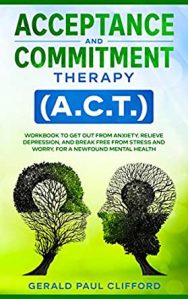
Book: Acceptance and Commitment Therapy (A.C.T.)

Book Title:

Acceptance and Commitment Therapy (A.C.T.): Workbook to Get Out From Anxiety, Relieve Depression, and Break Free From Stress and Worry, for a Newfound Mental Health.

Author(s): Gerald Paul Clifford.

Year: 2020.

Edition: First (1st).

Publisher: Independently Published.

Type(s): Paperback and Kindle.

Synopsis:

Life can present many challenges, some of which can be incredibly difficult to overcome. When these more troubling challenges arise, it can feel impossible to know how to navigate them and the many experiences they bring.

You may feel worried about your thoughts, emotions, behaviours, or all three. Especially when these parts of your experience seem hijacked by anxiety, anger, fear, frustration, depression, or other difficult emotions, it can be overwhelming to navigate them and the many behavioural experiences they bring.

Acceptance and Commitment Therapy (A.C.T) is a type of psychotherapy that relies on talk therapy techniques to assist you with achieving a more functional state in your life. By adjusting your perspective, increasing your awareness, and taking intentional action, you deepen your ability to recognise and navigate your emotions.

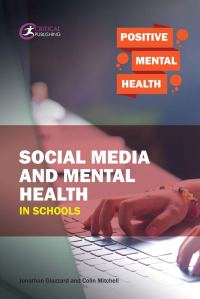
Book: Social Media and Mental Health in Schools

Book Title:

Social Media and Mental Health in Schools (Positive Mental Health).

Author(s): Jonathan Glazzard and Colin Mitchell.

Year: 2018.

Edition: First (1st).

Publisher: Critical Publishing.

Type(s): Paperback and Kindle.

Synopsis:

Social media is at the heart of children’s and young people’s lives. It is intimately entwined with mental health issues and can be both a blessing and a curse. Do you fully understand the links between social media and mental health? What problems does social media present for your learners? What benefits could it bring them? What can you do to educate children and young people about the use of social media while also developing their digital resilience? Whether you are a primary or secondary teacher, this book helps you tackle these questions, with a range of practical strategies and solutions that are workable in school and classroom settings.

Book: Feeling Good: The New Mood Therapy

Book Title:

Feeling Good: The New Mood Therapy.

Author(s): David D. Burns.

Year: 1998.

Edition: First (1st), New Edition.

Publisher: Avon Books.

Type(s): Paperback, Audiobook, and Kindle.

Synopsis:

The good news is that anxiety, guilt, pessimism, procrastination, low self-esteem, and other ′black holes′ of depression can be cured without drugs. In Feeling Good, eminent psychiatrist David D. Burns, M.D. outlines the remarkable, scientifically proven techniques that will immediately lift your spirits and help you develop a positive outlook on life.

Now, in this updated edition, Dr Burns adds an all-new Consumer′s Guide To Antidepressant Drugs, as well as a new introduction to help answer your questions about the many options available for treating depression.