Posts

Book: Nutrition and Mental Health: A Handbook

Book Title:

Nutrition and Mental Health: A Handbook: An Essential Guide to the Relationship Between Diet and Mental Health.

Author(s): Michael Crawford, Oscar Umahro Cadogan, Alexandra J. Richardson, and Martina Watts.

Year: 2008.

Edition: First (1st).

Publisher: Pavilion Publishing (Brighton) Ltd.

Type(s): Hardcover and Paperback.

Synopsis:

The role of nutrition is fundamental to human health and well-being.

It is, however, often overlooked when treating people with mental health problems.

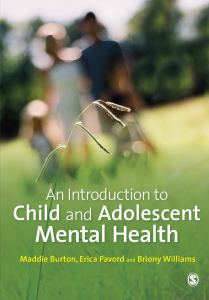
Book: An Introduction to Child and Adolescent Mental Health

Book Title:

An Introduction to Child and Adolescent Mental Health.

Author(s): Maddie Burton, Erica Pavord, and Briony Williams.

Year: 2014.

Edition: First (1st).

Publisher: SAGE Publications.

Type(s): Hardcover, Paperback, and Kindle.

Synopsis:

Anyone who works within children and adolescent mental health services will tell you what a challenging and complex world it is. To help prepare you, the authors have produced a clear introduction to child and adolescent mental health that takes you step-by-step on a journey through the subject. Beginning with the foundations, the book explores the common mental health concepts and influences that you can expect to encounter examining topics like the difference between emotional and mental health issues and how mental health problems develop.

On This Day … 09 December

People (Births)

  • 1926 – Jan Křesadlo, Czech-English psychologist and author (d. 1995).
  • 1972 – Saima Wazed Hossain, Bangladeshi psychologist.

Jan Kresadlo

Václav Jaroslav Karel Pinkava (09 December 1926 to 13 August 1995), better known by his pen name Jan Křesadlo, was a Czech psychologist who was also a prizewinning novelist and poet.

An anti-communist, Pinkava emigrated to Britain with his wife and four children following the 1968 invasion of Czechoslovakia by the Soviet-led armies of the Warsaw pact. He worked as a clinical psychologist until his early retirement in 1982, when he turned to full-time writing. His first novel “Mrchopěvci” (GraveLarks) was published by Josef Škvorecký’s emigre publishing house 68 Publishers, and earned the 1984 Egon Hostovský prize.

He chose his pseudonym (which means firesteel) partly because it contains the uniquely Czech sound ř; in addition, he was fond of creating more pseudonyms such as Jake Rolands (an anagram), J. K. Klement (after his grandfather, for translations into English), Juraj Hron (for his Slovak-Moravian writings), Ferdinand Lučovický z Lučovic a na Suchým dole (for his music), Kamil Troud (for his illustrations), Ἰωάννης Πυρεῖα (for his Astronautilia), and more.

Pinkava was also active in choral music, composing (among others) a Glagolitic Mass. As well, he worked in mathematical logic, discovering the many-valued logic algebra which bears his name.

A polymath and polyglot, Pinkava was fond of setting intense goals for himself, such as translating Jaroslav Seifert’s interwoven sonnet cycle about Prague, ‘A Wreath of Sonnets’. He published a collection of his own poems in seven languages. Perhaps his most staggering achievement is ΑΣΤΡΟΝΑΥΤΙΛΙΑ Hvězdoplavba, a 6575-line science fiction epic poem, an odyssey in classical Homeric Greek, with its parallel hexameter translation into Czech. This was published shortly after his death, in a limited edition. Only his first, prize-winning novel has been published in English translation, as GraveLarks in a bilingual edition in 1999 and in a revised edition in 2015.

He is the father of film director Jan Pinkava who received an Oscar for Geri’s Game in 1998 and also illustrated GraveLarks.

Saima Wazed

Saima Wazed Hossain (born 09 December 1972) is a Bangladeshi autism activist. She is the daughter of Bangladesh’s Prime Minister, Sheikh Hasina. She is a member of the World Health Organisation’s (WHO) 25-member Expert Advisory Panel on mental health. To her family, she is known simply as “Putul”.

Early Life and Education

She was born to Sheikh Hasina, the present Prime Minister of Bangladesh, and M.A. Wazed Miah, a nuclear scientist. Her brother is Sajeeb Wazed Joy. She graduated from Barry University. She is a licensed school psychologist.

Career

She organized the first South Asian conference on Autism in 2011 in Dhaka, Bangladesh. She is the chairperson of National Advisory Committee on Autism and Neurodevelopmental disorders. She campaigned for “Comprehensive and Coordinated Efforts for the Management of Autism Spectrum Disorders” resolution at the World Health Assembly which adopted the resolution, Autism Speaks praised her for spearheading “a truly global push for support for this resolution”.

In November, 2016, Wazed had been elected as chairperson of International Jury Board meeting of UNESCO for Digital Empowerment of Persons with Disabilities.

In April 2017, Wazed has been designated as WHO Champion for Autism” in South-East Asia. In July, 2017 she became the Goodwill Ambassador of the WHO for autism in South-East Asia Region.

Award

In 2016, Wazed has conferred WHO’s South-East Asia Region Award for Excellence in Public Health. In 2017, she has been awarded the International Champion Award for her outstanding contribution to the field of autism. She received a distinguished alumni award from Barry University for her activism.

Personality Core of Mental Illness

Research Paper Title

Does it exist a personality core of mental illness? A systematic review on core psychobiological personality traits in mental disorders,

Background

Research investigating the relationship between mental disorders and personality traits leads to interesting results. Individuals affected by several mental disorders have been worldwide assessed according to the psychobiological model of personality. This review aims to explore which temperament and character traits are recurrent in mental disorders and to highlight what traits may be shared determinants or consequences of the expression of a mental disorder.

Methods

Systematic search of Medline database between 1998 and 2011 has been conducted to select the studies exploring the Temperament and Character Inventory (TCI) dimensions in the most relevant axis I psychiatric disorders. Of the 110 studies that were retrieved, 88 met the inclusion/exclusion criteria and were analysed.

Results

High HA (HA) and low self-directedness are recurrent and can be considered as a “personality core” regardless of the diagnosis. They may be risk factors and relapse-related, they can indicate incomplete remission or chronic course of mental disorders, and consistently influence patients’ functioning. Furthermore, they can be modified by medications or psychotherapy and represent outcome predictors of treatments.

Conclusion

This “core” may represent a personality diathesis to psychopathology. Relational environment can influence the development of both temperament and character, thus prevention of mental disorders should promote a positive development of these traits. Although further research is needed, psychotherapeutic interventions should be performed also considering that mental disorders could benefit from HA desensitisation and SD reinforcement. Finally, these traits may be used to provide diagnostic, prognostic, quality of life and efficacy inferences on psychiatric treatments.

Reference

Fassino, S., Amianto, F., Sobrero, C. & Daga, G.A. (2020) Does it exist a personality core of mental illness? A systematic review on core psychobiological personality traits in mental disorders. Panminerva Medica. 55(4), pp.397-413.

On This Day … 08 December

People (Births)

  • 1928 – Ulric Neisser, German-American psychologist, neuroscientist, and academic (d. 2012).
  • 1949 – Robert Sternberg, American psychologist and academic.

Ulric Neisser

Ulric Gustav Neisser (08 December 1928 to 17 February 2012) was a German-born American psychologist and member of the US National Academy of Sciences. He has been referred to as the “father of cognitive psychology”.

Neisser researched and wrote about perception and memory. He posited that a person’s mental processes could be measured and subsequently analysed. In 1967, Neisser published Cognitive Psychology, which he later said was considered an attack on behaviourist psychological paradigms.

Cognitive Psychology brought Neisser instant fame and recognition in the field of psychology. While Cognitive Psychology was considered unconventional, it was Neisser’s Cognition and Reality that contained some of his most controversial ideas. A main theme in Cognition and Reality is Neisser’s advocacy for experiments on perception occurring in natural (“ecologically valid”) settings.

Neisser postulated that memory is, largely, reconstructed and not a snap shot of the moment. Neisser illustrated this during one of his highly publicised studies on people’s memories of the Challenger explosion. In his later career, he summed up current research on human intelligence and edited the first major scholarly monograph on the Flynn effect. A Review of General Psychology survey, published in 2002, ranked Neisser as the 32nd most cited psychologist of the 20th century.

Robert Sternberg

Robert J. Sternberg (born 08 December 1949) is an American psychologist and psychometrician. He is Professor of Human Development at Cornell University. Prior to joining Cornell, Sternberg was president of the University of Wyoming for 5 months. He has been Provost and Professor at Oklahoma State University, Dean of Arts and Sciences at Tufts University, IBM Professor of Psychology and Education at Yale University. He is a member of the editorial boards of numerous journals, including American Psychologist. He was the past President for the American Psychological Association.

Sternberg has a BA from Yale University and a PhD from Stanford University, under advisor Gordon Bower. He holds thirteen honorary doctorates from two North American, one South American, one Asian, and nine European universities, and additionally holds an honorary professorship at the University of Heidelberg, in Germany. He is a Distinguished Associate of the Psychometrics Centre at the University of Cambridge.

Among his major contributions to psychology are the triarchic theory of intelligence and several influential theories related to creativity, wisdom, thinking styles, love, and hate. A Review of General Psychology survey, published in 2002, ranked Sternberg as the 60th most cited psychologist of the 20th century. Sternberg has acquired over $20 million in grants and contracts for his research and has conducted research on five continents. The central focus of his research is on intelligence, creativity, and wisdom. He has also studied close relationships, love, and hatred. He has authored or co-authored over 1,500 publications, including articles, book chapters, and books. His work has been critiqued due to excessive self-citation and self-plagiarism. In 2018 he resigned as the editor of Perspectives on Psychological Science in response to these claims.

Robert Sternberg is married to Karin Sternberg, a German psychologist.

The Use of Complementary & Alternative Medicine in Mental Disorders

Research Paper Title

Mental disorders and the use of alternative medicine: results from a national survey.

Background

The study examined the relationship between mental disorders and the use of complementary and alternative medicine.

Methods

Data from a national household telephone survey conducted in 1997-1998 (N=9,585) were used to examine the relationships between use of complementary and alternative medicine during the past 12 months and several demographic variables and indicators of mental disorders. Structured diagnostic screening interviews were used to establish diagnoses of probable mental disorders.

Results

Use of complementary and alternative medicine during the past 12 months was reported by 16.5% of the respondents. Of those respondents, 21.3% met diagnostic criteria for one or more mental disorders, compared to 12.8% of respondents who did not report use of alternative medicine. Individuals with panic disorder and major depression were significantly more likely to use alternative medicine than those without those disorders. Respondents with mental disorders who reported use of alternative medicine were as likely to use conventional mental health services as respondents with mental disorders who did not use alternative medicine.

Conclusions

The researchers found relatively high rates of use of complementary and alternative medicine among respondents who met criteria for common mental disorders. Practitioners of alternative medicine should look for these disorders in their patients, and conventional medical providers should ask their depressed and anxious patients about the use of alternative medicine. More research is needed to determine if individuals with mental disorders use alternative medicine because conventional medical care does not meet their health care needs.

Reference

Unutzer, J., Klap, R., Sturm, R., Young, A.S., Marmon, T., Shatkin, J. & Wells, K.B. (2020) Mental disorders and the use of alternative medicine: results from a national survey. The American Journal of Psychiatry. 157(11), pp.1851-1857. doi: 10.1176/appi.ajp.157.11.1851.

Is the Association between Mental Disorders & Cardiovascular Disease Spurious or Real?

Research Paper Title

PsyCoLaus: mental disorders and cardiovascular diseases: spurious association?

Background

Cardio-vascular diseases (CVD), their well established risk factors (CVRF) and mental disorders are common and co-occur more frequently than would be expected by chance.

However, the mechanisms underlying this association are still poorly understood.

The main study questions of PsyCoLaus, the psychiatric arm of CoLaus, are:

  • Do mental disorders increase vulnerability to CVRF and CVD?
  • Do CVRF and CVD promote the development of mental disorders?
  • Do CVRF/ CVD and mental disorders share common pathogenetic processes?

The longitudinal project adds a comprehensive psychiatric evaluation to the CoLaus investigation.

A better understanding of the psychological, physiological and behavioural links underlying CVD/ CVRF and mental disorders will result in the development of more specific and efficient strategies of prevention and treatment for both psychiatric and CVD/CVRF, two major elements of burden of disease.

Reference

Preisig, M., Waeber, G., Mooser, V. & Vollenweider, P. (2020) PsyCoLaus: mental disorders and cardiovascular diseases: spurious association? Revue Medicale Suisse. 7(315), pp.2127-2129.

On This Day … 06 December

People (Births)

  • 1890 – Dion Fortune, Welsh occultist, psychologist, and author (d. 1946).

People (Deaths)

  • 1961 – Frantz Fanon, Martinique-French psychiatrist and author (b. 1925).

Dion Fortune

Dion Fortune (born Violet Mary Firth, 06 December 1890 to 06 January 1946) was a British occultist, ceremonial magician, novelist and author. She was a co-founder of the Fraternity of the Inner Light, an occult organisation that promoted philosophies which she claimed had been taught to her by spiritual entities known as the Ascended Masters. A prolific writer, she produced a large number of articles and books on her occult ideas and also authored seven novels, several of which expound occult themes.

Fortune was born in Llandudno, Caernarfonshire, North Wales, to a wealthy upper middle-class English family, although little is known of her early life. By her teenage years she was living in England’s West Country, where she wrote two books of poetry. After time spent at a horticultural college she began studying psychology and psychoanalysis at the University of London before working as a counsellor in a psychotherapy clinic. During the First World War she joined the Women’s Land Army and established a company selling soy milk products. She became interested in esotericism through the teachings of the Theosophical Society, before joining an occult lodge led by Theodore Moriarty and then the Alpha et Omega occult organisation.

She came to believe that she was being contacted by the Ascended Masters, including “the Master Jesus”, and underwent trance mediumship to channel the Masters’ messages. In 1922 Fortune and Charles Loveday claimed that during one of these ceremonies they were contacted by Masters who provided them with a text, The Cosmic Doctrine. Although she became the president of the Christian Mystic Lodge of the Theosophical Society, she believed the society to be uninterested in Christianity, and split from it to form the Community of the Inner Light, a group later renamed the Fraternity of the Inner Light. With Loveday she established bases in both Glastonbury and Bayswater, London, began issuing a magazine, gave public lectures, and promoted the growth of their society. During the Second World War she organised a project of meditations and visualisations designed to protect Britain. She began planning for what she believed was a coming post-war Age of Aquarius, although she died of leukaemia shortly after the war’s end.

Fortune is recognised as one of the most significant occultists and ceremonial magicians of the early 20th century. The Fraternity she founded survived her and in later decades spawned a variety of related groups based upon her teachings. Her novels in particular proved an influence on later occult and modern Pagan groups such as Wicca.

Frantz Fanon

Frantz Omar Fanon (20 July 1925 to 06 December 1961), also known as Ibrahim Frantz Fanon, was a French West Indian psychiatrist and political philosopher from the French colony of Martinique (today a French department). His works have become influential in the fields of post-colonial studies, critical theory and Marxism. As well as being an intellectual, Fanon was a political radical, Pan-Africanist, and Marxist humanist concerned with the psychopathology of colonisation and the human, social, and cultural consequences of decolonisation.

In the course of his work as a physician and psychiatrist, Fanon supported Algeria’s War of independence from France and was a member of the Algerian National Liberation Front.

For more than five decades, the life and works of Frantz Fanon have inspired national-liberation movements and other radical political organisations in Palestine, Sri Lanka, South Africa, and the United States. He formulated a model for community psychology, believing that many mental-health patients would do better if they were integrated into their family and community instead of being treated with institutionalised care. He also helped found the field of institutional psychotherapy while working at Saint-Alban under Francois Tosquelles and Jean Oury.

Fanon published numerous books, including The Wretched of the Earth (1961). This influential work focuses on what he believed is the necessary role of violence by activists in conducting decolonisation struggles.

What is International Volunteer Day?

Introduction

The International Volunteer Day for Economic and Social Development (05 December), more commonly referred to as International Volunteer Day (IVD), is an international observance mandated by the United Nations (UN) General Assembly in 1985. It offers an opportunity for volunteer-involving organisations and individual volunteers to promote volunteerism, encourage governments to support volunteer efforts and recognise volunteer contributions to the achievement of the Sustainable Development Goals (SDGs) at local, national and international levels.

International Volunteer Day is celebrated by many non-governmental organisations, civil society, and the private sector, among others. It is also marked and supported by the United Nations Volunteers (UNV) programme.

UNV coordinates a campaign to promote IVD every year, building on the impact volunteers have in communities, nationally and globally for peace and development.

In 2018 the focus of IVD is not only to celebrate volunteerism in all its facets, but also to highlight the role that volunteers play in building resilient communities. It is worth noting that current estimates equate the global volunteer workforce to 109 million full-time workers. 30% of volunteering that takes place formally through organisations, associations and groups; and 70% occurs through informal engagement between individuals. Overall, 60% of the informal volunteers are women.

Background

IVD is a chance for individual volunteers, communities and organisations to promote their contributions to development at the local, national and international levels. By combining UN support with a grassroots mandate, IVD is a unique opportunity for people and volunteer-involving organisations to work with government agencies, non-profit institutions, community groups, academia and the private sector.

The International Volunteer Day for Economic and Social Development was adopted by the UN General Assembly through Resolution A/RES/40/212 on 17 December 1985.

In 2012, in response to evolving experiences and recommendations, the UNV programme spearheaded a Five-Year IVD Strategy, with the aim to make it more globally recognised and grassroots-owned.

Celebration of IVD and the Themes

In the last six years, IVD was celebrated each year in over 80 countries annually. The IVD website receives around 50,000 page views every year, with around 150 stories posted which highlight over 50,000 volunteers, photos and videos of celebrations worldwide.

  • IVD 2018 – “Volunteers build Resilient Communities”:
    • IVD 2018 celebrates volunteer efforts that strengthen local ownership and the resilience of the community in the face of natural disasters, economic stresses and political shocks.
    • The event on 05 December 2018 will focus on how volunteers can build resilient communities.
  • IVD 2017 – “Volunteers Act First. Here. Everywhere.”:
    • The focus of IVD 2017 was to recognize the positive solidarity of volunteers around the world who answer calls in times of crisis, helping save lives today and supporting those who want to continue living their lives with dignity tomorrow.
  • IVD 2016 – “Global Applause – give volunteers a hand”:
    • Under this theme, IVD presented a round of global applause to celebrate volunteers everywhere and encouraged others to join in and contribute to peace and sustainable development.
  • IVD 2015 – “Your world is changing. Are you? Volunteer!”:
    • The goal of IVD 2015 was to start a dialogue about how volunteerism is vital to the success of the SDGs and the 2030 Agenda.
  • IVD 2014 – “Make change happen, volunteer!”:
    • The goal of IVD 2014 was to highlight the contribution of volunteers in engaging people from the grassroots in decision-making processes, ultimately creating spaces for participation that lead to stronger governance, social cohesion, peace and sustainable development.
  • IVD 2013 – “Young. Global. Active.”:
    • The goal of the event was to pay special tribute to the contribution of youth volunteers to global peace and sustainable human development, highlighting that young people act as agents of change in their communities.
  • IVD 2012 – “Celebrate volunteering”:
    • The event celebrated its commitment and hope for a better world. The main focus of IVD 2012 was awareness of and recognition for volunteers and volunteer organisations.

A Focus on Partnership and Development

Through the years, IVD has been used strategically: many countries have focused on volunteers’ contributions to achieving the SDGs, a set of time-bound targets to combat poverty, hunger, disease, health, environmental degradation and gender equality.

IVD celebrates active volunteers and attracts new volunteers in the North and in the South, with a special focus on promoting South-South cooperation.

The organisation of IVD is generally the result of a partnership between the UN system, governments, volunteer-involving organisations and committed individuals. Representatives from the media or academia, foundations, the private sector, faith groups, and sports and recreational organisations are often involved too.

The General Assembly invited Governments to observe annually, on 05 December, the International Volunteer Day for Economic and Social Development (resolution 40/212 of 17 December 1985) and urged them to take measures to heighten awareness of the important contribution of volunteer service, thereby stimulating more people in all walks of life to offer their services as volunteers, both at home and abroad.

The UN General Assembly, in its resolution 52/17 of 20 November 1997, proclaimed 2001 as the International Year of Volunteers (IYV). The year was conceived to further the recognition of volunteers, facilitate their work, create a communication network and promote the benefits of voluntary service.

In 2001, the International Year of Volunteers, the General Assembly adopted a set of recommendations on ways in which Governments and the United Nations system could support volunteering and asked that they be given wide dissemination (resolution 56/38 of 05 December 2001).

The UN General Assembly, in its resolution 57/106 of 22 November 2002, called upon the United Nations Volunteers (UNV) programme to ensure that the potential of International Volunteer Day is fully realized.

On 18 December 2008, the General Assembly decided that on or around 05 December 2011, two plenary meetings of the sixty-sixth session of the General Assembly should be devoted to the follow-up to the International Year of Volunteers and the commemoration of its tenth anniversary (resolution 63/153).

Online Volunteering Award

Traditionally, on International Volunteer Day (05 December), UNV calls for nominations and launches the UNV Online Volunteering Award. A jury made up of UNV representatives and external experts in volunteerism and development cooperation reviews the nominations and selects the winners.

The UNV programme invites citizens worldwide to be inspired by the winner’s stories and participate in the global voting for their favourite winner. The team that gets the most votes is announced as the public’s favourite on the International Day of Happiness.

The purpose of the award is to recognise online volunteers’ contributions towards achieving the SDGs, to showcase the many ways in which online volunteers can strengthen the capacities of organisations and to demonstrate the difference volunteers can make to peace and development projects by sharing their time, skills and expertise over the Internet.

On This Day … 05 December

People (Births)

  • 1901 – Milton H. Erickson, American psychiatrist and author (d. 1980).

Milton H. Erickson

Milton Hyland Erickson (05 December 1901 to 25 March 1980) was an American psychiatrist and psychologist specializing in medical hypnosis and family therapy.

He was founding president of the American Society for Clinical Hypnosis and a fellow of the American Psychiatric Association, the American Psychological Association, and the American Psychopathological Association.

He is noted for his approach to the unconscious mind as creative and solution-generating. He is also noted for influencing brief therapy, strategic family therapy, family systems therapy, solution focused brief therapy, and neuro-linguistic programming.