Posts

Book: Cognitive Analytic Therapy

Book Title:

Cognitive Analytic Therapy: Distinctive Features (Psychotherapy and Counselling Distinctive Features).

Author(s): Claire Corbridge, Laura Brummer, and Philippa Coid.

Year: 2017.

Edition: First (1st).

Publisher: Routledge.

Type(s): Hardcover, Paperback, and Kindle.

Synopsis:

Cognitive Analytic Therapy: Distinctive Features offers an introduction to what is distinctive about this increasingly popular method. Written by three Cognitive Analytic Therapists, with many years’ experience, it provides an accessible, bitesize overview of this increasingly used psychological therapy. Using the popular Distinctive Features format, this book describes 15 theoretical features and 15 practical techniques of Cognitive Analytic Therapy.

Cognitive Analytic Therapy will be a valuable source for students, professionals in training and practising therapists, as well as other psychotherapists, counsellors and mental health professionals wishing to learn more about the distinctive features of this important therapy.

Book: Cognitive Analytic Therapy and Borderline Personality Disorder

Book Title:

Cognitive Analytic Therapy and Borderline Personality Disorder : The Model and the Method

Author(s): Anthony Ryle.

Year: 1997.

Edition: First (1st).

Publisher: John Wiley & Sons.

Type(s): Paperback and Kindle.

Synopsis:

Borderline Personality Disorder patients are impulsive, unstable and destructive, hurting themselves and those around them, including those who seek to help them. This has resulted in a widespread reluctance to treat them and a pessimism about treatment.

In the experience of the authors this pessimism is unjustified, because for many patients a relatively brief intervention can be effective in cost-benefit terms as well as human terms. The interventions illustrated here have been used to treat outpatients for 15 years.

The results indicate that treatments can achieve clinically significant changes in the course of 16 24 sessions, in a substantial proportion of patients. While CAT shares some ideas and methods with other approaches, it introduces many new features and is uniquely integrated at both the theoretical and practical level. The early joint reformulation of patients problems serves to contain destructiveness and to create a working alliance. Also, the use of reformulation to teach self-reflection and avoid collusive responses from the therapist, throughout the therapy, represents a powerful new technique.

The book offers a critical appraisal of current ideas and practices, contrasting with these the ways in which CAT mobilises the patient s own resources. The authors argue that CAT should have a place in any service seeking to help these difficult patients.

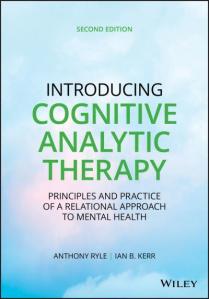
Book: Introducing Cognitive Analytic Therapy

Book Title:

Introducing Cognitive Analytic Therapy: Principles and Practice of a Relational Approach to Mental Health.

Author(s): Anthony Ryle and Ian B. Kerr.

Year: 2020.

Edition: Second (2nd).

Publisher: Wiley.

Type(s): Paperback and Kindle.

Synopsis:

Cognitive Analytic Therapy (CAT) is an increasingly popular approach to therapy that is now widely recognised as a genuinely integrative and fundamentally relational model of psychotherapy. This new edition of the definitive text to CAT offers a systematic and comprehensive introduction to its origins, development, and practice. It also provides a fully updated overview of developments in the theory, research, and applications of CAT, including clarification and re-statement of basic concepts, such as reciprocal roles and reciprocal role procedures, as well as extensions into new areas of expertise.

Introducing Cognitive Analytic Therapy: Principles and Practice of a Relational Approach to Mental Health, 2nd Edition starts with a brief account of the scope and focus of CAT and how it evolved and explains the main features of its practice. It next offers a brief account of a relatively straightforward therapy to give readers a sense of the unfolding structure and style of a time-limited CAT. Following that are chapters that consider the normal and abnormal development of the Self and that introduce influential concepts from Vygotskian, Bakhtinian and developmental psychology. Subsequent chapters describe selection and assessment; reformulation; the course of therapy; the ‘ideal model’ of therapist activity and its relation to the supervision of therapists; applications of CAT in various patient groups and settings and in treating personality type disorders; use in ‘reflective practice’; a CAT perspective on the ‘difficult’ patient; and systemic and ‘contextual’ approaches.

  • Presents an updated introduction and overview of the principles and practice of cognitive analytic therapy (CAT).
  • Updates the first edition with developments from the last decade, in which CAT theory has deepened and the approach has been applied to new patient groups and extended far beyond its roots.
  • Includes detailed, applicable ‘how to’ descriptions of CAT in practice.
  • Includes references to CAT published works and suggestions for further reading within each chapter.
  • Includes a glossary of terms and several appendices containing the CAT Psychotherapy File; a summary of CAT competences extracted from Roth and Pilling; the Personality Structure Questionnaire; and a description of repertory grid basics and their use in CAT.
  • Co-written by the creator of the CAT model, Anthony Ryle, in collaboration with leading CAT practitioner, trainer, and researcher, Ian B. Kerr.

Introducing Cognitive Analytic Therapy is the definitive book for CAT practitioners and CAT trainees at skills, practitioner, and psychotherapy levels. It should also be of considerable interest and relevance to mental health professionals of all orientations, including clinical psychologists, psychiatrists, counselors, mental health nurses, to those working in forensic and various institutional settings, and to a range of other health care and social work professionals.

On This Day … 16 November

People (Births)

  • 1944 – Oliver Braddick, English psychologist and academic.

Oliver Braddick

Oliver John Braddick, FBA, FMedSci (born 16 November 1944) is a British developmental psychologist who is involved in research on infant visual perception. He frequently collaborates with his wife Janette Atkinson.

Biography

Braddick is Emeritus Professor of Experimental Psychology and was formerly head of the Department of Experimental Psychology at Oxford University from 2001 until his retirement in 2011. He attained a BA (1965) and PhD (1968) in Experimental Psychology at Trinity College, Cambridge. Between 1968-1969 he was a post-doctoral fellow in the laboratory of Lorrin Riggs, Brown University, US. In 1969 he returned to Cambridge as a University Demonstrator, proceeding to become a lecturer and then reader.

By 1976, Braddick was an active member of the Cambridge Visual Development Unit, along with Janette Atkinson, his wife. The unit carried out pioneering research on the development of visual cortical function in infancy and in early visual screening. He also progressed understanding in binocular processes of both infants and adults.

In 1993, Braddick moved to University College London, together with Janette Atkinson, as professors of Psychology. He proceeded to become head of the Psychology department in 1998. He was elected fellow of the Academy of Medical Sciences in 2001 and that same year appointed Head Professor of Psychology at the University of Oxford and fellow at Magdalen College, Oxford.

In July 2012, it was announced that he had been elected as a Fellow of the British Academy, due to his contributions in the field of visual perception and its development in early childhood. Braddick is also a member of the Visual Development Unit at the University College of London and University of Oxford, a unit that specialises in child visual perception. He is a member of the Editorial Board for Current Biology.

Research

Braddick specialises in infant vision, particularly visual and visuomotor development of the dorsal and ventral streams in infants and children. In infancy, visual traits determine a manual response and the kinematic parameters of each type of response, including reach-and-grasp and surface exploration. These responses reflect the properties of visuo-motor modules which appear in infants from 4 to 12 months old. Since these modules are part of the dorsal cortical stream, they interact with the ventral stream processing in development and in the mature system.

His current research is on the perceptual development of infants with hyperopia. In addition to working on infant vision, he and his colleagues showed that adults attempting to grab a glowing item in the dark had a longer reach duration, lower average speed, as well as lower peak speed versus the same situation in the light.

According to Braddick, reliable motion perception needs a number of processes that integrate and combine visual motion signals from neighbouring locations within the field of vision. This has the effect of smoothing out spatial variations in velocity.

Mitochondria & Mental Disorders: Is There a Link?

Research Paper Title

Mitochondrial Involvement in Mental Disorders: Energy Metabolism and Genetic and Environmental Factors.

Background

Mental disorders, such as major depressive disorder (MDD), bipolar disorder (BD), and schizophrenia (SZ), are generally characterised by a combination of abnormal thoughts, perceptions, emotions, behaviour, and relationships with others.

Multiple risk factors incorporating genetic and environmental susceptibility are associated with development of these disorders.

Mitochondria have a central role in the energy metabolism, and the literature suggests energy metabolism abnormalities are widespread in the brains of subjects with MDD, BPD, and SZ.

Numerous studies have shown altered expressions of mitochondria-related genes in these mental disorders.

In addition, environmental factors for these disorders, such as stresses, have been suggested to induce mitochondrial abnormalities.

Moreover, animal studies have suggested that interactions of altered expression of mitochondria-related genes and environmental factors might be involved in mental disorders.

Further investigations into interactions of mitochondrial abnormalities with environmental factors are required to elucidate of the pathogenesis of these mental disorders.

Reference

Iwata, K. (2020) Mitochondrial Involvement in Mental Disorders: Energy Metabolism and Genetic and Environmental Factors. Advances in Experimental Medicine and Biology. doi: 10.1007/978-3-030-05542-4_3.

On This Day … 14 November

People (Births)

  • 1895 – Walter Jackson Freeman II, American physician and psychiatrist (d. 1972).

People (Deaths)

  • 2008 – Robert E. Valett, American psychologist, teacher, and author (b. 1927).

Walter Jackson Freeman II

Walter Jackson Freeman II (14 November 1895 to 31 May 1972) was an American physician who specialized in lobotomy.

Biography and Early Years

Walter J. Freeman was born on 14 November 1895, and raised in Philadelphia, Pennsylvania, by his parents. Freeman’s grandfather, William Williams Keen, was well known as a surgeon in the Civil War. His father was also a very successful doctor. Freeman attended Yale University beginning in 1912, and graduated in 1916. He then moved on to study neurology at the University of Pennsylvania Medical School. While attending medical school, he studied the work of William Spiller and idolized his groundbreaking work in the new field of the neurological sciences. Spiller also worked in Philadelphia and was credited by many in the world of psychology as being the founder of neurology. Freeman applied for a coveted position working alongside Spiller in his home town of Philadelphia, but was rejected.

Shortly afterward, in 1924, Freeman relocated to Washington, D.C., and started practicing as the first neurologist in the city. Upon his arrival in Washington, Freeman began work directing laboratories at St. Elizabeth’s Hospital. Working at the hospital and witnessing the pain and distress suffered by the patients encouraged him to continue his education in the field. Freeman earned his PhD in neuropathology within the following few years and secured a position at George Washington University in Washington, D.C., as head of the neurology department.

In 1932, his mother died at the Philadelphia Orthopaedic Hospital in Philadelphia, Pennsylvania.

Lobotomy

The first systematic attempt at human psychosurgery – performed in the 1880s-1890s – is commonly attributed to the Swiss psychiatrist Gottlieb Burckhardt. Burckhardt’s experimental surgical forays were largely condemned at the time and in the subsequent decades psychosurgery was attempted only intermittently. On 12 November 1935, a new psychosurgery procedure was performed in Portugal under the direction of the neurologist and physician Egas Moniz. His new “leucotomy” procedure, intended to treat mental illness, took small corings of the patient’s frontal lobes. Moniz became a mentor and idol for Freeman who modified the procedure and renamed it the “lobotomy”. Instead of taking coring’s from the frontal lobes, Freeman’s procedure severed the connection between the frontal lobes and the thalamus. Because Freeman lost his license to perform surgery himself after his last patient died on the operating table, he enlisted neurosurgeon James Watts as a research partner. One year after the first leucotomy, on 14 September 1936, Freeman directed Watts through the very first prefrontal lobotomy in the United States on housewife Alice Hood Hammatt of Topeka, Kansas. By November, only two months after performing their first lobotomy surgery, Freeman and Watts had already worked on 20 cases including several follow-up operations. By 1942, the duo had performed over 200 lobotomy procedures and had published results claiming 63% of patients had improved, 24% were reported to be unchanged and 14% were worse after surgery.

After almost ten years of performing lobotomies, Freeman heard of a doctor in Italy named Amarro Fiamberti who operated on the brain through his patients’ eye sockets, allowing him to access the brain without drilling through the skull. After experimenting with novel ways of performing these brain surgeries, Freeman formulated a new procedure called the transorbital lobotomy. This new procedure became known as the “icepick” lobotomy and was performed by inserting a metal pick into the corner of each eye-socket, hammering it through the thin bone there with a mallet, and moving it back and forth, severing the connections to the prefrontal cortex in the frontal lobes of the brain. He performed the transorbital lobotomy surgery for the first time in Washington, D.C., on a housewife named Sallie Ellen Ionesco. This transorbital lobotomy method did not require a neurosurgeon and could be performed outside of an operating room without the use of anaesthesia by using electroconvulsive therapy to induce seizure. The modifications to his lobotomy allowed Freeman to broaden the use of the surgery, which could be performed in psychiatric hospitals throughout the United States that were overpopulated and understaffed. In 1950, Walter Freeman’s long-time partner James Watts left their practice and split from Freeman due to his opposition to the cruelty and overuse of the transorbital lobotomy.

Following his development of the transorbital lobotomy, Freeman travelled across the country visiting mental institutions, performing lobotomies and spreading his views and methods to institution staff (Contrary to myth, there is no evidence that he referred to the van that he travelled in as a “lobotomobile”). Freeman’s name gained popularity despite the widespread criticism of his methods following a lobotomy on President John F. Kennedy’s sister Rosemary Kennedy, which left her with severe mental and physical disability. A memoir written by former patient Howard Dully, called My Lobotomy documented his experiences with Freeman and his long recovery after undergoing a lobotomy surgery at 12 years of age. Walter Freeman charged just $25 for each procedure that he performed. After four decades Freeman had personally performed possibly as many as 4,000 lobotomy surgeries in 23 states, of which 2,500 used his ice-pick procedure, despite the fact that he had no formal surgical training. In February 1967, Freeman performed his final surgery on Helen Mortensen. Mortensen was a long-term patient and was receiving her third lobotomy from Freeman. She died of a cerebral haemorrhage, as did as many as 100 of his other patients, and he was finally banned from performing surgery. His patients often had to be retaught how to eat and use the bathroom. Relapses were common, some never recovered, and about 15% died from the procedure. In 1951, one patient at Iowa’s Cherokee Mental Health Institute died when Freeman suddenly stopped for a photo during the procedure, and the surgical instrument accidentally penetrated too far into the patient’s brain. Freeman wore neither gloves nor mask during these procedures. He lobotomised nineteen minors, including a four-year-old child.

At fifty-seven years old, Freeman retired from his position at George Washington University and opened up a modest practice in California.

An extensive collection of Freeman’s papers were donated to The George Washington University in 1980. The collection largely deals with the work that Freeman and James W. Watts did on psychosurgery over the course of their medical careers. The collection is currently under the care of GWU’s Special Collections Research Centre, located in the Estelle and Melvin Gelman Library.

Freeman was known for his eccentricities and he complemented his theatrical approach to demonstrating surgery by sporting a cane, goatee, and a narrow-brimmed hat.

Death

Freeman died, of complications arising from an operation for cancer, on 31 May 1972.

He was survived by four children – Walter, Frank, Paul and Lorne – who became defenders of their father’s legacy. Paul became a psychiatrist in San Francisco and the eldest, Walter Jr., became a professor emeritus of neurobiology at University of California, Berkeley.

Contributions to Psychiatry

Walter Freeman nominated his mentor António Egas Moniz for a Nobel prize, and in 1949 Moniz won the Nobel prize in physiology and medicine. He pioneered and helped open up the psychiatric world to the idea of what would become psychosurgery. At the time, it was seen as a possible treatment for severe mental illness, but “within a few years, lobotomy was labelled one of the most barbaric mistakes of modern medicine.” He also helped to demonstrate the idea that mental events have a physiological basis. Despite his interest in the mind, Freeman was “uninterested in animal experiments or understanding what was happening in the brain”. Freeman was also co-founder and president of the American Board of Psychiatry and Neurology from 1946 to 1947 and a contributor and member of the American Psychiatric Association.

Publications

Freeman, W. & Watts, J.W. (1942) Psychosurgery: Intelligence, Emotion and Social Behaviour Following Prefrontal Lobotomy for Mental Disorders. Springfield, Illinois: Charles C. Thomas Publisher.

Robert E. Valett

Robert E. Valett (22 November 1927 to 14 November 2008) was an American psychology professor who wrote more than 20 books primarily focused on educational psychology. He earned the distinguished psychologist award from the San Joaquin Psychological Association and was a president of the California Association of School Psychologists.

Early Life and Education

Robert Edward Valett was born in Clinton, Iowa on 22 November 1927. His father, Edward John Valett, worked for the railroad as a pipe fitter and his mother, Myrtle (née Peterson), was a saleswoman. Valett attended Clinton High School while also achieving the rank of Eagle Scout in the Boy Scouts of America. During World War 2, he served in the US Navy Medical Corps. He then did his undergraduate work at the University of Iowa and George Williams College. Valett went on to earn an MA from the University of Chicago (1951 ) and an (Ed.D.) in educational psychology from the University of California in Los Angeles.

Career

Valett was a professor of psychology at Orange Coast College in Costa Mesa, Ca., and the University of Canterbury in New Zealand and taught psychology from 1970 to 1992 at California State University, Fresno where he was named Professor Emeritus. He authored several books on learning disabilities, child development, dyslexia and attention disorders/hyperactivity. He received the distinguished psychologist award from the San Joaquin Psychological Association in 1982 and served as president of the California Association of School Psychologists from 1971 to 1972.

Personal Life

In 1950, Valett married Shirley Bellman with whom he had 5 children. He died on 14 November 2008, in Fresno, California.

Publications

  • The Remediation of Learning Disabilities – Fearon Publishers 1967.
  • A Psychoeducational Inventory of Basic Learning Abilities – Fearon Publishers 1968.
  • Developmental Task Analysis – 1969.
  • Programming Learning Disabilities – Fearon 1969.
  • Modifying Children’s Behaviour: A Guide for Parents and Professionals – Fearon 1969.
  • Determining Individual Learning Objectives – Lear Siegler/Fearon 1972.
  • A Basic Screening and Referral Form for Children with Suspected Learning and Behavioural Disabilities – Fearon 1972.
  • Learning Disabilities: Diagnostic-Prescriptive Instruments – Lake Pub Co 1973.
  • Self-actualisation: A Guide to Happiness and Self-Determination – Argus Communications 1974.
  • The Psychoeducational Treatment of Hyperactive Children – Fearon 1974.
  • Affective-Humanistic Education; Goals, Programs & Learning Activities – L. Siegler/Fearon Publishers 1974.
  • Humanistic Education: Developing the Total Person – Mosby 1977.
  • Developing Cognitive Abilities: Teaching Children to Think – Mosby 1978.
  • The Dyslexia Screening Survey: A Checklist of Basic Neuropsychological Skills – Lake 1980.
  • Dyslexia, a Neuropsychological Approach to Educating Children With Severe Reading Disorders – Fearon Pitman, Costello Education 1980/
  • Valett Inventory of Critical Thinking Abilities (VICTA) – Wiley 1981.
  • How to Write an I.E. – with John Arena 1989.
  • The Valett Perceptual-Motor Transitions to Reading Programme – with Shirley Bellamn Valett, Academic Therapy Publications 1990.
  • Spiritual Guide to Holistic Health and Happiness – Authors Choice Press 1997.

Bipolar Rock ‘N’ Roller (2018)

Introduction

A raw and revealing documentary chronicling the prolific combat-sports broadcaster Mauro Ranallo and his lifelong battle with mental illness.

Outline

Mauro Ranallo has called some of the biggest combat sports events in history – all while fighting his own mental health battle. Follow his journey in this unflinching account of his struggle to confront the stigma of Bipolar Disorder.

Production & Filming Details

  • Director(s): Haris Usanovic.
  • Producer(s):
    • Ashley Ayaz … line producer.
    • Brian Dailey … producer.
    • Stephen Espinoza … executive producer.
    • Dan Fried … executive producer.
    • Louis Krubich … executive producer.
    • Haris Usanovic … producer.
  • Writer(s): Mitchell Hooper and Haris Usanovic.
  • Music:
  • Cinematography: Mark Cambria, Mitchell Hooper, and Haris Usanovic.
  • Editor(s): Mark Cambria.
  • Production: Showtime Sports.
  • Distributor(s): Showtime Networks.
  • Release Date: 25 May 2018.
  • Running Time: 70 minutes.
  • Rating: PG.
  • Country: US.
  • Language: English.

Video Link

Book: The Good News About Depression

Book Title:

The Good News About Depression: Cures And Treatments In The New Age Of Psychiatry.

Author(s): Mark S. Gold.

Year: 1995.

Edition: First (1st).

Publisher: Infobase Publishing.

Type(s): Paperback and Kindle.

Synopsis:

Ten years ago pioneering biopsychiatrist Mark S. Gold, M.D. wrote a visionary guide to the effective new medical therapies emerging for the treatment of depression. Now, in this newly revised edition of his classic book, Dr. Gold does it again. The new Good News reveals how, in just a decade, sophisticated new research and drug therapies have revolutionised the care of all types of depression.

This essential resource includes:

  • New treatments for depression and manic depression for 1995 and on the horizon for approval.
  • New diagnostic guidelines for different types of depression, including crucial tests many physicians omit.
  • The most common illnesses that mimic depression.
  • New tools to treat depression, such as light therapy and hormone therapy.
  • An all-new chapter on Prozac and other state-of-the-art medications.
  • New information on depression in women, children, and seniors.
  • Vital new approaches to relapse prevention.

Plus a complete guide to self-help, and in depth advice on getting and evaluating the proper treatment.

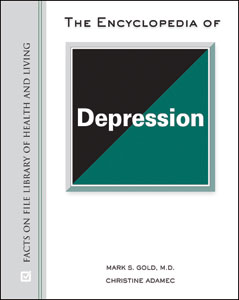
Book: The Encyclopaedia Of Depression

Book Title:

The Encyclopaedia Of Depression (part of the series Library of Health and Living).

Author(s): Mark S. Gold and Christine Adamec.

Year: 2016.

Edition: First (1st).

Publisher: Infobase Publishing.

Type(s): eBook.

Synopsis:

Mental health professionals estimate that approximately 1 in 10 Americans suffer from depression at some point in their lives. Depression is a disease that disrupts one’s mood and sense of well-being. It can interfere with one’s enjoyment of life, interactions with friends and family members, and ability to work. Severe depression can leave one despondent to the point of paralysis and hopelessness or even contribute to suicide. The disease takes an economic toll, as well, in costs for treatment and lost wages and productivity. Fortunately, most cases of depression can be successfully treated with medication and therapy.

The Encyclopaedia of Depression is a concise, A-to-Z guide to covering everything readers need to understand the nature of this disease, recognise its signs and symptoms, and seek out treatment for themselves or a loved one. More than 80 in-depth articles examine all aspects of depression, including its causes, current research into the disease, treatment options, and related social issues.

Topics covered include:

  • Antidepressants.
  • Bipolar disorder.
  • Children and depression.
  • Demographics of depression.
  • Generalised anxiety disorder.
  • Holiday depression.
  • Myths and inaccuracies about depression.
  • Refractory depression.
  • Risk factors for depression.
  • Substance abuse.

Book: The International Encyclopaedia Of Depression

Book Title:

The International Encyclopaedia Of Depression.

Author(s): Rick E. Ingram (Editor).

Year: 2019.

Edition: First (1st).

Publisher: Springer Publishing.

Type(s): Hardcover and Kindle.

Synopsis:

There is no more central topic to mental health professionals than depression.

In the last 20 years, theory and research in depression has grown rapidly.

The wealth of information now available on depression is enormous, but has not been summarised into a comprehensive encyclopaedia until now.

The entries in this book include: behavioural treatment, cognitive theories, cognitive therapy, epidemiology, heredity, personality disorders, double depression, and prevention.

In summarising the vast amount of information on depression, “The International Encyclopaedia of Depression” serves as an important resource for researchers, patients, students, and educated laypeople.

This book presents holistic, interdisciplinary coverage of an important but misunderstood medical disorder.