Posts

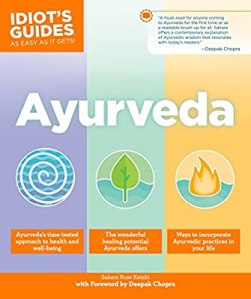
Book: Ayurveda

Book Title:

Ayurveda.

Author(s): Sahara Rose Ketabi.

Year: 2017.

Edition: First (1st).

Publisher: Alpha Books; Illustrated Edition.

Type(s): Paperback and Kindle.

Synopsis:

Discover your Ayurvedic Dosha (mind-body type) and find foods, self-care practices, yoga poses, and meditations that are tailored to your unique needs.

Best-selling author Sahara Rose Ketabi makes Ayurveda accessible with this contemporary guide to the world’s oldest health system. Originating in India over 5,000 years ago, Ayurveda is the sister science to yoga. It is the age-old secret to longevity, digestive health, mental clarity, beauty, and balance that’s regaining popularity today for its tried-and-trued methods.

Sahara Rose revitalises ancient Ayurvedic wisdom with a modern approach and explains how adjusting the timing of your meals; incorporating self-care practices such as dry-brushing, oil-pulling and tongue-scraping; eating the correct foods for your digestive type; and practicing the right yoga and meditation practices for your unique personality will radically enhance your health, digestion, radiance, intuition, and bliss.

With Idiot’s Guides: Ayurveda, you will:

  • Discover your unique Dosha and learn how it is reflected in your physiology, metabolism, digestion, personality, and even in your dreams.
  • Learn how your body’s needs change according to the season, environment, and time of day
  • Find ways to regain luster, passion and flow in your life
  • Enjoy easy-to-make, plant-based recipes
  • Establish an Ayurvedic morning and nighttime ritual for optimal balance
  • Learn how to balance your chakras according to your Dosha
  • Use Ayurvedic herbs and spices to heal digestive issues, skin problems, hormonal imbalance, and other ailments

With plenty of fun facts, holistic humour, and sacred knowledge from Sahara that will help you seamlessly integrate Ayurveda into your lifestyle.

Book: Everyday Ayurveda

Book Title:

Everyday Ayurveda – Daily Habits That Can Change Your Life In A Day.

Author(s): Dr. Bhaswati Bhattacharya.

Year: 2019.

Edition: First (1st).

Publisher: Random House India.

Type(s): Paperback and Kindle.

Synopsis:

Do you sometimes feel tired, lethargic and spiritless? How can Ayurveda help in a simple, practisable manner? Time is scarce and precious in today’s world, and we seek solutions that are quick. While allopathic medicine tends to focus on the management of disease, the ancient study of dinacharya provides us with holistic knowledge of preventing disease and eliminating its root cause. Taking us through a day in the life of Ayurveda living, Dr Bhaswati Bhattacharya illustrates the core principles of Ayurveda and shows us how to incorporate these in our routine. She explains the logic behind the changes she recommends and how they benefit us. Informative and accessible, Everyday Ayurveda is the perfect lifestyle guide designed to maximise health, longevity and happiness the natural way.

What is World Kindness Day?

Introduction

World Kindness Day is an international observance on 13 November.

It is observed in many countries, including Canada, Australia, Nigeria and the United Arab Emirates. Singapore observed the day for the first time in 2009. Italy and India have also observed the day. In the UK, it is fronted by David Jamilly, who co-founded Kindness Day UK with Louise Burfitt-Dons.

History

It was introduced in 1998 by the World Kindness Movement, a coalition of nations’ kindness non-governmental organisations (NGOs).

In 2010, at the request of Michael Lloyd-White, the NSW Federation Parents and Citizens Association wrote to the Minister of The New South Wales (NSW) Department of Education to place World Kindness Day on the NSW School Calendar.

In 2012, at the request of the Chairman of World Kindness Australia, World Kindness Day was placed on the Federal School Calendar and the then Minister of School Education, Early Childhood, and Youth.

The Hon Peter Garrett provided a Declaration of Support for World Kindness Australia and placed World Kindness Day on the National School Calendar for over 9000 schools. Schools across the globe are now celebrating World Kindness Day and work with local NGOs such as the Be Kind People Project and Life Vest Inside In the USA.

In 2012 in Australia, Marie Bashir, Governor of NSW, hosted an event for the first time at Government House to celebrate World Kindness Day and accepted a Cool To Be Kind Award from year 3 & 4 students.

Australian Councils representing over 1.3 million residents have also signed Declarations of Support for World Kindness Australia placing World Kindness Day on the Council Calendar of Events.

Events include THE BIG HUG, handing out Kindness Cards, Global Flashmob, which was coordinated by Orly Wahba from USA which was held in 15 countries and 33 cities with its images of the event making the big screens in New York City. Canada celebrates with The Kindness Concert and in Singapore in 2009, 45,000 yellow flowers were given away.

In 2017 World Kindness day was also celebrated in Slovenia, organised by volunteering organisation Humanitarček as part of their project Randomised Kindness.

What is the Objective of World Kindness Day?

World Kindness Day is to highlight good deeds in the community focusing on the positive power and the common thread of kindness which binds us.

Kindness is a fundamental part of the human condition which bridges the divides of race, religion, politics, gender and zip codes.

Kindness Cards are also an ongoing activity which can either be passed on to recognise an act of kindness and or ask that an act of kindness be done.

Approaches are being made to the United Nations by the peak global body, the World Kindness Movement, to have World Kindness Day officially recognized and its members unanimously sign a Declaration of Support for World Kindness.

According to Gulf News, “it is a day that encourages individuals to overlook boundaries, race and religion.”

Can Exercise & Physical Activity Induce Improvements for Mental Disorders?

Research Paper Title

Exercise and physical activity in mental disorders: clinical and experimental evidence.

Background

Several epidemiological studies have shown that exercise (EX) and physical activity (PA) can prevent or delay the onset of different mental disorders, and have therapeutic benefits when used as sole or adjunct treatment in mental disorders.

This review summarises studies that used EX interventions in patients with anxiety, affective, eating, and substance use disorders, as well as schizophrenia and dementia/mild cognitive impairment.

Despite several decades of clinical evidence with EX interventions, controlled studies are sparse in most disorder groups.

Preliminary evidence suggests that PA/EX can induce improvements in physical, subjective and disorder-specific clinical outcomes.

Potential mechanisms of action are discussed, as well as implications for psychiatric research and practice.

Reference

Zschucke, E., Gaudlitz, K. & Strohle, A. (2020) Exercise and physical activity in mental disorders: clinical and experimental evidence. Journal of Preventive Medicine and Public Health. 46 Suppl 1(Suppl 1), pp.S12-21. doi: 10.3961/jpmph.2013.46.S.S12. Epub 2013 Jan 30.

Book: The Food Addict’s Meal Prep Manual

Book Title:

The Food Addict’s Meal Prep Manual: Save Yourself From Food Addiction In Only 2 Hours A Week.

Author(s): Dr. Joan Ifland (PhD).

Year: 2018.

Edition: First (1st).

Publisher: ?.

Type(s): Kindle.

Synopsis:

Research shows that addiction to processed foods explains why we overeat. Processed foods are everywhere which makes it very hard to break the food addiction cycle. It seems like people are pushing processed foods at every turn.

But you CAN break the cycle! Having your own beautiful meals is the secret! In The Food Addicts Meal Prep Manual, we’re going to show you step-by-step how to prepare all your meals in only 2 hours a week. Having meals at hand will give you a big advantage in regaining control over your food. This quick, easy guide shows you how to have fun and save lots of money by making all your food in two hours per week.

The guide lets you pick the foods you already love. You will be delighted at how beautiful and delicious these healthy meals are. Learn the surprising truth that ‘healthy’ can be scrumptious, inexpensive, and quick. This guide shows you how.

But you CAN break the cycle! In The Food Addicts Meal Prep Manual, we are going to show you step-by-step how to prepare healthy meals in only 2 hours a week, helping you to break the cycle of sugar, salt and processed foods, which are keeping you from having the body you want.

Go from feeling poor to having endless energy. Finally be able to lose weight and gain back that self-confidence. And most importantly, take back control in your life without the mindless eating and self-shaming that is keeping you locked in the cycle.

Book: Food Junkies: Recovery from Food Addiction

Book Title:

Food Junkies: Recovery from Food Addiction.

Author(s): Vera Tarman.

Year: 2019.

Edition: Second (2nd).

Publisher: Dundurn.

Type(s): Paperback, Audiobook, and Kindle.

Synopsis:

A fact-filled guide to coping with compulsive overeating problems by an experienced addictions doctor who draws on many patients’ stories of recovery.

Overeating, binge eating, obesity, anorexia, and bulimia – Food Junkies tackles the complex, poorly understood issue of food addiction from the perspective of a medical researcher and dozens of survivors. What exactly is food addiction? Is it possible to draw a hard line between indulging cravings for “comfort food” and engaging in substance abuse? For people struggling with food addictions, recognizing their condition remains a frustrating battle.

This revised second edition contains the latest research as well as practical strategies for people facing the complicated challenges of eating disorders and addictions, offering an affirming and manageable path to healthy and sustainable habits.

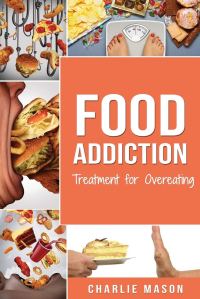
Book: Food Addiction: Treatment for Overeating

Book Title:

Food Addiction: Treatment for Overeating.

Author(s): Charlie Mason.

Year: 2019.

Edition: First (1st).

Publisher: Tilcan Group Limited.

Type(s): Paperback, Audiobook, and Kindle.

Synopsis:

Millions of people are struggling with their healthy eating and lifestyle to help manage their weight. But what most people do not notice is the link between emotional craving and eating and unwanted weight. A part of your brain tells you that you need to eat a healthy meal but your craving is telling you to reach for the comfort food instead.

Chances are, you end up with the comfort food, but it is not for a lack of willpower or motivation! Food addiction leads to various health-related problems including being over-weight and other eating disorders.

Food addiction is a mental and physical issue that requires mental and physical treatment. Unlike other addictions, you cannot eliminate food from your daily behaviours as you can with smoking or alcohol. You need food to survive. This means you need to find a way to stop your cravings and eat less in a realistic way.

As you navigate through the pages of this book, you will find tips and techniques to help you understand your cravings, how to stop them, and ways to treat your food addiction. Enjoy the simple and easy-to-follow tables, lists, and guides as you choose healthy meals over unhealthy and your wellbeing over cravings.

This book is designed to give you solutions to overeating in an inspiring and unique way!

It aims to reveal to you the common beliefs and thoughts about foods, untangle the addictive impulses programmed in your brain, and how to retrain your mind and body so you can live a healthier, happier, and balanced life with eating.

Using an approachable and factual delivery, Food Addiction: Treatment for Overeating offers you real solutions and simple steps so you can learn how to release the negative feelings entrapping you in your negative habits and the constant drudgery of failed diets and broken assurances.

Book: The Food Addiction Recovery Workbook

Book Title:

The Food Addiction Recovery Workbook: How to Manage Cravings, Reduce Stress, and Stop Hating Your Body.

Author(s): Carolyn Coker Ross (MD, MPH).

Year: 2017.

Edition: First (1st).

Publisher: New Harbinger.

Type(s): Paperback and Kindle.

Synopsis:

If you are struggling with obesity or food addiction, you have probably been told that you must deprive yourself of certain foods in order to lose weight. You may have also been convinced-by the media and by our culture-that if you finally become thin your life will be better, you will be happier, and your suffering will come to an end.

The problem is – it is not all about the food. It is about how food is used to self-soothe, to numb ourselves against the pain of living or to cope with stress and unresolved emotions. Even as your waist whittles away, the problems that caused your food addiction won’t disappear.

The Anchor Programme™ approach detailed in this workbook is not about dieting. It is about being anchored to your true, authentic self. When you find your unique anchor, you will relate better to your body, you will know intuitively how to feed your body, and you will reach the weight that is right for you. Anyone who’s been on the diet treadmill-losing and regaining lost weight-will admit that losing weight does not instantly bring health or happiness. That is because losing weight is a red herring for the real issue, the misuse of food to solve a problem that has nothing to do with food.

This book offers a whole-person approach that blends practical information on managing stress and regulating emotions without relying on food. If you are ready to uncover the true cause of your food addiction, you will finally be able to embrace a balanced diet and reach the weight that is right for you.

Book: The Emotional Eating Workbook

Book Title:

The Emotional Eating Workbook – A Proven-Effective Step-By-Step Guide To End Your Battle With Food And Satisfy Your Soul.

Author(s): Carolyn Coker Ross (MD, MPH).

Year: 2016.

Edition: First (1st).

Publisher: New Harbinger.

Type(s): Paperback and Kindle.

Synopsis:

For over fifty years, nutritional and medical scientists have dissected the problem of obesity. The result of this half-century of investigation has been a series of recommendations about what and how much to eat, and an unintended consequence is that we have been deprived of the joy of eating. From low-fat diets to the no-carb craze, the market has been continually flooded with one assortment of fad products and diets after another. So, when does it end?

If you are struggling with emotional overeating and are trying to lose weight, you should know that you do not need to deny yourself certain foods. In The Emotional Eating Workbook, you will learn about the real psychological needs that underlie your food cravings, how to meet those needs in positive ways, be mindful of your body, and find the deep satisfaction many overeaters seek in food.

It is not about food. It is about how food is used to self-soothe, numb ourselves against the pain of living, or self-medicate in coping with stress and unresolved emotions. The Anchor Programme™ approach detailed in this book is not about dieting. It is about being anchored to your true, authentic self. When you find your unique anchor, you will relate better to your body, you will know intuitively how to feed your body, and you will reach the weight that is right for you.

On This Day .. 12 November

People (Births)

  • 1894 – Thorleif Schjelderup-Ebbe, Norwegian zoologist and comparative psychologist (d. 1976).

People (Deaths)

  • 2012 – Daniel Stern, American psychologist and theorist (b. 1934).

Thorleif Schjelderup-Ebbe

Thorleif Schjelderup-Ebbe (12 November 1894 to 08 June 1976) was a Norwegian zoologist and comparative psychologist.

Thorleif Schjelderup-Ebbe described the pecking order of hens in his PhD dissertation of 1921. The work in his dissertation was partly based on his observations of his own chickens that he had recorded since the age of 10.

The dominance hierarchy of chickens and other birds that he studied led him to the observation that these birds had established the order in which individuals would be allowed to get to food while others would have to wait for their turn.

Daniel Stern

Daniel N. Stern (16 August 1934 to 12 November 2012) was a prominent American psychiatrist and psychoanalytic theorist, specialising in infant development, on which he had written a number of books – most notably The Interpersonal World of the Infant (1985).

Stern’s 1985 and 1995 research and conceptualisation created a bridge between psychoanalysis and research-based developmental models.

Stern was born in New York City. He went to Harvard University as an undergraduate, from 1952 to 1956. He then attended Albert Einstein College of Medicine, completing his M.D. in 1960. In 1961, Stern was member of the Freedom Riders, a group of black and white activists challenging racial segregation in the south by travelling together on bus rides.

He continued his educational career doing research at the NIH in psychopharmacology from 1962-1964. In 1964, Stern decided to specialise in psychiatric care, completing his residency at Columbia University College of Physicians and Surgeons. In 1972 he started a psychoanalytic education at Columbia University Centre for Psychoanalytic Training and Research.

For more than 30 years, he worked in research and practice as well in developmental psychology and psychodynamic psychotherapy.

In his research, he dedicated his time to the observation of infants and to clinical reconstruction of early experiences. His efforts continue to contribute to currently existing developmental theories.

He was well known as an expert researcher of early affective mother-child bonding. Research and discoveries on the field of affective bonding was one of his leading activities.

Before his death, Stern was an honorary professor in Psychology at the University of Geneva, adjunct professor in the department of Psychiatry at the Cornell University Medical School and a lecturer at the Columbia University Centre for Psychoanalytic Training and Research.

He received Honorary Doctorates from the Universities of Copenhagen (2002), Dk; Palermo, It; Mons Hainaut, Be; Alborg, Dk; Padua, It, and Stockholm University.

He died, aged 78, in Geneva, Switzerland, following a heart failure. He actively contributed to the ongoing work of the Boston Process of Change Study Group only a few months prior.