Posts

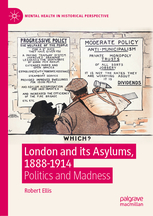
Book: London and Its Asylums, 1888-1914 – Politics and Madness

Book Title:

London and Its Asylums, 1888-1914 – Politics and Madness.

Author(s): Robert Ellis.

Year: 2020.

Edition: First (1ed).

Publisher: Palgrave Macmillan.

Type(s): Hardcover and Kindle.

Synopsis:

This book explores the impact that politics had on the management of mental health care at the turn of the nineteenth and twentieth centuries. 1888 and the introduction of the Local Government Act marked a turning point in which democratically elected bodies became responsible for the management of madness for the first time.

With its focus on London in the period leading up to the First World War, it offers a new way to look at institutions and to consider their connections to wider issues that were facing the capital and the nation.

The chapters that follow place London at the heart of international networks and debates relating to finance, welfare, architecture, scientific and medical initiatives, and the developing responses to immigrant populations.

Overall, it shines a light on the relationships between mental health policies and other ideological priorities.

Book: The Instinct to Heal

Book Title:

The Instinct to Heal – Curing Depression, Anxiety and Stress Without Drugs and Without Talk Therapy.

Author(s): David Servan-Schreiber.

Year: 2004.

Edition: First (1ed).

Publisher: Rodale Books.

Type(s): Hardcover, Paperback and Kindle.

Synopsis:

Millions of Americans try drugs or talk therapy to relieve depression and anxiety, but recent scientific studies prove certain alternative treatments can work as well or better-often bringing on a cure.

In the extraordinary international bestseller The Instinct to Heal, award-winning psychiatrist and neuroscientist David Servan-Schreiber, M.D., Ph.D., presents seven natural approaches, each with proven results, that together form a treatment plan that builds on the body’s relationship to the brain, yielding faster, more dramatic, and permanent changes. People who want to leave suffering behind now can live joyful, happy lives.

What Does Mental Health Have to Do With Well-Being?

Research Paper Title

What Does Mental Health Have to Do With Well-Being?

Background

Positive mental health involves not the absence of mental disorder but rather the presence of certain mental goods.

Institutions, practitioners, and theorists often identify positive mental health with well-being.

There are strong reasons, however, to keep the concepts of well-being and positive mental health separate.

Someone with high positive mental health can have low well-being, someone with high well-being can have low positive mental health, and well-being and positive mental health sometimes conflict.

But, while positive mental health and well-being are not identical, there is an informative conceptual connection between them.

Positive mental health usually contributes instrumentally to the living of a good human life, where a good human life includes (but is not limited to) well-being.

Reference

Keller, S. (2020) What Does Mental Health Have to Do With Well-Being? Bioethics. 34(3), pp.228-234. doi: 10.1111/bioe.12702. Epub 2019 Nov 29.

Book: Home Exercise to Relieve Anxiety

Book Title:

Home Exercise to Relieve Anxiety – The Ultimate Guide for Healthy Lifestyle and Happiness.

Author(s): Henri-Cartier Bresson.

Year: 2020.

Edition: First (1ed).

Publisher: Amazon.

Type(s): Paperback and Kindle.

Synopsis:

Are you tired of experiencing numb feet and fingers, sweaty nights, insomnia and other tiresome occurrences?

Is your friend, spouse, mother, father, sibling or anyone close to you suffering from uneasiness, heart palpitations and other symptoms associated with anxiety?

Have you been confusing anxiety with depression?

Do you feel uninformed about anxiety?

If you answered yes to any of the above questions, then you should proceed with digesting the subsequent chapters of this book.

This workbook on anxiety embodies that practice in an easy, user-friendly format that will guide you through understanding your anxiety, knowing where it comes from, and seeing how to best approach it in a unique way that will work for you.

Every one of us is affected by anxiety at some point in our life. You may experience mild anxiety before taking part in a job interview or public speaking session. These types of anxiety shrink when the event is over. However, when the anxiety appears out of nowhere in the absence of any actual threat and interferes with our daily lives, we have to do something about that.

There is nothing to fear in deciding now to face your anxieties. They are a part of you, just like your arms or legs. You can not remove your legs, neither should you amputate your anxiety. So, take a deep breath, turn the page, and meet your anxieties here and now. Get to know them, appreciate them, and learn from them.

This workbook is meant to be your companion. The more you practice it, the better your life will become dealing with your anxiety. Anxiety is not something that has to run your life instead of you. Anxiety should be something you learn to simply acknowledge as a dinner guest and move on without fear that it will start a food fight. That is why it is important to practice the exercises in this workbook daily. Write down your feelings daily. This is a day to day attack on anxiety in the fight for your freedom from it.

Here Is A Preview Of What You Will Learn :- 

  • What is anxiety.
  • Importance of Anxiety.
  • Symptoms of anxiety.
  • Causes of anxiety.
  • Physical Exercise and anxiety.
  • Anxiety Exercises.
  • How to Create a Successful Exercise Programme.
  • How to Enjoy Exercise.

This book is a guide to help you deal with your anxieties in a productive way, and it contains many exercises for doing this; however, if you feel totally overwhelmed, you may want to combine the use of this book with professional counselling sessions. When used together, they will provide you with even more powerful guidance and help as you face and embrace your anxieties.

Book: From Bud to Brain – A Psychiatrists View of Marijuana

Book Title:

From Bud to Brain: A Psychiatrists View of Marijuana.

Author(s): Timmen L. Cermak.

Year: 2020.

Edition: First (1ed).

Publisher: Cambridge University Press.

Type(s): Paperback and Kindle.

Synopsis:

The trend toward liberalising medical and recreational marijuana use is increasing the obligation on clinicians to provide useful information to the public.

This book summarises the science all healthcare professionals need to know in order to provide objective and relevant information to a variety of patients, from recreational and medicinal users to those who use regularly, and to adolescents and worried parents.

The author brings two and a half decades of studying cannabinoid research, and over forty years’ experience in psychiatric and addiction medicine practice, to shed light on the interaction between marijuana and the brain.

Topics range from how marijuana produces pleasurable sensations, relaxation and novelty (the ‘high’), to emerging medical uses, effects of regular use, addiction, and policy.

Principles of motivational interviewing are outlined to help clinicians engage patients in meaningful, non-judgmental conversations about their experiences with marijuana.

An invaluable guide for physicians, nurses, psychologists, therapists, and counsellors.

Book: Cognitive Behavioural Therapy Workbook For Dummies

Book Title:

Cognitive Behavioural Therapy Workbook For Dummies.

Author(s): Rhena Branch and Rob Wilson.

Year: 2012.

Edition: Second (2ed).

Publisher: For Dummies.

Type(s): Paperback and Kindle.

Synopsis:

Whether you are trying to overcome anxiety and depression, boost self-esteem, beat addiction, lose weight, or simply improve your outlook, cognitive behavioural therapy (CBT) offers a practical, sensible approach to mastering your thoughts and thinking constructively. In this updated and expanded edition of the companion workbook to their bestselling Cognitive Behavioural Therapy For Dummies, professional therapists Rhena Branch and Rob Wilson show you, step-by-step, how to put the lessons provided in their book into practice. Inside you’ll find a huge number of hands-on exercises and techniques to help you remove roadblocks to change and regain control over your life.

Cognitive Behavioural Therapy Workbook For Dummies, Second Edition:

  • Develops the ideas and concepts that presented in the book and provides exercises to put those ideas into practice.
  • Features a range of hands-on CBT exercises and techniques for beating anxiety or depression, boosting your self-esteem, losing weight, or simply improving your outlook on life.

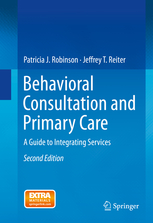
Book: Behavioural Consultation and Primary Care

Book Title:

Behavioural Consultation & Primary Care – A Guide to Integrating Services.

Author(s): Patricia J. Robinson and Jeffrey T. Reiter.

Year: 2016.

Edition: Second (2ed).

Publisher: Springer.

Type(s): Hardcover, Paperback and Kindle.

Synopsis:

2007, First Edition

The Primary Care Behavioural Health (PCBH) model is emerging as the future of integration between mental health and primary care services. The first book to detail the model, Behavioural Consultation and Primary Care explains in hands-on terms how to achieve truly integrated care. From starting up a new PCBH service to evaluating its outcome, clinicians and medical administrators alike will value in this up-to-the-minute resource.

2016, Second Edition

In this 2nd edition, Robinson and Reiter give us an updated blueprint for full integration of behavioural health and primary care in practice. They review the compelling rationale, but their real contribution is telling us exactly how to think about it and how to do it. This latest book is a must for anyone interested in population health and the nuts and bolts of full integration through using the Primary Care Behavioural Health Consultation model.

The best-selling guide to integrating behavioral health services into primary care is now updated, expanded and better than ever!

Integration is exploding in growth, and it is moving inexorably toward the model outlined here. To keep pace, this revised text is a must for primary care clinicians and administrators. It is also essential reading for graduate classes in a variety of disciplines, including social work, psychology, and medicine.

This updated edition includes:

  • A refined presentation of the PCBH model.
  • The latest terms, trends and innovations in primary care.
  • Comprehensive strategies and resource lists for hiring and training new Behavioural Health Consultants (BHC).
  • Step-by-step guidance for implementing the PCBH model.
  • A plethora of evolved practice tools, including new Core Competency Tools for BHCs and primary care providers.
  • Sample interventions for behaviourally influenced problems.
  • The use of “Third Wave” behaviour therapies in primary care.
  • Detailed programme evaluation instructions and tools.
  • The latest on financing integrated care.
  • An entire chapter on understanding and addressing the prescription drug abuse epidemic.
  • Experienced guidance on ethical issues in the PCBH model.
  • Improved patient education handouts.

With all of the changes in health care, the potential for the PCBH model to improve primary care – and the health of the population – is greater than ever.

This book should be the first read for anyone interested in realising the potential of integration.

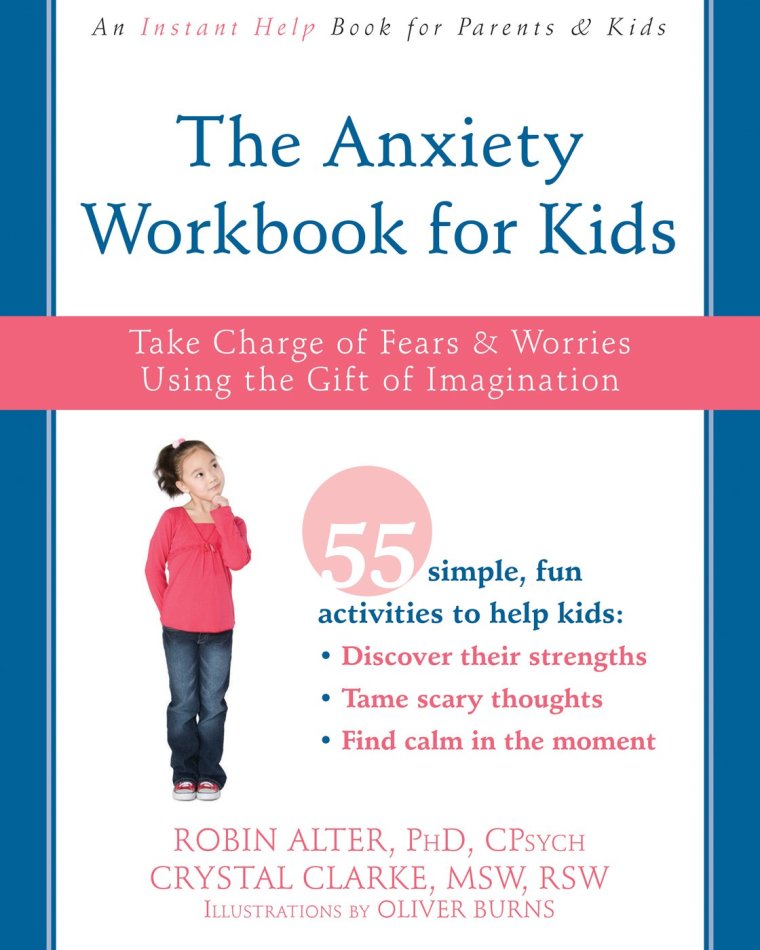
Book: The Anxiety Workbook for Kids

Book Title:

The Anxiety Workbook for Kids – Take Charge of Fears & Worries Using the Gift of Imagination.

Author(s): Robin Alter PhD and Crystal Clarke MSW.

Year: 2016.

Edition: First (1ed).

Publisher: New Harbinger; Workbook Edition.

Type(s): Paperback and Kindle.

Synopsis:

Millions of children suffer from anxiety, which can be extremely limiting, causing kids to miss school, opt out of activities with friends, and refuse to speak or participate in a variety of situations. Furthermore, children who are diagnosed with anxiety or brought into therapy often feel embarrassed about not being “normal.” Focusing on the problem of anxiety can stress kids out and make them feel ashamed. But when the focus is on their strengths and their vivid imaginations, children are empowered to face their anxiety head-on.

The Anxiety Workbook for Kids is a fun and unique workbook grounded in evidence-based CBT and designed to help children understand their anxious thoughts within a positive framework-a perspective that will allow kids to see themselves as the highly imaginative individuals they are, and actually appreciate the role imagination plays in their anxiety. With this workbook, children will learn that, just as they are capable of envisioning vivid scenarios that fuel their anxiety, they are capable of using their imagination to move away from anxious thoughts and become the boss of their own worries.

With engaging CBT-based activities, games, and illustrations-and with a focus on imagination training and developing skills like problem solving, assertiveness, positive thinking, body awareness, relaxation, and mindfulness-this book will help kids stand up to the “worry bully” and harness the power of their imagination for good.

A Brief Outline of Online Mental Health Services in China During the COVID-19 Outbreak

Research Paper Title

Online Mental Health Services in China During the COVID-19 Outbreak.

Background

At the start of 2020, the 2019 coronavirus disease (COVID-19), originating from Wuhan in Hubei province, started to spread throughout China. As a result of the rapidly increasing numbers of confirmed cases and deaths, both medical staff and the public have been experiencing psychological problems, including anxiety, depression, and stress. Since January 2020, the National Health Commission of China have published several guideline documents, starting with the notification of principles for emergency psychological crisis intervention for the COVID-19 epidemic on 26 January, then the notice on establishing psychological assistance hotlines for the epidemic on 02 February, and most recently, guidelines for psychological assistance hotlines during the COVID-19 epidemic on 07 February 7.

During the severe acute respiratory syndrome epidemic in 2003, internet services and smartphones were not widely available. Therefore, few online mental health services were provided for those in need. The popularisation of internet services and smartphones, and the emergence of fifth generation (5G) mobile networks, have enabled mental health professionals and health authorities to provide online mental health services during the COVID-19 outbreak. Fast transmission of the virus between people hinders traditional face-to-face psychological interventions. By contrast, provision of online mental health services is safe. To date, several types of online mental health services have been implemented widely for those in need during the outbreak in China.

Firstly, as of 08 Febreuary 2020, 72 online mental health surveys associated with the COVID-19 outbreak could be searched for via the WeChat-based survey programme Questionnaire Star, which target different populations, including medical staff (23 of the surveys), patients with COVID-19 (one survey), students (18 surveys), the general population (nine surveys), and mixed populations (21 surveys); in Hubei province (five surveys), other provinces (15 surveys), all provinces, municipalities, and autonomous regions (36 surveys), and unspecified areas of China (16 surveys). One such multi-centre survey involving 1563 medical staff, with the centre at Nanfang Hospital, Southern Medical University (Guangzhou, China) as one of the study sites, found the prevalence of depression (defined as a total score of ≥5 in the Patient Health Questionnaire-9) to be 50·7%, of anxiety (defined as a total score of ≥5 in the Generalized Anxiety Disorder-7) to be 44·7%, of insomnia to be 36·1% (defined as a total score of ≥8 in the Insomnia Severity Index), and of stress-related symptoms (defined as a total score of ≥9 in the Impact of Events Scale-Revised) to be 73·4%. These findings are important in enabling health authorities to allocate health resources and develop appropriate treatments for medical staff who have mental health problems.

Secondly, online mental health education with communication programmes, such as WeChat, Weibo, and TikTok, has been widely used during the outbreak for medical staff and the public. In addition, several books on COVID-19 prevention, control, and mental health education have been swiftly published and free electronic copies have been provided for the public. As of 08 February, 29 books associated with COVID-19 have been published, 11 (37·9%) of which are on mental health, including the “Guidelines for public psychological self-help and counselling of 2019-nCoV pneumonia”, published by the Chinese Association for Mental Health.

Finally, online psychological counselling services (eg, WeChat-based resources) have been widely established by mental health professionals in medical institutions, universities, and academic societies throughout all 31 provinces, municipalities, and autonomous regions in mainland China, which provide free 24-h services on all days of the week. Online psychological self-help intervention systems, including online cognitive behavioural therapy for depression, anxiety, and insomnia (e.g. on WeChat), have also been developed. In addition, several artificial intelligence (AI) programmes have been put in use as interventions for psychological crises during the epidemic. For example, individuals at risk of suicide can be recognised by the AI programme Tree Holes Rescue, by monitoring and analysing messages posted on Weibo, and alerting designated volunteers to act accordingly.

In general, online mental health services being used for the COVID-19 epidemic are facilitating the development of Chinese public emergency interventions, and eventually could improve the quality and effectiveness of emergency interventions.

Reference

Liu, S., Yang, L., Zhang, C., Xiang, Y., Liu, Z., Hu, S. & Zhang, B. (2020) Online Mental Health Services in China During the COVID-19 Outbreak. Lancet Psychiatry. 7(4), pp.e17-e18. doi: 10.1016/S2215-0366(20)30077-8. Epub 2020 Feb 19.

Autistic Pride Day (18 June)

Autistic Pride Day, originally an Aspies for Freedom initiative, is a pride celebration for autistic people held on 18 June each year.

Autistic pride recognises the importance of pride for autistic people and its role in bringing about positive changes in the broader society.

Autistic Pride

On 18 June every year, organisations around the world celebrate Autistic Pride Day, with events around the world, to connect with one another through autistic events and demonstrate to allistic people (those not on the autism spectrum) that autistic people are unique individuals who should not be seen as cases for treatment.

Autistic Pride Day was first celebrated in 2005 by Aspies for Freedom (AFF) and it quickly became a global event which is celebrated widely online and offline. AFF modelled the celebration on the gay pride movement. According to Kabie Brook, the co-founder of Autism Rights Group Highland (ARGH), “the most important thing to note about the day is that it is an autistic community event: it originated from and is still led by autistic people ourselves”, i.e. it is not a day for other charities or organisations to promote themselves or stifle autistic people. The rainbow infinity symbol is used as the symbol of this day, representing “diversity with infinite variations and infinite possibilities”.

During gay pride and other LGBTQ events, a rainbow flag is used featuring a white infinity symbol on a tri-colour background. LGBT+ autistic charity Twainbow oversaw the selection and online voting in 2015. Due to various reasons a rainbow infinity symbol is sometimes used.

Autistic pride points out that autistic people have always been an important part of human culture. Being autistic is a form of neurodiversity. As with all forms of neurodiversity, most of the challenges autistic people face come from other people’s attitudes about autism and a lack of supports and accommodations (ableism), rather than being essential to the autistic condition. For instance, according to Larry Arnold and Gareth Nelson, many autism-related organisations promote feelings of pity for parents, rather than fostering understanding. Autistic activists have contributed to a shift in attitudes away from the notion that autism is a deviation from the norm that must be treated or cured. Autistic self-advocacy organisations, which are led and run by autistics, are a key force in the movement for autistic acceptance and autistic pride.

New Scientist magazine released an article entitled “Autistic and proud” on the first Autistic Pride Day that discussed the idea.

Themes

  • 2005 Acceptance not cure – main event of 2005 was in Brasília, capital of Brazil.
  • 2006 Celebrate Neurodiversity – main events of 2006 were an Autistic Pride Summer Camp in Germany and an event at the Scienceworks Museum in Melbourne, Australia.
  • 2007 Autistics Speak. It’s time to listen.
  • 2008 Without a theme.
  • 2009 Without a theme.
  • 2010 Perspectives, not fear.
  • 2011 Recognize, Respect, Include.
  • 2012 No theme – main event of 2012 was in Herzliya Park, in Israel.
  • 2013 No theme – main event of 2013 was in Sacher Park, in Jerusalem, Israel.
  • 2015 No theme – main events were in Reading, UK, Hyde Park in London, UK, and Haifa, Israel.
  • 2016 No theme – main events were in Reading, UK, Hyde Park in London, UK, Manchester UK, and Ramat HaSharon, Israel, Nebraska.
  • 2017 No theme – main events were in Hyde Park, London, U.K., Reading U.K., Manchester UK and Modiin, Israel, and Nebraska.
  • 2018 No theme – main events were in Hyde Park, London, U.K., Reading U.K., Manchester UK and Tel Aviv, Israel.
  • 2019 No theme – main events were in Hyde Park, London, U.K., Reading U.K., Manchester UK, Paris, France, Lincoln, Nebraska, and for the first time, an Autistic Pride march in Galway, Ireland.