Posts

Primary Healthcare & Categories of Mental Health Programmes

Research Paper Title

Innovative Mental Health Initiatives in India: A Scope for Strengthening Primary Healthcare Services.

Background

Mental health burden is a major health concern worldwide.

In the last few decades, we are witnessing innovations that are successfully addressing gaps in the mental health service delivery in Indian context.

This is an opportune time to explore existing innovative mental health initiatives in the country and integrate viable interventions to primary healthcare facilities to strengthen public mental healthcare delivery.

Methods

A descriptive review of literature on innovative mental health programs in India was carried out.

The initial search from google scholar and PubMed database yielded 1152 articles, of which 1,114 were excluded that did not meet inclusion criteria.

Full texts of 38 articles were reviewed and finally 22 studies were included for the study.

Results

Based on the review, most innovations are broadly summarised into five categories:

  1. Quality improvement mental health programmes;
  2. Community-based mental health programmes;
  3. Non-specialist mental health programmes;
  4. Mobile technology-based mental health programmes; and
  5. Tele-mental health programmes.

These promising innovations in treatment and care can be customised as per the context for scale up and integrated into the primary healthcare system through the District Mental Health Programme.

Conclusions

The innovative approach not only makes mental health services more accessible and affordable but also empowering in nature by encouraging community members in early detection, prevention of mental illness and appropriate treatment referral to existing primary health care services.

Reference

Pandya, A., Shah, K., Chauhan, A. & Saha, S. (2020) Innovative Mental Health Initiatives in India: A Scope for Strengthening Primary Healthcare Services. Journal of Family Medicine and Primary Care. 9(2), pp.502-507. doi: 10.4103/jfmpc.jfmpc_977_19. eCollection 2020 Feb.

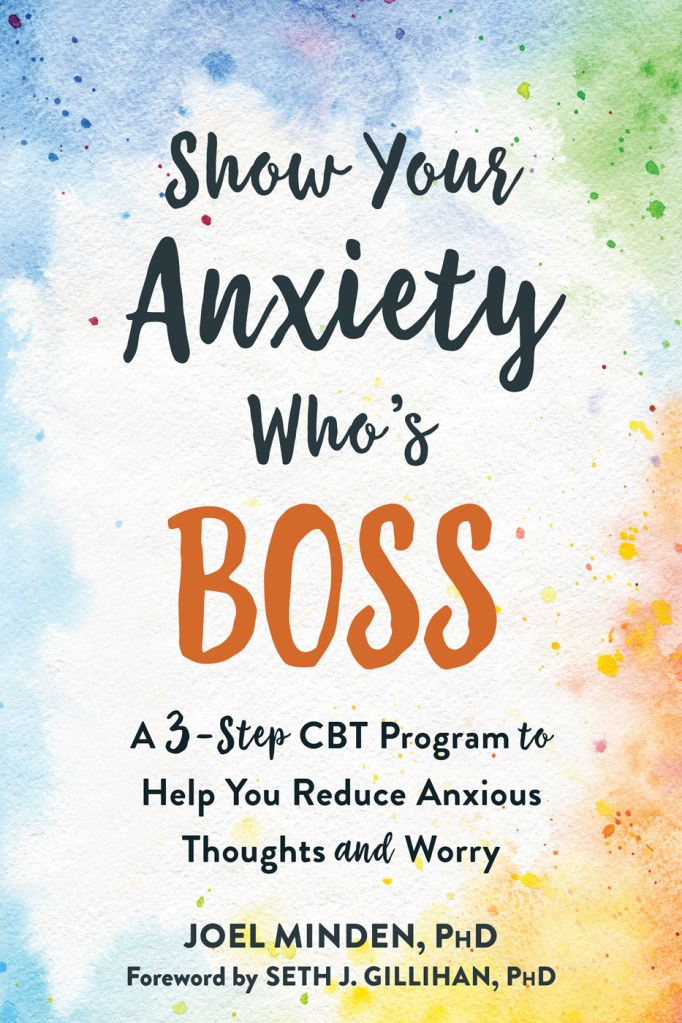
Book: Show Your Anxiety Who’s Boss

Book Title:

Show Your Anxiety Who’s Boss: a 3-Step CBT Programme to Help You Reduce Anxious Thoughts and Worry.

Author(s): Joel Minden PhD.

Year: 2020.

Edition: First (1ed).

Publisher: New Harbinger Publications.

Type(s): Paperback.

Synopsis:

Outsmart your anxiety with a ridiculously easy, three-step approach!

Is your anxiety running your life? Does it tell you where you can go, and when? Does it keep you trapped in a bubble of fear and panic? Anxiety can happen anytime, anywhere – and that is why you need simple, in-the-moment skills to stay grounded when worry takes hold. This accessible guide will help you gain the upper hand, show your anxiety who’s boss, and start living the life that you were always meant to live.

In Show Your Anxiety Who’s Boss, you will find a simple and direct three-step approach grounded in cognitive behavioural therapy (CBT) to help you gain understanding and authority over your anxious thoughts and rumination, bounce back from stress and minor setbacks, and accept what you just can’t know for sure. With this powerful guide, you will learn to:

  • Make peace with uncertainty.
  • Stop avoiding situations.
  • Accept and redirect anxious thoughts – so you can get on with your life.

If you’re ready to live a full and vital life without your anxiety constantly getting in the way, this straightforward guide will show you how to get back on track. It’s as easy as 1, 2, 3.

Book: Sexuality – A Very Short Introduction

Book Title:

Sexuality: A Very Short Introduction.

Author(s): Veronique Mottier.

Year: 2008.

Edition: First (1ed).

Publisher: Oxford University Press (OUP).

Type(s): Paperback, Audiobook, and Kindle.

Synopsis:

What shapes our sexuality? Is it a product of our genes, or of society, culture, and politics? How have concepts of sexuality and sexual norms changed over time? How have feminist theories, religion, and HIV/AIDS affected our attitudes to sex?

Focusing on the social, political, and psychological aspects of sexuality, this Very Short Introduction examines these questions and many more, exploring what shapes our sexuality, and how our attitudes to sex have in turn shaped the wider world. Revealing how our assumptions about what is ‘normal’ in sexuality have, in reality, varied widely across time and place, this book tackles the major topics and controversies that still confront us when issues of sex and sexuality are discussed: from sex education, HIV\AIDS, and eugenics, to religious doctrine, gay rights, and feminism.

Book: Raising Generation Rx

Book Title:

Raising Generation Rx – Mothering Kids with Invisible Disabilities in an Age of Inequality.

Author(s): Linda M. Blum.

Year: 2015.

Edition: First (1ed).

Publisher: American Psychiatric Association Publishing.

Type(s): Hardcover, Paperback and Kindle.

Synopsis:

Recent years have seen an explosion in the number of children diagnosed with “invisible disabilities” such as ADHD, mood and conduct disorders, and high-functioning autism spectrum disorders. Whether they are viewed as biological problems in brain wiring or as results of the increasing medicalisation of childhood, the burden of dealing with the day-to-day trials and complex medical and educational decisions falls almost entirely on mothers. Yet few ask how these mothers make sense of their children’s troubles, and to what extent they feel responsibility or blame. Raising Generation Rx offers a groundbreaking study that situates mothers’ experiences within an age of neuroscientific breakthrough, a high-stakes knowledge-based economy, cutbacks in public services and decent jobs, and increased global competition and racialised class and gender inequality.

Through in-depth interviews, observations of parents’ meetings, and analyses of popular advice, Linda Blum examines the experiences of diverse mothers coping with the challenges of their children’s “invisible disabilities” in the face of daunting social, economic, and political realities. She reveals how mothers in widely varied households learn to advocate for their children in the dense bureaucracies of the educational and medical systems; wrestle with anguishing decisions about the use of psychoactive medications; and live with the inescapable blame and stigma in their communities.

Book: Psychodynamic Therapy for Personality Pathology

Book Title:

Psychodynamic Therapy for Personality Pathology: Treating Self and Interpersonal Functioning

Author(s): Eve Valigor PhD, Ott, F, Kernberg M.D., John F. Clarkin PhD, and Frank E Yeomans M.D. PhD.

Year: 2018.

Edition: First (1ed).

Publisher: American Psychiatric Association Publishing.

Type(s): Paperback.

Synopsis:

Deftly integrating contemporary psychiatry and contemporary psychoanalysis, Psychodynamic Therapy for Personality Pathology: Treating Self and Interpersonal Functioning introduces Dynamic Psychotherapy for Personality Disorders (DPD), a specialised, theory-driven approach to the treatment of personality disorders.

Beyond merely being compatible with the DSM-5 Section III Alternative Model for Personality Disorders, this guide elaborates on it, offering clinicians at all levels of experience an accessible framework to guide evaluation and treatment of personality disorders in a broad variety of clinical and research settings.In this volume, readers will find:

  • A coherent model of personality functioning and disorders based in psychodynamic object relations theory.
  • A clinically near approach to the classification of personality disorders, coupled with a comprehensive approach to assessment.
  • An integrated treatment model based on general clinical principles that apply across the spectrum of personality disorders.
  • An understanding of specific modifications of technique that tailor intervention to the individual patient’s personality pathology.
  • Descriptions of specific psychodynamic techniques that can be exported to shorter-term treatments and acute clinical settings.

Patient assessment and basic psychodynamic techniques are described in up-to-date, jargon-free terms and richly supported by numerous clinical vignettes, as well as online videos demonstrating interventions. At the end of each chapter, readers will find a summary of key clinical concepts, making this book both a quick reference tool as well as a springboard for continued learning. Clinicians looking for a novel guide to understanding and treating personality pathology that combines contemporary theory with clinical practice need look no further than Psychodynamic Therapy for Personality Pathology: Treating Self and Interpersonal Functioning.

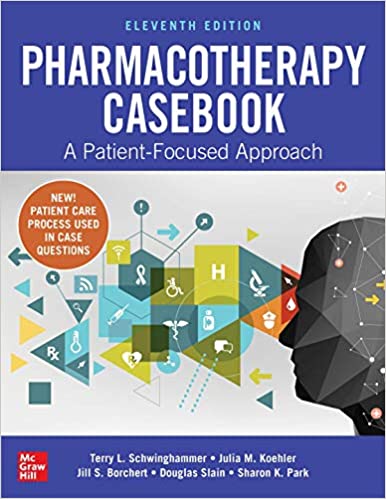
Book: Pharmacotherapy Casebook – A Patient-Focused Approach

Book Title:

Pharmacotherapy Casebook – A Patient-Focused Approach.

Author(s): Terry Schwinghammer. Julia Koehler, Jill Borchert, Douglas Slain, and Sharon Park.

Year: 2020.

Edition: Eleventh (11ed).

Publisher: McGraw-Hill Education.

Type(s): Paperback and Kindle.

Synopsis:

Packed with 157 patient cases, Pharmacotherapy Casebook: A Patient-Focused Approach builds your problem-solving and decision-making skills, so you can identify and resolve the most common drug therapy challenges you will encounter in daily practice.

Its case-based approach is also ideal for PharmD, Nurse Practitioner, and other allied health courses. Providing a consistent, practical approach, this authoritative guide delivers everything you need to master patient communication, care plan development, and documenting interventions. Case chapters are organised into system sections that correspond to those of the companion textbook.

Sharpen your ability to:

  • Identify actual or potential drug therapy problems.
  • Determine the desired therapeutic outcome.
  • Evaluate therapeutic alternatives.
  • Design an optimal individualised pharmacotherapeutic plan.
  • Evaluate the therapeutic outcome
  • Provide patient education.
  • Communicate and implement the therapeutic plan.

Develop expertise in pharmacotherapy decision making with:

  • Realistic patient presentations that include medial history, physical examination, and laboratory data, followed by a series of questions using a systematic, problem-solving approach
  • A broad range of cases – from a single disease state to multiple disease states and drug-related problems
  • Expert coverage that integrates the biomedical and pharmaceutical sciences with therapeutics
  • Appendices containing sample answer to several cases and valuable information on medical abbreviations, laboratory tests, mathematical conversion factors, and anthropometrics

The Importance of Positive Mental Health for both Mother & Child

Research Paper Title

Positive Maternal Mental Health, Parenting, and Child Development.

Background

While maternal mental health is an important influence on child development, the existing literature focuses primarily on negative aspects of maternal mental health, particularly symptoms of depression, anxiety, or states of distress.

The researchers provide a review of the evidence on the potential importance of positive mental health for both mother and child.

The evidence suggests that positive mental health is a distinct construct that is associated with improved birth outcomes and potentially with specific forms of parenting that promote both academic achievement and socioemotional function.

They review studies that provide a plausible biological basis for the link between positive mental health and parenting, focusing on oxytocin-dopamine interactions.

They caution that the evidence is largely preliminary and suggest directions for future research, noting the importance of identifying the operative dimensions of positive maternal mental health in relation to specific outcomes.

Finally, they suggest that the inclusion of positive maternal mental health provides the potential for a more comprehensive understanding of parental influences on child development.

Reference

Phua, D.Y., Lee, M.Z.L. & Meaney, M.J. (2020) Positive Maternal Mental Health, Parenting, and Child Development. Biological Psychiatry. 87(4), pp.328-337. doi: 10.1016/j.biopsych.2019.09.028. Epub 2019 Oct 16.

Book: Panic Free – The 10-Day Program to End Panic, Anxiety, and Claustrophobia

Book Title:

Panic Free – The 10-Day Program to End Panic, Anxiety, and Claustrophobia.

Author(s): Tom Bunn.

Year: 2019.

Edition: First (1ed).

Publisher: New World Library.

Type(s): Audiobook and Kindle.

Synopsis:

What if you could stop panic by tapping into a different part of your brain?

After years of working to help sufferers of panic and anxiety, licensed therapist (and pilot) Tom Bunn discovered a highly effective solution that utilises a part of the brain not affected by the stress hormones that bombard a person experiencing panic.

This “unconscious procedural memory” can be programmed to control panic by preventing the release of stress hormones and activating the parasympathetic nervous system.

This process, outlined in Panic Free, sounds complicated but is not, requiring just ten days and no drugs or doctors.

Bunn includes specific instructions for dealing with common panic triggers, such as airplane travel, bridges, MRIs, and tunnels.

Because panic is profoundly life-limiting, the programme Bunn offers can be a real life-changer.

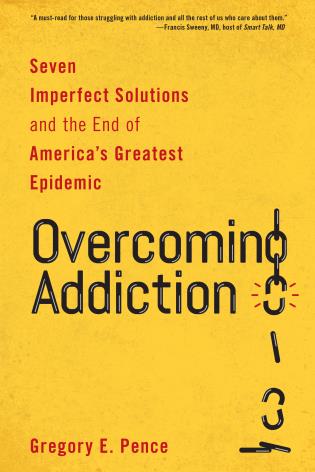
Book: Overcoming Addiction

Book Title:

Overcoming Addiction: Seven Imperfect Solutions and the End of America’s Greatest Epidemic.

Author(s): Gregory E. Pence.

Year: 2020.

Edition: First (1ed).

Publisher: Rowman & Littlefield Publishers.

Type(s): Hardcover and Kindle.

Synopsis:

With an estimated 20 million people addicted to drugs or alcohol, North America is in the grip of an unrivalled epidemic. Overcoming Addiction reveals how seemingly contradictory treatment theories must come together to understand and end dangerous substance abuse.

Addiction treatment has become a billion-dollar industry based on innumerable clinical and psychological perspectives. Zealous clinicians and researchers have gathered around the theories, proclaiming each as the sole truth and excluding alternate views. In this book, leading bioethicist Gregory Pence demystifies seven foundational theories of addiction and addiction treatment. From Alcoholics and Narcotics Anonymous to methadone clinics and brain chemistry studies, each method holds foundation beliefs about human nature, free will, and biology. Understanding the diversity of these theories allows us to build a framework for more effective treatment for all addiction types.

For individuals suffering from addiction, their families, and those who devote their lives to ending addiction’s grasp on our society, this book offers a fresh perspective and a framework for long-term solutions.

Book: The Mindful Child

Book Title:

Mindful Child, The – How to Help Your Kid Manage Stress and Become Happier, Kinder, and More Compassionate.

Author(s): Susan Kaiser Greenland.

Year: 2010.

Edition: First (1ed).

Publisher: Atria Books.

Type(s):Paperback, audiobook and Kindle.

Synopsis:

The techniques of mindful awareness have helped millions of adults reduce stress in their lives. Now, children -who are under more pressure than ever before – can learn to protect themselves with these well-established methods adapted for their ages. Based on a programme affiliated with UCLA, The Mindful Child is a groundbreaking book, the first to show parents how to teach these transformative practices to their children.

Mindful awareness works by enabling you to pay closer attention to what is happening within you – your thoughts, feelings, and emotions – so you can better understand what is happening to you.

The Mindful Child extends the vast benefits of mindfulness training to children from four to eighteen years old with age-appropriate exercises, songs, games, and fables that Susan Kaiser Greenland has developed over more than a decade of teaching mindful awareness to kids.

These fun and friendly techniques build kids’ inner and outer awareness and attention, which positively affects their academic performance as well as their social and emotional skills, such as making friends, being compassionate and kind to others, and playing sports, while also providing tools to manage stress and to overcome specific challenges like insomnia, overeating, ADHD, hyper-perfectionism, anxiety, and chronic pain.

When children take a few moments before responding to stressful situations, they allow their own healthy inner compasses to click in and guide them to become more thoughtful, resilient, and empathetic.

The step-by-step process of mental training presented in The Mindful Child provides tools from which all children – and all families – will benefit.