Posts

Book: Understanding Classical Psychoanalysis

Book Title:

Understanding Classical Psychoanalysis: Freudian Concepts in Contemporary Practice.

Author(s): Ahmed Fayek.

Year: 2017.

Edition: First (1st).

Publisher: Routledge.

Type(s): Paperback and Kindle.

Synopsis:

Understanding Classical Psychoanalysis gives a clear overview of the key tenets of classical Freudian psychoanalysis, and offers a guide to how these might be best understood and applied to contemporary psychoanalytic theory and practice.

Covering such essential concepts as the Oedipal complex, narcissism and metapsychology, Fayek explores what Freud’s thinking has to offer psychoanalysts of all schools of thought today, and what key facets of his work can usefully be built on to develop future theory.

The book will be of interest to psychoanalysts and psychoanalytic psychotherapists in practice and training, as well as teaching faculties and postgraduate students studying Freudian psychoanalysis.

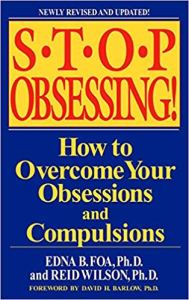
Book: Stop Obsessing!: How to Overcome Your Obsessions and Compulsions

Book Title:

Stop Obsessing!: How to Overcome Your Obsessions and Compulsions.

Author(s): Edna B. Foa and Reid Wilson.

Year: 2001.

Edition: Revised Edition.

Publisher: Bantam USA.

Type(s): Paperback.

Synopsis:

Are you tormented by extremely distressing thoughts or persistent worries? Compelled to wash your hands repeatedly? Driven to repeat or check certain numbers, words, or actions?

If you or someone you love suffers from these symptoms, you may be one of the millions of Americans who suffer from some form of obsessive-compulsive disorder, or OCD.

Once considered almost untreatable, OCD is now known to be a highly treatable disorder using behaviour therapy.

In this newly revised edition of Stop Obsessing! Drs. Foa and Wilson, internationally renowned authorities on the treatment of anxiety disorders, share their scientifically based and clinically proven self-help program that has already allowed thousands of men and women with OCD to enjoy a life free from excessive worries and rituals.

You will discover:

  • Step-by-step programmes for both mild and severe cases of OCD.
  • The most effective ways to help you let go of your obsessions and gain control over your compulsions.
  • New charts and fill-in guides to track progress and make exercises easier.
  • Questionnaires for self-evaluation and in-depth understanding of your symptoms.
  • Expert guidance for finding the best professional help.
  • The latest information about medications prescribed for OCD.

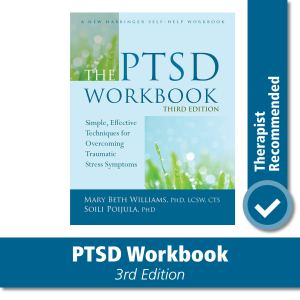
Book: The PTSD Workbook

Book Title:

The PTSD Workbook, 3rd Edition: Simple, Effective Techniques for Overcoming Traumatic Stress Symptoms.

Author(s): Mary Beth Williams and Soili Poijula.

Year: 2016.

Edition: Third (3rd).

Publisher: New Harbinger.

Type(s): Paperback and Kindle.

Synopsis:

Post-traumatic stress disorder (PTSD) is an extremely debilitating condition that can occur after exposure to a terrifying event.

But whether you are a veteran of war, a victim of domestic violence or sexual violence, or have been involved in a natural disaster, crime, car accident, or accident in the workplace, your symptoms may be getting in the way of you living your life.

PTSD can often cause you to relive your traumatic experience in the form of flashbacks, memories, nightmares, and frightening thoughts. This is especially true when you are exposed to events or objects that remind you of your trauma.

Left untreated, PTSD can lead to emotional numbness, insomnia, addiction, anxiety, depression, and even suicide. So, how can you start to heal and get your life back?

In The PTSD Workbook, Third Edition, psychologists and trauma experts Mary Beth Williams and Soili Poijula outline techniques and interventions used by PTSD experts from around the world to conquer distressing trauma-related symptoms.

In this fully revised and updated workbook, you will learn how to move past the trauma you have experienced and manage symptoms such as insomnia, anxiety, and flashbacks.

Based in cognitive behavioural therapy (CBT), this book is extremely accessible and easy-to-use, offering evidence-based therapy at a low cost.

This new edition features chapters focusing on veterans with PTSD, the link between cortisol and adrenaline and its role in PTSD and overall mental health, and the mind-body component of PTSD.

Clinicians will also find important updates reflecting the new DSM-V definition of PTSD.

This book is designed to give you the emotional resilience you need to get your life back together after a traumatic event.

Book: The PTSD Behavioural Activation Workbook

Book Title:

The PTSD Behavioral Activation Workbook: Activities to Help You Rebuild Your Life from Post-Traumatic Stress Disorder (A New Harbinger Self-Help Workbook).

Author(s): Matthew Jakupcak (PhD), Amy W Wagner (PhD), Christopher R. Martell (PhD), and Matthew T Tull (PhD).

Year: 2020.

Edition: First (1st).

Publisher: New Harbinger Publications; Workbook Edition.

Type(s): Paperback and Kindle.

Synopsis:

If you suffer from post-traumatic stress disorder (PTSD), reliving the past through trauma-focused treatments may be too painful a place to start. Behavioural activation – the powerful treatment method outlined in this workbook – provides an essential foundation for recovery by shifting the focus of your trauma to the things in life that give you true fulfilment, joy, and value. This way, you can envision the kind of future you want to have, and move forward in your treatment to pursue that future.

With this breakthrough workbook, you will learn to replace unproductive coping strategies – such as avoidance – with activities that you find pleasant and meaningful. You’ll find an overview of behavioural activation: what it is, why it works, and how you can implement it into your life to begin healing the wounds of your past and paving the way for a bright future full of possibility.

If you have experienced trauma, you need real tools to help you manage your pain and jumpstart your recovery. With this compassionate and evidence-based workbook, you will find actionable solutions to help you begin healing and take that next needed step toward wellness, wholeness, and peace.

Book: Psychotherapy – A Practical Guide

Book Title:

Psychotherapy: A Practical Guide.

Author(s): Jeffery Smith.

Year: 2016.

Edition: First (1st).

Publisher: Springer.

Type(s): Paperback and Kindle.

Synopsis:

This title combines the many schools of thought on psychotherapy into one reader-friendly guide that coaches psychotherapists through the various techniques needed as the field expands.

Unlike any other book on the market, this text considers all of the simultaneous advances in the field, including the neurobiology of emotions, the importance of the therapeutic relationship, mindfulness meditation, and the role of the body in healing.

Written with genuine respect for all traditions from CBT to psychodynamics, the book unifies views of psychopathology and cure based on the notion of the mind-brain as an organ of affect regulation.

The book accounts for the tasks that characterise psychotherapist activity in all therapies, how they are performed, and how they result in therapeutic change.

The book also reviews the various pathologies seen in general practice and guides the reader to the specific therapist-patient interactions needed for their resolution.

With its big-picture focus on clinical practice, Psychotherapy: A Practical Guide is a concise resource for students, psychotherapists, psychologists, residents, and all who seek to integrate what is new in psychotherapy.

Emotional Indicators of Urban Green Space Behaviour

Research Paper Title

Sitting or Walking? Analyzing the Neural Emotional Indicators of Urban Green Space Behavior with Mobile EEG.

Background

There is a close relationship between urban green space and the physical and mental health of individuals.

Most previous studies have discussed the impact of the structure of green space and its elements.

This study focused on the emotional changes caused by common behaviours in urban green space (walking and sitting).

Methods

The researchers recruited 40 college students and randomly assigned them to walking and sitting groups (20 students per group).

The two groups performed the same 8-min high-pressure learning task indoors and then performed 8-min recovery activities in a simulated urban green space (a bamboo-lawn space).

They used the Emotiv EPOC+ EEG headset to dynamically measure six neural emotional parameters:

  • ‘Engagement’;
  • ‘Valence’;
  • ‘Meditation’;
  • ‘Frustration’;
  • ‘Focus’; and
  • ‘Excitement’.

The researchers also conducted a pretest and post-test and used analysis of covariance (ANCOVA) to analyse the post-test data (with the pretest data as covariates).

Results

The results of the comparison of the two behaviours showed that the ‘valence’ and ‘meditation’ values of the walking group were higher than those of the sitting group, which suggests that walking in urban green space is more favourable for stress reduction.

The sitting group had a higher “focus” value than did the walking group, which suggests that sitting in urban green space is better for attention restoration.

Conclusions

The results of this study can provide guidance for urban green space planning and design as well as health guidance for urban residents.

Reference

Lin, W., Chen, Q., Jiang, M., Tao, J., Liu, Z., Zhang, X., Wu, L., Xu, S., Kang, Y. & Zeng, Q. (2020) Sitting or Walking? Analyzing the Neural Emotional Indicators of Urban Green Space Behavior with Mobile EEG. Journal of Urban Health. doi: 10.1007/s11524-019-00407-8. [Epub ahead of print].

Book: Psychiatric-Mental Health Nursing

Book Title:

Psychiatric-Mental Health Nursing.

Author(s): Sheila L. Videback.

Year: 2019.

Edition: Eighth (8th); North American Edition.

Publisher: Wolters Kluwer Health.

Type(s): Paperback and Kindle.

Synopsis:

With an accessible, clear and student-friendly approach, Psychiatric-Mental Health Nursing clarifies challenging concepts and helps you build a foundation for working successfully with clients experiencing mental health challenges regardless of care setting. The text explores the full spectrum of psychiatric nursing, helping you master specific nursing interventions, hone your therapeutic communication skills and learn to apply content effectively within the framework of the nursing process.

  • New! Unfolding Patient Stories written by the National League for Nursing put the nursing process in a realistic context to prepare you for successful client interactions and interventions.
  • Clinical Vignettes familiarise you with the features of major disorders you are likely to encounter in practice.
  • Therapeutic Dialogues help you perfect your communication skills with specific examples of nurse-client interactions.
  • Best Practice boxes provide the latest evidence-based findings in psychiatric nursing.
  • Self-Awareness features foster your personal and professional development through self-reflection.
  • Concept Mastery Alerts clarify important concepts essential to your classroom and clinical success.
  • Watch and Learn icons point you to corresponding true-to-life Lippincott(R) Theory to Practice Video Series videos for a richer understanding of important mental health disorders.
  • Built-In Study Guide reinforces your understanding with multiple-choice questions, multiple-response questions and clinical examples at the end of each chapter.
  • Nursing Care Plans demonstrate effective approaches for addressing specific client disorders.
  • Drug Alerts highlight essential concerns related to psychotropic drugs.
  • Warning boxes alert you to FDA considerations for specific medications.
  • Cultural Considerations help you ensure culturally sensitive care for a wide range of client populations.
  • Elder Considerations sections prepare you to care for the growing population of older adults.
  • Client/Family Education boxes boost your teaching capabilities.
  • Nursing Interventions etail key treatment strategies for specific disorders.
  • DSM-5 Diagnostic Criteria boxes summarise the medical diagnostic features of specific disorders.

Book: Psychiatric-Mental Health Nursing

Book Title:

Psychiatric-Mental Health Nursing: Evidence-Based Concepts, Skills, and Practices.

Author(s): Wanda K. Mohr.

Year: 2013.

Edition: Eighth (8th).

Publisher: Lippincott, Williams, and Wilkins.

Type(s): Hardcover and Kindle.

Synopsis:

This edition focuses on evidence-based practice and rational practice with more case-oriented content that helps students better understand how to apply key concepts to practice.

Plus, new illustrations, photographs, and special features actively engage students in learning and appeal to a variety of different types of learners.

Wanda Mohr aims to empower students by the down-to-earth discussion of theory and theoretical frame-work.

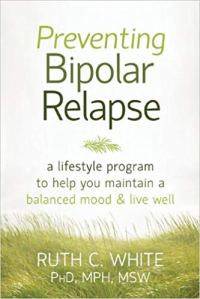
Book: Preventing Bipolar Relapse

Book Title:

Preventing Bipolar Relapse: A Lifestyle Program to Help You Maintain a Balanced Mood & Live Well.

Author(s): Ruth C. White (PhD, MPH, MSW).

Year: 2014.

Edition: First (1st).

Publisher: New Harbinger Publications.

Type(s): Paperback and Kindle.

Synopsis:

There is an old saying: “Prevention is better than cure.” If you have bipolar disorder, this is especially true. For you, it is incredibly important to read the warning signs of a possible episode. For instance, you may find you are not sleeping as well as usual, or you might be sleeping too much. You may stop doing things that you normally enjoy, or you may start acting out your impulses in ways that alienate those around you or get you into trouble.

While the path to wellness for those with bipolar may involve psychiatric visits and medication adjustments, preventing manic and depressive episodes is the true key to staying healthy and happy. So how do you do it? And most importantly, how can you keep yourself motivated?

In this powerful, breakthrough book, bipolar expert Ruth C. White shares her own personal approach to relapse prevention using the innovative programme SNAP (Sleep, Nutrition, Activity, and People).

White also offers practical tips and tracking tools you can use anytime, anywhere. By making necessary lifestyle adjustments, you can maintain balanced moods, recognise the warning signs of an oncoming episode, and make the necessary changes to reduce or prevent it.

This is the first and only book on bipolar disorder that focuses exclusively on prevention. To help you stay well, White includes links to helpful online tracking tools so that you can manage your symptoms, anytime, anywhere. If you are ready to stop living in fear of your next episode, this life-changing book can help you take charge of your diagnosis – and your life.

Book: Positive Psychology in Practice

Book Title:

Positive Psychology in Practice: Promoting Human Flourishing in Work, Health, Education, and Everyday Life.

Author(s): Stephen Joseph (Editor).

Year: 2015.

Edition: Second (2nd).

Publisher: John Wiley & Sons.

Type(s): Hardcover and Kindle.

Synopsis:

The best minds in positive psychology survey the state of the field Positive Psychology in Practice, Second Edition moves beyond the theoretical to show how positive psychology is being used in real-world settings, and the new directions emerging in the field.

An international team of contributors representing the best and brightest in the discipline review the latest research, discuss how the findings are being used in practice, explore new ideas for application, and discuss focus points for future research.

This updated edition contains new chapters that explore the intersection between positive psychology and humanistic psychology, salugenesis, hedonism, and eudaimonism, and more, with deep discussion of how the field is integrating with the new areas of self-help, life coaching, social work, rehabilitation psychology, and recovery-oriented service systems.

This book explores the challenges and opportunities in the field, providing readers with the latest research and consensus on practical application. * Get up to date on the latest research and practice findings * Integrate positive psychology into assessments, life coaching, and other therapies * Learn how positive psychology is being used in schools * Explore possible directions for new research to push the field forward Positive psychology is being used in areas as diverse as clinical, counselling, forensic, health, educational, and industrial/organisational settings, in a wide variety of interventions and applications.

Psychologists and other mental health professionals who want to promote human flourishing and well-being will find the second edition of Positive Psychology in Practice to be an informative, comprehensive guide.