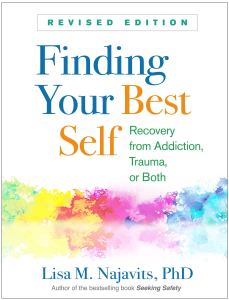
Book: Finding Your Best Self

Book Title:

Finding Your Best Self: Recovery from Addiction, Trauma, or Both.

Author(s): Lisa M. Najavits (PhD).

Year: 2019.

Edition: Second (2nd).

Publisher: Guildford Press.

Type(s): Hardcover, Paperback, and Kindle.

Synopsis:

Addiction and trauma are two of the most common and difficult issues that people face. In this motivating book, leading expert Lisa Najavits explains the link between addiction and trauma and presents science-based self-help strategies that you can use no matter where you are in your recovery. Every chapter features inspiring words from people who have “been there,” plus carefully designed reflection questions, exercises, and other practical tools. Learn how you can:

  • Build coping skills so that the future is better than the past.
  • Keep yourself safe and find support.
  • Set your own goals and make a plan to achieve them at your own pace.
  • Choose compassion over self-blame and shame.
  • Move toward your best self – the person you want to be.

If you are a family member or friend seeking to support a loved one – or a helping professional – this book is also for you. Now in a convenient large-size format, the revised edition features added materials for professional and peer counsellors. First edition title: Recovery from Trauma, Addiction, or Both.

Mental health professionals, see also the author’s Seeking Safety: A Treatment Manual for PTSD and Substance Abuse, which presents an evidence-based treatment approach developed specifically for PTSD and substance abuse.

What Causes Addiction?

What causes addiction?

Easy, right? Drugs cause addiction. But maybe it is not that simple.

Again, watched this on the introductory peer support course I am attending, definitely challenges the generally accepted convention of addiction.

This video is adapted from Johann Hari’s New York Times best-selling book ‘Chasing The Scream: The First and Last Days of the War on Drugs.’

For more information, and to take a quiz to see what you know about addiction, go to http://www.chasingthescream.com.

On This Day … 01 January

People (Births)

  • 1946 – Claude Steele, American social psychologist and academic.

Claude Steele

Claude Mason Steele (born January 1, 1946) is a social psychologist and emeritus professor at Stanford University, where he is the I. James Quillen Endowed Dean, Emeritus at the Stanford Graduate School of Education, and Lucie Stern Professor in the Social Sciences, Emeritus.

Formerly he was the executive vice chancellor and provost at the University of California, Berkeley. He also served as the 21st provost of Columbia University for two years. Before that, he had been a professor of psychology at various institutions for almost 40 years.

He is best known for his work on stereotype threat and its application to minority student academic performance. His earlier work dealt with research on the self (like self-image and self-affirmation) as well as the role of self-regulation in addictive behaviours.

In 2010, he released his book, Whistling Vivaldi and Other Clues to How Stereotypes Affect Us, summarising years of research on stereotype threat and the underperformance of minority students in higher education.

Education

He enrolled at Hiram College in Hiram, Ohio, where he earned a B.A. in psychology in 1967.

At Hiram College, Steele’s passion for reading novels led to an interest in how the individual faces the social world. After being fully immersed in the Civil Rights Movement and the issues of racial equality, rights, and the nature of prejudice as a child, Steele formed a desire to study the topics in a scientific manner. He was especially keen to discover their effects on social relationships and quality of life. Steele was inspired by African-American social psychologist Kenneth Clark’s TV appearance discussing the psychological implications of the 1964 race riots in Harlem, New York City, which led to doing behavioural research. Steele conducted early experimental research at Hiram College in physiological psychology (looking at behavioural motives in Siamese fighting fish) and social psychology (studying how African-American dialect among kids maintains ethnic/racial identity), where he worked under the mentorship of social psychologist, Ralph Cebulla.

In graduate school, he studied social psychology, earning an M.A. in 1969 and a Ph.D. in 1971 at Ohio State University, with a minor in statistical psychology. His dissertation work, with faculty adviser Tom Ostrom at Ohio State, focused on attitude measurement and attitude change.

Research

Throughout his academic career, his work fell into three main domains of research under the broad subject area of social psychology: stereotype threat, self-affirmation, and addictive behaviours. Although separate and distinct, the three lines of research are linked by their shared focus on self-evaluation and how people cope with threats to their self-image and self-identities.

  • Addictive Behaviours:
    • Although many people primarily associate Steele with his significant contributions in the development of stereotype threat research, the 14 years of his post-doctoral academic career that he spent at the University of Washington were focused on addictive behaviours and the social psychology behind alcohol use and addiction.
    • He was interested in the role of alcohol and drug use in self-regulation processes and social behaviour.
    • Among his major findings were that alcohol myopia, the cognitive impairment by alcohol use, reduces cognitive dissonance, leads to more extreme social responses, increases helping behaviour, reduces anxiety when it is combined with a distracting activity, and enhances important self-evaluations.
  • Self-Affirmation:
    • While studying the effects of alcohol use on social behaviour, Steele was formulating a theory about the effects of self-affirmation.
    • Developed in the 1980s, self-affirmational processes referred to the ability to reduce threats to self-image by stepping back and affirming a value that is important to self-concept.
    • Steele often uses the example of smokers who are told that smoking will lead to significant negative health outcomes.
    • The perception that they may be evaluated negatively by their willingness to engage in negative behaviours threatens their self-image.
    • However, affirming a value in a domain completely unrelated to smoking but important to one’s self-concept: joining a valued cause, or accomplishing more at work, will counter the negative effects of the self-image threat and re-establish self-integrity.
    • Self-affirmation theory was originally formulated as an alternative motivational explanation for cognitive dissonance theory that threats to the self led to a change in attitudes rather than psychologically inconsistent ideas, and self-affirmational strategies can reduce dissonance as effectively as attitude change.
    • His research on self-affirmation and its effects demonstrated the power of self-affirmation to reduce biased attitudes, lead to positive health behaviours, and even improve the academic performance of minority students.
  • Stereotype Threat:
    • Steele is best known for his work on stereotype threat and its application to explain real-world problems such as the underperformance of female students in mathematics and science classes as well as Black students in academic contexts.
    • Steele first began to explore the issues surrounding stereotype threat at the University of Michigan, when his membership on a university committee called for him to tackle the problem of academic underachievement of minority students at the university.
    • He discovered that the dropout rate for Black students was much higher than for their white peers even though they were good students and had received excellent SAT scores.
    • That led him to form a hypothesis involving stereotype threat.
    • Stereotype threat refers to the threat felt in particular situations in which stereotypes relevant to one’s collective identity exist, and the mere knowledge of the stereotypes can be distracting enough to negatively affect performance in a domain related to the stereotype.
    • Steele has demonstrated the far-reaching implications of stereotype threat by showing that it is more likely to undermine the performance of individuals highly invested in the domain being threatened and that stereotype threat can even lead to Black people having significant negative health outcomes.
    • The theories of stereotype threat can be applied for better understanding group differences in performance not only in intellectual situations but also in athletics.
    • Steele has spearheaded many successful interventions aimed at reducing the negative effects of stereotype threat, including how to provide critical feedback effectively to a student under the effects of stereotype threat, inspired by the motivating style of feedback of his graduate school adviser, Ostrom, and how teacher practices can foster a feeling of identity safety.
    • That would improve performance outcomes by elementary school minority students.

Book: The Addiction Treatment Planner: Includes DSM-5 Updates

Book Title:

The Addiction Treatment Planner: Includes DSM-5 Updates.

Author(s): Robert R. Perkinson, Arthur E. Jongsma, and Timothy J. Bruce.

Year: 2014.

Edition: Fifth (5th).

Publisher: Wiley.

Type(s): Paperback and Kindle.

Synopsis:

The Addiction Treatment Planner, Fifth Edition provides all the elements necessary to quickly and easily develop formal treatment plans that satisfy the demands of HMOs, managed care companies, third-party payors, and state and federal agencies.

  • New edition features empirically supported, evidence-based treatment interventions.
  • Organised around 43 behaviourally based presenting problems, including substance use, eating disorders, schizoid traits, and others.
  • Over 1,000 prewritten treatment goals, objectives, and interventions – plus space to record your own treatment plan options.
  • Easy-to-use reference format helps locate treatment plan components by behavioural problem.
  • Includes a sample treatment plan that conforms to the requirements of most third-party payors and accrediting agencies including CARF, The Joint Commission (TJC), COA, and the NCQA.

Book: Mental Health Workbook: 6 Books in 1

Book Title:

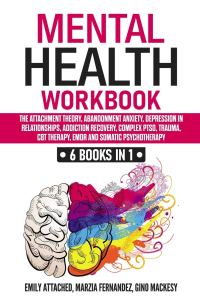
Mental Health Workbook: 6 Books in 1: The Attachment Theory, Abandonment Anxiety, Depression in Relationships, Addiction Recovery, Complex PTSD, Trauma, CBT Therapy, EMDR and Somatic Psychotherapy.

Author(s): Emily Attached, Marzia Fernandez, and Gino Mackesy.

Year: 2020.

Edition: First (1st).

Publisher: Independently Published.

Type(s): Hardcover, Paperback, Audiobook, and Kindle.

Synopsis:

This Book includes: 6 Manuscripts

  1. Attachment Theory Workbook.
  2. Abandonment Recovery Workbook.
  3. The Addiction Recovery Workbook.
  4. Complex PTSD, Trauma and Recovery.
  5. EMDR and Somatic Psychotherapy.
  6. Somatic Psychotherapy.

Book 1: Attachment Theory Workbook

You can start to redress the balance to build stronger relationships with those close to you, with chapters that cover:

  • How anxiety disorder develops.
  • How to become self-disciplined with your emotions.
  • Learning to communicate effectively.
  • How positive reinforcement works.
  • How your physical health affects your mental state.
  • Dealing with conflict.
  • Empathetic listening and its link to happiness.
  • And more…

Book 2: Abandonment Recovery Workbook

You will learn how to cope with the feelings of abandonment through chapters that examine:

  • What affecting abandonment.
  • Abandonment anxiety.
  • How abandonment can change a life.
  • Depression in Relationships.
  • Building healthier relationships.
  • The power of forgiveness.

Book 3: The Addiction Recovery Workbook

In this book, you will find the necessary help to get you on the road to recovery, with chapters that cover:

  • How to replace your addiction and find the peace you crave.
  • Educating yourself about your addiction.
  • What to avoid when you are developing new habits.
  • Exercise, hydration and a non-toxic lifestyle.
  • Getting creative to life healthier.

Book 4: Complex PTSD, Trauma and Recovery

In this book, you will finally find new ways to tackle your trauma, with chapters that focus on:

  • How depression is defined.
  • How you can avoid exacerbating the problem.
  • A range of trauma treatment exercises.
  • Trauma and the link to mental health.
  • Understanding anxiety.
  • Complex PTSD.

Books 5 and 6: EMDR and Somatic Psychotherapy

You’ll discover how it could help you, with chapters that cover:

  • The principles of EMDR and Somatic Psychotherapy.
  • The basic concepts of Somatic Psychotherapy and EMDR Therapy.
  • Examining the neurobiology of stress and trauma.
  • How the brain works and how it is affected by trauma.
  • Somatic Psychotherapy explained.

Book: Clean – Overcoming Addiction And Ending America’s Greatest Tragedy

Book Title:

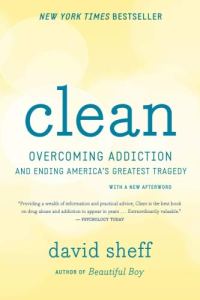
Clean – Overcoming Addiction And Ending America’s Greatest Tragedy.

Author(s): David Sheff.

Year: 2014.

Edition: First (1st).

Publisher: Houghton Mifflin Harcourt.

Type(s): hardcover, Paperback, and Audiobook.

Synopsis:

Addiction is a preventable, treatable disease, not a moral failing.

As with other illnesses, the approaches most likely to work are based on science – not on faith, tradition, contrition, or wishful thinking. These facts are the foundation of Clean.

The existing addiction treatments, including Twelve Step programmes and rehabs, have helped some, but they have failed to help many more.

To discover why, David Sheff spent time with scores of scientists, doctors, counsellors, and addicts and their families, and explored the latest research in psychology, neuroscience, and medicine.

In Clean, he reveals how addiction really works, and how we can combat it.

Book: Internet Addiction in Children and Adolescents

Book Title:

Internet Addiction in Children and Adolescents: Risk Factors, Assessment, and Treatment.

Author(s): Kimberly S. Young and Cristiano Nabuco de Abreu (Editors).

Year: 2017.

Edition: First (1st).

Publisher: Springer Publishing Co Inc.

Type(s): Paperback and Kindle.

Synopsis:

This is the first book to thoroughly examine how early and easy access to the Internet and digital technologies impacts children and adolescents. Experts in the field examine the research that shows the social, cognitive, developmental, and academic problems that can result when children spend excessive time in front of screens. As a whole, the book provides an invaluable resource for those who need to assess, treat, and prevent Internet addiction in children and adolescents.

Internet Addiction in Children and Adolescents:

  • Provides tools that help predict a child’s level of risk for media-related problems.
  • Examines how to diagnose and differentiate Internet addiction from other psychiatric conditions.
  • Explores evidence-based treatment approaches and how to distinguish pathology from normal development.
  • Shows how to create inpatient treatment programs and therapies to address media addiction.
  • Highlights the psychological, social, and family conditions for those most at risk.
  • Evaluates the effects of the excessive use of electronic games and the Internet on brain development.
  • Explores the physical risks that result from excessive media use and strategies for combating the problem.
  • Examines school-based initiatives that employ policies and procedures designed to increase awareness of excessive media use and help educators identify students who misuse technology, and that provide strategies of intervention and communication with parents.
  • Identifies signs of problem Internet behavior such as aggressive behavior, lying about screen use, and a preference for screen time over social interactions.
  • Outlines the risk factors for developing Internet addiction.
  • Provides strategies for treatment and prevention in family, school, and community settings.

Practitioners and researchers in psychology, social work, school counseling, child and family therapy, and nursing will appreciate this book’s thorough review of Internet addiction among children and adolescents. The book also serves as an engaging supplement in courses on media psychology, addiction counseling, abnormal psychology, school counseling, social issues, and more.

Book: Internet Addiction

Book Title:

Internet Addiction: Prevalence, Risk Factors and Health Effects.

Author(s): Margaret Adams (Editor).

Year: 2016.

Edition: First (1st).

Publisher: Nova Science Publishers.

Type(s): Hardcover and Kindle.

Synopsis:

According to the World Health Organisation, pathological addiction is the psychic, and sometimes even physical, condition arising from the interaction between a living organism and an exogenous substance, characterised by behavioural responses and other reactions that always include a compulsive need to take the substance continuously or periodically, in order to get its psychic effects and/or to avoid the distress related to its withdrawal.

This book presents a review on Internet addiction, which is considered an emergent problem especially amongst adolescents, and examines the risk factors and health effects of this addiction.

Book: Why Can’t I Stop?

Book Title:

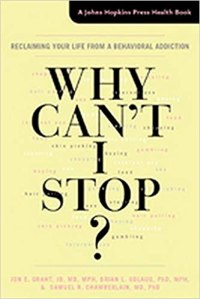
Why Can’t I Stop?: Reclaiming Your Life from a Behavioral Addiction (A Johns Hopkins Press Health Book).

Author(s): Jon E. Grant, Brian L. Odlaug, and Samuel R. Chamberlain.

Year: 2016.

Edition: First (1st).

Publisher: John Hopkins University Press.

Type(s): Hardcover, Paperback, and Kindle.

Synopsis:

At some point in our lives, we all engage in behaviours that are risky, irrational, or unwise. We might find it exciting and temporarily rewarding to gamble on the lottery or impulsively buy an expensive gadget. But just as substances like alcohol and narcotics have the potential to become addictive, so do certain behaviours. A person addicted to gambling, shopping, the internet, food, or picking at their skin may suffer shame in the shadows while their behaviour consumes time and energy and disrupts their life. Some people with behavioural addictions lose their family, job, savings, and home. With a physical basis in the brain, behavioural addictions are serious illnesses – but simply willing yourself to stop is usually not enough.

Why Can’t I Stop? is for anyone who has a behavioural addiction, as well as their supportive families and friends. Examining seven of the most common and serious addictions – gambling, sex, stealing, internet use, shopping and buying, hair pulling and skin picking, and food – the authors bring together cutting-edge research to describe behavioural addiction, its causes, and how it can be diagnosed and treated.

Featuring patient stories of behavioural addiction and recovery, as well as information about treatment centres, this compassionate guide will help readers better understand the complicated issues surrounding these addictions and teach family members how to help the addicted person while helping themselves.

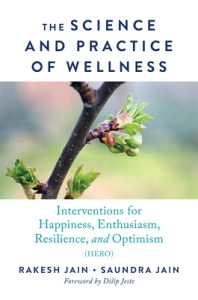
Book: The Science and Practice of Wellness

Book Title:

The Science and Practice of Wellness: Interventions for Happiness, Enthusiasm, Resilience, and Optimism (HERO).

Author(s): Rakesh Jain and Saundra Jain.

Year: 2020.

Edition: First (1st).

Publisher: W.W. Norton Company.

Type(s): Hardcover.

Synopsis:

Wellness is rapidly becoming an issue of great importance in clinical practice. Wellness-centric clinicians look to improve various traits known to be beneficial to patients – traits such as happiness, enthusiasm, resilience, and optimism (referred to as the HERO traits). All of these not only improve global mental wellness, but also offer resilience against stress, depression, and anxiety. Wellness-centric interventions augment both psychopharmacology and traditional psychotherapies, such as CBT.

Rakesh and Saundra Jain start with an in- depth review of the scientific literature and a practical introduction on applying wellness interventions in various clinical settings. Additionally, they offer advice on such beneficial practices as exercise, mindfulness, optimised nutrition, optimized sleep, enhanced socialisation, and positive psychology enhancement. A robust resource section offers access to wellness-centric scales and forms developed by the authors.