Are There Sex Differences in Comorbidity Between Substance Use & Mental Health in Adolescents?

Research Paper Title

Sex Differences in Comorbidity Between Substance Use and Mental Health in Adolescents: Two Sides of the Same Coin.

Background

This study aims to evaluate sex differences in alcohol and cannabis use and mental health disorders (MHD) in adolescents, and to evaluate the predictive role of mental health disorders for alcohol and cannabis use disorders (AUD and CUD respectively).

Method

A sample of 863 adolescents from the general population (53.7% girls, Mage = 16.62, SD = 0.85) completed a computerised battery including questions on substance use frequency, the Brief Symptom Inventory, the Cannabis Problems Questionnaire for Adolescents – Short version, the Rutgers Alcohol Problem Index and the DSM-IV-TR criteria for AUD and CUD. Bivariate analyses and binary logistic regressions were performed.

Results

Girls presented significantly more mental health problems and a higher prevalence of comorbidity between SUD and MHD. Obsessive-compulsive symptoms and phobic anxiety indicated a higher risk of AUD, whereas depression and interaction between hostility and obsessive-compulsive disorder indicated a higher risk of CUD.

Conclusions

Comorbidity between SUD and MHD is high among adolescents, and significantly higher among girls.

Reference

Fernandez-Artamendi, S. Martinez-Loredo, V. & Lopez-Nunez, C. (2021) Sex Differences in Comorbidity Between Substance Use and Mental Health in Adolescents: Two Sides of the Same Coin. Psicotherma. 33(1), pp.36-43. doi: 10.7334/psicothema2020.297.

Book: Neurobiologically Informed Trauma Therapy with Children & Adolescent

Book Title:

Neurobiologically Informed Trauma Therapy with Children and Adolescents: Understanding Mechanisms of Change (Norton Series on Interpersonal Neurobiology).

Author(s): Linda Chapman.

Year: 2014.

Edition: First (1st).

Publisher: W.W. Norton & Company.

Type(s): Paperback and Kindle.

Synopsis:

The model of treatment developed here is grounded in the physical, psychological, and cognitive reactions children have to traumatic experiences and the consequences of those experiences. The approach to treatment utilises the integrative capacity of the brain to create a self, foster insight, and produce change. Treatment strategies are based on cutting-edge understanding of neurobiology, the development of the brain, and the storage and retrieval of traumatic memory. Case vignettes illustrate specific examples of the reactions of children, families, and teens to acute and repeated exposure to traumatic events.

Also presented is the most recent knowledge of the role of the right hemisphere (RH) in development and therapy. Right brain communication, and how to recognise the non-verbal symbolic and unconscious, affective processes will be explained, along with examples of how the therapist can utilise art making, media, tools, and self to engage in a two-person biology. 30 illustrations; 8 pages of colour.

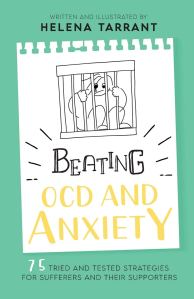
Book: Beating OCD and Anxiety

Book Title:

Beating OCD and Anxiety – 75 Tried and Tested Strategies for Sufferers and their Supporters.

Author(s): Helena Tarrant.

Year: 2020.

Edition: First (1st).

Publisher: Cherish Editions.

Type(s): Paperback and Kindle.

Synopsis:

Does anxiety impact on everything you do, leaving you unable to get through the day or with an inability to make decisions, no matter how small? Has it affected or even destroyed friendships and relationships? Or maybe you know or live with someone with these issues, and feel unable to help them?

Helena Tarrant gets it. She also understands why you may have struggled with text-heavy anxiety guides in the past. This book can help you to start a new fulfilling life, or help you provide invaluable support to someone you care about. The author has recovered from lifelong debilitating obsessive compulsive disorder and generalized anxiety disorder. This book shares the tried and tested techniques that she used to do it, based largely but not entirely on the methods and concepts behind cognitive behavioural therapy.

Written in accessible language, conveniently segmented and illustrated with over 100 original cartoons, the techniques are described clearly and concisely. Beating OCD and Anxiety knows you don’t want to read pages of complex theory on your quest for help.

In this book, Helena will show you how to get your life back.

Book: A Concise Introduction to Existential Counselling

Book Title:

A Concise Introduction to Existential Counselling.

Author(s): Martin Adams.

Year: 2013.

Edition: First (1st).

Publisher: SAGE Publications Ltd.

Type(s): Hardcover, Paperback, and Kindle.

Synopsis:

A Concise Introduction to Existential Counselling is just that: a brief and accessible pocket guide to the underlying theory & practice of the existential approach.

Addressing everything a new trainee needs to know and do in a way that is entirely accessible and jargon-free, this book:

  • Provides a short history of the existential tradition.
  • Puts key concepts into contexts, showing how theory translates into practice.
  • Discusses issues in the therapeutic process.
  • Shows how to work effectively with whatever the client brings to the session.
  • Addresses the significance of existential thought in the wider world.

This book will be the perfect companion to new trainees looking to embark on their path to thinking and practicing existentially.

Martin Adams is a practitioner and supervisor in private practice and a Lecturer at the New School of Psychotherapy and Regents College, both in London.

Book: Anxiety and Depression in Children and Adolescents

Book Title:

Anxiety and Depression in Children and Adolescents: Assessment, Intervention, and Prevention.

Author(s): Thomas J. Huberty..

Year: 2012.

Edition: First (1st).

Publisher: Springer.

Type(s): Hardcover and eBook.

Synopsis:

Although generally considered adult disorders, anxiety and depression are widespread among children and adolescents, affecting academic performance, social development, and long-term outcomes. They are also difficult to treat and, especially when they occur in tandem, tend to fly under the diagnostic radar.

Anxiety and Depression in Children and Adolescents offers a developmental psychology perspective for understanding and treating these complex disorders as they manifest in young people. Adding the school environment to well-known developmental contexts such as biology, genetics, social structures, and family, this significant volume provides a rich foundation for study and practice by analyzing the progression of pathology and the critical role of emotion regulation in anxiety disorders, depressive disorders, and in combination. Accurate diagnostic techniques, appropriate intervention methods, and empirically sound prevention strategies are given accessible, clinically relevant coverage. Illustrative case examples and an appendix of forms and checklists help make the book especially useful.

Featured in the text:

  • Developmental psychopathology of anxiety, anxiety disorders, depression, and mood disorders.
  • Differential diagnosis of the anxiety and depressive disorders.
  • Assessment measures for specific conditions.
  • Age-appropriate interventions for anxiety and depression, including CBT and pharmacotherapy.
  • Multitier school-based intervention and community programmes.
  • Building resilience through prevention.

Anxiety and Depression in Children and Adolescents is an essential reference for practitioners, researchers, and graduate students in school and clinical child psychology, mental health and school counselling, family therapy, psychiatry, social work, and education.

Book: Assessing Adolescent Psychopathology: MMPI-A / MMPI-A-RF

Book Title:

Assessing Adolescent Psychopathology: MMPI-A / MMPI-A-RF.

Author(s): Robert P. Archer.

Year: 2016.

Edition: Fourth (4th).

Publisher: Routledge.

Type(s): Hardcover and Paperback.

Synopsis:

Assessing Adolescent Psychopathology: MMPI-A / MMPI-A-RF, Fourth Edition provides updated recommendations for researchers and clinicians concerning the MMPI-A, the most widely used objective personality test with adolescents, and also introduces the MMPI-A-Restructured Form ( MMPI-A-RF), the newest form of the MMPI for use with adolescents. Further, this fourth edition includes comprehensive information on both MMPI forms for adolescents, including descriptions of the development, structure, and interpretive approaches to the MMPI-A and the MMPI-A-RF. This text provides extensive clinical case examples of the interpretation of both tests, including samples of computer based test package output, and identifies important areas of similarities and differences between these two important tests of adolescent psychopathology.

Book: MMPI-A Assessing Adolescent Psychopathology

Book Title:

MMPI-A Assessing Adolescent Psychopathology.

Author(s): Robert P. Archer.

Year: 2005.

Edition: Third (3ed).

Publisher: Routledge.

Type(s): Hardcover.

Synopsis:

This third edition of Robert Archer’s classic step-by-step guide to the MMPI-A continues the tradition of the first two in presenting the essential facts and recommendations for students, clinicians, and researchers interested in understanding and utilising this assessment instrument to its fullest .

Special features of the third edition include:

  • Presentation of appropriate administration criteria;
  • Updated references to document the recent development of an increasingly solid empirical foundation – more than 160 new ones;
  • Extensive review of new MMPI-A scales and subscales including the content component scales and the PSY-5 scales;
  • Expanded variety of clinical examples; and
  • A new chapter on the rapidly expanding forensic uses of the MMPI-A, including those in correctional facilities and in custody or personal injury evaluations.

Linking Eating Habits & Sleep Patterns in Adolescents with Symptoms of Depression

Research Paper Title

Eating habits and sleep patterns of adolescents with depression symptoms in Mumbai, India.

Background

Adolescents with depression engage in unhealthy eating habits and irregular sleep patterns and are often at an increased risk for weight-related problems.

Improvement in these lifestyle behaviours may help to prevent depression, but knowledge about the associations between depression, sleep, eating habits and body weight among adolescents in India is limited.

Methods

This cross-sectional study investigated the prevalence of depression and its association with sleep patterns, eating habits and body weight status among a convenience sample of 527 adolescents, ages 10-17 years in Mumbai, India.

Participants completed a survey on sleep patterns such as sleep duration, daytime sleepiness and sleep problems and eating habits such as frequency of breakfast consumption, eating family meals and eating out.

Depression was assessed using the Patient Health Questionnaire modified for Adolescents (PHQ-A).

Anthropometric measurements were also taken.

Results

Within this sample, 25% had moderate to severe depression (PHQ-A ≥ 10) and 46% reported sleeping less than 6 h > thrice a week.

Adolescents with moderate to severe depression had significantly higher body mass index than those with minimal depression (26.2 ± 6.6 vs. 20.2 ± 4.8 kg/m2 ).

The odds of having clinically significant depression (PHQ-A ≥ 10) was 4.5 times higher in adolescents who had family meals ≤ once a week, 1.6 times higher among those who were sleeping <6 h and 2.3 times higher among participants having trouble falling to sleep more than thrice a week.

Conclusions

The findings indicated that a significant proportion of adolescents had depression symptoms; improving sleep and eating habits may present potential targets for interventions.

Reference

Moitra, P., Madan, J. & Shaikh, N.I. (2020) Eating habits and sleep patterns of adolescents with depression symptoms in Mumbai, India. Maternal & Child Nutrition. 16 Suppl 3(Suppl 3):e12998. doi: 10.1111/mcn.12998.

Young People & Impulsivity in the Short-Term Build up to Self-Harm

Research Paper Title

What young people say about impulsivity in the short-term build up to self-harm: A qualitative study using card-sort tasks.

Background

Youth who self-harm report high levels of trait impulsivity and identify impulsive behaviour as a proximal factor directly preceding a self-harm act. Yet, impulsivity is a multidimensional construct and distinct impulsivity-related facets relate differentially to self-harm outcomes.

Studies have yet to examine if and how a multidimensional account of impulsivity is meaningful to individual experiences and understandings of self-harm in youth.

The researchers explored the salience and context of multidimensional impulsivity within narratives of self-harm, and specifically in relation to the short-term build-up to a self-harm episode.

Methods

Fifteen community-based adolescents (aged 16-22 years) attending Further Education (FE) colleges in the UK took part in individual face-to-face sessions (involving exploratory card-sort tasks and semi-structured interviews) which explored factors relating to self-harm, impulsivity and the broader emotional, developmental and cognitive context. Session data were analysed thematically.

Results

Two overarching themes, and associated subthemes, were identified:

  1. ‘How I respond to strong negative emotions’; and
  2. ‘Impulse versus deliberation – How much I think through what I’m doing before I do it’.

Self-harm was typically a quick, impulsive act in the context of overwhelming emotion, underpinned by cognitive processing deficits. The dynamic tension between emotion-based impulsivity and controlled deliberation was articulated in the immediate moments before self-harm. However, impulsive responses were perceived as modifiable. Where self-harm patterns were established, these related to habitual behaviour and quick go-to responses. Young people identified with a multidimensional conception of impulsivity and described the impulsive context of a self-harm act as dynamic, contextual, and developmentally charged.

Conclusions

Findings have implications for youth-focused work. Card-task frameworks are recommended to scaffold and facilitate discussion with young people, particularly where topics are sensitive, complex and multifactorial.

Reference

Lockwood, J., Townsend, E., Allen, H., Daley, D. & Sayal, K. (2020) What young people say about impulsivity in the short-term build up to self-harm: A qualitative study using card-sort tasks. PLoS One. 15(12), pp.e0244319. doi: 10.1371/journal.pone.0244319. eCollection 2020.

Online & Offline Sexual Harassment and Anxiety & Depressive Symptoms

Research Paper Title

Online and offline sexual harassment associations of anxiety and depression in an adolescent sample.

Background

The aims of this study were to study the prevalence of sexual harassment online and offline, to analyse the associations between subjection to sexual harassment and adolescents’ mental health and analyse if there are any significant differences between girls and boys. The researchers also examine if good peer-relationships interact with the associations between sexual harassment and mental health complaints.

Methods

This cross-sectional study included 594 adolescents, age 12-20. Participants responded to a web survey including the self-assessment scales Revised Children’s Anxiety and Depression Scale and Beck Youth Inventories as well as subjection to online and offline sexual harassment and peer-relational quality. Linear regression analysis was used to study whether symptoms of anxiety and depression correlated to subjection to online and offline sexual harassment and peer-relational quality.

Results

The researchers found that 48.50% of girls and 28.19% of boys reported sexual harassment victimisation. Offline was the most frequently reported site of victimisation. Online harassment correlated significantly with increased anxiety and depressive symptoms in girls but not boys. Offline harassment as well as online and offline harassment correlated significantly with increasing symptoms for both genders. Participants who reported good peer-relationships had significantly less symptoms.

Conclusions

This study shows that sexual harassment remains a common plague for adolescents, especially for girls. Offline sexual harassment is the most common form of harassment for both genders. For girls, but not for boys, online sexual harassment correlated significantly with anxiety and depressive symptoms. A strong negative correlation between satisfaction to peer-relationships and mental health symptoms was found.

Reference

Stahl, S. & Dennhag, I. (2020) Online and offline sexual harassment associations of anxiety and depression in an adolescent sample. Nordic Journal of Psychiatry. doi: 10.1080/08039488.2020.1856924. Online ahead of print.