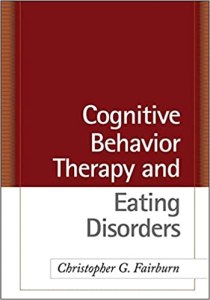
Book: Cognitive Behaviour Therapy and Eating Disorders

Book Title:

Cognitive Behaviour Therapy and Eating Disorders.

Author(s): Christopher G. Fairburn.

Year: 2008.

Edition: First (1st).

Publisher: Guildford Press.

Type(s): Hardcover and Kindle.

Synopsis:

This book provides the first comprehensive guide to enhanced cognitive behaviour therapy (CBT-E), the leading empirically supported treatment for eating disorders in adults.

Written with the practitioner in mind, the book demonstrates how this transdiagnostic approach can be used with the full range of eating disorders seen in clinical practice.

Christopher Fairburn and colleagues describe in detail how to tailor CBT-E to the needs of individual patients, and how to adapt it for patients who require hospitalisation.

Also addressed are frequently encountered co-occurring disorders and how to manage them.

Reproducible appendices feature the Eating Disorder Examination interview and questionnaire.

Book: Mental Health Workbook

Book Title:

Mental Health Workbook: 4 Books In 1: How to Use Neuroscience and Cognitive Behavioural Therapy to Declutter Your Mind, Stop Overthinking and Quickly Overcome Anxiety, Worry and Panic Attacks.

Author(s): Edward Scott.

Year: 2020.

Edition: First (1st).

Publisher: Saturno Lecca.

Type(s): Hardcover, Paperback, and Kindle.

Synopsis:

Want to learn more about neuroscience paired with cognitive behavioural therapy? Would you like to figure out how to clear your mind by stopping stress, stopping overthinking, overcoming anxiety, worries and panic attacks? If so, read on!

The Cognitive behavioural therapy has been shown to be effective in relieving symptoms in a wide range of mental health problems, ranging from addiction to schizophrenia, along with almost everything in between. It has been shown to be useful for longer than drugs and other forms of therapy.

Excessive thinking can be a side effect of some nervousness problems; however, it can also be an indication of simply being overwhelmed.

One of the most important reasons you want to clear your mind is because it is already playing a negative role in your life. Living with constant negative thoughts and intense fears can cause someone to crave a way to relieve pain or develop unhealthy habits that could get worse.

Anxiety is linked to many other mental illnesses, especially depression!

The main focus of this book is to follow the steps which will improve your thinking

This book covers the following topics

  • What is cognitive behavioural therapy?
  • Stages of cognitive behavioural therapy
  • Definition of excessive thinking.
  • How to identify if you are an excessive thinker.
  • The relationship between excessive thinking, anxiety and stress.
  • Health Benefits of Decluttering.
  • Usual remedy in localised deep breathing.
  • Believe in your self-esteem.
  • And many more.

Before learning the exercises that eliminate negative thinking, you should understand why you have these thoughts.

In fact, the stress caused by information overload, endless options and physical clutter can trigger various mental health problems, including depression, anxiety, and panic attacks. Do you want to know how to prevent them?

Book: Cognitive Behavioural Therapy for Depression

Book Title:

Cognitive Behavioral Therapy for Depression: Retrain your Brain from Wrong Behaviors, Irrational Beliefs and Negative Ways of Thinking. Open Yourself to Life, Happiness and the Freedom of Change.

Author(s): John Rich.

Year: 2019.

Edition: First (1st).

Publisher: Independently Published.

Type(s): Hardcover and Kindle.

Synopsis:

Depression is said to affect more than 300 million people globally, from all age categories. This particular mental disorder is incredibly common, and yet incredibly challenging for people to face, overcome, and heal from. Depression is considered to be a serious and even life-threatening condition as it can progress into more advanced stages that lead to thoughts surrounding self-harm and suicidal ideation.

Learning how to face, navigate, overcome, and heal from depression is important in your ability to protect yourself from the painful symptoms that depression can present in your life. If you have been looking for natural, healthy ways to overcome depression, cognitive behavioural therapy may be exactly what you are looking for.

Cognitive Behavioural Therapy (CBT) is a form of psychotherapy that is used to intentionally rewire the way your brain works through the power of specific thought processes and skills that are instilled within the individual that is healing from depression. As you learn how to navigate depression with CBT skills in tow, you will begin to realise how capable you are of overcoming this painful, dreadful, and often traumatising mental disorder that you might be facing in your life right now.

For some people, CBT is the only therapy that they need to support them in healing from depression. For others, CBT works in conjunction with lifestyle changes and even antidepressants to support a holistic form of therapy that helps the patient heal from depression in the immediate present while also being able to overcome episodes in the future.

The book seeks to shine a light on the power of CBT and how this particular psychotherapy can support you in having a healthier life, free of the struggles of depression. The goal is for you to learn to overcome depression in a way that supports you with increasing your mental strength, mental stamina, and emotional intelligence, while also improving your natural emotional resistance.

Some of what you will learn in Cognitive Behavioural Therapy for Depression includes:

  • What CBT is and how it works.
  • Who founded CBT and how.
  • What depression is and the specific symptoms to look for.
  • How you can use self-awareness to overcome depression.
  • How CBT works to heal depression.
  • How CBT supports mental and emotional strength and resiliency.
  • The exact steps for executing CBT in your own life.
  • How to monitor your CBT to make sure it is actually working.
  • How to use CBT to instantly boost your mood.
  • How to use CBT to boost your mood in the long term.
  • Natural methods for overcoming and healing depression.
  • And more!.

If you are ready to relieve yourself from the grasp of depression and heal yourself and your life, grab your copy of Cognitive Behavioural Therapy for Depression today to get started!

Book: Cognitive Behavioural Therapy for Anxiety

Book Title:

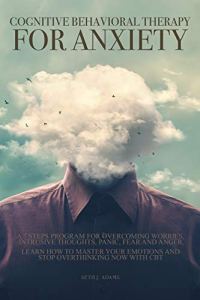
Cognitive Behavioral Therapy for Anxiety: A 7 Steps Program for Overcoming Worries, Intrusive Thoughts, Panic, Fear and Anger. Learn How to Master Your Emotions and Stop Overthinking Now with CBT.

Author(s): Seth J. Adams.

Year: 2020.

Edition: First (1st).

Publisher: Independently Published.

Type(s): Paperback and Kindle.

Synopsis:

Here is just a fraction of what’s inside:

  • What anxiety really is, and how much damage it can do to your mental and physical health?
  • The science behind CTB – why it is so effective and why so many people use it
  • The first-ever scientifically proven mental-healing therapy? Why CBT over any other self-healing program
  • What do you need to know before you start?
  • A complete “7- WEEK – 7 STEP CBT PROGRAMME” – your daily guide to overcome stress and anxiety once and for all!
  • How to transform anxiety into your daily driving force – a must-read chapter for every person who’s dealing with some or a lot of anxiety!
  • What to do after? 6 tips for maintaining and even improving your results after you’ve finished the “7 WEEK PROGRAMME”
  • Much much more…

And keep in mind that this is not going to be one of those “sit back and absorb” self-help programs, it will take a lot of your own effort!

Book: Cognitive Behavioural Therapy for Depression

Book Title:

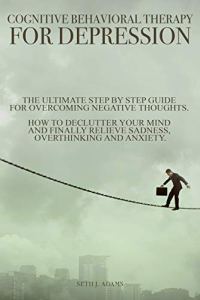
Cognitive Behavioural Therapy for Depression: The Ultimate Step by Step Guide for Overcoming Negative Thoughts. How to Declutter Your Mind and Finally Relieve Sadness, Overthinking and Anxiety.

Author(s): Seth J. Adams.

Year: 2020.

Edition: First (1st).

Publisher: Independently Published.

Type(s):Paperback and Kindle.

Synopsis:

Here is just a fraction of what is inside:

  • What is CBT and why it is better than other mental-healing therapies
  • Most common misconceptions about Cognitive Behavioural Therapy you should know before you start
  • How does it work? And why it is considered one of the very few scientifically approved self-healing therapies
  • The real causes of depression and other mental health issues
  • How can you integrate Mindfulness into your CBT Programme and achieve even better results faster?
  • Simple lifestyle changes you must make to maintain a healthy mind and body – very important!
  • Much much more…

Everybody wants to be healthy, not just for yourself, but also for the people you love and care about the most. And your own mind is where your true health starts!

Book: Cognitive Behavioural Therapy

Book Title:

Cognitive Behavioral Therapy: The Complete Guide to Overcoming Anxiety, Depression, Fear, Worries, Anger and Panic. Simple Techniques for Bringing Positivity, Happiness and Balance into Your Life.

Author(s): Seth J. Adams.

Year: 2020.

Edition: First (1st).

Publisher: Independently Published.

Type(s): Paperback and Kindle.

Synopsis:

Inside this book, you’ll discover probably the most widely-used, scientifically approved self-healing method called –”CBT or Cognitive-Behavioural Therapy” – and will teach you how you can eliminate your deepest emotional issues once and for all and start living and exciting, anxiety and depression free life!

This book includes: Cognitive Behavioural Therapy for Anxiety + Cognitive Behavioural Therapy for Depression

Here are just a few things you will discover inside:

  • What is CBT and why it is better than other mental-healing therapies
  • How does it work? And why it is considered one of the very few scientifically approved self-healing therapies
  • What do you need to know before you start?
  • CBT and anxiety A “7 STEP PROGRAMME” to eliminate anxiety and permanent depression
  • How to transform anxiety into your daily driving force – a must-read chapter for every person who’s dealing with some or a lot of anxiety!
  • 2 simple lifestyle changes you must make to maintain a healthy mind and body – very important!
  • Much much more…

I keep in mind that it doesn’t matter how long you have been hiding your issues. This book will take you by the hand and lead through every single step.

Book: The CBT Workbook for Perfectionism

Book Title:

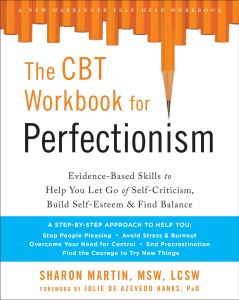
The CBT Workbook for Perfectionism – Evidence-Based Skills to Help You Let Go of Self-Criticism.

Author(s): Sharon Martin.

Year: 2019.

Edition: First (1st).

Publisher: New Harbinger.

Type(s): Paperback and Kindle.

Synopsis:

If you feel an intense pressure to be perfect, this evidence-based workbook offers real strategies based in cognitive-behavioural therapy (CBT) to help you develop a more balanced and healthy perspective.

Do you hold yourself-and perhaps others-to extremely high standards? Do you procrastinate certain tasks because you are afraid you will not carry them out perfectly? If you have answered “yes” to one or both of these questions, chances are you are a perfectionist. And while there’s nothing wrong with hard work and high standards, perfectionism can also take over your life if you let it. So, how can you find balance?

With this workbook, you will identify the causes of your perfectionism and the ways it is negatively impacting your life. Rather than measuring your self-worth by productivity and accomplishments, you will learn to exercise self compassion, and extend that compassion to others. You will also learn ways to prioritise the things that really matter to you, without focusing on attaining fixed goals.

On This Day … 24 October

People (Births)

  • 1959 – Ruth Perednik, English-Israeli psychologist and academic.

Ruth Perednik

Ruth Perednik (née Kestenbaum, born in London, 24 October 1959) is an English-born Israeli psychologist, pioneer in the field of selective mutism.

Background

Ruth Perednik graduated from University College London (1983) and the Institute of Education, University of London (1984) and the Hebrew University of Jerusalem (Educational Psychology, 2002). Her thesis in England was on The Relation Between Mothers’ Attentiveness to Toddlers and Child’s Attachment to Mother and in Israel she completed her thesis on Selective Mutism in Immigrant Families, under the supervision of Professor Yoel Elizur, with a grant from the Martin and Vivian Levin Centre for the Development of the Child and Adolescent. Ruth Perednik taught at the Lincoln School, and at the Yehuda Halevi Teacher’s Training College, Argentina (1986-1987), where she lectured on Educational Psychology. She resides in the outskirts of Jerusalem with her husband, Gustavo Perednik; they have five children.

Area of Expertise

Ruth Perednik has been specialising in the treatment of children with Selective Mutism and other anxiety disorders over the past 20 years. She has developed a treatment method for Selective Mutism based on cognitive behavioural techniques, in the framework of her work in the Jerusalem Psychological Services in the Jerusalem Municipality. Perednik heads a treatment clinic for children with Selective Mutism. She lectures and trains parents and therapists in Europe, the Americas and Asia. She has developed a Selective Mutism treatment manual which has been published in English and Chinese. She also published a Hebrew language treatment manual together with Professor Yoel Elitzur, of the Hebrew University.

The innovative element of Perednik’s treatment method is treating the child or teen in his natural environment (home and school sessions), and not in a clinic setting, since this is where the symptoms of the selective mutism hit hard and must be alleviated. This was considered iconoclastic when Perednik first published her treatment method, yet it has become generally accepted, and is the treatment of choice in several international selective mutism treatment centres. Perednik advocates for accountability of therapists when treating children, so that evidence-based interventions are the treatments of choice, facilitating effective therapy.

Online CBT Using a Waitlist Method

Research Paper Title

Online cognitive-behavioural therapy for traumatically bereaved people: study protocol for a randomised waitlist-controlled trial.

Background

The traumatic death of a loved one, such as death due to a traffic accident, can precipitate persistent complex bereavement disorder (PCBD) and comorbid post-traumatic stress disorder (PTSD) and depression. Waitlist-controlled trials have shown that grief-specific cognitive-behavioural therapy (CBT) is an effective treatment for such mental health problems. This is the first study that will examine the effectiveness of online CBT (vs waitlist controls) in a sample exclusively comprised of people bereaved by a traumatic death.

The primary hypothesis is that people allocated to the online CBT condition will show larger reductions in PCBD, PTSD and depression symptom levels at post-treatment than people allocated to a waitlist. We further expect that reductions in symptom levels during treatment are associated with reductions of negative cognitions and avoidance behaviours and the experience of fewer accident-related stressors. Moreover, the effect of the quality of the therapeutic alliance on treatment effects and drop-out rates will be explored.

Methods

A two-arm (online CBT vs waiting list) open-label parallel randomised controlled trial will be conducted. Participants will complete questionnaires at pre-treatment and 12 and 20 weeks after study enrolment. Eligible for participation are Dutch adults who lost a loved one at least 1 year earlier due to a traffic accident and report clinically relevant levels of PCBD, PTSD and/or depression. Multilevel modelling will be used.

Discussion

This study will provide new insights in the effectiveness of online CBT for traumatically bereaved people. If the treatment is demonstrated to be effective, it will be made publicly accessible. Findings will be disseminated among:

  • Lay people (e.g. through newsletters and media performances);
  • Research collaborators (e.g. through presentations at support organisations); and
  • Clinicians and researchers (e.g. through conference presentations and scientific journal articles).

Reference

Lenferink, L., de Keijser, J., Eisma, M., Smid, G. & Boelen, P. (2020) Online cognitive-behavioural therapy for traumatically bereaved people: study protocol for a randomised waitlist-controlled trial. BMJ Open. 10(9), pp.e035050. doi: 10.1136/bmjopen-2019-035050.

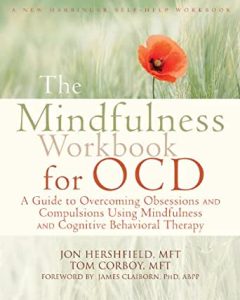
Book: The Mindfulness Workbook For OCD

Book Title:

The Mindfulness Workbook For OCD.

Author(s): Jon Hershfield (MFT) and Tom Corboy (MFT).

Year: 2014.

Edition: First (1st).

Publisher: New Harbinger.

Type(s): Paperback and Kindle.

Synopsis:

If you have obsessive-compulsive disorder (OCD), you might have an irrational fear of being contaminated by germs, or obsessively double-check things. You may even feel like a prisoner, trapped with your intrusive thoughts. Despite the fact that OCD can have a devastating impact on a person’s life, getting real help can be a challenge.

If you have tried medications without success, it might be time to explore further treatment options. You should know that mindfulness-based approaches have been proven-effective in treating OCD and anxiety disorders.

They involve developing an awareness and acceptance of the unwanted thoughts, feelings, and urges that are at the heart of OCD. Combining mindfulness practices with cognitive behavioral therapy (CBT), The Mindfulness Workbook for OCD offers practical and accessible tools for managing the unwanted thoughts and compulsive urges that are associated with OCD.