Book: The Emotional Eating Workbook

Book Title:

The Emotional Eating Workbook – A Proven-Effective Step-By-Step Guide To End Your Battle With Food And Satisfy Your Soul.

Author(s): Carolyn Coker Ross (MD, MPH).

Year: 2016.

Edition: First (1st).

Publisher: New Harbinger.

Type(s): Paperback and Kindle.

Synopsis:

For over fifty years, nutritional and medical scientists have dissected the problem of obesity. The result of this half-century of investigation has been a series of recommendations about what and how much to eat, and an unintended consequence is that we have been deprived of the joy of eating. From low-fat diets to the no-carb craze, the market has been continually flooded with one assortment of fad products and diets after another. So, when does it end?

If you are struggling with emotional overeating and are trying to lose weight, you should know that you do not need to deny yourself certain foods. In The Emotional Eating Workbook, you will learn about the real psychological needs that underlie your food cravings, how to meet those needs in positive ways, be mindful of your body, and find the deep satisfaction many overeaters seek in food.

It is not about food. It is about how food is used to self-soothe, numb ourselves against the pain of living, or self-medicate in coping with stress and unresolved emotions. The Anchor Programme™ approach detailed in this book is not about dieting. It is about being anchored to your true, authentic self. When you find your unique anchor, you will relate better to your body, you will know intuitively how to feed your body, and you will reach the weight that is right for you.
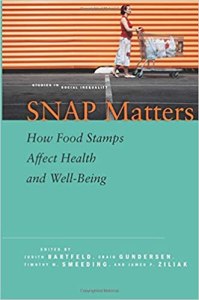
Book: SNAP Matters

Book Title:

Snap Matters – How Food Stamps Affect Health And Well-Being (Studies in Social Inequality).

Author(s): Judith Bartfield, Craig Gundersen, Timothy Smeeding, and James P. Ziliak (Editors).

Year: 2015.

Edition: First (1st).

Publisher: Stanford University Press.

Type(s): Hardcover, Paperback, and Kindle.

Synopsis:

In 1963, President Kennedy proposed making permanent a small pilot project called the Food Stamp Programme (FSP). By 2013, the programme’s fiftieth year, more than one in seven Americans received benefits at a cost of nearly $80 billion. Renamed the Supplemental Nutrition Assistance Programme (SNAP) in 2008, it currently faces sharp political pressure, but the social science research necessary to guide policy is still nascent.

In SNAP Matters, Judith Bartfeld, Craig Gundersen, Timothy M. Smeeding, and James P. Ziliak bring together top scholars to begin asking and answering the questions that matter. For example, what are the antipoverty effects of SNAP? Does SNAP cause obesity? Or does it improve nutrition and health more broadly? To what extent does SNAP work in tandem with other programmes, such as school breakfast and lunch? Overall, the volume concludes that SNAP is highly responsive to macroeconomic pressures and is one of the most effective antipoverty programmes in the safety net, but the volume also encourages policymakers, students, and researchers to continue examining this major pillar of social assistance in America.

What is the Effect of Nutrition on Mental HEalth?

Research Paper Title

The Effect of Nutrition on Mental Health: A Focus on Inflammatory Mechanisms.

Background

Neuropsychiatric disorders are closely associated with a persistent low-grade inflammatory state.

This suggests that the development of psychopathology is not only limited to the brain, but rather involves an additional systemic aspect, accounting for the large body of evidence demonstrating co-presentation of mental illness with chronic inflammatory conditions and metabolic syndromes.

Studies have shown that inflammatory processes underlie the development of neuropsychiatric symptoms, with recent studies revealing not only correlative, but causative relationships between the immune system and psychopathology.

Lifestyle factors such as diet and exercise may influence psychopathology, and this may occur via a bidirectional relationship.

Mental illness may prevent health-seeking behaviours such as failing to maintain a balanced diet, whilst adopting a ‘healthy’ diet rich in fruits, vegetables and fish alongside nutritional supplementation correlates with a reduction in psychiatric symptoms in patients.

Obesity and the gut microbiome have proven to be further factors which play an important role in inflammatory signalling and the development of psychiatric symptoms.

In a related paper the authors focus on the role of exercise (another significant lifestyle factor) on mental health (Venkatesh et al. 2020).

Conclusions

Lifestyle modifications which target diet and nutrition may prove therapeutically beneficial for many patients, especially in treatment-resistant subgroups.

The current evidence base provides equivocal evidence, however future studies will prove significant, as this is a highly attractive therapeutic avenue, due to its cost efficacy, low side effect profile and preventative potential.

By promoting lifestyle changes and addressing the limitations and barriers to adoption, these therapies may prove revolutionary for mental health conditions.

Reference

Edirappuli, S.D., Venkatesh, A. & Zaman, R. (2020) The Effect of Nutrition on Mental Health: A Focus on Inflammatory Mechanisms. Psychiatria Danubina. 32(Suppl 1), pp.114-120.

Book: How to Use Herbs, Nutrients, and Yoga in Mental Health Care

Book Title:

How to Use Herbs, Nutrients, and Yoga in Mental Health Care.

Author(s): Richard P. Brown, Patricia L. Gerberg, and Phillip R. Muskin.

Year: 2012.

Edition: Reprint Edition.

Publisher: W.W. Norton & Co.

Type(s): Hardcover, Paperback and Kindle.

Synopsis:

Many physicians and therapists agree that herbs and mind-body practices enhance health, but many more are reluctant to integrate them into their clinical work because of a lack of training or, given how long it takes to master the use of hundreds of different herbs, a lack of time.

But the trend is clear: clients and consumers alike want control over their health care choices, making the time ripe for a practical resource that guides both the clinician and the consumer on complementary and alternative medicine (CAM). This book answers that call.

Three noted experts in integrative medicine, Drs. Brown, Gerbarg, and Muskin, demystify the complexities of alternative mental health care, giving readers a comprehensive yet accessible guidebook to the best treatment options out there.

From mood, memory, and anxiety disorders to ADD, sexual enhancement issues, psychotic disorders, and substance abuse, every chapter covers a major diagnostic category.

The authors then present a range of complementary and alternative treatments-including the use of herbs, nutrients, vitamins, nootropics, hormones, and mind-body practices that they have found to be beneficial for various conditions within each category.

For example, B complex vitamins and folate have been shown to help with depression; omega-3 fatty acids can offer relief for bipolar sufferers; coherent and resonant breathing techniques-used by Buddhist monks-induce healthy alpha rhythms in the brain to relieve anxiety; the elderly can boost their memory by taking the ancient medicinal herb Rhodiola rosea; and those with chronic fatigue syndrome can find comfort in acupuncture and yoga.

Focusing on evidence-based approaches, the research, the authors’ clinical experience, and the potential risks and benefits of each treatment are carefully examined.

Brown, Gerbarg, and Muskin have distilled an otherwise daunting field of treatment down to its basics: their overriding approach is to present the CAM methods that are most practical in a clinical setting, easy to administer, and low in side effects.

With helpful summary tables at the end of each chapter, clinical pearls, and case vignettes interspersed throughout, this is a must-have resource for all clinicians and consumers who want the best that alternative medicine has to offer.

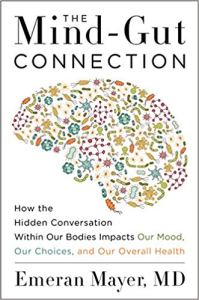
Book: The Mind-Gut Connection

Book Title:

The Mind-Gut Connection – How the Hidden Conversation Within Our Bodies Impacts Our Mood, Our Choices, and Our Overall Health.

Author(s): Emeran Mayer (MD).

Year: 2016.

Edition: First.

Publisher: HarperWave.

Type(s): Hardcover and Kindle.

Synopsis:

Combining cutting-edge neuroscience with the latest discoveries on the human microbiome, a practical guide in the tradition of The Second Brain, and The Good Gut that conclusively demonstrates the inextricable, biological link between mind and the digestive system.

We have all experienced the connection between our mind and our gut – the decision we made because it “felt right”; the butterflies in our stomach before a big meeting; the anxious stomach rumbling we get when we are stressed out.

While the dialogue between the gut and the brain has been recognised by ancient healing traditions, including Ayurvedic and Chinese medicine, Western medicine has by and large failed to appreciate the complexity of how the brain, gut, and more recently, the gut microbiota – the microorganisms that live inside our digestive tract – communicate with one another.

In The Mind-Gut Connection, Dr. Emeran Mayer, professor of medicine and executive director of the UCLA Centre for Neurobiology of Stress, offers a revolutionary and provocative look at this developing science, teaching us how to harness the power of the mind-gut connection to take charge of our health and listen to the innate wisdom of our bodies.

Book: Food and Addiction – A Comprehensive Handbook

Book Title:

Food and Addiction – A Comprehensive Handbook.

Author(s): Kelly D. Brownell and Mark S. Gold (Editors).

Year: 2014.

Edition: First.

Publisher: Oxford University Press.

Type(s): Hardcover, Paperback and Kindle.

Synopsis:

Can certain foods hijack the brain in ways similar to drugs and alcohol, and is this effect sufficiently strong to contribute to major diseases such as obesity, diabetes, and heart disease, and hence constitute a public health menace?

Terms like “chocoholic” and “food addict” are part of popular lore, some popular diet books discuss the concept of addiction, and there are food addiction programmes with names like Food Addicts in Recovery Anonymous.

Clinicians who work with patients often hear the language of addiction when individuals speak of irresistible cravings, withdrawal symptoms when starting a diet, and increasing intake of palatable foods over time.

But what does science show, and how strong is the evidence that food and addiction is a real and important phenomenon?

Food and Addiction: A Comprehensive Handbook brings scientific order to the issue of food and addiction, spanning multiple disciplines to create the foundation for what is a rapidly advancing field and to highlight needed advances in science and public policy.

The book assembles leading scientists and policy makers from fields such as nutrition, addiction, psychology, epidemiology, and public health to explore and analyse the scientific evidence for the addictive properties of food.

It provides complete and comprehensive coverage of all subjects pertinent to food and addiction, from basic background information on topics such as food intake, metabolism, and environmental risk factors for obesity, to diagnostic criteria for food addiction, the evolutionary and developmental bases of eating addictions, and behavioural and pharmacologic interventions, to the clinical, public health, and legal and policy implications of recognising the validity of food addiction.

Each chapter reviews the available science and notes needed scientific advances in the field.

Book: Brian Changer: How Diet can Save your Mental Health

Book Title: Brain Changer: How diet can save your mental health – cutting-edge science from an expert.

Author(s): Professor Felice Jacka.

Year: 2019.

Edition: First.

Publisher: Yellow Kite.

Synopsis:

A combination of Professor Felice Jacka’s love of food and her own experience of depression and anxiety as a young woman led her to question whether what we put in our mouths everyday affects more than our waistline. Felice set out on a journey of discovery to change the status quo and uncover the truth through rigorous science. Beginning her PhD in 2005, she examined the association between women’s diets and their mental health, focusing on depression and anxiety. She soon discovered – you feel how you eat. It is Professor Jacka’s ground-breaking research that has now changed the way we think about mental and brain health in relation to diet.

Brain Changer explains how and why we should consider our food as the basis of our mental and brain health throughout our lives. It includes a selection of recipes and meal plans featuring ingredients beneficial to mental health. It also includes the simple, practical solutions we can use to help prevent mental health problems in the first place and offers strategies for treating these problems if they do arise.

This is not a diet book to help you on the weight scales. This is a guide to good habits to save your brain and to optimise your mental health through what you eat at every stage of life.

Clozapine & Motivation for Food

Research Paper Title

Clozapine reliably increases the motivation for food: parsing the role of the 5-HT2c and H1 receptors.

Background

Although clozapine is effective in treating schizophrenia, it is associated with adverse side effects including weight gain and metabolic syndrome.

Despite this, the role of clozapine on feeding behaviour and food intake has not been thoroughly characterised.

Clozapine has a broad pharmacological profile, with affinities for several neurotransmitter receptors, including serotonin (5-hydroxytriptamine, 5-HT) and histamine.

Given that the serotonin 5-HT2C receptor and histaminergic H1 receptor are involved in aspects of feeding behaviour, the effect of clozapine on feeding may be linked to its action at these receptors.

Methods

The researchers assessed, in rats, the effect of acute and subchronic administration of clozapine on responding for food under a progressive ratio (PR) schedule under conditions of food restriction and satiety.

They also examined the effect of antagonists of the serotonin 5-HT2C and histaminergic H1 receptors on the same schedule.

Results

Clozapine reliably increased responding for food, even when rats had ad libitum access to food.

The effect of clozapine on responding for food was reproduced by combined (but not individual) antagonism of the serotonin 5-HT2C and histaminergic H1 receptors.

Conclusions

These findings show that clozapine enhances the motivation to work for food, that this effect is stable over repeated testing, and is independent of hunger state of the animal.

This effect may relate to a combined action of clozapine at the serotonin 5-HT2C and histaminergic H1 receptors.

Reference

Abela, A.R., Ji, X.D., Li, Z., Lê, A.D. & Fletcher, P.J. (2020) Clozapine reliably increases the motivation for food: parsing the role of the 5-HT2c and H1 receptors. Psychopharmacology (Berl). doi: 10.1007/s00213-019-05425-7. [Epub ahead of print].

What is the Evidence for the Use of Nutrient Supplements in the Treatment of Mental Disorders?

Research Paper Title

The efficacy and safety of nutrient supplements in the treatment of mental disorders: a meta-review of meta-analyses of randomized controlled trials.

Background

The role of nutrition in mental health is becoming increasingly acknowledged. Along with dietary intake, nutrition can also be obtained from “nutrient supplements”, such as polyunsaturated fatty acids (PUFAs), vitamins, minerals, antioxidants, amino acids and pre/probiotic supplements.

Recently, a large number of meta-analyses have emerged examining nutrient supplements in the treatment of mental disorders.

Methods

To produce a meta-review of this top-tier evidence, the researchers identified, synthesised and appraised all meta-analyses of randomised controlled trials (RCTs) reporting on the efficacy and safety of nutrient supplements in common and severe mental disorders.

Results

Their systematic search identified 33 meta-analyses of placebo-controlled RCTs, with primary analyses including outcome data from 10,951 individuals. The strongest evidence was found for PUFAs (particularly as eicosapentaenoic acid) as an adjunctive treatment for depression.

More nascent evidence suggested that PUFAs may also be beneficial for attention-deficit/hyperactivity disorder, whereas there was no evidence for schizophrenia.

Folate-based supplements were widely researched as adjunctive treatments for depression and schizophrenia, with positive effects from RCTs of high dose methylfolate in major depressive disorder.

There was emergent evidence for N-acetylcysteine as a useful adjunctive treatment in mood disorders and schizophrenia.

All nutrient supplements had good safety profiles, with no evidence of serious adverse effects or contraindications with psychiatric medications.

Conclusions

In conclusion, clinicians should be informed of the nutrient supplements with established efficacy for certain conditions (such as eicosapentaenoic acid in depression), but also made aware of those currently lacking evidentiary support.

Future research should aim to determine which individuals may benefit most from evidence-based supplements, to further elucidate the underlying mechanisms.

Reference

Firth, J., Teasdale, S.B., Allott, K., Siskind, D., Marz, W., Cotter, J., Veronese, N., Schuch, F., Smith, L., Solmi, M., Carvalho, A.F., Vancampfort, D., Berk, M., Stubbs, B> & Sarris, J. (2019) The efficacy and safety of nutrient supplements in the treatment of mental disorders: a meta-review of meta-analyses of randomized controlled trials. World Psychiatry. 18, pp.308-324.