Book: Breaking the Barriers: Early Intervention to Mental Health Issues

Book Title:

Breaking the Barriers: Early Intervention to Mental Health Issues.

Author(s): Lade Hephzibah Olugbemi.

Year: 2020.

Edition: First (1st).

Publisher: Independently Published.

Type(s): Paperback and Kindle.

Synopsis:

“If you don’t know what your barriers are, it’s impossible to figure out how to tear them down.” John Manning, author of The Disciplined Leader.

This is true about mental health in the community. Barriers to information and understanding have affected people with mental health issues, as well as their friends, work colleagues and family members. This book seeks to shed light on the many factors that causes barriers to preventing mental health problems. It demystifies the various issues surrounding mental health, especially within the Black, Asian and Minority Ethnic (BAME) communities. It also explores the various factors that trigger mental illness, the role of the media, religion and culture in complicating the barriers.

By reading Breaking The Barriers, you will become more aware of the various issues around mental health, and better equipped to overcoming the barriers.

Book: Mental Health Journal: Anxiety and Depression Journal

Book Title:

Mental Health Journal: Anxiety and Depression Journal. Mental Health Journal & Mood Tracker – Thoughts and Feelings Tracker – PTSD and Depression … Goals, Promote Positive Thinking & Gratitude.

Author(s): R. Roslinda.

Year: 2020.

Edition: First (1st).

Publisher: Independently Published.

Type(s): Paperback.

Synopsis:

This Mental Health Journal & Mood Tracker is designed to help you keep track of your mental and emotional wellbeing. Ideal for anyone struggling with anxiety and mood disorders: depression, ADHD, Bipolar etc. The journal features a 12 monthly daily mood tracker, pages for you to write down your feelings and thoughts. Keep notes on things you are grateful for and your achievements. There are also spaces for you to jot down stuff like, things you did well at today, things that made you smile, things that you had fun doing and enjoyed, things you did that made you feel proud. You can also make notes on goals you want to accomplish.

Features:

  • Mood Tracker For 12 Months: Angry, Ashamed, Confused, Excited….
  • Anxiety Levels Chart-Mood Chart-Section with writing prompts: How do I feel?, Today I am grateful for…, Something I did well today, I felt proud when…
  • and many more!

Book: Mental Health and Well-being in Primary Education

Book Title:

Mental Health and Well-being in Primary Education: A Practical Guide and Resource.

Author(s): Laura Meek, Jo Phillips, and Sarah Jordan.

Year: 2020.

Edition: First (1st).

Publisher: Luminate.

Type(s): Paperback and Kindle.

Synopsis:

Good mental health is much more than the absence of mental illness – it also means having self-belief and the resilience to cope with stress and change. In order to teach such skills, teachers and other education professionals must equip themselves and their workplaces with the procedures, understanding and confidence required to monitor mental health, share concepts effectively, identify warning signs and act appropriately if issues arise.

Written by an author team combining clinical and teaching expertise, Mental Health and Wellbeing in Primary Education puts all the information you need at your fingertips with detailed guidance on creating a culture of wellbeing, overviews of how a wide variety of common mental health problems including anxiety, anger and ADHD are typically diagnosed and managed, warning signs to look out for, and a range of ready-made forms, exercises and lesson plans.

What is World Kindness Day?

Introduction

World Kindness Day is an international observance on 13 November.

It is observed in many countries, including Canada, Australia, Nigeria and the United Arab Emirates. Singapore observed the day for the first time in 2009. Italy and India have also observed the day. In the UK, it is fronted by David Jamilly, who co-founded Kindness Day UK with Louise Burfitt-Dons.

History

It was introduced in 1998 by the World Kindness Movement, a coalition of nations’ kindness non-governmental organisations (NGOs).

In 2010, at the request of Michael Lloyd-White, the NSW Federation Parents and Citizens Association wrote to the Minister of The New South Wales (NSW) Department of Education to place World Kindness Day on the NSW School Calendar.

In 2012, at the request of the Chairman of World Kindness Australia, World Kindness Day was placed on the Federal School Calendar and the then Minister of School Education, Early Childhood, and Youth.

The Hon Peter Garrett provided a Declaration of Support for World Kindness Australia and placed World Kindness Day on the National School Calendar for over 9000 schools. Schools across the globe are now celebrating World Kindness Day and work with local NGOs such as the Be Kind People Project and Life Vest Inside In the USA.

In 2012 in Australia, Marie Bashir, Governor of NSW, hosted an event for the first time at Government House to celebrate World Kindness Day and accepted a Cool To Be Kind Award from year 3 & 4 students.

Australian Councils representing over 1.3 million residents have also signed Declarations of Support for World Kindness Australia placing World Kindness Day on the Council Calendar of Events.

Events include THE BIG HUG, handing out Kindness Cards, Global Flashmob, which was coordinated by Orly Wahba from USA which was held in 15 countries and 33 cities with its images of the event making the big screens in New York City. Canada celebrates with The Kindness Concert and in Singapore in 2009, 45,000 yellow flowers were given away.

In 2017 World Kindness day was also celebrated in Slovenia, organised by volunteering organisation Humanitarček as part of their project Randomised Kindness.

What is the Objective of World Kindness Day?

World Kindness Day is to highlight good deeds in the community focusing on the positive power and the common thread of kindness which binds us.

Kindness is a fundamental part of the human condition which bridges the divides of race, religion, politics, gender and zip codes.

Kindness Cards are also an ongoing activity which can either be passed on to recognise an act of kindness and or ask that an act of kindness be done.

Approaches are being made to the United Nations by the peak global body, the World Kindness Movement, to have World Kindness Day officially recognized and its members unanimously sign a Declaration of Support for World Kindness.

According to Gulf News, “it is a day that encourages individuals to overlook boundaries, race and religion.”

Can Swimming Improve Mental Health in Children with ADHD?

Research Paper Title

Swimming training improves mental health parameters, cognition and motor coordination in children with Attention Deficit Hyperactivity Disorder.

Background

The aim of this study was to verify the effects of swimming-learning programme of mental health parameters, cognition and motor coordination in students with Attention Deficit Hyperactivity Disorder (ADHD).

Methods

Thirty-three children of both sexes between 11 and 14 years were randomised into trained group (n = 18) and untrained group (n = 15).

The training was performed for 8 weeks.

Then, before and after 48 hours of training period of both groups were submitted to find the mental health, cognition, motor coordination test, and physical fitness.

Results

The results demonstrate that the aquatic exercise programme significantly improved the depression parameters (p = 0.048), stress (p = 0.039), cognitive flexibility (p = 0.042) and selective attention (p = 0.047).

In relation to motor coordination and physical fitness, the results showed significant improvements in the coordination of lower limbs laterality (p = 0.05), flexibility (p = 0.049), and abdominal resistance (p = 0.037).

Conclusions

Taken together, the results suggest that swimming-learning programme significantly improved the mental health, cognition, and motor coordination in children with ADHD.

Reference

Da Silva, L.A., Doyenart, R., Salvan, P.H., Rodrigues, W., Lopes, J.F., Gomes, K., Thirupathi, A., De Pinho, R.A. & Silveira, P.C. (2020) Swimming training improves mental health parameters, cognition and motor coordination in children with Attention Deficit Hyperactivity Disorder. International Journal of Environmental Health Research. 30(5), pp.584-592. doi: 10.1080/09603123.2019.1612041. Epub 2019 May 13.

Developing the Capacity for a New Generation of Implementation Studies in Mental Health

Research Paper Title

Capacity-building and training opportunities for implementation science in mental health.

Background

This article traces efforts over the past decade by the National Institute of Mental Health, of the US National Institutes of Health, and other US organisations to build capacity for mental health researchers to advance activities in implementation science.

The authors briefly chronicle the antecedents to the field’s growth, and describe funding opportunities, workshop and conferences, training programmes, and other initiatives that have collectively engaged hundreds of mental health researchers in the development and execution of implementation studies across the breadth of contexts where mental health care and prevention programs are delivered to those in need.

The authors summarise a number of key initiatives and present potential next steps to further build the capacity for a new generation of implementation studies in mental health.

Reference

Chambers, D.A., Pintello, D. & Juliano-Bult, D. (2020) Capacity-building and training opportunities for implementation science in mental health. Psychiatry Research. doi: 10.1016/j.psychres.2019.112511. Epub 2019 Aug 9.

Reviewing the Evidence of Gut Microbiota & Mental Health in Adults

Research Paper Title

The gut microbiota and mental health in adults.

Background

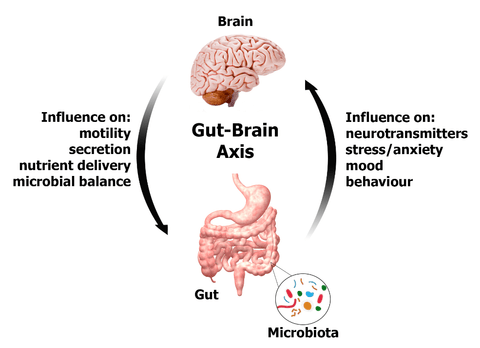
A growing body of evidence point toward the bidirectional gut microbiota-brain axis playing a role in mental health.

Most of this research is conducted on animals.

In this review the researchers summarise and comment upon recent studies evaluating the gut microbiome in mental health in humans.

Further support for the relevance of the bidirectional gut microbiota-brain communication in mood disorders has been presented, such as the effect of probiotics on brain connectivity and mental health outcomes and pregnancy related stress on gut microbiota in the newborn child.

However, the heterogeneity between studies precludes conclusions regarding differences in microbiota composition in mental disease and health and many of the studies are limited by a cross-sectional design, small sample sizes and multiple comparisons.

Thus, well-designed longitudinal studies with larger sample size, accounting for confounders are needed.

Reference

Jarbrink-Sehgal, E. & Andreasson, A. (2020) The gut microbiota and mental health in adults. Current Opinion in Neurobiology. 62, pp.102-114. doi: 10.1016/j.conb.2020.01.016. Epub 2020 Mar 9.

What does mental health have to do with well-being?

Research Paper Title

What does mental health have to do with well-being?

Background

Positive mental health involves not the absence of mental disorder but rather the presence of certain mental goods.

Institutions, practitioners, and theorists often identify positive mental health with well-being.

There are strong reasons, however, to keep the concepts of well-being and positive mental health separate.

Someone with high positive mental health can have low well-being, someone with high well-being can have low positive mental health, and well-being and positive mental health sometimes conflict.

But, while positive mental health and well-being are not identical, there is an informative conceptual connection between them.

Positive mental health usually contributes instrumentally to the living of a good human life, where a good human life includes (but is not limited to) well-being.

Reference

Keller, S. (2020) What does mental health have to do with well-being? Bioethics. 34(3), pp.228-234. doi: 10.1111/bioe.12702. Epub 2019 Nov 29.

A New Definition of Mental Health!

Research Paper Title

A proposed new definition of mental health.

Background

The authors propose a new approach to the definition of mental health, different than the definition proposed by the World Health Organisation, which is established around issues of person’s well-being and productivity.

It is supposed to reflect the complexity of human life experience.

Introduction

The definition of mental health proposed by the World Health Organization (WHO) is organised around a hedonic and eudaimonic perspective, in which a key role is assigned to person’s well-being and productivity. While regarding well-being as a desirable goal for many people, its inclusion in the definition of mental health raises concerns. According to Keyes, well-being includes emotional, psychological and social well-being, and involves positive feelings (e.g., happiness, satisfaction), positive attitudes towards own responsibilities and towards others, and positive functioning
(e.g., social integration, actualisation and coherence).

However, people in good mental health experience a wide range of emotions, such as sadness, anger or unhappiness; most adolescents are often unsatisfied, unhappy about present social organisation and may lack social coherence. Does this mean that they are not in good mental health? A person responsible for her/his family might feel desperate after being fired from his/her job, especially in a situation characterised by scarce occupational opportunities; should we question her/his mental health? Actually, raising the bar of mental health may create unrealistic expectations, encourage people
to mask most of their emotions while pretending constant happiness, and even favour their isolation when they feel sad, angry or worried.

Also the concept of positive functioning (“can work productively and fruitfully”), in line with the eudaimonic tradition, raises concerns, as it implies that a person at an age or in a physical or even political condition preventing her/him from working productively is not by definition in good mental health.

The definition of mental health is clearly influenced by the culture that defines it. However, as also advocated by Vaillant, an effort can be made to identify elements that have a universal importance for mental health, as for example, vitamins and the four basic food groups are universally given a key role in eating habits, in spite of cultural differences.

You can read the rest of the article here.

Reference

Galderisi, S., Heinz, A., Kastrup, M., Beezhold, J. & Sartorius, N. (2020) A proposed new definition of mental health. Psychiatria Polska. 51(3), pp.407-411. doi: 10.12740/PP/74145. Epub 2017 Jun 18.

Book: Sleep Medicine and Mental Health

Book Title:

Sleep Medicine and Mental Health – A Guide for Psychiatrists and Other Healthcare Professionals.

Author(s): Karim Sedky, Racha Nazir, and David Bennett (Editors).

Year: 2020.

Edition: First (1st).

Publisher: Springer.

Type(s): Hardcover and Kindle.

Synopsis:

Advances in sleep medicine research are improving our clinical work for individuals with sleep problems. The aim of this book is to educate psychiatrists and other mental health professionals about the importance of understanding sleep disorders, including their bidirectional relationship with psychiatric conditions.

This book consists of six major sections with seventeen chapters. It is led off by an introduction on the function of sleep, its neurophysiology, and types of sleep problems. Since insomnia represents a common and significant challenge for patients with psychiatric disorders, its clinical presentation and treatments are reviewed in the second section. Cognitive behavioural therapy for insomnia (CBT-I), mindfulness-based CBT, acceptance and commitment therapy (ACT), and the medication management of insomnia are reviewed.

A third section addresses sleep related breathing disorders. The pathology of sleep apnea, its treatments, and therapeutic modalities to address non-compliance with positive pressure ventilation are reviewed. Other sleep disorders such as hypersomnia, circadian rhythm disorders, movement disorders and parasomnias are discussed in the fourth section.

Since features of sleep disorders can vary by age, gender, and trauma history, a fifth section discusses the unique sleep problems associated with children, women, older adults, and veterans. The book concludes with a final section discussing how sleep disorders and psychiatric conditions overlap.

We hope this book highlights the importance of understanding and addressing comorbid sleep disorders among individuals with psychiatric conditions. We are confident that this book will be valuable in helping clinicians improve the management of sleep disorders in their clinical practice.