Can Acupressure Reduce Soldiers’ Anxiety in Stressful Situations?

Research Paper Title

Effects of Acupressure at the P6 and LI4 Points on the Anxiety Level of Soldiers in the Iranian Military.

Background

Military service is a stressful environment. Methods to reduce stress may result in the mental health promotion of military forces.

There are various methods for relieving anxiety. Acupressure is one of them.

Hence, this study was carried out to explore effects of acupressure at the P6 and LI4 acupressure points on the anxiety level of army soldiers.

Methods

A randomised double-blind design was undertaken. A total of 120 Iranian army soldiers were randomly assigned to three groups, namely P6, LI4 and control. The P6 and LI4 acupressure points are effective in lowering the anxiety level.

In the intervention groups, acupressure was applied at the P6 and LI4 points three times for 10 min at 30 min intervals. In the control group, the thumb pad, which is not an acupressure point, was pressed.

The anxiety level of the subjects was measured before the intervention and 30 min after the last intervention. The instruments included a demographics questionnaire and the State-Trait Anxiety Inventory.

Results

There was no significant difference between the three groups with respect to the anxiety level in the preintervention phase. However, the mean anxiety score in the P6 group decreased significantly from 53.35±9.7 to 49.02±9.3 (p=0.005).

The mean anxiety score in the LI4 group also decreased significantly from 53.37±8.39 to 45.47±8.16 (p<0.001).

In the control group, there was no significant difference between the preintervention and postintervention phases (p=0.16).

In the postintervention phase, the analysis of variance test showed a significant difference between the three groups in terms of the anxiety level (p=0.04).

Conclusions

Acupressure can reduce soldiers’ anxiety at the acupressure points, especially at the LI4 point.

It is recommended that this simple and cost-effective intervention be used to relieve soldiers’ anxiety in stressful situations.

Reference

Rarani, S.A., Rajai, N. & Sharififar, S. (2020) Effects of Acupressure at the P6 and LI4 Points on the Anxiety Level of Soldiers in the Iranian Military. BMJ Military Health. doi: 10.1136/jramc-2019-001332. Online ahead of print.

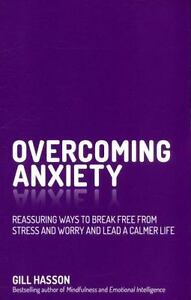
Book: Overcoming Anxiety

Book Title:

Overcoming Anxiety: Reassuring ways to break free from stress and worry and lead a calmer life.

Author(s): Gill Hasson and Tania Rodrigues.

Year: 2016.

Edition: First (1st).

Publisher: Audible Studios.

Type(s): Paperback, Audiobook, and Kindle.

Synopsis:

Understand, overcome, and break free from worry and anxiety.

Best-selling personal development author Gill Hasson is back, and this time she is here to help with something that affects all people at some point in their lives: anxiety.

Worries and anxieties are familiar to us all. Worrying can be helpful when it prompts you to take action and solve a problem, but unrelenting doubts, fears, and negative possibilities can dominate your mind, affecting your ability to manage your everyday life and well-being, your sleep and appetite, your social life, and your ability to concentrate.

But it does not need to be like this; there are ways that you can manage this spiral of unhelpful thoughts and difficult feelings. Overcoming Anxiety explains how to manage anxiety and stop it from taking over; it teaches you the skills you need to lead a more peaceful, stress-free life.

Overcoming Anxiety:

  • Provides practical strategies and techniques to manage your anxiety.
  • Discusses how to break free from negative cycles and move forward in a positive way.
  • Contains real-life examples from anxiety sufferers.
  • Explores what it takes to handle immediate anxiety events and longer term, low-level background anxiety and worry.

Mental Stress Tasks & the Prefrontal Cortex

Research Paper Title

Relationship Between Cerebral Blood Oxygenation and Electrical Activity During Mental Stress Tasks: Simultaneous Measurements of NIRS and EEG.

Background

The incidence of stress-induced psychological and somatic diseases has been increasing rapidly, and it is important to clarify the neurophysiological mechanisms of stress response in order to establish effective stress management methods.

The researchers previously reported that the prefrontal cortex (PFC) plays an important role in stress response.

Methods

In the present study, the researchers employed near-infrared spectroscopy (NIRS) and electroencephalography (EEG) to investigate the characteristics of PFC activity during mental arithmetic tasks.

A two-channel NIRS device was used to measure haemoglobin (Hb) concentration changes in the bilateral PFC during a mental arithmetic task (2 min) in normal adults.

Simultaneously, EEG was used to also measure bilateral PFC activity during the same task.

They evaluated concentration changes of oxy-Hb induced by the task while analysing α wave changes using power spectrum analysis.

Results

It was observed that oxy-Hb in the bilateral PFC increased significantly during the task (p < 0.05), while α wave power in the PFC decreased significantly (p < 0.01).

Conclusions

The present results indicate that mental stress tasks caused the activation of the bilateral PFC.

Simultaneous measurements of NIRS and EEG are useful for evaluating the neurophysiological mechanism of stress responses in the brain.

Reference

Nagasawa, Y., Ishida, M., Komuro, Y., Ushioda, S., Hu, L. & Sakatani, K. (2020) Relationship Between Cerebral Blood Oxygenation and Electrical Activity During Mental Stress Tasks: Simultaneous Measurements of NIRS and EEG. Advances in Experimental Medicine and Biology. 1232:99-104. doi: 10.1007/978-3-030-34461-0_14.

Examining Bicultural Stress & Well-being Processes among Adolescents

Research Paper Title

Disentangling relationships between bicultural stress and mental well-being among Latinx immigrant adolescents.

Background

The Acculturative Process and Context Framework (Ward & Geeraert, 2016) proposes that acculturative stressors influence psychological well-being over time.

In fact, extant literature has linked bicultural stress with psychological functioning; yet, no studies have explored the causal dominance of bicultural stress.

The purpose of the present study was to evaluate the directionality of prospective relations among bicultural stress and psychosocial functioning (i.e., depressive symptoms, hopefulness, and self-esteem) in Latinx immigrant adolescents across 5 waves.

Methods

There were 303 Latinx adolescents who were recruited for this study from Los Angeles and Miami and were assessed across 5 waves at 6-month intervals.

Adolescents were 14.50 years old on average (SD = .88) and 53.16% were male.

Adolescents reported living in the United States for 2.07 years on average (SD = 1.87). A Random-Intercept Cross-Lagged Panel Model (RI-CLPM) was used to examine the between- and within-person relations among bicultural stress, depressive symptoms, hopefulness, and self-esteem in a comprehensive model.

Results

The comprehensive RI-CLPM including bicultural stress, depressive symptoms, hopefulness, and self-esteem exhibited excellent model fit.

Between-person, trait-like relations among constructs ranged from small to large, as expected.

Within-person, cross-lagged estimates among constructs were overall inconsistent, with some evidence that, within individuals, self-esteem influences later hopefulness.

Conclusions

Findings from this study indicate that the RI-CLPM is an effective strategy to examine bicultural stress and well-being processes among adolescents.

There is a need for further research examining bicultural stress among Latinx immigrant youth, particularly within prevention and intervention studies.

Reference

Romero, A., Piña-Watson, B., Stevens, A.K., Schwartz, S.J., Unger, J.B., Zamboanga, B.L., Szapocznik, J., Lorenzo-Blanco, E., Cano, M,Á., Meca, A., Baezconde-Garbanati, L., Córdova, D., Villamar, J.A., Soto, D.W., Lizzi, K.M., Des Rosiers, S.E., Pattarroyo, M. & Oshri, A. (2020) Disentangling relationships between bicultural stress and mental well-being among Latinx immigrant adolescents. Journal of Consulting and Clinical Psychology. 88(2), pp.149-159. doi: 10.1037/ccp0000466.

Book: The Mind-Gut Connection

Book Title:

The Mind-Gut Connection – How the Hidden Conversation Within Our Bodies Impacts Our Mood, Our Choices, and Our Overall Health.

Author(s): Emeran Mayer (MD).

Year: 2016.

Edition: First.

Publisher: HarperWave.

Type(s): Hardcover and Kindle.

Synopsis:

Combining cutting-edge neuroscience with the latest discoveries on the human microbiome, a practical guide in the tradition of The Second Brain, and The Good Gut that conclusively demonstrates the inextricable, biological link between mind and the digestive system.

We have all experienced the connection between our mind and our gut – the decision we made because it “felt right”; the butterflies in our stomach before a big meeting; the anxious stomach rumbling we get when we are stressed out.

While the dialogue between the gut and the brain has been recognised by ancient healing traditions, including Ayurvedic and Chinese medicine, Western medicine has by and large failed to appreciate the complexity of how the brain, gut, and more recently, the gut microbiota – the microorganisms that live inside our digestive tract – communicate with one another.

In The Mind-Gut Connection, Dr. Emeran Mayer, professor of medicine and executive director of the UCLA Centre for Neurobiology of Stress, offers a revolutionary and provocative look at this developing science, teaching us how to harness the power of the mind-gut connection to take charge of our health and listen to the innate wisdom of our bodies.

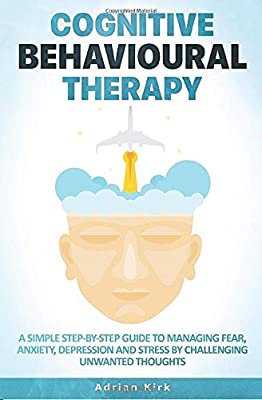
Book: Cognitive Behavioural Therapy

Book Title:

Cognitive Behavioural Therapy: A Simple Step-by-Step Guide to Managing Fear, Anxiety, Depression and Stress by Challenging Unwanted Thoughts.

Author(s): Adrian Kirk.

Year: 2019.

Edition: One.

Publisher: Independently Published.

Type(s): Paperback and Kindle.

Synopsis:

Do you want to significantly improve the way you behave around others by refining your thought patterns?

Do you want to be able to interpret life events from another person’s perspective to help you understand others?

This book will help you achieve those goals!

Many of us interprets information that we receive differently, whether it is at work or elsewhere. As a result, we end up having to deal with problems that others might not understand or even see. This is where Cognitive Behavioural Therapy comes in!

Inside this book, Cognitive Behavioural Therapy: A Simple step-by-step Guide to Managing Fear, Anxiety, Depression and Stress by Challenging Unwanted Thoughts, you will find new ideas and strategies to help you improve the way you approach problems, with chapters that include:

  • Understanding the root causes of your thought pattern.
  • Identifying and challenging your worst nightmares.
  • Setting realistic goals and how to stay on track.
  • Applying exercises to combat unwanted thought.
  • And much more…

This book is ideal for anyone who has never heard of cognitive behavioural therapy before, or for those who are not getting the most from the ones they are currently practising.

Whichever it is, Cognitive Behavioural Therapy: A Simple step-by-step Guide to Managing Fear, Anxiety, Depression and Stress by Challenging Unwanted Thoughts is the book which will provide a platform for success like no other!

Owning & Managing a Business Can be Hazardous to your Mental Health

1.0 Introduction

Owning and Managing a Business Can be Hazardous to your Mental Health.

This article provides an overview of business ownership in the context of mental health.

If you are one of the millions of small and medium business owners around the globe, you probably have a good idea of how tough (and sometimes lonely) it can be at the top of the business – and how owning and managing your own business can be hazardous to your mental health.

It is well-known that our mental health can deteriorate, for a variety of reasons, and, if left unchecked, can lead to mental health problems.

Although depression and anxiety are likely to be the most common issues an owner faces, it is important to remember that mental health symptoms and conditions come in many forms.

2.0 Why Be a Business Owner?

Many of us are drawn to small business because working for others provides its own stresses, for example, the feeling of lost control as others make decisions we may feel unable to influence.

Being a business owner offers a level of freedom and control that we may be unable to achieve as an employee.

3.0 Factors Affecting Mental Health in Owners

Although the symptoms of mental health conditions can be similar between people, the triggers can be very different.

There are a number of factors that could lead to a deterioration in a business owner’s mental health, including:

  • Excessive stress;
  • A toxic work environment;
  • Poor leadership;
  • Uncertainty;
  • Long hours;
  • A lack of sleep; and
  • So on.

These can lead to burnout which, in turn, can lead to mental health conditions such as anxiety and depression.

Increased competition in your particular market or industry means added pressure to perform and stand out from the crowd, as well as potentially making it more difficult to be financially successful. Business costs may also be rising, possibly faster than your ability to increase sales and revenue – meaning the bottom line is impacted, aka less profit.

Using a contemporaneous example, the business uncertainty surrounding Brexit, especially for export-orientated businesses, can have a profound impact on business planning and sales generation.

4.0 A Blur between Personal, Family & Work

Small business ownership, especially, can be tough because there are few support structures for owners.

As an owner, you are responsible for everything and the lines between personal and family pressures and work are blurred or even non-existent.

Finally, the financial pressures are very real, as it is the owner’s money at stake not a large company’s money.

5.0 I’m In Control!

Business owners may be reluctant to seek, ask or talk about any mental health issues they may be facing due to the need to be perceived as having everything under control.

This means that business owners can, effectively, end up in rather stressful jobs.

With this in mind, most employees will be unaware of the stress attached to owning a business and how challenging cashflow, for example, can be. When margins are tight, paying wages can be extremely stressful. There are real life examples where owners have paid staff wages through their credit cards or overdrafts to ensure their employees get paid – mainly due to a feeling of guilt and not wanting to let them down. It can be stressful knowing that your employee’s family relies on the wage you are paying their loved one.

There is also the stress on marriages, especially if a couple is in business together.

6.0 The Value of Mentors

Other business owners understand what you, as a business owner, are going through. They understand the impact that long hours, for example, can have on the owner’s well-being and their families.

A business mentor can assist by helping the owner find ways of being more effective with their time, among other things.

7.0 Addressing Mental Health Issues

It is imperative that you do not do nothing.

There are a number of things owners can do, at both at an individual and organisational level:

  • Know the risks to mental health and well-being in your business.
    • What are the triggers?
  • Talk about mental health and well-being.
    • This helps to normalise it.
  • Leaders in your business need to be on board.
    • They must send the message to all staff that the business takes mental health seriously.
    • Role model what good mental health looks like and what we do when someone needs our help.
  • Get some education around mental health.
    • The reason that myths and fear exist is because of lack of awareness and knowledge.
    • There are workshops, coaches and even online courses now which help plug this knowledge gap.
  • Have the conversation with your people.
    • Not saying anything to someone who is struggling is not the way to go.
    • Simply asking “Are you OK?” is a really good start and shows the person that you have noticed and do care.
  • Sleep, nutrition, relationships and exercise all correlate with mental health, so check in on your people to see how they are going with these areas.
    • For example, if someone tells you that they have not been sleeping for two months, that is going to take its toll and something needs to be done.
  • Know who to go to.
    • Have an accessible list of contacts that you can call on for a range of different mental health and well-being matters.

It is important to seek support from someone who:

  • Has received appropriate training;
  • Is a registered practitioner; and
  • Has frequent supervision.

8.0 Pursing Good Mental Health

In the pursuit of good mental health, it is important to:

  • Understand our stressors;
  • Name our stressors;
  • Admit they exist; and
  • Aim to avoid them.

If our stressors cannot be avoided, we should attempt to better manage them.

Finally, when possible, it is important as a business owner to make time and take personal care of yourself.

Treatment of Anxiety Disorders

When treating anxiety disorders, there are a number of things to consider:

  • Treatment of the cause if appropriate;
  • Psychotherapy;
  • Drug therapy; and/or
  • Treatment of other active disorders.

Accurate diagnosis is important because treatment varies from one anxiety disorder to another.

Additionally, anxiety disorders must be distinguished from anxiety that occurs in many other mental health disorders, which involve different treatment approaches.

If the cause is another medical disorder or a drug, medical professionals aim to correct the cause rather than treat the symptoms of anxiety.

Anxiety should subside after the physical disorder is treated or the drug has been stopped long enough for any withdrawal symptoms to abate.

If anxiety remains, anti-anxiety drugs or psychotherapy (such as behavioural therapy) is used.

For individuals who are dying, certain strong pain relievers, such as morphine, may relieve both pain and anxiety.

If an anxiety disorder is diagnosed, drug therapy or psychotherapy (such as behavioral therapy), alone or in combination, can significantly relieve the distress and dysfunction for most individuals.

Benzodiazepines (such as diazepam) are commonly prescribed for acute anxiety.

For many individuals, antidepressants, such as selective serotonin reuptake inhibitors (SSRIs), work as well for anxiety disorders as they do for depression.

Specific treatments depend on which anxiety disorder is diagnosed.

All of the anxiety disorders can occur along with other psychiatric conditions.

For example, anxiety disorders often occur along with an alcohol use disorder.

It is important to treat all of these conditions as soon as possible.

Treating the alcohol use disorder without treating the anxiety is unlikely to be effective since the individual may be using alcohol to treat the anxiety.

On the other hand, treating the anxiety without addressing the alcohol disorder may be unsuccessful because daily changes in the amount of alcohol in the blood can cause levels of anxiety to fluctuate.

Diagnosis of Anxiety Disorders

A diagnosis of anxiety disorder is via a medical professional’s evaluation, based on specific criteria.

Deciding when anxiety is severe enough to be considered a disorder can be complicated.

Individual ability to tolerate anxiety varies, and determining what constitutes abnormal anxiety can be difficult.

Medical professionals usually use the following specific established criteria:

  • Anxiety is very distressing.
  • Anxiety interferes with functioning.
  • Anxiety is long-lasting or keeps coming back

Medical professionals look for other disorders that may be causing anxiety, such as depression or a sleep disturbance.

They may also ask whether relatives have had similar symptoms, because anxiety disorders tend to run in families.

Medical professionals also do a physical examination. Blood and other tests may be done to check for other medical disorders that can cause anxiety.

Symptoms of Anxiety Disorders

Anxiety can arise suddenly, as in panic, or gradually over minutes, hours, or days.

Anxiety can last for any length of time, from a few seconds to years.

It ranges in intensity from barely noticeable qualms to a full-blown panic attack, which may cause shortness of breath, dizziness, an increased heart rate, and trembling (tremor).

Anxiety disorders can be so distressing and interfere so much with an individual’s life that they can lead to depression.

Individuals may develop a substance use disorder.

Individuals who have an anxiety disorder (except for certain very specific phobias, such as fear of spiders) are at least twice as likely to have depression as those without an anxiety disorder.

Sometimes individuals with depression develop an anxiety disorder.