Book: Hallucinations

Book Title:

Hallucinations

Author(s): Oliver Sacks.

Year: 2013.

Edition: First (1st).

Publisher: Picador.

Type(s): Hardcover, Paperback, Audiobook, and Kindle.

Synopsis:

Have you ever seen something that was not really there? Heard someone call your name in an empty house? Sensed someone following you and turned around to find nothing?

Hallucinations do not belong wholly to the insane. Much more commonly, they are linked to sensory deprivation, intoxication, illness, or injury. In some conditions, hallucinations can lead to religious epiphanies or even the feeling of leaving one’s own body. Humans have always sought such life-changing visions, and for thousands of years have used hallucinogenic compounds to achieve them.

In Hallucinations, with his usual elegance, curiosity, and compassion, Dr Oliver Sacks weaves together stories of his patients and of his own mind-altering experiences to illuminate what hallucinations tell us about the organisation and structure of our brains, how they have influenced every culture’s folklore and art, and why the potential for hallucination is present in us all, a vital part of the human condition.

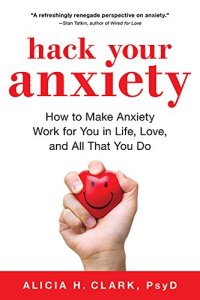
Book: Hack Your Anxiety

Book Title:

Hack Your Anxiety – How to Make Anxiety Work for You in Life, Love, and All That You Do.

Author(s): Alicia H. Clark, PsyD.

Year: 2018.

Edition: First (1st).

Publisher: Sourcebooks.

Type(s): Paperback and Audiobook.

Synopsis:

What if the way you are thinking about anxiety is off base? What if there is something about anxiety that can be used for you instead of against you?

In this revolutionary book, Dr. Alicia H. Clark recognises anxiety as an unsung hero in the path to success and well-being. Anxiety is a powerful motivating force that can be harnessed to create a better you, if you have got the right tools. Hack Your Anxiety provides a road map to approach anxiety in a new – and empowering – light so you can stop anxiety from stopping you.

In this book on anxiety, Clark will help you deal with:

  • Panic attacks;
  • Anxiety in your relationship;
  • Parenting and youth;
  • Work, money and successSocial support;
  • 10 myths and misconceptions; and
  • And more.

Weaving together modern neuroscience, case studies, interviews, and personal anecdotes, Hack Your Anxiety demonstrates how anxiety can be reclaimed as a potent force for living our best lives.

Book: Clinical Psychology

Book Title:

The Science and Practice of Clinical Psychology.

Author(s): Timothy J. Trull and Mitch J. Prinstein.

Year: 2012.

Edition: Eighth (8th).

Publisher: Cengage Learning.

Type(s): Hardcover and Paperback.

Synopsis:

In language your students will understand and enjoy reading, Trull/Prinstein’s THE SCIENCE AND PRACTICE OF CLINICAL PSYCHOLOGY, 8E, International Edition offers a concrete and well-rounded introduction to clinical psychology. A highly respected clinician and researcher, Dr. Trull examines the rigorous research training that clinicians receive, along with the empirically supported assessment methods and interventions that clinical psychologists must understand to be successful in the field. This new edition of Trull’s bestselling text covers cutting-edge trends, as well as offers enhanced coverage of culture, gender and diversity, and contemporary issues of health care. Written to inspire students thinking of pursuing careers in the field of clinical psychology, this text is a complete introduction.

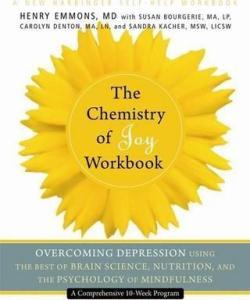
Book: The Chemistry of Joy Workbook

Book Title:

The Chemistry of Joy Workbook: Overcoming Depression Using the Best of Brain Science, Nutrition, and the Psychology of Mindfulness (A New Harbinger Self-Help Workbook).

Author(s): Henry Emmons MD, Susan Bourgerie MA LP, Carolyn Denton MA LN, and Sandra Kacher MSW LICSW.

Year: 2012.

Edition: First (1st).

Publisher: New Harbinger Publications, Illustrated Edition.

Type(s): Paperback and Kindle.

Synopsis:

Joy comes of its own accord when we are in our naturally healthy state. Every one of us has the capacity for joy, but many forces in our lives keep us from enjoying this contented and healthy state of being.

When our resilience is depleted, we find it difficult to adapt to change, face challenges, and deal with the ups and downs life brings. If your natural resilience has been consumed by stress or depression, you can reclaim it with the resilience-building programme in The Chemistry of Joy Workbook. Through the questionnaires, exercises, and practices in this guide, you will explore the nine pathways to restoring mood, regaining balance, and rediscovering your capacity for joy.

This book will help you reclaim your joy by teaching you to balance your body with proper nutrition and principles from ayurvedic medicine, how to settle your mind with mindfulness practices, and how to skillfully managing those “emotional tsunamis”. In addition, you will learn to find the right medications and supplements, tap into the wisdom, generosity, and openness that lie within, and build your self-acceptance and connection with others.

If you are ready to reclaim your life from stress, depression, or anxiety and find deep, proufound happiness, this book will be your guide.

Book: The Wellness Sense

Book Title:

The Wellness Sense – A Practical Guide to your Physical and Emotional Health based on Ayurvedic and Yogic Wisdom.

Author(s): Om Swami.

Year: 2015.

Edition: First (1ed).

Publisher: Black Lotus.

Type(s): Paperback, Audiobook, and Kindle.

Synopsis:

Why do certain foods harm some people and help others? How come the same weight loss program shows different results on different individuals? And, why do some people fall sick more often than others?

Answers to these questions and many more lie in Ayurveda where your body is not just looked upon a holder of flesh and bones but the finest vehicle of experiencing all pleasures and sorrows.

In Ayurveda, as in yoga and tantra, the health of an individual is not just the state of his physical body but an aggregate of the body, senses, mind and soul. Your body is a sacred space, it is the seat of your consciousness.

The Sanskrit word for health is svasthya; it means self-dependence or a sound state of the body and mind. If examined further, it means your natural state; sva means natural and sthya means state or place.

Ayurveda aims to restore your natural state, balance so you may be free of mental and physical afflictions.

More often than not, and certainly in adults, most physical disorders are the result of a repressed and bruised consciousness. Mental afflictions create diseases in the physical body and physical diseases, in turn, disturb the state of mind.

You can treat the disease in the physical body but that’s merely treating the symptom. It is not the permanent solution.

The modern system of medicine is mostly symptom driven. If I have a headache, it’ll tell me to take a pain-killer. Ayurveda does not believe in treating the symptoms. Its advocates understanding the patient and treating the cause of the symptom and not the symptom itself.

In order to do that, the ancient scriptures took a far more holistic approach to health by combining our lifestyle with our natural tendencies (which vary from one person to another). In other words, it understood that one man’s medicine could be another man’s poison.

Expounding on the esoteric aspects of the ancient wisdom, in simple terms, this book shows you how to take care of yourself better and how to lead a healthier life in our present world – a world where we have all the comforts yet we are restless.

We have organic breakfast on the table but no time to eat it, we have the comfiest mattress but little sleep. The key to wholesome living and your well-being is entirely in your hands. This book is a must read for those who are serious about their health.

What Does Mental Health Have to Do With Well-Being?

Research Paper Title

What Does Mental Health Have to Do With Well-Being?

Background

Positive mental health involves not the absence of mental disorder but rather the presence of certain mental goods.

Institutions, practitioners, and theorists often identify positive mental health with well-being.

There are strong reasons, however, to keep the concepts of well-being and positive mental health separate.

Someone with high positive mental health can have low well-being, someone with high well-being can have low positive mental health, and well-being and positive mental health sometimes conflict.

But, while positive mental health and well-being are not identical, there is an informative conceptual connection between them.

Positive mental health usually contributes instrumentally to the living of a good human life, where a good human life includes (but is not limited to) well-being.

Reference

Keller, S. (2020) What Does Mental Health Have to Do With Well-Being? Bioethics. 34(3), pp.228-234. doi: 10.1111/bioe.12702. Epub 2019 Nov 29.

Examining Bicultural Stress & Well-being Processes among Adolescents

Research Paper Title

Disentangling relationships between bicultural stress and mental well-being among Latinx immigrant adolescents.

Background

The Acculturative Process and Context Framework (Ward & Geeraert, 2016) proposes that acculturative stressors influence psychological well-being over time.

In fact, extant literature has linked bicultural stress with psychological functioning; yet, no studies have explored the causal dominance of bicultural stress.

The purpose of the present study was to evaluate the directionality of prospective relations among bicultural stress and psychosocial functioning (i.e., depressive symptoms, hopefulness, and self-esteem) in Latinx immigrant adolescents across 5 waves.

Methods

There were 303 Latinx adolescents who were recruited for this study from Los Angeles and Miami and were assessed across 5 waves at 6-month intervals.

Adolescents were 14.50 years old on average (SD = .88) and 53.16% were male.

Adolescents reported living in the United States for 2.07 years on average (SD = 1.87). A Random-Intercept Cross-Lagged Panel Model (RI-CLPM) was used to examine the between- and within-person relations among bicultural stress, depressive symptoms, hopefulness, and self-esteem in a comprehensive model.

Results

The comprehensive RI-CLPM including bicultural stress, depressive symptoms, hopefulness, and self-esteem exhibited excellent model fit.

Between-person, trait-like relations among constructs ranged from small to large, as expected.

Within-person, cross-lagged estimates among constructs were overall inconsistent, with some evidence that, within individuals, self-esteem influences later hopefulness.

Conclusions

Findings from this study indicate that the RI-CLPM is an effective strategy to examine bicultural stress and well-being processes among adolescents.

There is a need for further research examining bicultural stress among Latinx immigrant youth, particularly within prevention and intervention studies.

Reference

Romero, A., Piña-Watson, B., Stevens, A.K., Schwartz, S.J., Unger, J.B., Zamboanga, B.L., Szapocznik, J., Lorenzo-Blanco, E., Cano, M,Á., Meca, A., Baezconde-Garbanati, L., Córdova, D., Villamar, J.A., Soto, D.W., Lizzi, K.M., Des Rosiers, S.E., Pattarroyo, M. & Oshri, A. (2020) Disentangling relationships between bicultural stress and mental well-being among Latinx immigrant adolescents. Journal of Consulting and Clinical Psychology. 88(2), pp.149-159. doi: 10.1037/ccp0000466.

Book: Brian Changer: How Diet can Save your Mental Health

Book Title: Brain Changer: How diet can save your mental health – cutting-edge science from an expert.

Author(s): Professor Felice Jacka.

Year: 2019.

Edition: First.

Publisher: Yellow Kite.

Synopsis:

A combination of Professor Felice Jacka’s love of food and her own experience of depression and anxiety as a young woman led her to question whether what we put in our mouths everyday affects more than our waistline. Felice set out on a journey of discovery to change the status quo and uncover the truth through rigorous science. Beginning her PhD in 2005, she examined the association between women’s diets and their mental health, focusing on depression and anxiety. She soon discovered – you feel how you eat. It is Professor Jacka’s ground-breaking research that has now changed the way we think about mental and brain health in relation to diet.

Brain Changer explains how and why we should consider our food as the basis of our mental and brain health throughout our lives. It includes a selection of recipes and meal plans featuring ingredients beneficial to mental health. It also includes the simple, practical solutions we can use to help prevent mental health problems in the first place and offers strategies for treating these problems if they do arise.

This is not a diet book to help you on the weight scales. This is a guide to good habits to save your brain and to optimise your mental health through what you eat at every stage of life.

Book: Ayurveda 101

Book Title: Ayurveda 101: Ayurveda Basics for The Absolute Beginner [Achieve Natural Health and Well Being through Ayurveda].

Author(s): Advait.

Year: 2016.

Edition: First.

Publisher: CreateSpace Independent Publishing Platform.

Synopsis:

The Ultimate Beginner’s Guide to Ayurveda Have you been searching for proven natural remedies for Achieving Everlasting Health Holistically???

Has your search lead you to Ayurveda??? But, you don’t know where to start and are waiting to be initiated into the Amazing world of Ayurvedic Healing….Then this book is for you.

Discover :: Ayurveda 101 – Ayurveda Basics for The Absolute Beginner This Book will teach you everything you need to know about Ayurveda as a Beginner.

Here’s a sneak peak at the contents of the book; #Origin of Ayurveda #Ashtaanga Veda – The Eight branches of Ayurveda #Panch Maha Bhuta’s – The Five Fundamental Elements #The Three Dosha’s and Your Prakriti – Vata – Pitta – Kapha #The Tri-Dosha test for determining your Prakriti #Sapta-Dhatu – The Seven Body Tissues #Jathar-Agni – The Digestive Fire #Trayodasha Vega – The 13 Natural Urge’s.