Book: Dialogical Psychiatry: A Handbook For The Teaching And Practice Of Open Dialogue

Book Title:

Dialogical Psychiatry: A Handbook For The Teaching And Practice Of Open Dialogue.

Author(s): Russell Razzaque.

Year: 2019.

Edition: First (1st).

Publisher: Omni House Books.

Type(s): Paperback and Kindle.

Synopsis:

This book is written for all of those who are searching for a more client driven, compassionate and relational approach to mental health services. Consultant Psychiatrist, Professor Russell Razzaque combines his experience as practitioner, trainer and researcher of Open Dialogue in this accessible guide to a more dialogical psychiatry.

Both thoughtful and eminently practical, this book outlines the operational changes and the cultural shift needed to deliver this promising approach which could fundamentally transform the way mental health services are delivered. If you’ve ever wondered what the future of mental health services can, and hopefully will, look like I encourage you to read this book and be inspired to be part of that change.
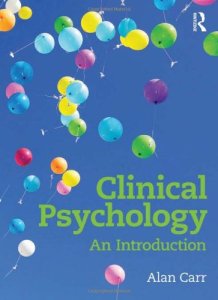
Book: Clinical Psychology: An Introduction

Book Title:

Clinical Psychology: An Introduction.

Author(s): Alan Carr.

Year: 2012.

Edition: First (1st).

Publisher: Routledge.

Type(s): Hardcover, Paperback, and Kindle.

Synopsis:

Clinical Psychology is for students studying clinical psychology as part of an undergraduate programme in psychology, nursing, sociology or social and behavioural sciences. Undergraduate students who wish to know if postgraduate study in clinical psychology would be of interest to them will find this book particularly useful.

The book will inform students about:

  • The profession of clinical psychology.
  • How to get onto a clinical psychology postgraduate training programme.
  • The way clinical psychologists work with children, adolescents and adults with common psychological problems.
  • The main models of practice used by clinical psychologists, and.
  • The scientific evidence for the effectiveness of psychological interventions.

There is a focus on both clinical case studies and relevant research, and the book includes summaries, revision questions, advice on further reading and a glossary of key terms, all of which make it an excellent student-friendly introduction to an exceptionally interesting subject.

Book: Cognitive Behavioural Therapy – A CBT Guide To Theories & Professional Practice

Book Title:

Cognitive Behavioural Therapy – A CBT Guide To Theories & Professional Practice.

Author(s): Bill Andrews.

Year: 2019.

Edition: First (1st).

Publisher: Independently Published.

Type(s): Paperback and Kindle.

Synopsis:

Here is finally a complete guide on CBT that is for the mental health practitioner as well as the clients. The guide is expansive on CBT with new ideas and suggestions for both clinical and non-professional settings.

The book’s main purpose will help you deliver:

  • Hacks for fast and effective treatments to most mental health issues.
  • A complete professional guide for mental health practitioners of all levels.
  • Detailed explanations and simple strategies anyone can help implement.
  • Effective uses including suggested therapies for most mental health disorders.

A well researched cognitive therapy guide explores powerful tools & suggested therapies, including everything you should know about CBT and it’s effective uses.

Both professional practitioner and even mental health novices can benefit from this power packed guide.

Finally you can deal with disorders in a fast and powerful way and we also include a complete range of important topics most other CBT guides omit like:

  • Changing Maladaptive Thinking.
  • Cognitive Behavioural Assessment Model Explanations.
  • Intervention & Treatment Analysis.
  • The Power of CBT: Removal of Erroneous Thinking.
  • Cognitive Distortion Made Whole.
  • Reducing Emotional Distress with CBT.
  • Modern CBT & the Latest Tools and More!

Book: Communication and Mental Health Disorders: Developing Theory, Growing Practice

Book Title:

Communication and Mental Health Disorders: Developing Theory, Growing Practice.

Author(s): Caroline Jagoe and Irene P. Walsh (Editor).

Year: 2019.

Edition: First (1st).

Publisher: J & R Press Ltd.

Type(s): Paperback.

Synopsis:

Communication and Mental Health Disorders: Developing Theory, Growing Practice brings together academics and expert clinicians to share their research, clinical expertise and insights in the presentation of current theory and evolving practice of language and communication work with children and adults with mental health disorders. The book presents recent developments in the field against a background of ‘recovery model’ principles and practices, moving beyond introductory texts published previously.

This book is a highly comprehensive text drawing on multidisciplinary perspectives in the care of people with communication difficulties and mental health disorders. It covers a broad range of areas, providing an extensive exploration of the unique and complex relationship between mental health and disorder, and language and communication, with specific emphasis on the application of theoretical developments to clinical practice. The focus is on recent and cutting-edge developments in the field, whilst acknowledging historical constructs and contexts. Service users’ perceptions are incorporated throughout alongside those of mental healthcare professionals (e.g., psychiatrists and speech and language therapists). A full section on advances in approaches to communication intervention presents the strides taken in the practical applications of innovative thinking in the area.

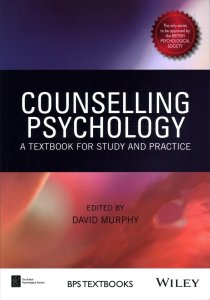
Book: Counselling Psychology: A Textbook for Study and Practice

Book Title:

Counselling Psychology: A Textbook for Study and Practice.

Author(s): David Murphy (Editor).

Year: 2017.

Edition: First (1st).

Publisher: Wiley-Blackwell.

Type(s): Hardcover, Paperback, and Kindle.

Synopsis:

An excellent resource for students at undergraduate or graduate level, Counselling Psychology: A Textbook for Study and Practice provides valuable insights into the key issues associated with theory and practice in this field. The contributors represent a diverse array of approaches, reflecting the rich diversity within the area, and care is taken to avoid favouring any one approach. The book begins with an overview of the historical and philosophical foundations of counselling psychology, before taking a detailed look at major therapeutic approaches and exploring issues associated with specific client populations, ethics, research design, and more. In particular, the text seeks to explain how counselling psychology differs from and informs other areas of contemporary applied psychology. The result is an engaging balance of the personal and academically rigorous, presented in a highly accessible format.

  • An authoritative introduction to and key issues involved with the theory and practice of counselling psychology for students and practitioners at all levels.
  • Considers all major approaches to psychotherapy including existential, person-centred experiential, psychodynamic, and cognitive-behavioural.
  • Explores issues commonly encountered when working with specific client groups including children, people with intellectual disabilities, and emergency trauma victims.

Book: Cracked: Why Psychiatry is Doing More Harm Than Good

Book Title:

Cracked: Why Psychiatry is Doing More Harm Than Good.

Author(s): James Davies

Year: 2014.

Edition: First (1st).

Publisher: Icon Books.

Type(s): Hardcover, Paperback, Audiobook, and Kindle.

Synopsis:

Controversial and powerful – a shocking indictment of the pseudo-science at the heart of modern psychiatry.

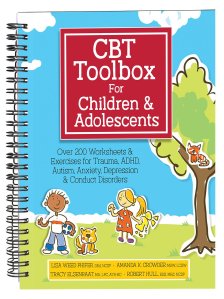
Book: CBT Toolbox for Children and Adolescents

Book Title:

CBT Toolbox for Children and Adolescents: Over 220 Worksheets & Exercises for Trauma, ADHD, Autism, Anxiety, Depression & Conduct Disorders.

Author(s): Lisa Phifer.

Year: 2017.

Edition: First (1st).

Publisher: PESI Publishing & Media.

Type(s): Spiral-bound, Paperback and Kindle.

Synopsis:

The CBT Toolbox for Children and Adolescents gives you the resources to help the children in your life handle their daily obstacles with ease. Inside this workbook you’ll find hundreds of worksheets, exercises, and activities to help treat:

  • Trauma.
  • ADHD.
  • Autism.
  • Anxiety.
  • Depression.
  • Conduct Disorders.

Written by clinicians and teachers with decades of experience working with kids, these practical and easy-to-use therapy tools are vital to teaching children how to cope with and overcome their deepest struggles. Step-by-step, you’ll see how the best strategies from cognitive behavioural therapy are adapted for children.

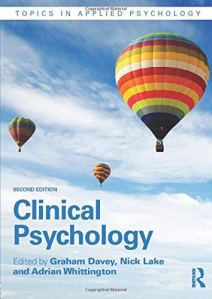
Book: Clinical Psychology

Book Title:

Clinical Psychology (Topics in Applied Psychology).

Author(s): Graham Davey, Nick Lake, and Adrian Whittington (Editors).

Year: 2015.

Edition: Second (2nd).

Publisher: Routledge.

Type(s): Hardcover, Paperback and Kindle.

Synopsis:

Clinical Psychology, Second Edition offers a comprehensive and an up-to-date introduction to the field. Written by clinical practitioners and researchers, as well as service users who add their personal stories, the book provides a broad and balanced view of contemporary clinical psychology.

This new edition has been extensively revised throughout and includes a new section on working with people with disabilities and physical health problems. It also includes a new chapter on career choices, and help and advice on how to move forward into clinical psychology training.

The book starts by explaining the core elements of what a clinical psychologist does and the principles of clinical practice, as well as outlining the role of the clinical psychologist within a healthcare team. It goes on to cover issues involved with working with children and families, adult mental health problems, working with people with disabilities and physical health problems, and the use of neuropsychology. The final part of the book explores current professional issues in clinical psychology, the history and future of clinical psychology, and career options.

The integrated and interactive approach, combined with the comprehensive coverage, make this book the ideal companion for undergraduate courses in clinical psychology, and anyone interested in a career in this field. It will also be of interest to anyone who wants to learn more about the work of a clinical psychologist, including other healthcare professionals.

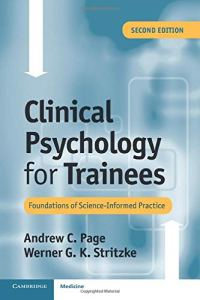
Book: Clinical Psychology for Trainees: Foundations of Science-Informed Practice

Book Title:

Clinical Psychology for Trainees: Foundations of Science-Informed Practice.

Author(s): Andrew C. Page and Werner G.K. Stritzke.

Year: 2014.

Edition: Second (2nd).

Publisher: Cambridge University Press.

Type(s): Paperback and Kindle.

Synopsis:

Thoroughly revised, and fully updated for DSM-5, the new edition of this practice-focused book guides clinical psychology trainees through a field which is rapidly evolving. Through real-world exploration of the scientist-practitioner model, the book helps readers to develop the core competencies required in an increasingly interdisciplinary healthcare environment. New chapters cover brief interventions, routine monitoring of treatment progress, and managing alliance ruptures. Practical skills such as interviewing, diagnosis, assessment, treatment and case management are discussed with emphasis on the question ‘how would a scientist-practitioner think and act?’ By demonstrating how an evidence-base can influence every decision that a clinical psychologist makes, the book equips trainees to deliver the accountable, efficient, effective client-centred service which is demanded of professionals in the modern integrated care setting. Essential reading for all those enrolled in, or contemplating, postgraduate studies in clinical psychology.

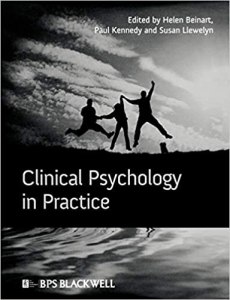
Book: Clinical Psychology in Practice

Book Title:

Clinical Psychology in Practice.

Author(s): Helen Beinart, Paul Kennedy, and Susan Llewelyn (Editors).

Year: 2009.

Edition: First (1st).

Publisher: WB.

Type(s): Paperback and eBook.

Synopsis:

Academic, clinical and research aspects are offered in collaboration with clinical practitioners, who provide the clinical experience to foster the development of competencies in Health and Social Care.

  • Provides a clear, authoritative and lively introduction to the practice of clinical psychology.
  • Explains succinctly the range of competencies which a psychologist is expected to possess, and how these can be applied in a variety of contexts.
  • Key issues covered include awareness of the social context, the need for responsive and flexible practice, and respect for diversity.
  • Examples and principles are provided which demonstrate the clinical psychologist in action, and explain why and how they work as they do.