Posts

On This Day … 04 November

People (Births)

  • 1882 – Constance Davey, Australian psychologist (d. 1963).
  • 1925 – Albert Bandura, Canadian-American psychologist and academic.

People (Deaths)

  • 1963 – Constance Davey, Australian psychologist (b. 1882).
  • 1981 – Jeanne Block, American psychologist (b. 1923).

Constance Davey

Constance Muriel Davey OBE (04 December 1882 to 04 December 1963) was an Australian psychologist who worked in the South Australian Department of Education, where she introduced the state’s first special education classes.

Career

Davey was born in 1882 in Nuriootpa, South Australia, to Emily Mary (née Roberts) and Stephen Henry Davey. She began teaching at a Port Adelaide private school in 1908 and at St Peter’s Collegiate Girls’ School in 1909. She attended the University of Adelaide as a part-time student, completing a BA in philosophy in 1915 and an MA in 1918. In 1921 she won a Catherine Helen Spence Memorial Scholarship which allowed her to undertake a doctorate at the University of London; her main area of research was “mental efficiency and deficiency” in children. She received her doctorate in 1924 and visited the United States and Canada to observe the teaching of intellectually disabled and delinquent children before returning to Australia.

In November 1924 Davey was hired as the first psychologist in the South Australian Department of Education, where she was tasked with examining and organising classes for “backward, retarded and problem” school students. She examined and performed intelligence tests on all educationally delayed children, and established South Australia’s first “opportunity class” for these children in 1925. She set up a course which educated teachers on working with intellectually disabled children in 1931. She began lecturing in psychology at the University of Adelaide in 1927, continuing until 1950, and in 1938 she helped to set up a new university course for training social workers. She resigned from the Department of Education in 1942, by which point there were 700 children in the opportunity classes she had introduced.

Davey was a member of the Women’s Non-Party Political Association for 30 years and served as the organisation’s president from 1943 to 1947. She became a fellow of the British Psychological Society in 1950 and was appointed an Officer of the Order of the British Empire (OBE) in 1955. In 1956 she published Children and Their Law-makers, a historical study of South Australian law as it pertained to children, which she had begun in 1945 as a senior research fellow at the University of Adelaide. Davey died of thyroid cancer on her 81st birthday in 1963.

Albert Bandura

Albert Bandura OC (born 04 December 1925) is a Canadian-American psychologist who is the David Starr Jordan Professor Emeritus of Social Science in Psychology at Stanford University.

Bandura has been responsible for contributions to the field of education and to several fields of psychology, including social cognitive theory, therapy, and personality psychology, and was also of influence in the transition between behaviourism and cognitive psychology. He is known as the originator of social learning theory (renamed the social cognitive theory) and the theoretical construct of self-efficacy, and is also responsible for the influential 1961 Bobo doll experiment. This Bobo doll experiment demonstrated the concept of observational learning.

A 2002 survey ranked Bandura as the fourth most-frequently cited psychologist of all time, behind B.F. Skinner, Sigmund Freud, and Jean Piaget, and as the most cited living one. Bandura is widely described as the greatest living psychologist, and as one of the most influential psychologists of all time.

Jeanne Block

Jeanne Lavonne Humphrey Block (17 July 1923 to 04 December 1981) was an American psychologist. She conducted research into sex-role socialization and, with her husband Jack Block, created a person-centred personality framework. Block was a fellow of the American Association for the Advancement of Science and conducted her research with the National Institute of Mental Health and the University of California, Berkeley. She was an active researcher when she was diagnosed with cancer in 1981.

Career

Block was born in 1923 in Tulsa, Oklahoma. She was raised in a small town in Oregon. After graduating from high school, she entered Oregon State University as a home economics major, but she was dissatisfied with her education. She joined SPARS, the women’s branch of the United States Coast Guard, in 1944. While serving in World War II, Block was badly burned and nearly died. She was treated with skin grafts, and she was able to return to military service until 1946.

After completing a psychology degree at Reed College, she attended graduate school at Stanford University. At Stanford, Block met two mentors, Ernest Hilgard and Maud Merrill James. Hilgard wrote a popular general psychology textbook and co-wrote a textbook on learning theories, and he became president of the American Psychological Association. James had been an associate of intelligence researcher Lewis Terman. Block also met her future husband and research collaborator, Jack Block, during her time at Stanford.

Pregnant at the time she finished her Ph.D. at Stanford in 1951, Block worked mostly part-time in the 1950s while she raised four children. Block and her husband created a person-centred personality theory that became popular among personality researchers. The theory examined personality in terms of two variables, ego-resiliency (the ability to respond flexibly to changing situations) and ego-control (the ability to suppress impulses). In 1963, she was awarded a National Institute of Mental Health fellowship and she moved with her family to Norway for a year. She joined the faculty at the University of California, Berkeley, in 1965.

In the 1970s, Block published an analysis the sex-role socialisation occurring in several groups of children in the United States and Northern Europe. Even across countries, boys were typically raised to be independent, high-achieving and unemotional, and girls were generally encouraged to express feelings, to foster close relationships and to pursue typical feminine ideals.

Block was made a fellow of the American Association for the Advancement of Science and received the Hofheimer Prize for outstanding psychiatric research from the American Psychological Association (APA). She was elected president of the APA Division of Developmental Psychology.

Block died on 04 December 1981, having been diagnosed with cancer earlier in the year.

What are the Current Trends in Therapy for Mental Disorders in Adolescence?

Research Paper Title

Mental disorders in adolescence: current trends in therapy.

Background

On the basis of the high prevalence for behavioural problems and mental disorders in adolescence and its persistence into adulthood it is tested whether and based upon which emphasis this topic is considered in the recent discussion on psychotherapy.

Therefore, a bibliometric analysis is given that summarizes the issue in the 2011 and 2012 volumes of representative German child and adolescent psychological and psychiatric journals.

The focus lies on conduct disorder, depression, deliberate self-harm, dissociative disorder, and post traumatic stress disorder.

Reference

de Vries, U., Lehmkuhl, G. & Petermann, F. (2020) Mental disorders in adolescence: current trends in therapy.

Book: Never Let Go: How to Parent Your Child Through Mental Illness

Book Title:

Never Let Go: How to Parent Your Child Through Mental Illness.

Author(s): Suzanne Alderson.

Year: 2020.

Edition: First (1st).

Publisher: Vermilion.

Type(s): Paperback, Audiobook, and Kindle.

Synopsis:

How to help your child with mental illness through partnering, not parenting.

Never Let Go is a supportive and practical guide for parents looking after a child with a mental illness. Suzanne Alderson understands the agonising struggle of bringing a child back from the brink of suicide, having spent three years supporting her own daughter through recovery. Her method of ‘partnering, not parenting’ has now helped thousands of other parents through her charity, Parenting Mental Health.

Combining Suzanne’s honest personal experience with expert input from psychologists, this book provides parents with the methods and knowledge they need to support, shield and strengthen their child as they progress towards recovery. Chapters include a background to the mental health epidemic, why a new method of parenting is crucial, how to change your thinking about mental health and practical advice on solutions to daily problems including accepting the new normal, dealing with others, and looking after yourself as well as your child.

Book: Understanding Mental Illness 6th edition: Mental Health Awareness For Self Teaching

Book Title:

Understanding Mental Illness 6th edition: Mental Health Awareness For Self Teaching.

Author(s): Marianne Richards.

Year: 2015.

Edition: Sixth (6th).

Publisher: CreateSpace Independent Publishing Platform.

Type(s): Paperback and Kindle.

Synopsis:

Understanding Mental Illness is the 6th edition of this professionally acclaimed book. This is a comprehensive, jargon-free guide aimed at volunteers, patients, carers, new professionals and students of mental health, as well as the keen general reader.

The book contains a wealth of information, including a history of mental illness from primitive times to the 20th century, with the often-bizarre treatments meted out in earlier times.

There is a selection of case histories on common disorders, together with ‘pen portraits’ illustrating ‘a day in the life of’ medical and non-medical therapists. Illustrated throughout with a glossary, suggested reading and index. The keen student is sure to find topics of interest for further study in this fascinating field.

Book: Psychiatric and Mental Health Nursing: The craft of caring

Book Title:

Psychiatric and Mental Health Nursing: The Craft of Caring.

Author(s): Mary Chambers.

Year: 2017.

Edition: Third (3rd).

Publisher: Routledge.

Type(s): Hardcover, Paperback and Kindle.

Synopsis:

This new edition of a bestselling, evidence-based textbook provides a comprehensive overview of psychiatric and mental health nursing. Keeping service users and their recovery at the centre of care, the holistic approach will help nurses to gain the tools and understanding required to work in this complex area.

Extensively updated for this new edition, the text looks at:

  • Aspects of mental health nursing: covering topics such as ethics, developing therapeutic relationships and supervision.
  • The foundations of mental health nursing: discussing diagnosis, assessment and risk.
  • Caring for those experiencing mental health distress: looking at wide range of troubles including anxiety, bipolar disorder, eating disorders and issues around sexuality and gender.
  • Care planning and approaches to therapeutic practice: exploring ideas, pathways and treatments such as recovery, CBT, psychodynamic therapies and psychopharmacology.
  • Services and support for those with mental health distress: covering topics such as collaborative work, involvement of service users and their families and carers, and a range of different mental healthcare settings.
  • Mental health nursing in the twenty-first century: highlighting emerging and future trends including the political landscape, physical health and health promotion, and technological advances.

This accessible and comprehensive textbook integrates service user perspectives throughout and includes student-friendly features such as learning outcomes, key points summaries, reflection points and further reading sections. It is an essential resource for all mental health nursing students, as well as an invaluable reference for practising nurses.

Book: Psychopharmacology: A mental health professional’s guide to commonly used medications (Nursing)

Book Title:

Psychopharmacology: A mental health professional’s guide to commonly used medications (Nursing).

Author(s): Herbert Mwebe.

Year: 2018.

Edition: First (1st).

Publisher: Critical Publishing Ltd.

Type(s): Paperback and Kindle.

Synopsis:

This jargon-free guide is suitable for all trainee and registered health professionals who require knowledge and understanding of drugs used in the treatment of mental health conditions for prescribing or administering purposes. A life-saving pocketbook that you can easily carry anywhere you go!

Introductory material provides a background on psychotropic drugs, the aetiology of mental illness, some of the commonly used drugs in practice and brief notes on common non-pharmacological interventional options. It also examines biochemical and neurodevelopmental theories and the link to the pathophysiology of mental illness as well as clinical decision making.

The central chapters of the book provide comprehensive coverage of all the major medications used in mental health. Each focuses on a specific class of drug, detailing the most commonly used medicines, including side effects, average doses, contra-indications and clinical management interventions that may be required. At the end of each chapter a series of review questions enable readers to review their learning, and theory is clearly related to practice throughout.

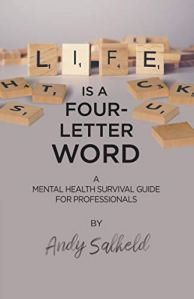
Book: Life Is a Four-Letter Word

Book Title:

Life Is a Four-Letter Word: A Mental Health Survival Guide for Professionals.

Author(s): Andy Salkeld.

Year: 2020.

Edition: First (1st), Illustrated Edition.

Publisher: Practical Inspiration Publishing.

Type(s): Paperback and Kindle.

Synopsis:

  • Do you ever feel you’re a fraud and about to be found out?
  • Do you feel an expectation to keep going and to be strong?
  • Do you ever think what it would be like to just… ‘STOP’?

You are not alone. Mental ill health impacts one in four people every year, and professionals in high-pressure jobs are especially vulnerable.

Life is a Four-Letter Word is a mental health survival guide for professionals, from a high-flying Big 4 accountant who has struggled with depression, anxiety, stress and suicidal thoughts and learned a lot along the way.

Andy now advocates positive action around mental health, working closely with business leaders across the UK to help them build mentally healthy cultures. He is a renowned speaker and writer on mental health, entrepreneurship and finance.

On This Day … 03 December

People (Births)

  • 1895 – Anna Freud, Austrian-English psychologist and psychoanalyst (d. 1982)
  • 1943 – J. Philippe Rushton, English-Canadian psychologist and academic (d. 2012).

People (Deaths)

  • 2008 – Robert Zajonc, Polish-American psychologist and author (b. 1923).
  • 2014 – Nathaniel Branden, Canadian-American psychotherapist and author (b. 1930).

Anna Freud

Anna Freud (03 December 1895 to 09 October 1982) was an Austrian-British psychoanalyst. She was born in Vienna, the sixth and youngest child of Sigmund Freud and Martha Bernays. She followed the path of her father and contributed to the field of psychoanalysis. Alongside Melanie Klein, she may be considered the founder of psychoanalytic child psychology.

Compared to her father, her work emphasized the importance of the ego and its normal “developmental lines” as well as incorporating a distinctive emphasis on collaborative work across a range of analytical and observational contexts.

After the Freud family were forced to leave Vienna in 1938 with the advent of the Nazi regime in Austria, she resumed her psychoanalytic practice and her pioneering work in child psychology in London, establishing the Hampstead Child Therapy Course and Clinic in 1952 (now the Anna Freud National Centre for Children and Families) as a centre for therapy, training and research work.

J. Philippe Rushton

John Philippe Rushton (03 December 1943 to 02 October 2012) was a Canadian psychologist and author. He taught at the University of Western Ontario and became known to the general public during the 1980s and 1990s for research on race and intelligence, race and crime, and other apparent racial variations. His book Race, Evolution, and Behaviour (1995) is about the application of r/K selection theory to humans.

Rushton’s work was heavily criticised by the scientific community for the questionable quality of its research, with many alleging that it was conducted under a racist agenda. From 2002 until his death, he served as the head of the Pioneer Fund, an organization founded in 1937 to promote Eugenics, which worked actively with the Nazi party to promote theories of racial superiority and inferiority, and has been described as racist and white supremacist and designated as a hate group by the Southern Poverty Law Centre. Rushton was a Fellow of the Canadian Psychological Association and a onetime Fellow of the John Simon Guggenheim Memorial Foundation.

Robert Zajonc

Robert Bolesław Zajonc (23 November 1923 to 03 December 2008) was a Polish-born American social psychologist who is known for his decades of work on a wide range of social and cognitive processes. One of his most important contributions to social psychology is the mere-exposure effect. Zajonc also conducted research in the areas of social facilitation, and theories of emotion, such as the affective neuroscience hypothesis.

He also made contributions to comparative psychology. He argued that studying the social behaviour of humans alongside the behaviour of other species, is essential to our understanding of the general laws of social behaviour. An example of his viewpoint is his work with cockroaches that demonstrated social facilitation, evidence that this phenomenon is displayed regardless of species.

A Review of General Psychology survey, published in 2002, ranked Zajonc as the 35th most cited psychologist of the 20th century.

He died of pancreatic cancer on 03 December 2008 in Palo Alto, California, and is survived by his wife Hazel Rose Markus and his four children.

Nathaniel Branden

Nathaniel Branden (born Nathan Blumenthal; 09 April 1930 to 03 December 2014) was a Canadian–American psychotherapist and writer known for his work in the psychology of self-esteem.

A former associate and romantic partner of Ayn Rand, Branden also played a prominent role in the 1960s in promoting Rand’s philosophy, Objectivism.

Rand and Branden split acrimoniously in 1968, after which Branden focused on developing his own psychological theories and modes of therapy.

Are Treatments for Common Mental Disorders also Effective for Functional Symptoms & Disorder?

Research Paper Title

Are treatments for common mental disorders also effective for functional symptoms and disorder?

Background

To consider whether the many types of treatments for mental disorders – both those specifically targeting illness mechanisms and nonspecific elements – are also effective in treating functional symptoms and syndromes. The paper discusses the need for well-organised care that emphasizes early treatment and recognition of more complex problems in primary and secondary medical care.

Methods

Evidence from a wide range of research and clinical experience is used to identify and illustrate general themes.

Results

Despite a limited evidence base, it is clear that both specific and nonspecific interventions that are effective with mental disorders are also effective in treating functional complaints. They are also helpful in the management of maladaptive reactions to physical disorders. Delivery is most effective as stepped care.

Conclusions

There is a particular need for more evidence on the effectiveness of the nonspecific elements of treatment and of their most appropriate delivery by non-specialists in general medical settings.

Experience with a variety of treatment methods will enhance our understanding of psychological and other etiological variables and thereby influence the development of improved definitions in Diagnostic and Statistical Manual of Mental Disorders-5(th) Edition.

It is argued that a main focus of review of somatoform disorder should be the resolution of conceptual problems.

Reference

Mayou, R. (2020) Are treatments for common mental disorders also effective for functional symptoms and disorder? Psychosomatic Medicine. 69(9), pp.876-880. doi: 10.1097/PSY.0b013e31815b00a6.

Book: Working Effectively with ‘Personality Disorder’

Book Title:

Working Effectively with ‘Personality Disorder’: Contemporary and Critical Approaches to Clinical and Organisational Practice.

Author(s): Jo Ramsden, Sharon Prince, and Julia Blazdell (Editors).

Year: 2020.

Edition: First (1st).

Publisher: Luminate.

Type(s): Paperback and Kindle.

Synopsis:

The history of personality disorder services is problematic to say the least. The very concept is under heavy fire, services are often expensive and ineffective, and many service users report feeling that they have been deceived, stigmatised or excluded. Yet while there are inevitably serious (and often destructive) relational challenges involved in the work, creative networks of learning do exist – professionals who are striving to provide progressive, compassionate services for and with this client group.

Working Effectively with Personality Disorder shares this knowledge, articulating an alternative way of working that acknowledges the contemporary debate around diagnosis, reveals flawed assumptions underlying current approaches, and argues for services that work more positively, more holistically and with a wider and more socially focused agenda.