Posts

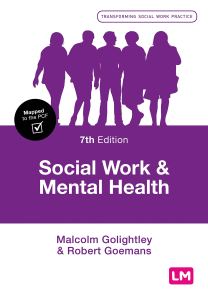
Book: Social Work and Mental Health

Book Title:

Social Work and Mental Health (Transforming Social Work Practice Series).

Author(s): Malcom Golightley and Robert Goemans.

Year: 2020.

Edition: Seventh (7th).

Publisher: Learning Matters.

Type(s): Hardcover, Paperback and Kindle.

Synopsis:

With 1 in 4 people experiencing a mental health problem in any given year, mental health is a more important part of social work training than ever before, and all successful social workers need to understand the core values, skills and knowledge that underpin excellent practice in a modern mental health system.

Written as an accessible introduction to the complex issues around mental health, this book has become a classic in its field. Law and policy are clearly outlined while the authors give space to important ethical considerations when working with the most vulnerable in society. There are clear links between policy, legislation and real life practice as well as a wealth of learning features.

Book: The Addiction Treatment Planner: Includes DSM-5 Updates

Book Title:

The Addiction Treatment Planner: Includes DSM-5 Updates.

Author(s): Robert R. Perkinson, Arthur E. Jongsma, and Timothy J. Bruce.

Year: 2014.

Edition: Fifth (5th).

Publisher: Wiley.

Type(s): Paperback and Kindle.

Synopsis:

The Addiction Treatment Planner, Fifth Edition provides all the elements necessary to quickly and easily develop formal treatment plans that satisfy the demands of HMOs, managed care companies, third-party payors, and state and federal agencies.

  • New edition features empirically supported, evidence-based treatment interventions.
  • Organised around 43 behaviourally based presenting problems, including substance use, eating disorders, schizoid traits, and others.
  • Over 1,000 prewritten treatment goals, objectives, and interventions – plus space to record your own treatment plan options.
  • Easy-to-use reference format helps locate treatment plan components by behavioural problem.
  • Includes a sample treatment plan that conforms to the requirements of most third-party payors and accrediting agencies including CARF, The Joint Commission (TJC), COA, and the NCQA.

Book: Oxford Handbook of Mental Health Nursing

Book Title:

Oxford Handbook of Mental Health Nursing (Oxford Handbooks in Nursing).

Author(s): Patrick Callaghan and Catherine Gamble (Editors).

Year: 2015.

Edition: Second (2nd).

Publisher: OUP Oxford.

Type(s): Flexibound (Illustrated) and Kindle.

Synopsis:

Fully revised for its second edition, the Oxford Handbook of Mental Health Nursing is the indispensable resource for all those caring for patients with mental health problems. Practical, concise, and up-to-date with the latest guidelines, practice, and initiatives, this handbook is designed to allow essential information to be quickly accessible to nurses in a busy clinical setting.

This Handbook contains expert guidance on all aspects of the nurses role. Written by experienced nurses and teachers, it will help you achieve the best possible results for your patients. Summaries of key sections of the mental health act are provided, as well as the mental capacity act, mental health legislation in Scotland and other UK countries. New material for the second edition includes expanded and revised information on leadership, medications, physical interventions, basic life support, religion, spirituality and faith, and working with older adults, as well as a brand new chapter on contemporary issues in mental health nursing.

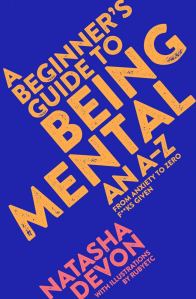
Book: A Beginner’s Guide to Being Mental: An A-Z

Book Title:

A Beginner’s Guide to Being Mental: An A-Z.

Author(s): Natasha Devon.

Year: 2018.

Edition: First (1st), Main Market Edition.

Publisher: Blue Bird.

Type(s): Paperback, Audiobook and Kindle.

Synopsis:

‘Am I normal?’
‘What’s an anxiety disorder?’
‘Does therapy work?’

These are just a few of the questions Natasha Devon is asked as she travels the UK campaigning for better mental health awareness and provision. Here, Natasha calls upon experts in the fields of psychology, neuroscience and anthropology to debunk and demystify the full spectrum of mental health. From A (Anxiety) to Z (Zero F**ks Given – or the art of having high self-esteem) via everything from body image and gender to differentiating ‘sadness’ from ‘depression’.

Statistically, one in three of us will experience symptoms of a mental illness during our lifetimes. Yet all of us have a brain, and so we ALL have mental health – regardless of age, sexuality, race or background. The past few years have seen an explosion in awareness, yet it seems there is still widespread confusion. A Beginner’s Guide to Being Mental is for anyone who wants to have this essential conversation, written as only Natasha – with her combination of expertise, personal experience and humour – knows how.

On This Day … 02 December

People (Deaths)

  • 1957 – Manfred Sakel, Ukrainian-American neurophysiologist and psychiatrist (b. 1902).
  • 1986 – John Curtis Gowan, American psychologist and academic (b. 1912).

Manfred Sakel

Manfred Joshua Sakel (06 June 1900 to 02 December 1957) was an Austrian-Jewish (later Austrian-American) neurophysiologist and psychiatrist, credited with developing insulin shock therapy in 1927.

Sakel was born in Nadvirna (Nadwórna), in the former Austria-Hungary Empire (now Ukraine), which was part of Poland between the world wars. Sakel studied Medicine at the University of Vienna from 1919 to 1925, specialising in neurology and neuropsychiatry. From 1927 until 1933 Sakel worked in hospitals in Berlin. In 1933 he became a researcher at the University of Vienna’s Neuropsychiatric Clinic. In 1936, after receiving an invitation from Frederick Parsons, the state commissioner of mental hygiene, he chose to emigrate from Austria to the United States of America. In the US, he became an attending physician and researcher at the Harlem Valley State Hospital.

Dr. Sakel was the developer of insulin shock therapy from 1927 while a young doctor in Vienna, starting to practice it in 1933. It would become widely used on individuals with schizophrenia and other mental patients. He noted that insulin-induced coma and convulsions, due to the low level of glucose attained in the blood (hypoglycaemic crisis), had a short-term appearance of changing the mental state of drug addicts and psychotics, sometimes dramatically so. He reported that up to 88% of his patients improved with insulin shock therapy, but most other people reported more mixed results and it was eventually shown that patient selection had been biased and that it did not really have any specific benefits and had many risks, adverse effects and fatalities. However, his method became widely applied for many years in mental institutions worldwide. In the US and other countries it was gradually dropped after the introduction of the electroconvulsive therapy in the 1940s and the first neuroleptics in the 1950s.

Dr. Sakel died from a heart attack on 02 December 1957, in New York City, NY, US.

John Curtis Gowan

John Curtis Gowan (21 May 1912 to 02 December 1986) was a psychologist who studied, along with E. Paul Torrance, the development of creative capabilities in children and gifted populations.

Graduating from Thayer Academy, Braintree, Massachusetts, in 1929, John Gowan was only 17 when he entered Harvard University, earning his undergraduate degree four years later. A master’s degree in mathematics followed; he then moved to Culver, Indiana, where he was employed as a counsellor and mathematics teacher at Culver Military Academy from 1941 to 1952. Earning a doctorate from UCLA, he became a member of the founding faculty at the California State University at Northridge, where he taught as a professor of Educational Psychology from 1953 until 1975, when he retired with emeritus status.

Dr. Gowan became interested in gifted children after the Russians gained superiority in space with the 1957 launch of Sputnik. He formed the National Association for Gifted Children the following year. He was the group’s executive director and president from 1975 to 1979 and over the years wrote more than 100 articles and fourteen books on gifted children, teacher evaluation, child development, and creativity.

While at Northridge, he developed a program to train campus counsellors, was nominated in 1973 as outstanding professor, and had been a counsellor, researcher, Fulbright lecturer, and visiting professor at various schools including the University of Singapore, the University of Canterbury in Christchurch, New Zealand, the University of Hawaii, and Connecticut State College. He was a fellow of the American Psychological Association and was also a colleague of the Creative Education Foundation.

Besides his work in Educational Psychology as specifically related to gifted children, he also had an interest in psychic (or psychedelic) phenomena as it relates to human creativity. His work in this area was inspired by the writings of Aldous Huxley and Carl Jung. Based on his work in creativity and with gifted children, Dr. Gowan developed a model of mental development that derived from the work of Jean Piaget and Erik Erikson, but also included adult development beyond the ordinary adult successes of career and family building, extending into the emergence and stabilisation of extraordinary development and mystical states of consciousness. He described the entire spectrum of available states in his classic Trance, Art, & Creativity (1975), with its different modalities of spiritual and aesthetic expression. He also devised a test for self-actualisation, (as defined by Abraham Maslow), called the Northridge Developmental Scale.

Is Neuroanalysis a Useful Method for Brain-Related Neuroscientific Diagnosis of Mental Disorders?

Research Paper Title

Neuroanalysis: a method for brain-related neuroscientific diagnosis of mental disorders.

Background

As an Ancient Chinese proverb says “The beginning of wisdom is to call things by their right names” thus we must start calling mental disorders by the names of their underlying brain disturbances. Without knowledge of the causes of mental disorders, their cures will remain elusive.

Methods

Neuroanalysis is a literature-based re-conceptualisation of mental disorders as disturbances of brain organisation. Psychosis and schizophrenia can be re-conceptualised as disturbances to connectivity and hierarchical dynamics in the brain; mood disorders can be re-conceptualised as disturbances to optimization dynamics and free energy in the brain, and finally personality disorders can be re-conceptualised as disordered default-mode networks in the brain.

Results and Conclusions

Knowledge and awareness of the disease algorithms of mental disorders will become critical because powerful technologies for controlling brain activity are developing and becoming available. The time will soon come when psychiatrists will be asked to define the exact ‘algorithms’ of disturbances in their psychiatric patients. Neuroanalysis can be a starting point for the response to that challenge.

Reference

Peled, A. (2020) Neuroanalysis: a method for brain-related neuroscientific diagnosis of mental disorders. Medical Hypotheses. 78(5), pp.636-640. doi: 10.1016/j.mehy.2012.01.043. Epub 2012 Feb 18.

Book: Boys Don’t Cry

Book Title:

Boys Don’t Cry: Why I hid my depression and why men need to talk about their mental health.

Author(s): Tim Grayburn.

Year: 2018.

Edition: First (1st).

Publisher: Hodder & Stoughton.

Type(s): Hardcover, Paperback, Audiobook and Kindle.

Synopsis:

For nearly a decade Tim kept his depression secret. It made him feel so weak and shameful he thought it would destroy his whole life if anyone found out. But an unexpected discovery by a loved one forced him to confront his illness and realise there was strength to be found in sharing his story with others. When he finally opened up to the world about what he was going through he discovered he was not alone.

Boys Don’t Cry is a book that speaks against the stigma that makes men feel like they are less-than for struggling, making sense of depression and anxiety for people who might not recognise those feelings in themselves or others. It is a brutally honest, sometimes heart-breaking (and sometimes funny) tale about what it really takes to be a ‘real man’, written by one who decided that he wanted to change the status quo by no longer being silent.

Book: The Nurse’s Guide to Mental Health Medicines

Book Title:

The Nurse’s Guide to Mental Health Medicines.

Author(s): Liz Holland.

Year: 2018.

Edition: First (1st).

Publisher: SAGE Publications Ltd.

Type(s): Hardcover, Paperback and Kindle.

Synopsis:

The Nurse’s Guide to Mental Health Medicines is an invaluable, pocket sized guide to a complex subject. Each chapter provides a short and easy-to-read overview of the different drug types used in mental health nursing, focusses only on the need to know information and the associated risks and side effects. The chapters also provide a short medicines list that gives you fast facts relating to the most common drugs used in practice.

Key features:

  • Simple layout with clear tables putting the facts at your fingertips.
  • Written by nurses for nurses providing the perfect amount of detail for the busy student or practitioner.
  • Clear and simple language combined with real world case studies to cut through the jargon and terminology.

Book: Breaking the Barriers

Book Title:

Breaking the Barriers: Early Intervention to Mental Health Issues.

Author(s): Lade Hephzibah Olugbemi.

Year: 2020.

Edition: First (1st).

Publisher: Independently Published.

Type(s): Paperback and Kindle.

Synopsis:

“If you don’t know what your barriers are, it’s impossible to figure out how to tear them down.” – John Manning, author of The Disciplined Leader.

This is true about mental health in the community. Barriers to information and understanding have affected people with mental health issues, as well as their friends, work colleagues and family members. This book seeks to shed light on the many factors that causes barriers to preventing mental health problems. It demystifies the various issues surrounding mental health, especially within the Black, Asian and Minority Ethnic (BAME) communities. It also explores the various factors that trigger mental illness, the role of the media, religion and culture in complicating the barriers.

By reading Breaking The Barriers, you will become more aware of the various issues around mental health, and better equipped to overcoming the barriers.

Book: The Maudsley Prescribing Guidelines in Psychiatry

Book Title:

The Maudsley Prescribing Guidelines in Psychiatry (The Maudsley Prescribing Guidelines Series).

Author(s): David M. Taylor, Thomas R.E. Barnes, and Allan H. Young.

Year: 2018.

Edition: Thirteenth (13th).

Publisher: Wiley-Blackwall.

Type(s): Paperback and Kindle.

Synopsis:

The revised 13th edition of the essential reference for the prescribing of drugs for patients with mental health disorders.

The revised and updated 13th edition of The Maudsley Prescribing Guidelines in Psychiatry provides up-to-date information, expert guidance on prescribing practice in mental health, including drug choice, treatment of adverse effects and how to augment or switch medications.

The text covers a wide range of topics including pharmacological interventions for schizophrenia, bipolar disorder, depression and anxiety, and many other less common conditions. There is advice on prescribing in children and adolescents, in substance misuse and in special patient groups. This world-renowned guide has been written in concise terms by an expert team of psychiatrists and specialist pharmacists.

The Guidelines help with complex prescribing problems and include information on prescribing psychotropic medications outside their licensed indications as well as potential interactions with other medications and substances such as alcohol, tobacco and caffeine. In addition, each of the book’s 165 sections features a full reference list so that evidence on which guidance is based can be readily accessed.

This important text: Is the world’s leading clinical resource for evidence-based prescribing in day-to-day clinical practice and for formulating prescribing policy Includes referenced information on topics such as transferring from one medication to another, prescribing psychotropic medications during pregnancy or breastfeeding, and treating patients with comorbid physical conditions, including impaired renal or hepatic function. Presents guidance on complex clinical problems that may not be encountered routinely Written for psychiatrists, neuropharmacologists, pharmacists and clinical psychologists as well as nurses and medical trainees, The Maudsley Prescribing Guidelines in Psychiatry are the established reference source for ensuring the safe and effective use of medications for patients presenting with mental health problems.