Posts

Reviewing Sleep & Mental Disorders in Childhood & Adolescence

Research Paper Title

Review: Sleep and mental disorders in childhood and adolescence.

Background

Sleep problems and disorders are common in childhood and adolescence.

This review aims to throw light on the relationship between sleep problems and mental disorders in childhood and adolescence.

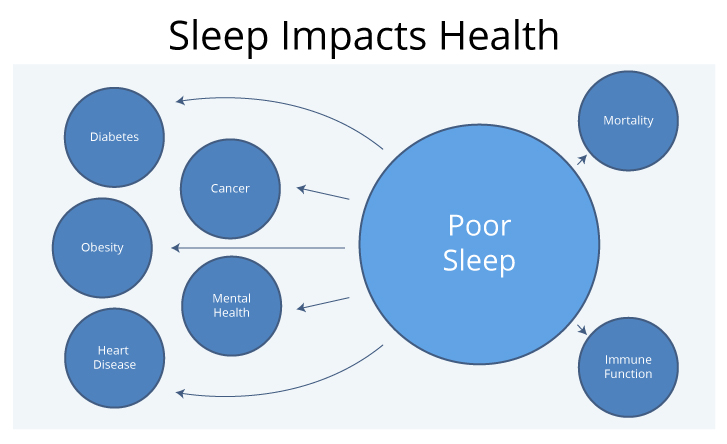
Sleep problems and disorders appear to be risk factors for mental disorders as comorbidities, as symptoms, and as effects of mental disorders.

Frequently, there is an interaction between sleep behaviour and psychopathology so that sleep problems contribute to the intensity and maintenance of mental disorders.

This bidirectional association is observed in early childhood as well as in school-aged children and in adolescents.

Many studies show that this association has a long-term nature beyond child development.

Both environmental and genetic factors seem to play a role in the development and maintenance of the relationship between sleep problems and mental disorders.

Various research articles show that treatment of mental disorders and treatment of sleep disorders influence each other in a positive way.

Therefore, it is strongly advised to consider sleep problems in diagnosis and treatment but also in prevention of mental disorders.

Reference

Schnatschmidt, M. & Schlarb, A. (2020) Review: Sleep and mental disorders in childhood and adolescence. Zeitschrift fur Kinder- und Jugendpsychiatrie und Psychotherapie. 46(5), pp.368-381. doi: 10.1024/1422-4917/a000605. Epub 2018 Jul 27.

Book: Design for Wellbeing

Book Title:

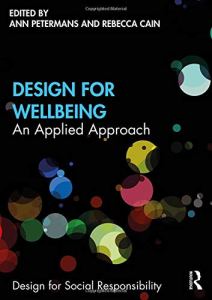
Design for Wellbeing – An Applied Approach.

Author(s): Ann Petermans and Rebecca Cain (Editors).

Year: 2019.

Edition: First (1st).

Publisher: Routledge.

Type(s): Hardcover and Kindle.

Synopsis:

Design for Wellbeing charts the development and application of design research to improve the personal and societal wellbeing and happiness of people. It draws together contributions from internationally leading academics and designers to demonstrate the latest thinking and research on the design of products, technologies, environments, services and experiences for wellbeing.

  • Part I starts by conceptualising wellbeing and takes an in-depth look at the rise of the design for wellbeing movement.
  • Part II then goes on to demonstrate design for wellbeing in practice through a broad range of domains from products and environments to services. Among others, we see emerging trends in the design of interiors and urban spaces to support wellbeing, designing to enable and support connectedness and social interaction, and designing for behaviour change to tackle unhealthy eating behaviour in children. Significantly, the body of work on subjective wellbeing, design for happiness, is increasing, and several case studies are provided on this, demonstrating how design can contribute to support the wellbeing of people.
  • Part III provides practical guidance for designing for wellbeing through a range of examples of tools, methods and approaches, which are highly user-centric, participatory, critical and speculative.
  • Finally, the book concludes in Part IV with a look at future challenges for design for wellbeing.

This book provides students, researchers and practitioners with a detailed assessment of design for wellbeing, taking a distinctive global approach to design practice and theory in context. Design for Wellbeing concerns designers and organisations but also defines its broader contribution to society, culture and economy.

Book: Cold War Freud

Book Title:

Cold War Freud – Psychoanalysis in an Age of Catastrophes.

Author(s): Dagmar Herzog.

Year: 2016.

Edition: First (1st).

Publisher: Cambridge University Press.

Type(s): Hardcover, Paperback, and Kindle.

Synopsis:

In Cold War Freud Dagmar Herzog uncovers the astonishing array of concepts of human selfhood which circulated across the globe in the aftermath of World War II.

Against the backdrop of Nazism and the Holocaust, the sexual revolution, feminism, gay rights, and anticolonial and antiwar activism, she charts the heated battles which raged over Freud’s legacy.

From the postwar US to Europe and Latin America, she reveals how competing theories of desire, anxiety, aggression, guilt, trauma and pleasure emerged and were then transformed to serve both conservative and subversive ends in a fundamental rethinking of the very nature of the human self and its motivations.

Her findings shed new light on psychoanalysis’ enduring contribution to the enigma of the relationship between nature and culture, and the ways in which social contexts enter into and shape the innermost recesses of individual psyches.

On This Day … 11 November

People (Births)

  • 1891 – Grunya Sukhareva, Ukrainian-Russian psychiatrist and university lecturer (d. 1981).

People (Deaths)

  • 2002 – Frances Ames, South African neurologist, psychiatrist, and human rights activist (b. 1920).

Grunya Sukhareva

Grunya Efimovna Sukhareva (11 November 1891 to 26 April 1981) was a Soviet child psychiatrist. She was the first to publish a detailed description of autistic symptoms in 1925. The original paper was in Russian and published in German a year later. Sula Wolff translated it in 1996 for the English-speaking world.

She initially used the term “schizoid psychopathy”, “schizoid” meaning “eccentric” at the time, but later replaced it with “autistic (pathological avoidant) psychopathy” to describe the clinical picture of autism. The article was created almost two decades before the case reports of Hans Asperger and Leo Kanner, which were published while Sukhareva’s pioneering work remained unnoticed. This is possibly because of various political and language barriers at the time. Her name was transliterated as “Ssucharewa” when her papers appeared in Germany, and the autism researcher Hans Asperger likely chose not to cite her work, due to his affiliation with the Nazi Party and her Jewish heritage.

Biography

Sukhareva was born in Kiev to the Jewish family of Chaim Faitelevich and Rachil Iosifovna Sukhareva. Between 1917 and 1921, she worked in a psychiatric hospital in Kiev. From 1921, she worked in Moscow, and from 1933 to 1935 she was leading the department of Psychiatry in Kharkov University (Kharkov Psychoneurological Institute).

Sukhareva studied autistic children, and described them in a way which has been compared to the modern description of autism in the DSM V. She helped open schools for autistic children where they participated in multiple activities, such as gymnastics, drawing, and woodwork.

In 1935, Sukhareva founded a Faculty of Pediatric Psychiatry in the Central Institute of Postgraduate Medical Education. In 1938, she led a clinic of childhood psychosis under the Russian SFSR Ministry of Agriculture and Food. For many years, she worked as a councillor and leader of the Psychiatric Hospital of Kashchenko in Moscow.

Sukhareva believed that for personality disorders to appear in children and teenagers, a significant social factor was required. Some of the factors she discussed for personality disorders were a poor family environment and societal structure. She was a pioneer in using the method of suggestion, and fought for children’s rights, stating that difficult children should not be sent to labour camps, but to medical institutions. She also studied PTSD from war injuries sustained by children.

By order of the Moscow Department of Health, the Moscow Scientific and Practical Centre for Mental Health of Children and Adolescents was named after Sukhareva, with the prefix G.E. Sukhareva appended to the front. The centre is the leading specialised medical institution for the treatment of suicidal states in children and adolescents under 18 years of age.

Frances Ames

Frances Rix Ames (20 April 1920 to 11 November 2002) was a South African neurologist, psychiatrist, and human rights activist, best known for leading the medical ethics inquiry into the death of anti-apartheid activist Steve Biko, who died from medical neglect after being tortured in police custody. When the South African Medical and Dental Council (SAMDC) declined to discipline the chief district surgeon and his assistant who treated Biko, Ames and a group of five academics and physicians raised funds and fought an eight-year legal battle against the medical establishment. Ames risked her personal safety and academic career in her pursuit of justice, taking the dispute to the South African Supreme Court, where she eventually won the case in 1985.

Born in Pretoria and raised in poverty in Cape Town, Ames became the first woman to receive a Doctor of Medicine degree from the University of Cape Town in 1964. Ames studied the effects of cannabis on the brain and published several articles on the subject. Seeing the therapeutic benefits of cannabis on patients in her own hospital, she became an early proponent of legalization for medicinal use. She headed the neurology department at Groote Schuur Hospital before retiring in 1985, but continued to lecture at Valkenberg and Alexandra Hospital. After apartheid was dismantled in 1994, Ames testified at the Truth and Reconciliation Commission about her work on the “Biko doctors” medical ethics inquiry. In 1999, Nelson Mandela awarded Ames the Star of South Africa, the country’s highest civilian award, in recognition of her work on behalf of human rights.

Early Life

Ames was born at Voortrekkerhoogte in Pretoria, South Africa, on 20 April 1920, to Frank and Georgina Ames, the second of three daughters. Her mother, who was raised in a Boer concentration camp by Ames’ grandmother, a nurse in the Second Boer War, was also a nurse. Ames never knew her father, who left her mother alone to raise three daughters in poverty. With her mother unable to care for her family, Ames spent part of her childhood in a Catholic orphanage where she was stricken with typhoid fever. Her mother later rejoined the family and moved them to Cape Town, where Ames attended the Rustenburg School for Girls. She enrolled at the University of Cape Town (UCT) medical school where she received her MBChB degree in 1942.

Medical Career

In Cape Town, Ames interned at Groote Schuur Hospital; she also worked in the Transkei region as a general practitioner. She earned her MD degree in 1964 from UCT, the first woman to do so. Ames became head of the neurology department at Groote Schuur Hospital in 1976. She was made an associate professor in 1978. Ames retired in 1985, but continued to work part-time at both Valkenberg and Alexandra Hospital as a lecturer in the UCT Psychiatry and Mental Health departments. In 1997, UCT made Ames an associate professor emeritus of neurology; she received an honorary doctorate in medicine from UCT in 2001. According to Pat Sidley of the British Medical Journal, Ames “was never made a full professor, and believed that this was because she was a woman.”

Cannabis Research

Ames studied the effects of cannabis in 1958, publishing her work in The British Journal of Psychiatry as “A clinical and metabolic study of acute intoxication with Cannabis sativa and its role in the model psychoses”. Her work is cited extensively throughout the cannabis literature. She opposed the War on Drugs and was a proponent of the therapeutic benefits of cannabis, particularly for people with multiple sclerosis (MS). Ames observed first-hand how cannabis (known as dagga in South Africa) relieved spasm in MS patients and helped paraplegics in the spinal injuries ward of her hospital. She continued to study the effects of cannabis in the 1990s, publishing several articles about cannabis-induced euphoria and the effects of cannabis on the brain.

Death

Ames struggled with leukaemia for some time. Before her death, she told an interviewer, “I shall go on until I drop.” She continued to work for UCT as a part-time lecturer at Valkenberg Hospital until six weeks before she died at home in Rondebosch on 11 November 2002. Representing UCT’s psychiatry department, Greg McCarthy gave the eulogy at the funeral. Ames was cremated, and according to her wishes, her ashes were combined with hemp seed and dispersed outside of Valkenberg Hospital where her memorial service was held.

Is there a Link between Maternal Depression & Child Mental Health?

Research Paper Title

Prevalence of mental health problems in preschoolers and the impact of maternal depression.

Background

A large number of children of depressed mothers have one or more mental disorders.

This study aimed to evaluate the impact of maternal depression on the mental health of 4-5-year-old children of adolescent mothers, according to the hypotheses generated from the model of accumulation.

Methods

Between October 2009 and March 2011, all pregnant adolescents who received prenatal care from the public health system in Pelotas (southern Brazil) were invited to participate in the study and have been prospectively followed.

Of these individuals, 413 participants were evaluated in the postpartum period and when the child was 2-3 years old and 4-5 years old (current stage).

The Strengths and Difficulties Questionnaire was used to assess mental health problems in children, and the Mini International Neuropsychiatric Interview (MINI)-Plus version was used to assess maternal depression.

The researchers applied a structured modelling approach to examine the relations between three different hypothesized life course models (accumulation, critical period, and mobility) and maternal depression.

After selecting the most appropriate model, they used a logistic regression analysis to assess the effect of depression on mental health problems in 4-5-year-old children of adolescent mothers. They also used the Chi square test to estimate the prevalence of mental health problems in 4-5-year-old children.

Results

The longer the time of exposure to maternal depression, the greater the probability that the child would present behavioural problems.

Conclusions

Investments in strategies to prevent mental disorders beginning in the gestational period are important.

Reference

Pires, A.J., de Matos, M.B., Scholl, C.C., Trettim, J.P., Coelho, F.T., da Cunha Coelho, F.M., Pinheiro, K.A.T., Pinheiro, R.T. & Queveedo, L. (2020) Prevalence of mental health problems in preschoolers and the impact of maternal depression. European Child & Adolescent Psychiatry. 29(5), pp.605-616. doi: 10.1007/s00787-019-01381-x. Epub 2019 Aug 7.

Book: Cognitive Behavioural Therapy for Depression

Book Title:

Cognitive Behavioral Therapy for Depression: Retrain your Brain from Wrong Behaviors, Irrational Beliefs and Negative Ways of Thinking. Open Yourself to Life, Happiness and the Freedom of Change.

Author(s): John Rich.

Year: 2019.

Edition: First (1st).

Publisher: Independently Published.

Type(s): Hardcover and Kindle.

Synopsis:

Depression is said to affect more than 300 million people globally, from all age categories. This particular mental disorder is incredibly common, and yet incredibly challenging for people to face, overcome, and heal from. Depression is considered to be a serious and even life-threatening condition as it can progress into more advanced stages that lead to thoughts surrounding self-harm and suicidal ideation.

Learning how to face, navigate, overcome, and heal from depression is important in your ability to protect yourself from the painful symptoms that depression can present in your life. If you have been looking for natural, healthy ways to overcome depression, cognitive behavioural therapy may be exactly what you are looking for.

Cognitive Behavioural Therapy (CBT) is a form of psychotherapy that is used to intentionally rewire the way your brain works through the power of specific thought processes and skills that are instilled within the individual that is healing from depression. As you learn how to navigate depression with CBT skills in tow, you will begin to realise how capable you are of overcoming this painful, dreadful, and often traumatising mental disorder that you might be facing in your life right now.

For some people, CBT is the only therapy that they need to support them in healing from depression. For others, CBT works in conjunction with lifestyle changes and even antidepressants to support a holistic form of therapy that helps the patient heal from depression in the immediate present while also being able to overcome episodes in the future.

The book seeks to shine a light on the power of CBT and how this particular psychotherapy can support you in having a healthier life, free of the struggles of depression. The goal is for you to learn to overcome depression in a way that supports you with increasing your mental strength, mental stamina, and emotional intelligence, while also improving your natural emotional resistance.

Some of what you will learn in Cognitive Behavioural Therapy for Depression includes:

  • What CBT is and how it works.
  • Who founded CBT and how.
  • What depression is and the specific symptoms to look for.
  • How you can use self-awareness to overcome depression.
  • How CBT works to heal depression.
  • How CBT supports mental and emotional strength and resiliency.
  • The exact steps for executing CBT in your own life.
  • How to monitor your CBT to make sure it is actually working.
  • How to use CBT to instantly boost your mood.
  • How to use CBT to boost your mood in the long term.
  • Natural methods for overcoming and healing depression.
  • And more!.

If you are ready to relieve yourself from the grasp of depression and heal yourself and your life, grab your copy of Cognitive Behavioural Therapy for Depression today to get started!

Book: Cognitive Behavioural Therapy for Anxiety

Book Title:

Cognitive Behavioral Therapy for Anxiety: A 7 Steps Program for Overcoming Worries, Intrusive Thoughts, Panic, Fear and Anger. Learn How to Master Your Emotions and Stop Overthinking Now with CBT.

Author(s): Seth J. Adams.

Year: 2020.

Edition: First (1st).

Publisher: Independently Published.

Type(s): Paperback and Kindle.

Synopsis:

Here is just a fraction of what’s inside:

  • What anxiety really is, and how much damage it can do to your mental and physical health?
  • The science behind CTB – why it is so effective and why so many people use it
  • The first-ever scientifically proven mental-healing therapy? Why CBT over any other self-healing program
  • What do you need to know before you start?
  • A complete “7- WEEK – 7 STEP CBT PROGRAMME” – your daily guide to overcome stress and anxiety once and for all!
  • How to transform anxiety into your daily driving force – a must-read chapter for every person who’s dealing with some or a lot of anxiety!
  • What to do after? 6 tips for maintaining and even improving your results after you’ve finished the “7 WEEK PROGRAMME”
  • Much much more…

And keep in mind that this is not going to be one of those “sit back and absorb” self-help programs, it will take a lot of your own effort!

Book: Cognitive Behavioural Therapy for Depression

Book Title:

Cognitive Behavioural Therapy for Depression: The Ultimate Step by Step Guide for Overcoming Negative Thoughts. How to Declutter Your Mind and Finally Relieve Sadness, Overthinking and Anxiety.

Author(s): Seth J. Adams.

Year: 2020.

Edition: First (1st).

Publisher: Independently Published.

Type(s):Paperback and Kindle.

Synopsis:

Here is just a fraction of what is inside:

  • What is CBT and why it is better than other mental-healing therapies
  • Most common misconceptions about Cognitive Behavioural Therapy you should know before you start
  • How does it work? And why it is considered one of the very few scientifically approved self-healing therapies
  • The real causes of depression and other mental health issues
  • How can you integrate Mindfulness into your CBT Programme and achieve even better results faster?
  • Simple lifestyle changes you must make to maintain a healthy mind and body – very important!
  • Much much more…

Everybody wants to be healthy, not just for yourself, but also for the people you love and care about the most. And your own mind is where your true health starts!

Book: Cognitive Behavioural Therapy

Book Title:

Cognitive Behavioral Therapy: The Complete Guide to Overcoming Anxiety, Depression, Fear, Worries, Anger and Panic. Simple Techniques for Bringing Positivity, Happiness and Balance into Your Life.

Author(s): Seth J. Adams.

Year: 2020.

Edition: First (1st).

Publisher: Independently Published.

Type(s): Paperback and Kindle.

Synopsis:

Inside this book, you’ll discover probably the most widely-used, scientifically approved self-healing method called –”CBT or Cognitive-Behavioural Therapy” – and will teach you how you can eliminate your deepest emotional issues once and for all and start living and exciting, anxiety and depression free life!

This book includes: Cognitive Behavioural Therapy for Anxiety + Cognitive Behavioural Therapy for Depression

Here are just a few things you will discover inside:

  • What is CBT and why it is better than other mental-healing therapies
  • How does it work? And why it is considered one of the very few scientifically approved self-healing therapies
  • What do you need to know before you start?
  • CBT and anxiety A “7 STEP PROGRAMME” to eliminate anxiety and permanent depression
  • How to transform anxiety into your daily driving force – a must-read chapter for every person who’s dealing with some or a lot of anxiety!
  • 2 simple lifestyle changes you must make to maintain a healthy mind and body – very important!
  • Much much more…

I keep in mind that it doesn’t matter how long you have been hiding your issues. This book will take you by the hand and lead through every single step.

Book: Clinical Psychology

Book Title:

Clinical Pschology.

Author(s): Timothy J. Trull and Mitchell J. Prinstein.

Year: 2012.

Edition: Eighth (8th).

Publisher: Wadsworth Publishing Co Inc.

Type(s): Hardcover and Paperback.

Synopsis:

In language your students will understand and enjoy reading, Timothy Trull’s Clinical Psychology offers a concrete and well-rounded introduction to clinical psychology.

A highly respected clinician and researcher, Dr. Trull examines the rigorous research training that clinicians receive, along with the empirically supported assessment methods and interventions that clinical psychologists must understand to be successful in the field.

This new edition of Trull’s bestselling text covers cutting-edge trends, as well as offers enhanced coverage of culture, gender and diversity, and contemporary issues of health care.

Written to inspire students thinking of pursuing careers in the field of clinical psychology, this text is a complete introduction.