Posts

Pre-Clinical Dementia & Depression

Research Paper Title

A cross-national study of depression in preclinical dementia: A COSMIC collaboration study.

Background

Depression commonly accompanies Alzheimer’s disease, but the nature of this association remains uncertain.

Methods

Longitudinal data from the COSMIC consortium were harmonized for eight population-based cohorts from four continents.

Incident dementia was diagnosed in 646 participants, with a median follow-up time of 5.6 years to diagnosis.

The association between years to dementia diagnosis and successive depressive states was assessed using a mixed effect logistic regression model.

A generic inverse variance method was used to group study results, construct forest plots, and generate heterogeneity statistics.

Results

A common trajectory was observed showing an increase in the incidence of depression as the time to dementia diagnosis decreased despite cross-national variability in depression rates.

Conclusions

The results support the hypothesis that depression occurring in the preclinical phases of dementia is more likely to be attributable to dementia-related brain changes than environment or reverse causality.

Reference

Carles, S., Carriere, I., Reppermund, S., Davin, A., Guaita, A. et al. (2020) A cross-national study of depression in preclinical dementia: A COSMIC collaboration study. Alzheimer’s & Dementia. doi: 10.1002/alz.12149. Online ahead of print.

What is the Impact of COVID-19 & Lockdown on the Mental Health of Children & Adolescents?

Research Paper Title

Impact of COVID-19 and lockdown on mental health of children and adolescents: A narrative review with recommendations.

Background

COVID-19 pandemic and lockdown has brought about a sense of fear and anxiety around the globe. This phenomenon has led to short term as well as long term psychosocial and mental health implications for children and adolescents. The quality and magnitude of impact on minors is determined by many vulnerability factors like developmental age, educational status, pre-existing mental health condition, being economically underprivileged or being quarantined due to infection or fear of infection.

This paper is aimed at narratively reviewing various articles related to mental-health aspects of children and adolescents impacted by COVID-19 pandemic and enforcement of nationwide or regional lockdowns to prevent further spread of infection.

Methods

The researchers conducted a review and collected articles and advisories on mental health aspects of children and adolescents during the COVID-19 pandemic. They selected articles and thematically organized them.

Results

The researchers put up their major findings under the thematic areas of impact on young children, school and college going students, children and adolescents with mental health challenges, economically underprivileged children, impact due to quarantine and separation from parents and the advisories of international organisations. They have also provided recommendations to the above.

Conclusions

There is a pressing need for planning longitudinal and developmental studies, and implementing evidence based elaborative plan of action to cater to the psycho social and mental health needs of the vulnerable children and adolescents during pandemic as well as post pandemic. There is a need to ameliorate children and adolescents’ access to mental health support services geared towards providing measures for developing healthy coping mechanisms during the current crisis.

For this innovative child and adolescent mental health policies with direct and digital collaborative networks of psychiatrists, psychologists, paediatricians, and community volunteers are deemed necessary.

Reference

Singh, S., Roy, D. Sinha, K., Parveen, S., Sharma, G. & Joshi, G. (2020) Impact of COVID-19 and lockdown on mental health of children and adolescents: A narrative review with recommendations. Psychiatry Research. 293, pp.113429. doi: 10.1016/j.psychres.2020.113429. Online ahead of print.

On This Day … 18 October

People (Births)

  • 1941 – Martha Burk, American psychologist and author.

People (Deaths)

  • 1911 – Alfred Binet, French psychologist and author (b. 1857).

Martha Burk

Martha Gertrude Burk (born 18 October 1941) is an American political psychologist, feminist, and former Chair of the National Council of Women’s Organisations.

Alfred Binet

Alfred Binet (08 July 1857 to 18 October 1911), born Alfredo Binetti, was a French psychologist who invented the first practical IQ test, the Binet–Simon test.

In 1904, the French Ministry of Education asked psychologist Alfred Binet to devise a method that would determine which students did not learn effectively from regular classroom instruction so they could be given remedial work.

Along with his collaborator Théodore Simon, Binet published revisions of his test in 1908 and 1911, the last of which appeared just before his death.

On This Day … 16 October

People (Births)

  • 1888 – Paul Popenoe, American founder of relationship counselling (d. 1979).

People (Deaths)

  • 2015 – James W. Fowler, American psychologist and academic (b. 1940).

Paul Popenoe

Paul Bowman Popenoe (16 October 1888 to 19 June 1979) was an American agricultural explorer and eugenicist.

He was an influential advocate of the compulsory sterilisation of the mentally ill and the mentally disabled, and the father of relationship counselling in the US.

What is Relationship Counselling?

Couples therapy (also known couples’ counselling, marriage counselling, or marriage therapy) attempts to improve romantic relationships and resolve interpersonal conflicts.

Marriage counselling originated in Germany in the 1920s as part of the eugenics movement. The first institutes for marriage counselling in the United States began in the 1930s, partly in response to Germany’s medically directed, racial purification marriage counselling centres. It was promoted by prominent American eugenicists such as Paul Popenoe, who directed the American Institute of Family Relations until 1976, and Robert Latou Dickinson and by birth control advocates such as Abraham and Hannah Stone who wrote A Marriage Manual in 1935 and were involved with Planned Parenthood. Other founders in the United States include Lena Levine and Margaret Sanger.

It wasn’t until the 1950s that therapists began treating psychological problems in the context of the family. Relationship counselling as a discrete, professional service is thus a recent phenomenon. Until the late 20th century, the work of relationship counselling was informally fulfilled by close friends, family members, or local religious leaders. Psychiatrists, psychologists, counsellors and social workers have historically dealt primarily with individual psychological problems in a medical and psychoanalytic framework. In many less technologically advanced cultures around the world today, the institution of family, the village or group elders fulfil the work of relationship counselling. Today marriage mentoring mirrors those cultures.

With increasing modernisation or westernisation in many parts of the world and the continuous shift towards isolated nuclear families, the trend is towards trained and accredited relationship counsellors or couple therapists. Sometimes volunteers are trained by either the government or social service institutions to help those who are in need of family or marital counselling. Many communities and government departments have their own team of trained voluntary and professional relationship counsellors. Similar services are operated by many universities and colleges, sometimes staffed by volunteers from among the student peer group. Some large companies maintain a full-time professional counselling staff to facilitate smoother interactions between corporate employees, to minimize the negative effects that personal difficulties might have on work performance.

Increasingly there is a trend toward professional certification and government registration of these services. This is in part due to the presence of duty of care issues and the consequences of the counsellor or therapist’s services being provided in a fiduciary relationship.

James W. Fowler

James William Fowler III (1940–2015) was an American theologian who was Professor of Theology and Human Development at Emory University. He was director of both the Centre for Research on Faith and Moral Development and the Centre for Ethics until he retired in 2005. He was a minister in the United Methodist Church.

Life and Career

Fowler was born in Reidsville, North Carolina, on 12 October 1940, the son of a Methodist minister. In 1977, Fowler was appointed Associate Professor of Theology and Human Development at the Candler School of Theology at Emory University. He was later named Charles Howard Candler Professor of Theology and Human Development. He died on 16 October 2015.

He published Stages of Faith: The Psychology of Human Development and the Quest for Meaning in 1981.

Stages of Faith

He is best known for his book Stages of Faith, published in 1981, in which he sought to develop the idea of a developmental process in “human faith”.

These stages of faith development were along the lines of Jean Piaget’s theory of cognitive development and Lawrence Kohlberg’s stages of moral development.

  • Stage 0:
    • “Primal or Undifferentiated” faith (birth to 2 years), is characterised by an early learning of the safety of their environment (i.e. warm, safe and secure vs. hurt, neglect and abuse).
    • If consistent nurture is experienced, one will develop a sense of trust and safety about the universe and the divine.
    • Conversely, negative experiences will cause one to develop distrust with the universe and the divine.
    • Transition to the next stage begins with integration of thought and language which facilitates the use of symbols in speech and play.
  • Stage 1:
    • “Intuitive-Projective” faith (ages of three to seven), is characterized by the psyche’s unprotected exposure to the Unconscious, and marked by a relative fluidity of thought patterns.
    • Religion is learned mainly through experiences, stories, images, and the people that one comes in contact with.
  • Stage 2:
    • “Mythic-Literal” faith (mostly in school children), stage two persons have a strong belief in the justice and reciprocity of the universe, and their deities are almost always anthropomorphic.
    • During this time metaphors and symbolic language are often misunderstood and are taken literally.
  • Stage 3:
    • “Synthetic-Conventional” faith (arising in adolescence; aged 12 to adulthood) characterized by conformity to authority and the religious development of a personal identity.
    • Any conflicts with one’s beliefs are ignored at this stage due to the fear of threat from inconsistencies.
  • Stage 4:
    • “Individuative-Reflective” faith (usually mid-twenties to late thirties) a stage of angst and struggle.
    • The individual takes personal responsibility for his or her beliefs and feelings.
    • As one is able to reflect on one’s own beliefs, there is an openness to a new complexity of faith, but this also increases the awareness of conflicts in one’s belief.
  • Stage 5:
    • “Conjunctive” faith (mid-life crisis) acknowledges paradox and transcendence relating reality behind the symbols of inherited systems.
    • The individual resolves conflicts from previous stages by a complex understanding of a multidimensional, interdependent “truth” that cannot be explained by any particular statement.
  • Stage 6:
    • “Universalising” faith, or what some might call “enlightenment”.
    • The individual would treat any person with compassion as he or she views people as from a universal community, and should be treated with universal principles of love and justice.

Empirical Research

Fowler’s model has inspired a considerable body of empirical research into faith development, although little of such research was ever conducted by Fowler himself. A useful tool here has been Gary Leak’s Faith Development Scale, or FDS, which has been subject to factor analysis by Leak.

Psychological Trauma: Metaphor and Psychiatrists Beliefs

Research Paper Title

A frog in boiling water? A qualitative analysis of psychiatrists’ use of metaphor in relation to psychological trauma.

Background

Tensions about the definition, diagnostics, and role of psychological trauma in psychiatry are long-standing. This study sought to explore what metaphor patterns in qualitative interviews may reveal about the beliefs of psychiatrists in relation to trauma.

Methods

A qualitative inquiry using systematic metaphor analysis of 13 in-depth interviews with Australian psychiatrists.

Results

Three themes were identified: a power struggle between people, trauma, and psychiatry; trauma is not a medical condition; and serving the profession to protect society.

Conclusions

Metaphors present trauma as a powerful force that people can manage in different ways. Psychiatrists may view trauma as a social rather than medical issue. Psychiatrists experience role pressure associated with trauma including incongruence with risk management expectations of their roles.

Reference

Isobel, S., McCloughen, A. & Foster, K. (2020) A frog in boiling water? A qualitative analysis of psychiatrists’ use of metaphor in relation to psychological trauma. Australasian Psychiatry. doi: 10.1177/1039856220946596. Online ahead of print.

What are the Risk factors of Hospitalisation for any Medical Condition among Patients with Prior Emergency Department Visits for Mental Health Conditions?

Research Paper Title

Risk factors of hospitalization for any medical condition among patients with prior emergency department visits for mental health conditions.

Background

This longitudinal study identified risk factors for frequency of hospitalisation among patients with any medical condition who had previously visited one of six Quebec (Canada) emergency departments (ED) at least once for mental health (MH) conditions as the primary diagnosis.

Methods

Records of n = 11,367 patients were investigated using administrative databanks (2012-13/2014-15). Hospitalisation rates in the 12 months after a first ED visit in 2014-15 were categorised as no hospitalisations (0 times), moderate hospitalisations (1-2 times), and frequent hospitalisations (3+ times). Based on the Andersen Behavioural Model, data on risk factors were gathered for the 2 years prior to the first visit in 2014-2015, and were identified as predisposing, enabling or needs factors. They were tested using a hierarchical multinomial logistic regression according to the three groups of hospitalisation rate.

Results

Enabling factors accounted for the largest percentage of total variance explained in the study model, followed by needs and predisposing factors. Co-occurring mental disorders (MD)/substance-related disorders (SRD), alcohol-related disorders, depressive disorders, frequency of consultations with outpatient psychiatrists, prior ED visits for any medical condition and number of physicians consulted in specialized care, were risk factors for both moderate and frequent hospitalisations. Schizophrenia spectrum and other psychotic disorders, bipolar disorders, and age (except 12-17 years) were risk factors for moderate hospitalisations, while higher numbers (4+) of overall interventions in local community health service centres were a risk factor for frequent hospitalisations only. Patients with personality disorders, drug-related disorders, suicidal behaviours, and those who visited a psychiatric ED integrated with a general ED in a separate site, or who visited a general ED without psychiatric services were also less likely to be hospitalised. Less urgent and non-urgent illness acuity prevented moderate hospitalisations only.

Conclusions

Patients with severe and complex health conditions, and higher numbers of both prior outpatient psychiatrist consultations and ED visits for medical conditions had more moderate and frequent hospitalisations as compared with non-hospitalised patients. Patients at risk for frequent hospitalisations were more vulnerable overall and had important biopsychosocial problems. Improved primary care and integrated outpatient services may prevent post-ED hospitalisation.

Reference

Penzenstadler, L., Gentil, L., Grenier, G., Khazaal, Y. & Fleury, M-J. (2020) Risk factors of hospitalization for any medical condition among patients with prior emergency department visits for mental health conditions. BMC Psychiatry. 20(1), pp.431. doi: 10.1186/s12888-020-02835-2.

On This Day … 14 October

People (Births)

  • 1936 – Jürg Schubiger, Swiss psychotherapist and author (d. 2014).

Jürg Schubiger

Jürg Schubiger (14 October 1936 to 15 September 2014) was a Swiss psychotherapist and writer of children’s books.

Schubiger was born in Zürich and raised in Winterthur, Switzerland. He graduated from the University of Zürich in German Studies, Psychology and Philosophy. He wrote his PhD thesis on Franz Kafka.

He won the Deutscher Jugendliteraturpreis (German Youth Literature Award) in 1996 for Als die Welt noch jung war. For his ‘lasting contribution’ as a children’s writer Schubiger received the biennial Hans Christian Andersen Medal in 2008. The award conferred by the International Board on Books for Young People is the highest recognition available to a writer or illustrator of children’s books.

Schubiger died in 2014, aged 77, four weeks and one day before his 78th birthday.

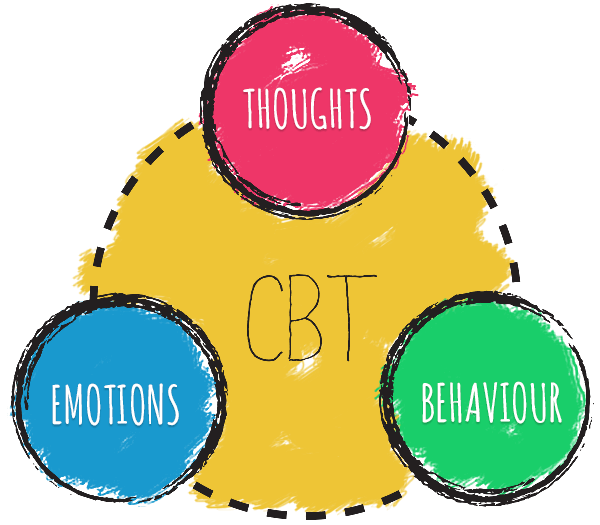
Online CBT Using a Waitlist Method

Research Paper Title

Online cognitive-behavioural therapy for traumatically bereaved people: study protocol for a randomised waitlist-controlled trial.

Background

The traumatic death of a loved one, such as death due to a traffic accident, can precipitate persistent complex bereavement disorder (PCBD) and comorbid post-traumatic stress disorder (PTSD) and depression. Waitlist-controlled trials have shown that grief-specific cognitive-behavioural therapy (CBT) is an effective treatment for such mental health problems. This is the first study that will examine the effectiveness of online CBT (vs waitlist controls) in a sample exclusively comprised of people bereaved by a traumatic death.

The primary hypothesis is that people allocated to the online CBT condition will show larger reductions in PCBD, PTSD and depression symptom levels at post-treatment than people allocated to a waitlist. We further expect that reductions in symptom levels during treatment are associated with reductions of negative cognitions and avoidance behaviours and the experience of fewer accident-related stressors. Moreover, the effect of the quality of the therapeutic alliance on treatment effects and drop-out rates will be explored.

Methods

A two-arm (online CBT vs waiting list) open-label parallel randomised controlled trial will be conducted. Participants will complete questionnaires at pre-treatment and 12 and 20 weeks after study enrolment. Eligible for participation are Dutch adults who lost a loved one at least 1 year earlier due to a traffic accident and report clinically relevant levels of PCBD, PTSD and/or depression. Multilevel modelling will be used.

Discussion

This study will provide new insights in the effectiveness of online CBT for traumatically bereaved people. If the treatment is demonstrated to be effective, it will be made publicly accessible. Findings will be disseminated among:

  • Lay people (e.g. through newsletters and media performances);
  • Research collaborators (e.g. through presentations at support organisations); and
  • Clinicians and researchers (e.g. through conference presentations and scientific journal articles).

Reference

Lenferink, L., de Keijser, J., Eisma, M., Smid, G. & Boelen, P. (2020) Online cognitive-behavioural therapy for traumatically bereaved people: study protocol for a randomised waitlist-controlled trial. BMJ Open. 10(9), pp.e035050. doi: 10.1136/bmjopen-2019-035050.

Book: Psychology for Dummies

Book Title:

Psychology For Dummies.

Author(s): Adam Cash (PsyD).

Year: 2013.

Edition: Second (2nd).

Publisher: Wiley.

Type(s): Hardcovr and Paperback.

Synopsis:

Understand why you feel and act the way you do.

Psychology For Dummies is a fun, user-friendly guide to the basics of human behaviour and mental processes. In plain English – and using lots of everyday examples – psychologist Dr. Adam Cash cuts through the jargon to explain what psychology is all about and what it tells you about why you do the things you do.

With this book as your guide, you will: gain profound insights into human nature; understand yourself better; make sense of individual and group behaviors; explore different approaches in psychology; recognise problems in yourself and others; make informed choices when seeking psychological counseling; and much more.

  • Shows you how understanding human psychology can help you make better decisions, avoid things that cause stress, manage your time to a greater degree, and set goals.
  • Helps you make informed choices when seeking psychological counselling.
  • Serves as an invaluable supplement to classroom learning.

From Freud to forensics, anorexia to xenophobia, Psychology For Dummies takes you on a fascinating journey of self discovery.

Book: Psychology – The Science of Mind and Behaviour

Book Title:

Psychology – The Science of Mind and Behaviour.

Author(s): Nigel Holt, Andy Bremner, Ed Sutherland, Michael Vliek, Michael Passer, and Ronald Smith.

Year: 2019.

Edition: Sixth (6th).

Publisher: McGraw-Hill Education.

Type(s): Paperback.

Synopsis:

Psychology: The Science of Mind and Behaviour fourth edition has been fully updated to reflect new developments in the field. Its celebrated pedagogical design has been reinforced with key research, issues and offers an exciting and engaging introduction to the study of psychology.
The scientific approach brings together international research, practical application and the levels of analysis framework to encourage critical thinking about psychology and its impact on our daily lives.
Key features:

  • Brand new! Psychology at Work interviews from Psychologists in the field provide a glimpse of their day-to-day work and the career path they have taken since completing a psychology degree.
  • Research Close Ups reflect new research and literature as well as brand new critical thinking questions to increase analysis and evaluation of the findings.
  • Core subject updates such as DSM-5 for psychological disorders.
  • Current issues and hot topics such as, social media, prosociality, critical perspectives of positive psychology and coverage of the replication crisis to prompt debates on the questions facing psychologists today.
  • Focus Arrow Boxes encourage critical analysis and application of the text.