Posts

Online CBT and Bereaved Persons

Research Paper Title

Online cognitive-behavioural therapy for traumatically bereaved people: study protocol for a randomised waitlist-controlled trial.

Background

The traumatic death of a loved one, such as death due to a traffic accident, can precipitate persistent complex bereavement disorder (PCBD) and comorbid post-traumatic stress disorder (PTSD) and depression.

Waitlist-controlled trials have shown that grief-specific cognitive-behavioural therapy (CBT) is an effective treatment for such mental health problems.

This is the first study that will examine the effectiveness of online CBT (vs waitlist controls) in a sample exclusively comprised of people bereaved by a traumatic death.

The primary hypothesis is that people allocated to the online CBT condition will show larger reductions in PCBD, PTSD and depression symptom levels at post-treatment than people allocated to a waitlist. The researchers further expect that reductions in symptom levels during treatment are associated with reductions of negative cognitions and avoidance behaviours and the experience of fewer accident-related stressors. Moreover, the effect of the quality of the therapeutic alliance on treatment effects and drop-out rates will be explored.

Methods

A two-arm (online CBT vs waiting list) open-label parallel randomised controlled trial will be conducted. Participants will complete questionnaires at pretreatment and 12 and 20 weeks after study enrolment.

Eligible for participation are Dutch adults who lost a loved one at least 1 year earlier due to a traffic accident and report clinically relevant levels of PCBD, PTSD and/or depression. Multilevel modelling will be used.

Ethics and Dissemination

Ethics approval has been received by the Medical Ethics Review Board of the University Medical Center Groningen (METc UMCG: M20.252121). This study will provide new insights in the effectiveness of online CBT for traumatically bereaved people.

If the treatment is demonstrated to be effective, it will be made publicly accessible.

Findings will be disseminated among:

  • Lay people (eg, through newsletters and media performances);
  • Our collaborators (eg, through presentations at support organisations); and
  • Clinicians and researchers (eg, through conference presentations and scientific journal articles).

Reference

Lenferink, L., de Keijser, J., Eisma, M., Smid, G. & Boelen, P. (2020) Online cognitive-behavioural therapy for traumatically bereaved people: study protocol for a randomised waitlist-controlled trial. BMJ Open. doi: 10.1136/bmjopen-2019-035050.

Book: Excuse Me, Your Life Is Waiting

Book Title:

Excuse Me, Your Life Is Waiting – The Astonishing Power of Feelings.

Author(s): Lynn Grabhorn.

Year: 2003.

Edition: First (1st), 1st Trade Paper Ed Edition.

Publisher: Hampton Roads Publishing.

Type(s): Hardcover, Paperback, Audiobook, and Kindle.

Synopsis:

Argues that feelings, rather than positive thinking or intelligence, set the tone for people’s lives, and helps listeners find peace and pleasure in life by feeling rather than thinking.

Book: The Everyday Ayurveda Guide to Self-Care

Book Title:

The Everyday Ayurveda Guide to Self-Care – Rhythms, Routines, and Home Remedies for Natural Healing.

Author(s): Kate O’Donnell.

Year: 2020.

Edition: First (1st).

Publisher: Shambhala Publications Inc.

Type(s): Paperback and Kindle.

Synopsis:

Embrace the ancient principles of Ayurveda to become a more integrated, whole, and healthy version of yourself. This detailed guide walks you through the steps of foundational Ayurvedic practices that can be easily integrated into your existing self-care routine – from self-massage, oil pulling, and tongue scraping to breathing practices, meditation exercises, and eating with intention – to uplift your physical health and state of mind.

In The Everyday Ayurveda Guide to Self-Care, you will:

  • Get acquainted with the tradition of Ayurveda and better understand your doshas (metabolic tendencies) and basic Ayurvedic anatomy.
  • Discover the art of self-care by exploring daily routines and seasonal practices to prevent imbalances in the body and mind.
  • Find out what foods, spices, and herbs carry medicinal qualities that support cleansing, rejuvenation, and management of common ailments.

Book: The End of Mental Illness

Book Title:

The End of Mental Illness: How Neuroscience Is Transforming Psychiatry and Helping Prevent or Reverse Mood and Anxiety Disorders, ADHD, Addictions, PTSD, Psychosis, Personality Disorders, and More.

Author(s): Daniel G. Amen.

Year: 2020.

Edition: First (1st), Illustrated Edition.

Publisher: Tyndale Momentum.

Type(s): Hardcover, Paperback, Audiobook, and Kindle.

Synopsis:

Though incidence of these conditions is skyrocketing, for the past four decades standard treatment hasn’t much changed, and success rates in treating them have barely improved, either. Meanwhile, the stigma of the “mental illness” label—damaging and devastating on its own—can often prevent sufferers from getting the help they need.

Brain specialist and bestselling author Dr. Daniel Amen is on the forefront of a new movement within medicine and related disciplines that aims to change all that. In The End of Mental Illness, Dr. Amen draws on the latest findings of neuroscience to challenge an outdated psychiatric paradigm and help readers take control and improve the health of their own brain, minimising or reversing conditions that may be preventing them from living a full and emotionally healthy life.

The End of Mental Illness will help you discover:

  • Why labeling someone as having a “mental illness” is not only inaccurate but harmful.
  • Why standard treatment may not have helped you or a loved one – and why diagnosing and treating you based on your symptoms alone so often misses the true cause of those symptoms and results in poor outcomes.
  • At least 100 simple things you can do yourself to heal your brain and prevent or reverse the problems that are making you feel sad, mad, or bad.
  • How to identify your “brain type” and what you can do to optimise your particular type.
  • Where to find the kind of health provider who understands and uses the new paradigm of brain health.

Book: Encyclopedia of Psychedelics

Book Title:

Encyclopedia of Psychedelics.

Author(s): Peter Stafford.

Year: 1993.

Edition: Third (3rd), Expanded Edition.

Publisher: Ronin Publishing.

Type(s): Paperback and Kindle.

Synopsis:

Traces the history of the use of hallucinogenic drugs and discusses the psychological and physical effects of LSD, marijuana, mescaline, and other drugs.

Book: Encyclopedia of Mental Health

Book Title:

Encyclopedia of Mental Health.

Author(s): Howard S. Friedman.

Year: 2015.

Edition: Second (2nd).

Publisher: Academic Press.

Type(s): Hardcover and Kindle.

Synopsis:

The Encyclopedia of Mental Health, Second Edition, tackles the subject of mental health, arguably one of the biggest issues facing modern society. The book presents a comprehensive overview of the many genetic, neurological, social, and psychological factors that affect mental health, also describing the impact of mental health on the individual and society, and illustrating the factors that aid positive mental health.

The book contains 245 peer-reviewed articles written by more than 250 expert authors and provides essential material on assessment, theories of personality, specific disorders, therapies, forensic issues, ethics, and cross-cultural and sociological aspects. Both professionals and libraries will find this timely work indispensable.

  • Provides fully up-to-date descriptions of the neurological, social, genetic, and psychological factors that affect the individual and society.
  • Contains more than 240 articles written by domain experts in the field.
  • Written in an accessible style using terms that an educated layperson can understand.
  • Of interest to public as well as research libraries with coverage of many important topics, including marital health, divorce, couples therapy, fathers, child custody, day care and day care providers, extended families, and family therapy.

Social Support & Mental Health Needs: Carers of Those with Intellectual Disabilities

Research Paper Title

Effect of the covid-19 pandemic on the mental health of carers of people with intellectual disabilities.

Background

The measures implemented to manage the COVID-19 pandemic have been shown to impair mental health. This problem is likely to be exacerbated for carers.

Methods

Informal carers (mainly parents) of children and adults with intellectual disabilities, and a comparison group of parents of children without disabilities, completed an online questionnaire. Almost all the data were collected while strict lockdown conditions were in place.

Results

Relative to carers of children without intellectual disability, carers of both children and adults with intellectual disability had significantly greater levels of a wish fulfilment coping style, defeat/entrapment, anxiety, and depression. Differences were 2-3 times greater than reported in earlier pre-pandemic studies. Positive correlations were found between objective stress scores and all mental health outcomes.

Conclusions

Despite their greater mental health needs, carers of those with intellectual disability received less social support from a variety of sources. The researchers consider the policy implications of these findings.

Reference

Willner, P., Rose, J., Kroese, B.S., Murphy, G., Langdon, P., Clifford, C., Hutchings, H., Watkins, A., Hiles, S. & Cooper, V. (2020) Effect of the covid-19 pandemic on the mental health of carers of people with intellectual disabilities. Journal of Applied Research in Intellectual Disabilities. doi: 10.1111/jar.12811. Online ahead of print.

Certificate: Level 3 in Understanding Mental Health

This qualification will:

  • Focus on the study of mental health and mental well-being to support different occupational areas; and
  • Offer breadth and depth of study, incorporating a key core of knowledge and understanding.

The objectives of this qualification are to help learners to understand:

  • Mental health legislation, services and public attitudes and how these have evolved;
  • How to support mental well-being through various stages of life;
  • Mental ill health, treatment options available and the potential consequences of mental ill health; and
  • The skills required to work in a mental health service.

I actually completed the course in November 2019 but coronavirus delayed external moderation!

You read more about the qualification here.

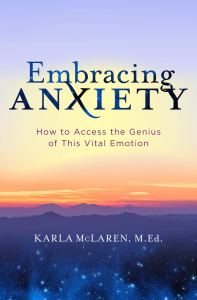
Book: Embracing Anxiety – How to Access the Genius of This Vital Emotion

Book Title:

Embracing Anxiety – How to Access the Genius of This Vital Emotion.

Author(s): Karla McLaren.

Year: 2020.

Edition: First (1ed).

Publisher: Sounds True.

Type(s): Paperback and Kindle.

Synopsis:

An in-depth guide for engaging with anxiety–not as an affliction, but as an essential source of foresight, intuition, and energy for completing your tasks and projects.

If you are facing anxiety, you’ve probably got one thing on your mind – how to make it go away. But what if this challenging emotion were actually trying to help?

When we ignore or repress our anxiety,” teaches Karla McLaren, it can overwhelm us. But when we learn to welcome it with skill, we can access its remarkable gifts.

Engaged with wisely, anxiety is your task completion ally – it helps you to focus, plan, take action, and fulfill your goals. With Embracing Anxiety, you will join this acclaimed educator and researcher to explore:

  • Principles and practices to befriend your anxiety at every level of intensity (before it overwhelms you).
  • Strategies to engage with anxiety as a source of foresight, conscientiousness, and motivation.
  • Why fear, confusion, and panic are not the same as anxiety, and tools to work with each effectively.
  • How anxiety blends with anger, depression, and other emotions, and how to clarify these compounded states.
  • Using McLaren’s Conscious Questioning practice to engage with anxiety and garner its insights.
  • How to embrace procrastination and get things done.

When you identify, listen to, and act on anxiety skillfully, you support its purpose, teaches McLaren, and allow it to recede naturally until it is needed again. With Embracing Anxiety, you’ll learn how to get this powerful emotion on your side.

Book: The Economics Of Addictive Behaviours – Volume IV

Book Title:

The Economics Of Addictive Behaviours – Volume IV: The Private and Social Costs of Overeating and Their Remedies.

Author(s): John Joshua.

Year: 2017.

Edition: First (1ed).

Publisher: Palgrave Macmillan.

Type(s): Hardcover, Paperback, and Kindle.

Synopsis:

This title offers an in-depth analysis of the psychological causes and consequences of, and proposed interventions for over-eating. The author examines the history of obesity and its distribution by social class and geography, the environmental effects of overconsumption and economic remedies such as the introduction of a sugar tax to reduce obesity. Joshua also considers the politics of corporate social responsibility of food and beverage corporations and how this could prevent poor health decisions.

This is the final title in a four volume series ‘The Economics of Addictive Behaviours’, consisting of three additional volumes on smoking, alcohol abuse and illicit drug abuse.