Book: Ayurveda

Book Title:

Ayurveda.

Author(s): Sahara Rose Ketabi.

Year: 2017.

Edition: First (1st).

Publisher: Alpha Books; Illustrated Edition.

Type(s): Paperback and Kindle.

Synopsis:

Discover your Ayurvedic Dosha (mind-body type) and find foods, self-care practices, yoga poses, and meditations that are tailored to your unique needs.

Best-selling author Sahara Rose Ketabi makes Ayurveda accessible with this contemporary guide to the world’s oldest health system. Originating in India over 5,000 years ago, Ayurveda is the sister science to yoga. It is the age-old secret to longevity, digestive health, mental clarity, beauty, and balance that’s regaining popularity today for its tried-and-trued methods.

Sahara Rose revitalises ancient Ayurvedic wisdom with a modern approach and explains how adjusting the timing of your meals; incorporating self-care practices such as dry-brushing, oil-pulling and tongue-scraping; eating the correct foods for your digestive type; and practicing the right yoga and meditation practices for your unique personality will radically enhance your health, digestion, radiance, intuition, and bliss.

With Idiot’s Guides: Ayurveda, you will:

  • Discover your unique Dosha and learn how it is reflected in your physiology, metabolism, digestion, personality, and even in your dreams.
  • Learn how your body’s needs change according to the season, environment, and time of day
  • Find ways to regain luster, passion and flow in your life
  • Enjoy easy-to-make, plant-based recipes
  • Establish an Ayurvedic morning and nighttime ritual for optimal balance
  • Learn how to balance your chakras according to your Dosha
  • Use Ayurvedic herbs and spices to heal digestive issues, skin problems, hormonal imbalance, and other ailments

With plenty of fun facts, holistic humour, and sacred knowledge from Sahara that will help you seamlessly integrate Ayurveda into your lifestyle.

Book: Everyday Ayurveda

Book Title:

Everyday Ayurveda – Daily Habits That Can Change Your Life In A Day.

Author(s): Dr. Bhaswati Bhattacharya.

Year: 2019.

Edition: First (1st).

Publisher: Random House India.

Type(s): Paperback and Kindle.

Synopsis:

Do you sometimes feel tired, lethargic and spiritless? How can Ayurveda help in a simple, practisable manner? Time is scarce and precious in today’s world, and we seek solutions that are quick. While allopathic medicine tends to focus on the management of disease, the ancient study of dinacharya provides us with holistic knowledge of preventing disease and eliminating its root cause. Taking us through a day in the life of Ayurveda living, Dr Bhaswati Bhattacharya illustrates the core principles of Ayurveda and shows us how to incorporate these in our routine. She explains the logic behind the changes she recommends and how they benefit us. Informative and accessible, Everyday Ayurveda is the perfect lifestyle guide designed to maximise health, longevity and happiness the natural way.

Book: The Food Addict’s Meal Prep Manual

Book Title:

The Food Addict’s Meal Prep Manual: Save Yourself From Food Addiction In Only 2 Hours A Week.

Author(s): Dr. Joan Ifland (PhD).

Year: 2018.

Edition: First (1st).

Publisher: ?.

Type(s): Kindle.

Synopsis:

Research shows that addiction to processed foods explains why we overeat. Processed foods are everywhere which makes it very hard to break the food addiction cycle. It seems like people are pushing processed foods at every turn.

But you CAN break the cycle! Having your own beautiful meals is the secret! In The Food Addicts Meal Prep Manual, we’re going to show you step-by-step how to prepare all your meals in only 2 hours a week. Having meals at hand will give you a big advantage in regaining control over your food. This quick, easy guide shows you how to have fun and save lots of money by making all your food in two hours per week.

The guide lets you pick the foods you already love. You will be delighted at how beautiful and delicious these healthy meals are. Learn the surprising truth that ‘healthy’ can be scrumptious, inexpensive, and quick. This guide shows you how.

But you CAN break the cycle! In The Food Addicts Meal Prep Manual, we are going to show you step-by-step how to prepare healthy meals in only 2 hours a week, helping you to break the cycle of sugar, salt and processed foods, which are keeping you from having the body you want.

Go from feeling poor to having endless energy. Finally be able to lose weight and gain back that self-confidence. And most importantly, take back control in your life without the mindless eating and self-shaming that is keeping you locked in the cycle.

Book: Food Junkies: Recovery from Food Addiction

Book Title:

Food Junkies: Recovery from Food Addiction.

Author(s): Vera Tarman.

Year: 2019.

Edition: Second (2nd).

Publisher: Dundurn.

Type(s): Paperback, Audiobook, and Kindle.

Synopsis:

A fact-filled guide to coping with compulsive overeating problems by an experienced addictions doctor who draws on many patients’ stories of recovery.

Overeating, binge eating, obesity, anorexia, and bulimia – Food Junkies tackles the complex, poorly understood issue of food addiction from the perspective of a medical researcher and dozens of survivors. What exactly is food addiction? Is it possible to draw a hard line between indulging cravings for “comfort food” and engaging in substance abuse? For people struggling with food addictions, recognizing their condition remains a frustrating battle.

This revised second edition contains the latest research as well as practical strategies for people facing the complicated challenges of eating disorders and addictions, offering an affirming and manageable path to healthy and sustainable habits.

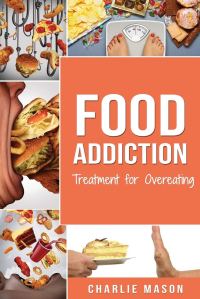
Book: Food Addiction: Treatment for Overeating

Book Title:

Food Addiction: Treatment for Overeating.

Author(s): Charlie Mason.

Year: 2019.

Edition: First (1st).

Publisher: Tilcan Group Limited.

Type(s): Paperback, Audiobook, and Kindle.

Synopsis:

Millions of people are struggling with their healthy eating and lifestyle to help manage their weight. But what most people do not notice is the link between emotional craving and eating and unwanted weight. A part of your brain tells you that you need to eat a healthy meal but your craving is telling you to reach for the comfort food instead.

Chances are, you end up with the comfort food, but it is not for a lack of willpower or motivation! Food addiction leads to various health-related problems including being over-weight and other eating disorders.

Food addiction is a mental and physical issue that requires mental and physical treatment. Unlike other addictions, you cannot eliminate food from your daily behaviours as you can with smoking or alcohol. You need food to survive. This means you need to find a way to stop your cravings and eat less in a realistic way.

As you navigate through the pages of this book, you will find tips and techniques to help you understand your cravings, how to stop them, and ways to treat your food addiction. Enjoy the simple and easy-to-follow tables, lists, and guides as you choose healthy meals over unhealthy and your wellbeing over cravings.

This book is designed to give you solutions to overeating in an inspiring and unique way!

It aims to reveal to you the common beliefs and thoughts about foods, untangle the addictive impulses programmed in your brain, and how to retrain your mind and body so you can live a healthier, happier, and balanced life with eating.

Using an approachable and factual delivery, Food Addiction: Treatment for Overeating offers you real solutions and simple steps so you can learn how to release the negative feelings entrapping you in your negative habits and the constant drudgery of failed diets and broken assurances.

Book: The Food Addiction Recovery Workbook

Book Title:

The Food Addiction Recovery Workbook: How to Manage Cravings, Reduce Stress, and Stop Hating Your Body.

Author(s): Carolyn Coker Ross (MD, MPH).

Year: 2017.

Edition: First (1st).

Publisher: New Harbinger.

Type(s): Paperback and Kindle.

Synopsis:

If you are struggling with obesity or food addiction, you have probably been told that you must deprive yourself of certain foods in order to lose weight. You may have also been convinced-by the media and by our culture-that if you finally become thin your life will be better, you will be happier, and your suffering will come to an end.

The problem is – it is not all about the food. It is about how food is used to self-soothe, to numb ourselves against the pain of living or to cope with stress and unresolved emotions. Even as your waist whittles away, the problems that caused your food addiction won’t disappear.

The Anchor Programme™ approach detailed in this workbook is not about dieting. It is about being anchored to your true, authentic self. When you find your unique anchor, you will relate better to your body, you will know intuitively how to feed your body, and you will reach the weight that is right for you. Anyone who’s been on the diet treadmill-losing and regaining lost weight-will admit that losing weight does not instantly bring health or happiness. That is because losing weight is a red herring for the real issue, the misuse of food to solve a problem that has nothing to do with food.

This book offers a whole-person approach that blends practical information on managing stress and regulating emotions without relying on food. If you are ready to uncover the true cause of your food addiction, you will finally be able to embrace a balanced diet and reach the weight that is right for you.

Book: The Emotional Eating Workbook

Book Title:

The Emotional Eating Workbook – A Proven-Effective Step-By-Step Guide To End Your Battle With Food And Satisfy Your Soul.

Author(s): Carolyn Coker Ross (MD, MPH).

Year: 2016.

Edition: First (1st).

Publisher: New Harbinger.

Type(s): Paperback and Kindle.

Synopsis:

For over fifty years, nutritional and medical scientists have dissected the problem of obesity. The result of this half-century of investigation has been a series of recommendations about what and how much to eat, and an unintended consequence is that we have been deprived of the joy of eating. From low-fat diets to the no-carb craze, the market has been continually flooded with one assortment of fad products and diets after another. So, when does it end?

If you are struggling with emotional overeating and are trying to lose weight, you should know that you do not need to deny yourself certain foods. In The Emotional Eating Workbook, you will learn about the real psychological needs that underlie your food cravings, how to meet those needs in positive ways, be mindful of your body, and find the deep satisfaction many overeaters seek in food.

It is not about food. It is about how food is used to self-soothe, numb ourselves against the pain of living, or self-medicate in coping with stress and unresolved emotions. The Anchor Programme™ approach detailed in this book is not about dieting. It is about being anchored to your true, authentic self. When you find your unique anchor, you will relate better to your body, you will know intuitively how to feed your body, and you will reach the weight that is right for you.

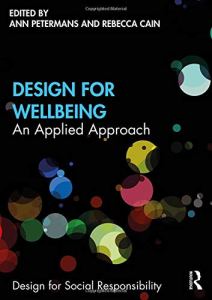
Book: Design for Wellbeing

Book Title:

Design for Wellbeing – An Applied Approach.

Author(s): Ann Petermans and Rebecca Cain (Editors).

Year: 2019.

Edition: First (1st).

Publisher: Routledge.

Type(s): Hardcover and Kindle.

Synopsis:

Design for Wellbeing charts the development and application of design research to improve the personal and societal wellbeing and happiness of people. It draws together contributions from internationally leading academics and designers to demonstrate the latest thinking and research on the design of products, technologies, environments, services and experiences for wellbeing.

  • Part I starts by conceptualising wellbeing and takes an in-depth look at the rise of the design for wellbeing movement.
  • Part II then goes on to demonstrate design for wellbeing in practice through a broad range of domains from products and environments to services. Among others, we see emerging trends in the design of interiors and urban spaces to support wellbeing, designing to enable and support connectedness and social interaction, and designing for behaviour change to tackle unhealthy eating behaviour in children. Significantly, the body of work on subjective wellbeing, design for happiness, is increasing, and several case studies are provided on this, demonstrating how design can contribute to support the wellbeing of people.
  • Part III provides practical guidance for designing for wellbeing through a range of examples of tools, methods and approaches, which are highly user-centric, participatory, critical and speculative.
  • Finally, the book concludes in Part IV with a look at future challenges for design for wellbeing.

This book provides students, researchers and practitioners with a detailed assessment of design for wellbeing, taking a distinctive global approach to design practice and theory in context. Design for Wellbeing concerns designers and organisations but also defines its broader contribution to society, culture and economy.

Book: Cold War Freud

Book Title:

Cold War Freud – Psychoanalysis in an Age of Catastrophes.

Author(s): Dagmar Herzog.

Year: 2016.

Edition: First (1st).

Publisher: Cambridge University Press.

Type(s): Hardcover, Paperback, and Kindle.

Synopsis:

In Cold War Freud Dagmar Herzog uncovers the astonishing array of concepts of human selfhood which circulated across the globe in the aftermath of World War II.

Against the backdrop of Nazism and the Holocaust, the sexual revolution, feminism, gay rights, and anticolonial and antiwar activism, she charts the heated battles which raged over Freud’s legacy.

From the postwar US to Europe and Latin America, she reveals how competing theories of desire, anxiety, aggression, guilt, trauma and pleasure emerged and were then transformed to serve both conservative and subversive ends in a fundamental rethinking of the very nature of the human self and its motivations.

Her findings shed new light on psychoanalysis’ enduring contribution to the enigma of the relationship between nature and culture, and the ways in which social contexts enter into and shape the innermost recesses of individual psyches.

Book: Cognitive Behavioural Therapy for Depression

Book Title:

Cognitive Behavioral Therapy for Depression: Retrain your Brain from Wrong Behaviors, Irrational Beliefs and Negative Ways of Thinking. Open Yourself to Life, Happiness and the Freedom of Change.

Author(s): John Rich.

Year: 2019.

Edition: First (1st).

Publisher: Independently Published.

Type(s): Hardcover and Kindle.

Synopsis:

Depression is said to affect more than 300 million people globally, from all age categories. This particular mental disorder is incredibly common, and yet incredibly challenging for people to face, overcome, and heal from. Depression is considered to be a serious and even life-threatening condition as it can progress into more advanced stages that lead to thoughts surrounding self-harm and suicidal ideation.

Learning how to face, navigate, overcome, and heal from depression is important in your ability to protect yourself from the painful symptoms that depression can present in your life. If you have been looking for natural, healthy ways to overcome depression, cognitive behavioural therapy may be exactly what you are looking for.

Cognitive Behavioural Therapy (CBT) is a form of psychotherapy that is used to intentionally rewire the way your brain works through the power of specific thought processes and skills that are instilled within the individual that is healing from depression. As you learn how to navigate depression with CBT skills in tow, you will begin to realise how capable you are of overcoming this painful, dreadful, and often traumatising mental disorder that you might be facing in your life right now.

For some people, CBT is the only therapy that they need to support them in healing from depression. For others, CBT works in conjunction with lifestyle changes and even antidepressants to support a holistic form of therapy that helps the patient heal from depression in the immediate present while also being able to overcome episodes in the future.

The book seeks to shine a light on the power of CBT and how this particular psychotherapy can support you in having a healthier life, free of the struggles of depression. The goal is for you to learn to overcome depression in a way that supports you with increasing your mental strength, mental stamina, and emotional intelligence, while also improving your natural emotional resistance.

Some of what you will learn in Cognitive Behavioural Therapy for Depression includes:

  • What CBT is and how it works.
  • Who founded CBT and how.
  • What depression is and the specific symptoms to look for.
  • How you can use self-awareness to overcome depression.
  • How CBT works to heal depression.
  • How CBT supports mental and emotional strength and resiliency.
  • The exact steps for executing CBT in your own life.
  • How to monitor your CBT to make sure it is actually working.
  • How to use CBT to instantly boost your mood.
  • How to use CBT to boost your mood in the long term.
  • Natural methods for overcoming and healing depression.
  • And more!.

If you are ready to relieve yourself from the grasp of depression and heal yourself and your life, grab your copy of Cognitive Behavioural Therapy for Depression today to get started!