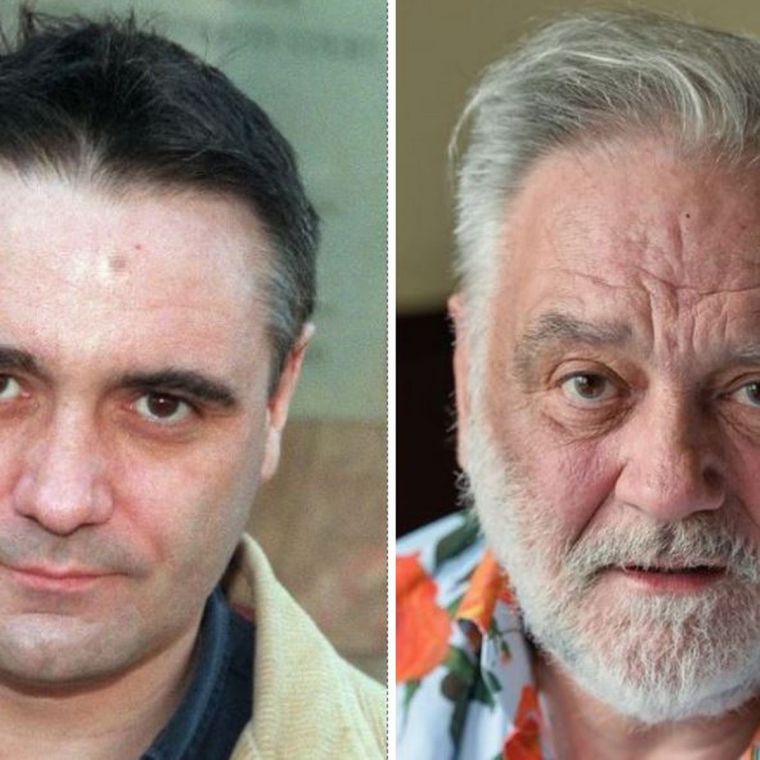
Actor and comedian Tony Slattery, as he searches for a better understanding of the mental health problems he has had for the past 25 years.
Outline
Comedian Tony Slattery meets experts to explore his psychological problems, finding out if he is definitely bipolar, confronting addiction and opening up about a childhood trauma.
Tony Slattery was one of the most gifted TV comedians of the late 1980’s and early 1990’s.
Production & Filming Details
Narrator(s): Denise Gough.
Director(s): Clare Richards.
Producer(s): Katie Buchanan, Katharine Fish, Alan Holland, and Clare Richards.
Let There Be Light (1946) – known to the US Army as PMF 5019 – is a documentary film directed by American filmmaker John Huston.
Intended to educate the public about posttraumatic stress disorder and its treatment among returning veterans, the film’s unscripted presentation of mental disability led to Let There Be Light being suppressed by the US government; it was not released until the 1980’s.
As the US Army was demobilising near the end of World War II it had the task of reintegrating returning military veterans back into peacetime society.
An obstacle veterans faced was the stigma surrounding “shell shock” or “psychoneurosis”, the old terms for posttraumatic stress disorder.
To convince the public, and especially employers, that veterans being treated for battle-induced mental instability were completely normal after psychiatric treatment, on 25 June 1945, the Army Signal Corps tasked Major John Huston with producing the documentary The Returning Psychoneurotics.
Huston visited multiple Army hospitals on the East and West Coasts before deciding upon Mason General Hospital on Brentwood, Long Island. The reasons being that Mason General was the biggest mental health facility on the East Coast, the hospital was located near the Army motion picture production center at Astoria Studio in Queens, New York, and the doctors were very open and receptive to the filming and any psychiatric questions he had.
The new title that Huston gave the film, Let There Be Light, was a reference to Genesis 1:3 of the King James Version of the Bible. This was an allusion to the documentary revealing truths that were previously concealed as too frightening or shameful for acknowledgement.
Outline (Documentary)
The film begins with an introduction, stating that 20% of wartime casualties are of a psychiatric nature.
Veterans are transported from a medical ship to Mason General Hospital to be treated for mental conditions brought about by war.
A group of seventy-five US service members – recent combat veterans suffering from various “nervous conditions” including psychoneurosis, battle neurosis, conversion disorder, amnesia, severe stammering, and anxiety states – arrive at the facility. They are brought into a room and told by an admissions officer to not be alarmed by the cameras, which will make a photographic record of their progress.
Next are scenes of interviews between a doctor and some of the patients about their problems and circumstances leading to that point. Afterwards, various treatment methods are employed to cure them.
Treatments depicted include narcosynthesis, hypnosis, group psychotherapy, music therapy, and work therapy. One soldier who had amnesia was hypnotised to remember the trauma of the Japanese bombings on Okinawa and his life before then. Another is given an intravenous injection of sodium amytal to induce a hypnotic state, curing him of his mental inability to walk.
The treatments are followed by classes (designed to reintegrate patients into civilian life) and group therapy sessions. Therapists make a point of reassuring the patients that there is nothing to be ashamed of for receiving treatment for their mental conditions, and that civilians subjected to the same stresses would develop the same conditions.
At this point the documentary shifts the tone to a sense of normalcy, with the soldiers performing regular activities and complaining about everyday problems.
The film ends with a number of the featured patients participating in a ceremony in which they are discharged, not just from the hospital, but from military service, and returned to civilian life.
Production & Filming Details
Narrator(s): Walter Huston.
Director(s): John Huston.
Producer(s): John Huston and US Army Pictorial Service.
Writer(s): John Huston and Charles Kaufman.
Music: Dimitri Tiomkin.
Cinematography: Stanley Cortez, John Doran, Lloyd Fromm, Joseph Jackman, and George Smith.
Editor(s): William H. Reynolds and Genre Fowler Jr.
Lost Transmissions is a 2019 drama film, written and directed by Katharine O’Brien. It stars Simon Pegg, Juno Temple and Alexandra Daddario.
The film had its world premiere at the Tribeca Film Festival on 28 April 2019, and was released on 13 March 2020, by Gravitas Ventures.
Outline
When an acclaimed music producer goes off his medication for schizophrenia, his friends chase him through the LA music scene to help commit him to a psychiatric hospital, revealing the troubling inadequacies of our mental health care system.
Production & Filming Details
Director(s): Katharine O’Brien.
Producer(s): Bo An, Thomas Benski, Al Di, Jo Henriquez, Olga Kagan, Tory Lenosky, Brian Levy, Alan Li, Craig Newman, Katharine O’Brien, Cassidy Shea Pahl, Filip Jan Rymsza, Robert Schartzman, Alyssa Swanzey, and Alvaro R. Valente.
Writer(s): Katharine O’Brien.
Music: Hugo Nicolson.
Cinematography: Arnau Valls Colomer.
Editor(s): Giannis Halkiadakis.
Production: Royal Road Entertainment, Pulse Films, and Underlying Tension.
Distributor(s): Gravitas Ventures, 101 Films, Premiere Entertainment Group, and Storm Pictures Korea.
Release Date: 28 April 2019 (Tribeca Film Festival).
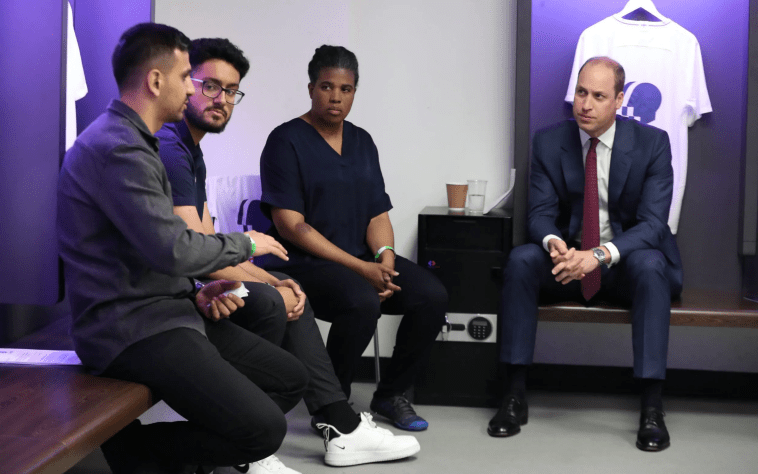
Documentary following Prince William’s campaign to get British men to open up about mental health issues through football.
Outline
Why do British men struggle to talk about their emotions? The Duke of Cambridge has spent the past year campaigning to change attitudes to mental health in Britain. Spurred on by the fact that suicide is the biggest killer of young men in this country, he wants to use football as a way to get men talking and to break the taboo that surrounds mental health. As a real fan of the sport, William has seen the way men express their feelings at football games. Now he wants to help men show the same passion and openness away from the game.
The film follows William as he meets players and fans from grassroots to the elite of the game and openly discusses their mental health challenges. Former England goalkeeper Joe Hart explains how he has learnt to cope with difficulties at the very top of the game, and a group of bereaved fathers reveal how they use their local football team as a support network and safe space to talk. Former Premier League footballer Marvin Sordell opens up about his struggles with depression, while Chelsea manager Frank Lampard compares life now with his early experiences of professional football.
As well as campaigning to change attitudes today, William explores aspects of British history that have helped create the culture of silence around this issue. Honest and touching, the film powerfully conveys his passion to change the conversation around mental health in Britain.
Production & Filming Details
Director(s): Marcus Plowright.
Producer(s): Gabby Saper, Lucy Rogers, Tony Pastor, and Jonathan Smith.
Most people have heard of it and many of us say we have a little bit of it, but what exactly is Obsessive Compulsive Disorder.
OCD and Me gives us a greater appreciation of this secretive and often misunderstood mental health condition.
Outline
Most people have heard of OCD, but what exactly is Obsessive Compulsive Disorder?
An estimated two to three percent of the population suffers from the condition, which goes far beyond the common stereotypes of excessive hand washing or repetitive behaviours.
To penetrate the reality of this mental illness, this film gets to know several who have agreed to come forward and talk about their OCD.
Production & Filming Details
Director(s): Adrian McCarthy.
Producer(s): Adrian McCarthy, Niamh O’Connor, Zlata Filipovic, and Martha O’Neill..
An award-winning documentary film about treating anxiety, depression and addiction with psychedelic medicine.
Outline
After years of prescription medications failed her a suicidal woman, Adrianne, turns to underground healers to try and overcome her depression, anxiety, and opioid addiction with illegal psychedelic medicine like magic mushrooms and iboga.
Production & Filming Details
Director(s): Tyler Chandler.
Producer(s): Robert J. Barnhart, Tyler Chandler, Jason Hodges, Kelley Hodges, Chris Mayerson, Nicholas Meyers, and Nick Soares.
Writer(s): Tyler Chandler, Nicholas Meyers, and Jessie Deeter (Story consultant).
A New Understanding explores the treatment of end-of-life anxiety in terminally ill cancer patients using psilocybin, a psychoactive compound found in some mushrooms, to facilitate deeply spiritual experiences.
Outline
The documentary explores the confluence of science and spirituality in the first psychedelic research studies since the 1970’s with terminally ill patients.
As a society we devote a great deal of attention to treating cancer, but very little to treating the human being who is dying of cancer. The recent resurgence of psychedelic research is once again revealing the power of compounds like psilocybin to profoundly alter our understanding of both life and death. Through the eyes of patients, their loved ones, therapists, and researchers, A New Understanding examines the use of psilocybin in a controlled setting to reduce psychospiritual anxiety, depression, and physical pain.
The treatment aims to help the patient understand that a ‘good’ death is possible, and to help the patient’s family deal well with the dying process. A New Understanding shows patients and their families coming to terms with dying through the skillful treatment of the whole human being. If we can learn to work more skillfully with dying, we will also learn to take better care of life.
Production & Filming Details
Director(s): Roslyn Dauber.
Producer(s): Robert J Barnhart, Roslyn Dauber, Brady Dial, Matt Humble, Steve McDonald, Jeff Porter, and Mitch Schultz.
The 1979 class of Porter Gaud School in Charleston, South Carolina graduated 49 boys. Within the last 35 years, six of them have died by suicide.
Outline
When Paige Goldberg Tolmach gets word that another former student from her beloved high school has killed himself, she decides to take a deep dive into her past in order to uncover the surprising truth and finally release the ghosts that haunt her hometown to this day.
Production & Filming Details
Director(s): Paige Tolmach.
Producer(s): Sarah Gibson, James Huntsman, Andreas Olavarria, and Told Slater.
Music: Nathan Halpern.
Cinematography: Adam Dubrowa.
Editor(s): Derek Doneen and Allan Duso.
Production: Diamond Docs, Matt Tolmach Productions, and The Kennedy/Marshall Company.
Distributor(s): Blue Fox Entertainment.
Release Date: 24 February 2018 (Boulder International Film Festival) and 11 May 2018 (US, general release).
Every year thousands of young people are brought to mental health units across the UK to seek treatments.
Latest estimates put the number of people who suffer from a mental condition at 1 in 3 and most first experience mental health problems when they are young.
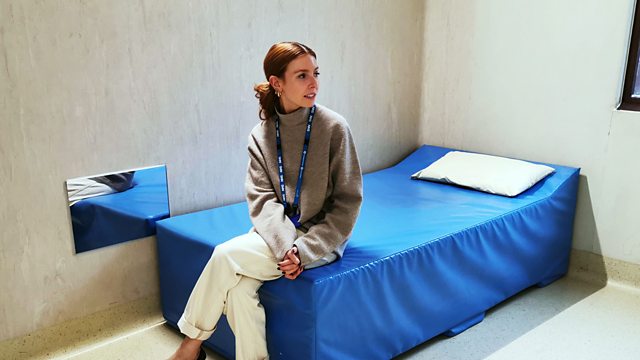
Stacey is going to work in Springfield Hospital, one of the oldest mental health units in the UK, to see what life is really like on the front line of mental health services. More than just observing, she will be working directly with staff, dealing with patients, and taking part in making incredibly tough decisions on what is best for patients.
Stacey meets Rachelle who has been diagnosed with EUPD (Emotionally Unstable Personality Disorder). Still in her 20s, she’s had a troubled life already – full of suicide attempts and self-harm. She opens up to Stacey about her struggles with her illness, and her hope that she will soon get the talking therapy that she believes could be the solution to her problems. The doctors here agree that this is not the best place for Rachelle to be, and they are hoping she will get a place at a specialist unit in Cambridge where she can make real progress in coping with her condition.
Stacey also spends time in a special acute assessment unit where patients can self-refer. She meets 19-year-old Kyle, who has come to Springfield in the midst of a severe depression and incident of self-harm. As Stacey takes part in a discussion with staff about whether to admit him to the hospital or support him in the community, Stacey experiences for herself just how difficult the decisions and the judgement calls are that the team have to make.
Police have brought Laura to the 136 unit, so called because it is the local designated place of safety as defined under section 136 of the Mental Health Act. She has been sectioned after being found on a motorway bridge, threatening to jump. She opens up to Stacey as they talk, trying to explain her thinking and her ongoing struggles with depression and her eating disorder – all stemming from traumas earlier in her short life.











 Mental Health Matters
You must be logged in to post a comment.