Posts

Mental Health and Stress in Humanitarian Expatriates.

Research Paper Title

Mental Health and Stress in Humanitarian Expatriates.

Background

Humanitarian work is stressful and can have an impact on the mental health of humanitarian expatriates.

In order to reduce stress and its consequences, humanitarian organisations are implementing various measures to keep their staff healthy.

Humanitarian workers, on the other hand, must take care of themselves and apply self-protection mechanisms. Most humanitarian workers are doing well.

The treating doctor plays a key role in detecting people and behaviour at risk. they encourage the expatriate to use their resources and provide the adequate support and medical follow-up if necessary.

Collaboration with the staff health units of humanitarian organisations allows for optimal care of humanitarian workers’ medical conditions.

Reference

Perone, S.A., BAvarel, M., Suzic, D. & Chappuis, F. (2020) [Mental Health and Stress in Humanitarian Expatriates] [Article in French]. Revue Medicale Suisse. 16(693), pp.993-997.

National PTSD Awareness Day

National PTSD Awareness Day is a day dedicated to creating awareness regarding PTSD (Post Traumatic Stress Disorder). It is acknowledged annually on the 27th of June. The US Senate officially designated this day in 2010. In 2014 the Senate designated the whole month of June as PTSD Awareness Month.

In the US, 6.8% of adults will experience PTSD in their lifetimes with women twice as likely as men to experience it (10.4% to 5%) frequently as a result of sexual trauma. Veterans are another group highly likely to experience PTSD during their lives, with Vietnam War veterans at 30%, Gulf War veterans at 10%, and Iraq War veterans at 14%.

On this day, organisations that work with employees, consumers, and patients at risk for the condition work to get information about symptoms and treatments for it out to the public in the hopes that when more people know about the disease more people who suffer from it will get treatment. The US Department of Defence is one of the major organisations involved as June is full of days relating to the military.

You can find out more about raising PTSD awareness from the US Department of Veterans Affair’s National Centre for PTSD and PTSDUK.

What are the Perceptions of Mental Health and Perceived Barriers to Mental Health Help-Seeking Amongst Refugees?

Research Paper Title

Perceptions of Mental Health and Perceived Barriers to Mental Health Help-Seeking Amongst Refugees: A Systematic Review.

Background

Despite elevated rates of psychological disorders amongst individuals from a refugee background, levels of mental health help-seeking in these populations are low.

There is an urgent need to understand the key barriers that prevent refugees and asylum-seekers from accessing help for psychological symptoms.

This review synthesises literature examining perceptions of mental health and barriers to mental health help-seeking in individuals from a refugee background.

The researchers analysis, which complies with PRISMA reporting guidelines, identified 62 relevant studies.

Methods

Data extraction and thematic analytic techniques were used to synthesise findings from quantitative (n = 26) and qualitative (n = 40) studies.

Results

They found that the salient barriers to help-seeking were:

  • Cultural barriers, including mental health stigma and knowledge of dominant models of mental health;
  • Structural barriers, including financial strain, language proficiency, unstable accommodation, and a lack of understanding of how to access services, and
  • Barriers specific to the refugee experience, including immigration status, a lack of trust in authority figures and concerns about confidentiality.

Conclusions

The researchers discuss and contextualise these key themes and consider how these findings can inform the development of policies and programmes to increase treatment uptake and ultimately reduce the mental health burden amongst refugees and asylum-seekers.

Reference

Byrow, Y., Pajak, R., Specker, P. & Nickerson, A. (2020) Perceptions of Mental Health and Perceived Barriers to Mental Health Help-Seeking Amongst Refugees: A Systematic Review. Clinical Psychology Review. 75:101812. doi: 10.1016/j.cpr.2019.101812. Epub 2019 Dec 24.

Inclusion & Paternal Mental Health

Research Paper Title

Paternal Mental Health During the Perinatal Period: A Qualitative Systematic Review.

Background

To examine fathers’ experiences and needs associated with mental health during the perinatal period.

Qualitative studies were meta-synthesised using the steps outlined by Sandelowski and Barroso.

Six databases (PubMed, Embase, PsycINFO, CINAHL, Scopus and ProQuest) were searched for qualitative studies from each database’s inception to 24 June 2019.

Methods

Studies were critically appraised using the Critical Appraisal Skills Programme tool. Qualitative data were extracted, meta-summarised, then meta-synthesised.

Results

Fourteen studies were included and four themes were identified:

  1. Negative feelings and psychological difficulties;
  2. Role strain and role conflict with multiple sources;
  3. Coping strategies that buffered negative feelings and psychological difficulties; and
  4. Support needs to enhance mental health.

Conclusions

Fathers reported poor mental health and expressed needs to enhance their mental health across the perinatal period. Future studies can focus specifically on paternal mental health. The development of theory-guided, family inclusive, technology-based healthcare services are needed to manage mental health. Healthcare providers can promote positive mental health to prepare fathers, increasing their awareness to manage their mental health and to seek timely help.

Impact

Problem-focused coping (i.e. support and problem-solving with partners and childcare involvement) helped fathers to buffer their negative feelings and psychological difficulties. Future studies should focus on paternal mental health rather than on general fathering experiences. Healthcare providers should focus on promoting positive mental health and well-being. Policymakers should create awareness on paternal mental health across the perinatal period.

Reference

Shorey, S. & Chan. V. (2020) Paternal Mental Health During the Perinatal Period: A Qualitative Systematic Review. Journal of Advanced Nursing. 76(6), pp.1307-1319. doi: 10.1111/jan.14325. Epub 2020 Feb 25.

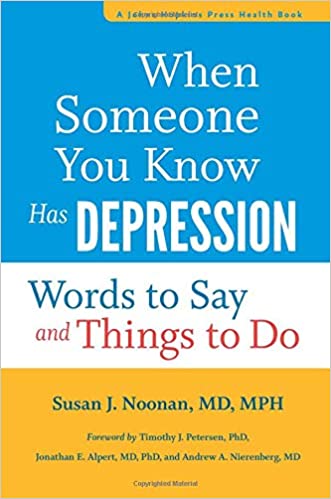
Book: When Someone You Know Has Depression

Book Title:

When Someone You Know Has Depression – Words to Say and Things to Do.

Author(s): Susan J Noonan M.D. MPH.

Year: 2016.

Edition: First (1ed).

Publisher: John Hopkins University Press (JHUP).

Type(s): Paperback, Audiobook, and Kindle.

Synopsis:

Mood disorders such as depression and bipolar disorder can be devastating to the person who has the disorder and to his or her family. Depression and bipolar disorder affect every aspect of how a person functions, including their thoughts, feelings, actions, and relationships with other people. Family members and close friends are often the first to recognise the subtle changes and symptoms of depression. They are also the ones who provide daily support to their relative or friend, often at great personal cost. They need to know what to say or do to cope with the person’s impaired thinking and fluctuating moods.

In When Someone You Know Has Depression, Dr. Susan J. Noonan draws on first-hand experience of the illness and evidence-based medical information. As a physician she has treated, supported, and educated those living with – and those caring for – a person who has a mood disorder. She also has lived through the depths of her own mood disorder. Here, she has written a concise and practical guide to caring fevor someone who has depression or bipolar disorder. This compassionate book offers specific suggestions for what to say, how to encourage, and how to act around a loved one – as well as when to back off.

Dr Noonan describes effective communication strategies to use during episodes of depression and offers essential advice for finding appropriate professional help. She also explains how to reinforce progress made in therapy, how to model resilience skills, and how caregivers can and must care for themselves. Featuring tables and worksheets that convey information in an accessible way, as well as references, resources, and a glossary, this companion volume to Dr. Noonan’s patient-oriented Managing Your Depression is an invaluable handbook for readers navigating and working to improve the depression of someone close to them.

Book: The Wellness Sense

Book Title:

The Wellness Sense – A Practical Guide to your Physical and Emotional Health based on Ayurvedic and Yogic Wisdom.

Author(s): Om Swami.

Year: 2015.

Edition: First (1ed).

Publisher: Black Lotus.

Type(s): Paperback, Audiobook, and Kindle.

Synopsis:

Why do certain foods harm some people and help others? How come the same weight loss program shows different results on different individuals? And, why do some people fall sick more often than others?

Answers to these questions and many more lie in Ayurveda where your body is not just looked upon a holder of flesh and bones but the finest vehicle of experiencing all pleasures and sorrows.

In Ayurveda, as in yoga and tantra, the health of an individual is not just the state of his physical body but an aggregate of the body, senses, mind and soul. Your body is a sacred space, it is the seat of your consciousness.

The Sanskrit word for health is svasthya; it means self-dependence or a sound state of the body and mind. If examined further, it means your natural state; sva means natural and sthya means state or place.

Ayurveda aims to restore your natural state, balance so you may be free of mental and physical afflictions.

More often than not, and certainly in adults, most physical disorders are the result of a repressed and bruised consciousness. Mental afflictions create diseases in the physical body and physical diseases, in turn, disturb the state of mind.

You can treat the disease in the physical body but that’s merely treating the symptom. It is not the permanent solution.

The modern system of medicine is mostly symptom driven. If I have a headache, it’ll tell me to take a pain-killer. Ayurveda does not believe in treating the symptoms. Its advocates understanding the patient and treating the cause of the symptom and not the symptom itself.

In order to do that, the ancient scriptures took a far more holistic approach to health by combining our lifestyle with our natural tendencies (which vary from one person to another). In other words, it understood that one man’s medicine could be another man’s poison.

Expounding on the esoteric aspects of the ancient wisdom, in simple terms, this book shows you how to take care of yourself better and how to lead a healthier life in our present world – a world where we have all the comforts yet we are restless.

We have organic breakfast on the table but no time to eat it, we have the comfiest mattress but little sleep. The key to wholesome living and your well-being is entirely in your hands. This book is a must read for those who are serious about their health.

Book: Treating Trichotillomania – CBT for Hairpulling and Related Problems

Book Title:

Treating Trichotillomania – CBT for Hairpulling and Related Problems.

Author(s): Martin E. Franklin and David F. Tolin.

Year: 2010.

Edition: Reprint Edition.

Publisher: Springer.

Type(s): Hardcover, Paperback and Kindle.

Synopsis:

There is still scant clinical information on trichotillomania. This book fills the need for a full-length cognitive-behavioural treatment manual.

The authors share their considerable expertise in treating body-focused repetitive behaviour disorders (not only hair-pulling but skin-picking and nail-biting as well) in an accessible, clinically valid reference.

This is the first comprehensive, clinical, and empirically-based volume to address these disorders.

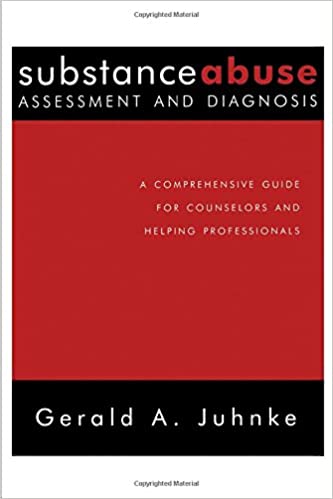
Book: Substance Abuse – Assessment & Diagnosis

Book Title:

Substance Abuse – Assessment & Diagnosis.

Author(s): Gerald A. Juhnke.

Year: 2002.

Edition: 1ed.

Publisher: Routledge.

Type(s): Hardcover, Paperback and Kindle.

Synopsis:

Substance abuse counselling has gone beyond being viewed as optional training; instead it is fast becoming an essential part of the education of helping professionals. In this book, Dr. Gerald Juhnke presents an innovative, practical model to be used in the assessment and diagnosing of substance abuse and related co-morbid disorders.

Substance Abuse Assessment and Diagnosis includes practical “nuts and bolts” direction on how to facilitate a thorough, multi-tiered substance abuse assessment. This book uniquely incorporates detailed examples of how to use individual and significant other clinical interviews, including the CAGE, SUBSTANCE -Q, etc, standardised specialty instruments, drug detection types, and personality instruments to accomplish this feat. This is the only book of its kind that provides practical detail on how to use and score these varied assessment instruments-including the newest “cornerstone instruments,” the MMPI-2, the SASSI-3 and the recently released SASSI-A2.

Students and practitioners alike will benefit from this comprehensive volume on the assessment and diagnosis of substance abuse.

Book: States of Consciousness – Models for Psychology & Psychotherapy

Book Title:

States of Consciousness – Models for Psychology & Psychotherapy.

Author(s): Andrzej Kokoszka.

Year: 2006.

Edition: 1ed.

Publisher: Springer-Verlag New York Inc.

Type(s): Hardcover and Paperback.

Synopsis:

Consciousness has always been a particularly elusive concept and one vigorously argued in the scientific community. This new volume takes on the task of defining normal and altered consciousness in their most relevant clinical terms.

In States of Consciousness, Andrzej Kokoszka expands on the pioneering work of JH Jackson, offering contemporary models for studying consciousness as it applies to both pathology and normal altered states, eg, relaxation, sleep, meditation, and hypnosis. He makes clear distinctions between the neuroscientific and psychiatric components of consciousness; at the same time, his theories are rooted firmly in the biopsychosocial approach.

Highlights:

  • Historical overview of studies of consciousness and its altered states.
  • Evolutionary/dynamic model of consciousness and information processing, based on the structure and principles of cell behaviour.
  • Comparison of altered states of consciousness in healthy persons and patients with schizophrenia.
  • New perspectives on the role of consciousness in pathology.
  • Case illustration of altered states in a patient with Post-traumatic Stress Disorder, integrating neurobiological, cognitive-behavioural, and psychodynamic data.
  • Applications of the model in clinical practice.

States of Consciousness lends itself to theoretical and practical, research and classroom use. It is relevant to a range of scientists and practitioners in cognition, clinical psychology, social psychology, and neuropsychology The book’s scope and the author’s attention to detail make it a work of great versatility, much like consciousness itself.

Book: Stand Strong – You Can Overcome Bullying

Book Title:

Stand Strong – You Can Overcome Bullying (and Other Stuff That Keeps You Down).

Author(s): Nick Vujicic.

Year: 2015.

Edition: Reprint Edition.

Publisher: WaterBrook.

Type(s): Hardcover, Paperback, Audiobook, and Kindle.

Synopsis:

In Stand Strong Nick Vujicic gives you strategies for developing a “bully defense system” so you can handle bullies of all kinds, by building your strength from the inside out.

With no arms, no legs, and no defence, Nick Vujicic has experienced bullying of all kinds for being “different.” He knows what it feels like to be picked on and pushed around. But Nick learned that he doesn’t have to play the bully’s game – and neither do you. No bully can define who you are, and in Stand Strong, Nick shows how you too can overcome and rise above bullying.

Find out how to:

  • Turn being bullied into a great opportunity (yes, really!).
  • Create a safety zone within yourself.
  • Establish strong values that no bully can shake.
  • Deal with cyber bullies.
  • Develop a spiritual foundation to stay strong against bullying.
  • Monitor your emotions and control your response to them.
  • Help others who are being bullied.

Are you facing the unwanted attention of a bully? You can stand up to the challenge, because you have greater power over your feelings and your life than you may think! Just ask Nick – the man with no arms or legs … and “a ridiculously good life.”