Does VRET & ARET Work as a Treatment for PTSD?

Research Paper Title

Efficacy of immersive PTSD treatments: A systematic review of virtual and augmented reality exposure therapy and a meta-analysis of virtual reality exposure therapy.

Background

Virtual reality exposure therapy (VRET) and augmented reality exposure therapy (ARET) are digitally assisted psychotherapies that potentially enhance posttraumatic stress disorder (PTSD) treatment by increasing a patient’s sense of presence during exposure therapy.

This study aimed to systematically review current evidence regarding the efficacy of VRET and ARET as PTSD treatment.

Methods

A systematic electronic database search, a systematic quality assessment and two meta-analyses were conducted in accordance with PRISMA guidelines.

Results

Eleven studies on the efficacy of VRET for PTSD (n = 438) were found, but no studies on the efficacy of ARET. The majority of VRET studies were of a low quality and had heterogeneous results. Meta-analyses showed VRET outperformed waitlist control (standardised mean difference -0.64 (95% CI -1.05 to -0.22)) while no significant difference was found between VRET and active treatment conditions (standardised mean difference -0.25 (95% CI -0.77 to 0.27)).

Conclusions

VRET was superior to waitlist control groups and as effective as other psychotherapies. However, the results showed considerable heterogeneity due to the low number of studies and variety of VRET methods. VRET may be an effective alternative to current treatments and shows promise for the treatment of PTSD patients that have not responded to previous treatment.

Future research should focus on high quality RCTs, including information on side effects and adverse events, with sufficient numbers of participants.

This study recognises a research gap regarding the efficacy of ARET, while it may have potential for PTSD treatment.

Reference

Eshuis, L.V., van Gelderen, M.J., van Zuidan, M., Nijdam, M.J., Vermetten, E., Olff, M. & Bakker, A. (2020) Efficacy of immersive PTSD treatments: A systematic review of virtual and augmented reality exposure therapy and a meta-analysis of virtual reality exposure therapy. Journal of Psychiatric Research. doi: 10.1016/j.jpsychires.2020.11.030. Online ahead of print.

Highlighting the Hidden Links between Mental Disorders

Research Paper Title

The hidden links between mental disorders.

Background

Psychiatrists have a dizzying array of diagnoses and not enough treatments. Hunting for the hidden biology underlying mental disorders could help.

In 2018, psychiatrist Oleguer Plana-Ripoll was wrestling with a puzzling fact about mental disorders. He knew that many individuals have multiple conditions – anxiety and depression, say, or schizophrenia and bipolar disorder. He wanted to know how common it was to have more than one diagnosis, so he got his hands on a database containing the medical details of around 5.9 million Danish citizens.

You can continue reading the full article here.

Reference

Marshall, M. (2020) The hidden links between mental disorders. Nature. 581(7806), pp.19-21. doi: 10.1038/d41586-020-00922-8.

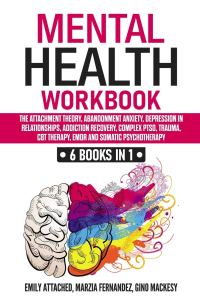
Book: Mental Health Workbook: 6 Books in 1

Book Title:

Mental Health Workbook: 6 Books in 1: The Attachment Theory, Abandonment Anxiety, Depression in Relationships, Addiction Recovery, Complex PTSD, Trauma, CBT Therapy, EMDR and Somatic Psychotherapy.

Author(s): Emily Attached, Marzia Fernandez, and Gino Mackesy.

Year: 2020.

Edition: First (1st).

Publisher: Independently Published.

Type(s): Hardcover, Paperback, Audiobook, and Kindle.

Synopsis:

This Book includes: 6 Manuscripts

  1. Attachment Theory Workbook.
  2. Abandonment Recovery Workbook.
  3. The Addiction Recovery Workbook.
  4. Complex PTSD, Trauma and Recovery.
  5. EMDR and Somatic Psychotherapy.
  6. Somatic Psychotherapy.

Book 1: Attachment Theory Workbook

You can start to redress the balance to build stronger relationships with those close to you, with chapters that cover:

  • How anxiety disorder develops.
  • How to become self-disciplined with your emotions.
  • Learning to communicate effectively.
  • How positive reinforcement works.
  • How your physical health affects your mental state.
  • Dealing with conflict.
  • Empathetic listening and its link to happiness.
  • And more…

Book 2: Abandonment Recovery Workbook

You will learn how to cope with the feelings of abandonment through chapters that examine:

  • What affecting abandonment.
  • Abandonment anxiety.
  • How abandonment can change a life.
  • Depression in Relationships.
  • Building healthier relationships.
  • The power of forgiveness.

Book 3: The Addiction Recovery Workbook

In this book, you will find the necessary help to get you on the road to recovery, with chapters that cover:

  • How to replace your addiction and find the peace you crave.
  • Educating yourself about your addiction.
  • What to avoid when you are developing new habits.
  • Exercise, hydration and a non-toxic lifestyle.
  • Getting creative to life healthier.

Book 4: Complex PTSD, Trauma and Recovery

In this book, you will finally find new ways to tackle your trauma, with chapters that focus on:

  • How depression is defined.
  • How you can avoid exacerbating the problem.
  • A range of trauma treatment exercises.
  • Trauma and the link to mental health.
  • Understanding anxiety.
  • Complex PTSD.

Books 5 and 6: EMDR and Somatic Psychotherapy

You’ll discover how it could help you, with chapters that cover:

  • The principles of EMDR and Somatic Psychotherapy.
  • The basic concepts of Somatic Psychotherapy and EMDR Therapy.
  • Examining the neurobiology of stress and trauma.
  • How the brain works and how it is affected by trauma.
  • Somatic Psychotherapy explained.

Dogs of War Reality TV Series Overview

Introduction

Veterans struggling with PTSD are paired with service dogs as they undergo rehabilitation.

Outline

Man’s best friend is living up to its moniker in this docuseries. It presents stories of shelter dogs trained to help veterans suffering from post-traumatic stress disorder re-acclimate to civilian life.

Each hourlong episode chronicles the rigorous process involved with pairing a vet with a service dog, an emotional journey whereby a suffering person and an abandoned dog come together to help each other.

Facilitating the unions is Paws and Stripes, the brainchild of Lindsey Stanek. Her husband, Jim – a retired US Army staff sergeant who served three tours in Iraq – suffered from severe PTSD before visits with a service dog helped him relax.

Inspired by his experience, and motivated by her love of dogs and country, Lindsey created the non-profit organisation that allows veterans to participate at no cost.

Dogs of War Series

The links take you to our sister website ‘MilitaryGogglebox.com’.

Production & Filming Details

  • Director(s):
    • Peter LoGreco … (2 episodes, 2014).
  • Producer(s):
    • Peter LoGreco … executive producer (5 episodes, 2014).
    • Kurt Schemper … supervising producer (5 episodes, 2014).
    • Ashley York … producer (5 episodes, 2014).
    • Erik Christensen … senior producer / Senior Producer / producer (4 episodes, 2014).
    • Joe Makdisi … associate story producer (4 episodes, 2014).
    • Ben Bloodwell … field producer (2 episodes, 2014).
    • Sandra C. Alvarez … producer (1 episode, 2014).
    • Joel Nassan … field producer (1 episode, 2014).
    • Christopher Burke … executive producer (unknown episodes).
    • Jared Cotton … executive producer (unknown episodes).
    • Steve Stockman … executive producer (unknown episodes).
  • Writer(s):
  • Music:
    • Christian Lundberg … (5 episodes, 2014).
  • Cinematography:
    • Ben Bloodwell … (4 episodes, 2014).
  • Editor(s):
    • Erik Christensen … (5 episodes, 2014).
    • Doyle Esch … (3 episodes, 2014).
  • Production: Custom Productions and Redtail Media.
  • Distributor(s): A+E Networks.
  • Release Date: 11 November 2014 to 07 December 2014.
  • Running Time: 60 minutes.
  • Rating: PG.
  • Country: US.
  • Language: English.

Video Link

What is the Association between PTSD & Cancer?

Research Paper Title

Post-Traumatic Stress Symptoms among Lithuanian Parents Raising Children with Cancer.

Background

The study aims to evaluate post-traumatic stress symptom expression among Lithuanian parents raising children with cancer, including social, demographic, and medical factors, and to determine their significance for the risk of developing post-traumatic stress disorder.

Methods

The study was carried out in two major Lithuanian hospitals treating children with oncologic diseases. The cross-sectional study included 195 parents, out of which 151 were mothers (77.4%) and 44 were fathers (22.6%). Post-traumatic stress symptoms were assessed using the Impact of Event Scale-Revised. To collect the sociodemographic, childhood cancer, and treatment data, we developed a questionnaire that was completed by the parents. Main study results were obtained using multiple linear regression.

Results

A total of 75.4% of parents caring for children with cancer had pronounced symptoms of post-traumatic stress disorder. The female gender (β = 0.83, p < 0.001) was associated with an increased manifestation of symptoms, whilst higher parental education (β = -0.21, p = 0.034) and the absence of relapse (β = -0.48, p < 0.001) of the child’s disease reduced post-traumatic stress symptom expression.

Conclusions

Obtained results confirmed that experiencing a child’s cancer diagnosis and treatment is extremely stressful for many parents. This event may lead to impaired mental health and increased post-traumatic stress disorder (PTSD) risk; hence, it is necessary to provide better support and assistance to parents of children with cancer.

Reference

Baniene, I. & Zemaitiene, N. (2020) Post-Traumatic Stress Symptoms among Lithuanian Parents Raising Children with Cancer. Children (Basel, Switzerland). 7(9), pp.116. doi: 10.3390/children7090116.

Online CBT Using a Waitlist Method

Research Paper Title

Online cognitive-behavioural therapy for traumatically bereaved people: study protocol for a randomised waitlist-controlled trial.

Background

The traumatic death of a loved one, such as death due to a traffic accident, can precipitate persistent complex bereavement disorder (PCBD) and comorbid post-traumatic stress disorder (PTSD) and depression. Waitlist-controlled trials have shown that grief-specific cognitive-behavioural therapy (CBT) is an effective treatment for such mental health problems. This is the first study that will examine the effectiveness of online CBT (vs waitlist controls) in a sample exclusively comprised of people bereaved by a traumatic death.

The primary hypothesis is that people allocated to the online CBT condition will show larger reductions in PCBD, PTSD and depression symptom levels at post-treatment than people allocated to a waitlist. We further expect that reductions in symptom levels during treatment are associated with reductions of negative cognitions and avoidance behaviours and the experience of fewer accident-related stressors. Moreover, the effect of the quality of the therapeutic alliance on treatment effects and drop-out rates will be explored.

Methods

A two-arm (online CBT vs waiting list) open-label parallel randomised controlled trial will be conducted. Participants will complete questionnaires at pre-treatment and 12 and 20 weeks after study enrolment. Eligible for participation are Dutch adults who lost a loved one at least 1 year earlier due to a traffic accident and report clinically relevant levels of PCBD, PTSD and/or depression. Multilevel modelling will be used.

Discussion

This study will provide new insights in the effectiveness of online CBT for traumatically bereaved people. If the treatment is demonstrated to be effective, it will be made publicly accessible. Findings will be disseminated among:

  • Lay people (e.g. through newsletters and media performances);
  • Research collaborators (e.g. through presentations at support organisations); and
  • Clinicians and researchers (e.g. through conference presentations and scientific journal articles).

Reference

Lenferink, L., de Keijser, J., Eisma, M., Smid, G. & Boelen, P. (2020) Online cognitive-behavioural therapy for traumatically bereaved people: study protocol for a randomised waitlist-controlled trial. BMJ Open. 10(9), pp.e035050. doi: 10.1136/bmjopen-2019-035050.

Book: Face Your Fears

Book Title:

Face Your Fears – A Proven Plan to Beat Anxiety, Panic, Phobias, and Obsessions.

Author(s): David Tolin, PhD.

Year: 2012.

Edition: First (1st), Illustrated Edition.

Publisher: John Wiley & Sons.

Type(s): Hardcover.

Synopsis:

Reclaim your life from crippling anxiety with this revolutionary step-by-step approach Nearly a third of all people will suffer from severe or debilitating fears – phobias, panic attacks, obsessions, worries, and more over the course of a lifetime.

Now Dr. David Tolin – a renowned psychologist and scientist at the Institute of Living and Yale featured on such programmes as The OCD Project, Hoarders, The Dr. Oz Show , and Oprah – offers help for nearly every type of anxiety disorder.

Dr. Tolin explains what fear really is, why you should face, not avoid, your fear, and how to beat your fear using gradual exposure techniques.

Practical action steps and exercises help you learn this unique approach to facing fear without crutches or other unhelpful things found in many other programs in order to achieve a life that is free of debilitating anxieties. Self–help guide that gives you the tools to take charge and overcome your fears Written by a leading authority on anxiety and based on the latest research provides a practical, step-by-step plan for beating many different kinds of fears—including social anxiety, posttraumatic stress disorder (PTSD), obsessive–compulsive disorder, panic disorder, and phobias Face Your Fears will change the way you think about fear and what to do about it.

This up-to-date, evidence-based, and user-friendly self-help guide to beating phobias and overcoming anxieties walks you step by step through the process of choosing courage and freedom over fear.

Linking PTSD and the Parents of Children with Cancer

Research Paper Title

Post-Traumatic Stress Symptoms among Lithuanian Parents Raising Children with Cancer.

Background

The study aims to evaluate post-traumatic stress symptom expression among Lithuanian parents raising children with cancer, including social, demographic, and medical factors, and to determine their significance for the risk of developing post-traumatic stress disorder.

Methods

The study was carried out in two major Lithuanian hospitals treating children with oncologic diseases. The cross-sectional study included 195 parents, out of which 151 were mothers (77.4%) and 44 were fathers (22.6%). Post-traumatic stress symptoms were assessed using the Impact of Event Scale-Revised. To collect the sociodemographic, childhood cancer, and treatment data, we developed a questionnaire that was completed by the parents. Main study results were obtained using multiple linear regression.

Results

A total of 75.4% of parents caring for children with cancer had pronounced symptoms of post-traumatic stress disorder. The female gender (β = 0.83, p < 0.001) was associated with an increased manifestation of symptoms, whilst higher parental education (β = -0.21, p = 0.034) and the absence of relapse (β = -0.48, p < 0.001) of the child’s disease reduced post-traumatic stress symptom expression.

Conclusions

Obtained results confirmed that experiencing a child’s cancer diagnosis and treatment is extremely stressful for many parents. This event may lead to impaired mental health and increased post-traumatic stress disorder (PTSD) risk; hence, it is necessary to provide better support and assistance to parents of children with cancer.

Reference

Baniene, I. & Zemaitiene, N. (2020) Post-Traumatic Stress Symptoms among Lithuanian Parents Raising Children with Cancer. Children (Basel, Switzerland). 7(9), pp.116. doi: 10.3390/children7090116.

Book: The Anxiety and Phobia Workbook

Book Title:

The Anxiety and Phobia Workbook.

Author(s): Edmund J. Bourne, PhD.

Year: 2020.

Edition: Seventh (7th), Revised and Updated Edition.

Publisher: New Harbinger Publications.

Type(s): Paperback and Kindle.

Synopsis:

Celebrating 30 years as a classic in its field and recommended by therapists worldwide, The Anxiety and Phobia Workbook is an unparalleled, essential resource for people struggling with anxiety and phobias.

Living with anxiety, panic disorders, or phobias can make you feel like you aren’t in control of your life. Tackle the fears that hold you back with this go-to guide. Packed with the most effective skills for assessing and treating anxiety, this evidence-based workbook contains the latest clinical research. You’ll find an arsenal of tools for quieting worry, ending negative self-talk, and taking charge of your anxious thoughts, including:

  • Relaxation and breathing techniques; and
  • New research on exposure therapy for phobiasLifestyle, exercise, mindfulness and nutrition tips.

Written by a leading expert in cognitive behavioural therapy (CBT), this fully revised and updated seventh edition offers powerful, step-by-step treatment strategies for panic disorders, agoraphobia, generalised anxiety disorder (GAD), obsessive-compulsive disorder (OCD), post-traumatic stress disorder (PTSD), worry, and fear.

You will also find new information on relapse prevention after successful treatment, and updates on medication, cannabis derivatives, ketamine, exposure, nutrition, spirituality, the latest research in neurobiology, and more.

Whether you suffer from anxiety and phobias yourself, or are a professional working with this population, this book provides the latest treatment solutions for overcoming the fears that stand in the way of living a meaningful and happy life.

This workbook can be used on its own or in conjunction with therapy.

Book: The Handbook of Stress

Book Title:

The Handbook of Stress – Neuropsychological Effects on the Brain.

Author(s): Cheryl D. Conrad (Editor).

Year: 2011.

Edition: First (1st).

Publisher: Wiley-Blackwell.

Type(s): Hardcover and Kindle.

Synopsis:

The Handbook of Stress: Neuropsychological Effects on the Brain is an authoritative guide to the effects of stress on brain health, with a collection of articles that reflect the most recent findings in the field.

  • Presents cutting edge findings on the effects of stress on brain health.
  • Examines stress influences on brain plasticity across the lifespan, including links to anxiety, PTSD, and clinical depression.
  • Features contributions by internationally recognised experts in the field of brain health.
  • Serves as an essential reference guide for scholars and advanced students.