Book: The Wellness Sense

Book Title:

The Wellness Sense – A Practical Guide to your Physical and Emotional Health based on Ayurvedic and Yogic Wisdom.

Author(s): Om Swami.

Year: 2015.

Edition: First (1ed).

Publisher: Black Lotus.

Type(s): Paperback, Audiobook, and Kindle.

Synopsis:

Why do certain foods harm some people and help others? How come the same weight loss program shows different results on different individuals? And, why do some people fall sick more often than others?

Answers to these questions and many more lie in Ayurveda where your body is not just looked upon a holder of flesh and bones but the finest vehicle of experiencing all pleasures and sorrows.

In Ayurveda, as in yoga and tantra, the health of an individual is not just the state of his physical body but an aggregate of the body, senses, mind and soul. Your body is a sacred space, it is the seat of your consciousness.

The Sanskrit word for health is svasthya; it means self-dependence or a sound state of the body and mind. If examined further, it means your natural state; sva means natural and sthya means state or place.

Ayurveda aims to restore your natural state, balance so you may be free of mental and physical afflictions.

More often than not, and certainly in adults, most physical disorders are the result of a repressed and bruised consciousness. Mental afflictions create diseases in the physical body and physical diseases, in turn, disturb the state of mind.

You can treat the disease in the physical body but that’s merely treating the symptom. It is not the permanent solution.

The modern system of medicine is mostly symptom driven. If I have a headache, it’ll tell me to take a pain-killer. Ayurveda does not believe in treating the symptoms. Its advocates understanding the patient and treating the cause of the symptom and not the symptom itself.

In order to do that, the ancient scriptures took a far more holistic approach to health by combining our lifestyle with our natural tendencies (which vary from one person to another). In other words, it understood that one man’s medicine could be another man’s poison.

Expounding on the esoteric aspects of the ancient wisdom, in simple terms, this book shows you how to take care of yourself better and how to lead a healthier life in our present world – a world where we have all the comforts yet we are restless.

We have organic breakfast on the table but no time to eat it, we have the comfiest mattress but little sleep. The key to wholesome living and your well-being is entirely in your hands. This book is a must read for those who are serious about their health.

Book: Treating Trichotillomania – CBT for Hairpulling and Related Problems

Book Title:

Treating Trichotillomania – CBT for Hairpulling and Related Problems.

Author(s): Martin E. Franklin and David F. Tolin.

Year: 2010.

Edition: Reprint Edition.

Publisher: Springer.

Type(s): Hardcover, Paperback and Kindle.

Synopsis:

There is still scant clinical information on trichotillomania. This book fills the need for a full-length cognitive-behavioural treatment manual.

The authors share their considerable expertise in treating body-focused repetitive behaviour disorders (not only hair-pulling but skin-picking and nail-biting as well) in an accessible, clinically valid reference.

This is the first comprehensive, clinical, and empirically-based volume to address these disorders.

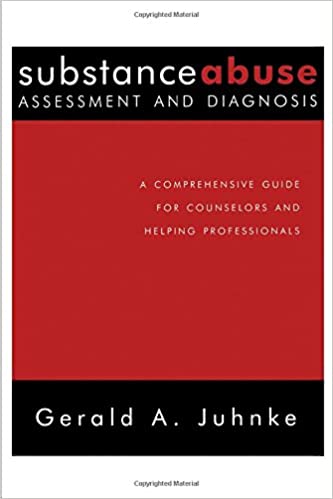
Book: Substance Abuse – Assessment & Diagnosis

Book Title:

Substance Abuse – Assessment & Diagnosis.

Author(s): Gerald A. Juhnke.

Year: 2002.

Edition: 1ed.

Publisher: Routledge.

Type(s): Hardcover, Paperback and Kindle.

Synopsis:

Substance abuse counselling has gone beyond being viewed as optional training; instead it is fast becoming an essential part of the education of helping professionals. In this book, Dr. Gerald Juhnke presents an innovative, practical model to be used in the assessment and diagnosing of substance abuse and related co-morbid disorders.

Substance Abuse Assessment and Diagnosis includes practical “nuts and bolts” direction on how to facilitate a thorough, multi-tiered substance abuse assessment. This book uniquely incorporates detailed examples of how to use individual and significant other clinical interviews, including the CAGE, SUBSTANCE -Q, etc, standardised specialty instruments, drug detection types, and personality instruments to accomplish this feat. This is the only book of its kind that provides practical detail on how to use and score these varied assessment instruments-including the newest “cornerstone instruments,” the MMPI-2, the SASSI-3 and the recently released SASSI-A2.

Students and practitioners alike will benefit from this comprehensive volume on the assessment and diagnosis of substance abuse.

Book: States of Consciousness – Models for Psychology & Psychotherapy

Book Title:

States of Consciousness – Models for Psychology & Psychotherapy.

Author(s): Andrzej Kokoszka.

Year: 2006.

Edition: 1ed.

Publisher: Springer-Verlag New York Inc.

Type(s): Hardcover and Paperback.

Synopsis:

Consciousness has always been a particularly elusive concept and one vigorously argued in the scientific community. This new volume takes on the task of defining normal and altered consciousness in their most relevant clinical terms.

In States of Consciousness, Andrzej Kokoszka expands on the pioneering work of JH Jackson, offering contemporary models for studying consciousness as it applies to both pathology and normal altered states, eg, relaxation, sleep, meditation, and hypnosis. He makes clear distinctions between the neuroscientific and psychiatric components of consciousness; at the same time, his theories are rooted firmly in the biopsychosocial approach.

Highlights:

  • Historical overview of studies of consciousness and its altered states.
  • Evolutionary/dynamic model of consciousness and information processing, based on the structure and principles of cell behaviour.
  • Comparison of altered states of consciousness in healthy persons and patients with schizophrenia.
  • New perspectives on the role of consciousness in pathology.
  • Case illustration of altered states in a patient with Post-traumatic Stress Disorder, integrating neurobiological, cognitive-behavioural, and psychodynamic data.
  • Applications of the model in clinical practice.

States of Consciousness lends itself to theoretical and practical, research and classroom use. It is relevant to a range of scientists and practitioners in cognition, clinical psychology, social psychology, and neuropsychology The book’s scope and the author’s attention to detail make it a work of great versatility, much like consciousness itself.

Book: Stand Strong – You Can Overcome Bullying

Book Title:

Stand Strong – You Can Overcome Bullying (and Other Stuff That Keeps You Down).

Author(s): Nick Vujicic.

Year: 2015.

Edition: Reprint Edition.

Publisher: WaterBrook.

Type(s): Hardcover, Paperback, Audiobook, and Kindle.

Synopsis:

In Stand Strong Nick Vujicic gives you strategies for developing a “bully defense system” so you can handle bullies of all kinds, by building your strength from the inside out.

With no arms, no legs, and no defence, Nick Vujicic has experienced bullying of all kinds for being “different.” He knows what it feels like to be picked on and pushed around. But Nick learned that he doesn’t have to play the bully’s game – and neither do you. No bully can define who you are, and in Stand Strong, Nick shows how you too can overcome and rise above bullying.

Find out how to:

  • Turn being bullied into a great opportunity (yes, really!).
  • Create a safety zone within yourself.
  • Establish strong values that no bully can shake.
  • Deal with cyber bullies.
  • Develop a spiritual foundation to stay strong against bullying.
  • Monitor your emotions and control your response to them.
  • Help others who are being bullied.

Are you facing the unwanted attention of a bully? You can stand up to the challenge, because you have greater power over your feelings and your life than you may think! Just ask Nick – the man with no arms or legs … and “a ridiculously good life.”

Book: Show Your Anxiety Who’s Boss

Book Title:

Show Your Anxiety Who’s Boss: a 3-Step CBT Programme to Help You Reduce Anxious Thoughts and Worry.

Author(s): Joel Minden PhD.

Year: 2020.

Edition: First (1ed).

Publisher: New Harbinger Publications.

Type(s): Paperback.

Synopsis:

Outsmart your anxiety with a ridiculously easy, three-step approach!

Is your anxiety running your life? Does it tell you where you can go, and when? Does it keep you trapped in a bubble of fear and panic? Anxiety can happen anytime, anywhere – and that is why you need simple, in-the-moment skills to stay grounded when worry takes hold. This accessible guide will help you gain the upper hand, show your anxiety who’s boss, and start living the life that you were always meant to live.

In Show Your Anxiety Who’s Boss, you will find a simple and direct three-step approach grounded in cognitive behavioural therapy (CBT) to help you gain understanding and authority over your anxious thoughts and rumination, bounce back from stress and minor setbacks, and accept what you just can’t know for sure. With this powerful guide, you will learn to:

  • Make peace with uncertainty.
  • Stop avoiding situations.
  • Accept and redirect anxious thoughts – so you can get on with your life.

If you’re ready to live a full and vital life without your anxiety constantly getting in the way, this straightforward guide will show you how to get back on track. It’s as easy as 1, 2, 3.

Book: Sexuality – A Very Short Introduction

Book Title:

Sexuality: A Very Short Introduction.

Author(s): Veronique Mottier.

Year: 2008.

Edition: First (1ed).

Publisher: Oxford University Press (OUP).

Type(s): Paperback, Audiobook, and Kindle.

Synopsis:

What shapes our sexuality? Is it a product of our genes, or of society, culture, and politics? How have concepts of sexuality and sexual norms changed over time? How have feminist theories, religion, and HIV/AIDS affected our attitudes to sex?

Focusing on the social, political, and psychological aspects of sexuality, this Very Short Introduction examines these questions and many more, exploring what shapes our sexuality, and how our attitudes to sex have in turn shaped the wider world. Revealing how our assumptions about what is ‘normal’ in sexuality have, in reality, varied widely across time and place, this book tackles the major topics and controversies that still confront us when issues of sex and sexuality are discussed: from sex education, HIV\AIDS, and eugenics, to religious doctrine, gay rights, and feminism.

Book: Raising Generation Rx

Book Title:

Raising Generation Rx – Mothering Kids with Invisible Disabilities in an Age of Inequality.

Author(s): Linda M. Blum.

Year: 2015.

Edition: First (1ed).

Publisher: American Psychiatric Association Publishing.

Type(s): Hardcover, Paperback and Kindle.

Synopsis:

Recent years have seen an explosion in the number of children diagnosed with “invisible disabilities” such as ADHD, mood and conduct disorders, and high-functioning autism spectrum disorders. Whether they are viewed as biological problems in brain wiring or as results of the increasing medicalisation of childhood, the burden of dealing with the day-to-day trials and complex medical and educational decisions falls almost entirely on mothers. Yet few ask how these mothers make sense of their children’s troubles, and to what extent they feel responsibility or blame. Raising Generation Rx offers a groundbreaking study that situates mothers’ experiences within an age of neuroscientific breakthrough, a high-stakes knowledge-based economy, cutbacks in public services and decent jobs, and increased global competition and racialised class and gender inequality.

Through in-depth interviews, observations of parents’ meetings, and analyses of popular advice, Linda Blum examines the experiences of diverse mothers coping with the challenges of their children’s “invisible disabilities” in the face of daunting social, economic, and political realities. She reveals how mothers in widely varied households learn to advocate for their children in the dense bureaucracies of the educational and medical systems; wrestle with anguishing decisions about the use of psychoactive medications; and live with the inescapable blame and stigma in their communities.

Book: Psychodynamic Therapy for Personality Pathology

Book Title:

Psychodynamic Therapy for Personality Pathology: Treating Self and Interpersonal Functioning

Author(s): Eve Valigor PhD, Ott, F, Kernberg M.D., John F. Clarkin PhD, and Frank E Yeomans M.D. PhD.

Year: 2018.

Edition: First (1ed).

Publisher: American Psychiatric Association Publishing.

Type(s): Paperback.

Synopsis:

Deftly integrating contemporary psychiatry and contemporary psychoanalysis, Psychodynamic Therapy for Personality Pathology: Treating Self and Interpersonal Functioning introduces Dynamic Psychotherapy for Personality Disorders (DPD), a specialised, theory-driven approach to the treatment of personality disorders.

Beyond merely being compatible with the DSM-5 Section III Alternative Model for Personality Disorders, this guide elaborates on it, offering clinicians at all levels of experience an accessible framework to guide evaluation and treatment of personality disorders in a broad variety of clinical and research settings.In this volume, readers will find:

  • A coherent model of personality functioning and disorders based in psychodynamic object relations theory.
  • A clinically near approach to the classification of personality disorders, coupled with a comprehensive approach to assessment.
  • An integrated treatment model based on general clinical principles that apply across the spectrum of personality disorders.
  • An understanding of specific modifications of technique that tailor intervention to the individual patient’s personality pathology.
  • Descriptions of specific psychodynamic techniques that can be exported to shorter-term treatments and acute clinical settings.

Patient assessment and basic psychodynamic techniques are described in up-to-date, jargon-free terms and richly supported by numerous clinical vignettes, as well as online videos demonstrating interventions. At the end of each chapter, readers will find a summary of key clinical concepts, making this book both a quick reference tool as well as a springboard for continued learning. Clinicians looking for a novel guide to understanding and treating personality pathology that combines contemporary theory with clinical practice need look no further than Psychodynamic Therapy for Personality Pathology: Treating Self and Interpersonal Functioning.

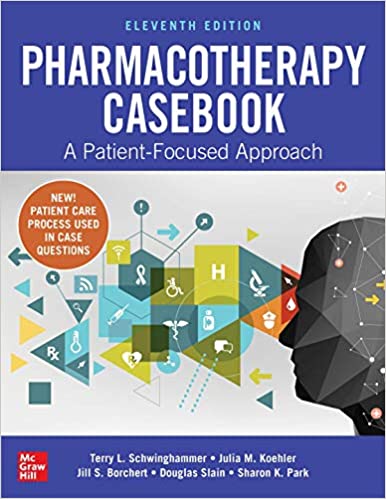
Book: Pharmacotherapy Casebook – A Patient-Focused Approach

Book Title:

Pharmacotherapy Casebook – A Patient-Focused Approach.

Author(s): Terry Schwinghammer. Julia Koehler, Jill Borchert, Douglas Slain, and Sharon Park.

Year: 2020.

Edition: Eleventh (11ed).

Publisher: McGraw-Hill Education.

Type(s): Paperback and Kindle.

Synopsis:

Packed with 157 patient cases, Pharmacotherapy Casebook: A Patient-Focused Approach builds your problem-solving and decision-making skills, so you can identify and resolve the most common drug therapy challenges you will encounter in daily practice.

Its case-based approach is also ideal for PharmD, Nurse Practitioner, and other allied health courses. Providing a consistent, practical approach, this authoritative guide delivers everything you need to master patient communication, care plan development, and documenting interventions. Case chapters are organised into system sections that correspond to those of the companion textbook.

Sharpen your ability to:

  • Identify actual or potential drug therapy problems.
  • Determine the desired therapeutic outcome.
  • Evaluate therapeutic alternatives.
  • Design an optimal individualised pharmacotherapeutic plan.
  • Evaluate the therapeutic outcome
  • Provide patient education.
  • Communicate and implement the therapeutic plan.

Develop expertise in pharmacotherapy decision making with:

  • Realistic patient presentations that include medial history, physical examination, and laboratory data, followed by a series of questions using a systematic, problem-solving approach
  • A broad range of cases – from a single disease state to multiple disease states and drug-related problems
  • Expert coverage that integrates the biomedical and pharmaceutical sciences with therapeutics
  • Appendices containing sample answer to several cases and valuable information on medical abbreviations, laboratory tests, mathematical conversion factors, and anthropometrics